
Stairs are often the most daunting part of a home for anyone concerned about mobility. We use them dozens of times a day, often without a second thought, but they represent a unique challenge for our balance and coordination. Whether you are a senior living independently or a caregiver looking out for a loved one, ensuring the staircase is as safe as possible is a top priority.
Many people believe that as long as there is a railing, the stairs are "safe." Unfortunately, it isn't always that simple. Small oversights: like a dim bulb or a loose rug: can create significant risks. The good news is that most stair-related accidents are preventable. By identifying common mistakes and applying practical, reassuring solutions, you can regain confidence in navigating your home.
Here are seven common mistakes you might be making with stair safety and, more importantly, how you can fix them today.
1. The "Guesswork" of Dim Lighting
One of the most frequent mistakes we see is inadequate lighting. As we age, our eyes require more light to distinguish between the edge of a step and the floor below. Dim staircases, burned-out bulbs, or poorly placed fixtures that cast long shadows make it incredibly difficult to judge depth. If you are squinting or "feeling" for the next step with your toe, the lighting is insufficient.
The Fix:
Visibility is the first line of defense. Start by replacing standard bulbs with high-lumen LED bulbs that offer bright, clear light. However, don't just stop at a single overhead light. Shadows can be just as dangerous as darkness.
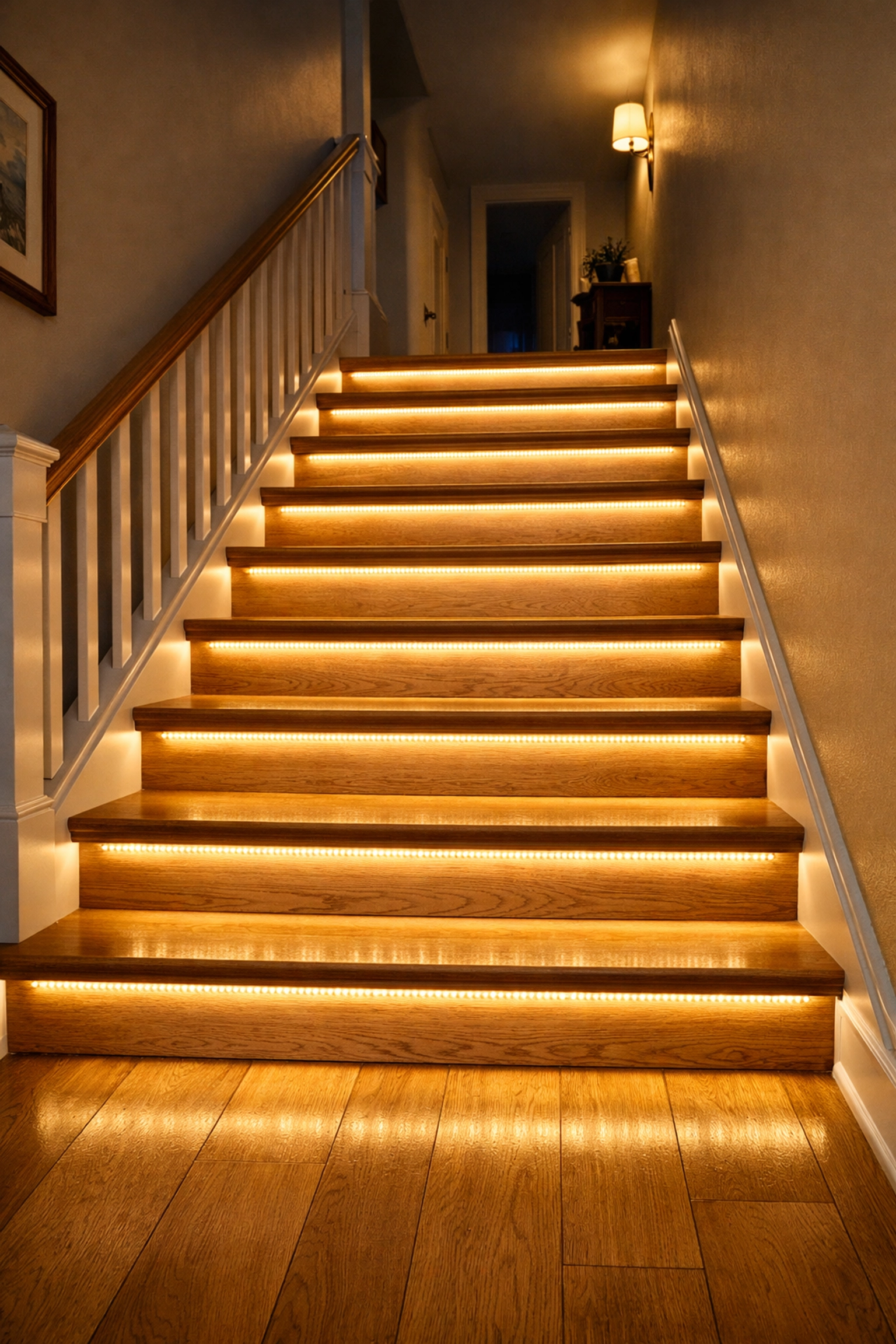
Consider installing motion-activated LED strip lighting along the baseboards or under the lip of each individual step. This illuminates the exact path where your feet need to land. Additionally, ensure there are light switches at both the top and bottom of the stairs. If a hardwired solution is too expensive, battery-powered motion sensors are a fantastic, no-drill alternative that ensures the path is lit the moment you approach the stairs.
2. Relying on "Slippery" Surfaces
Hardwood, polished stone, and glossy tiles are beautiful, but they are essentially ice rinks when you are wearing socks or slippers. Even some types of low-pile carpet can become worn down over time, losing their grip and becoming slick. A common mistake is assuming that a "clean" floor is a safe floor, but high-gloss finishes often lack the necessary friction to keep a foot planted firmly.
The Fix:
You don't need to rip out your beautiful staircase to make it safe. The goal is to add traction without creating a trip hazard.
- Non-slip treads: Clear or colored adhesive treads can be applied directly to the edge of each step. These provide a "gritty" surface that grips the sole of your shoe or foot.
- Stair runners: If you prefer carpet, ensure it is a tight, low-pile weave and is professionally installed with heavy-duty staples or rods.
- Contrasting tape: For those with low vision, placing a strip of high-contrast, anti-slip tape on the edge of each step can help the brain quickly identify where one step ends and the next begins.
To understand more about how vision impacts your movement on these surfaces, you might find our article on vision and balance: 10 things you should know about fall prevention helpful.
3. The "Wobbly" or Short Handrail
A handrail shouldn't just be a suggestion; it needs to be a sturdy, reliable anchor. Many homes have handrails that are loose, too thin to grip properly, or: most commonly: too short. If your handrail ends exactly at the last step, you are left without support during the most critical part of the transition: the final step onto the flat floor.
The Fix:
A safe handrail should be "continuous." This means you should be able to keep your hand on the rail from the very top until you are safely standing on the level ground at the bottom.
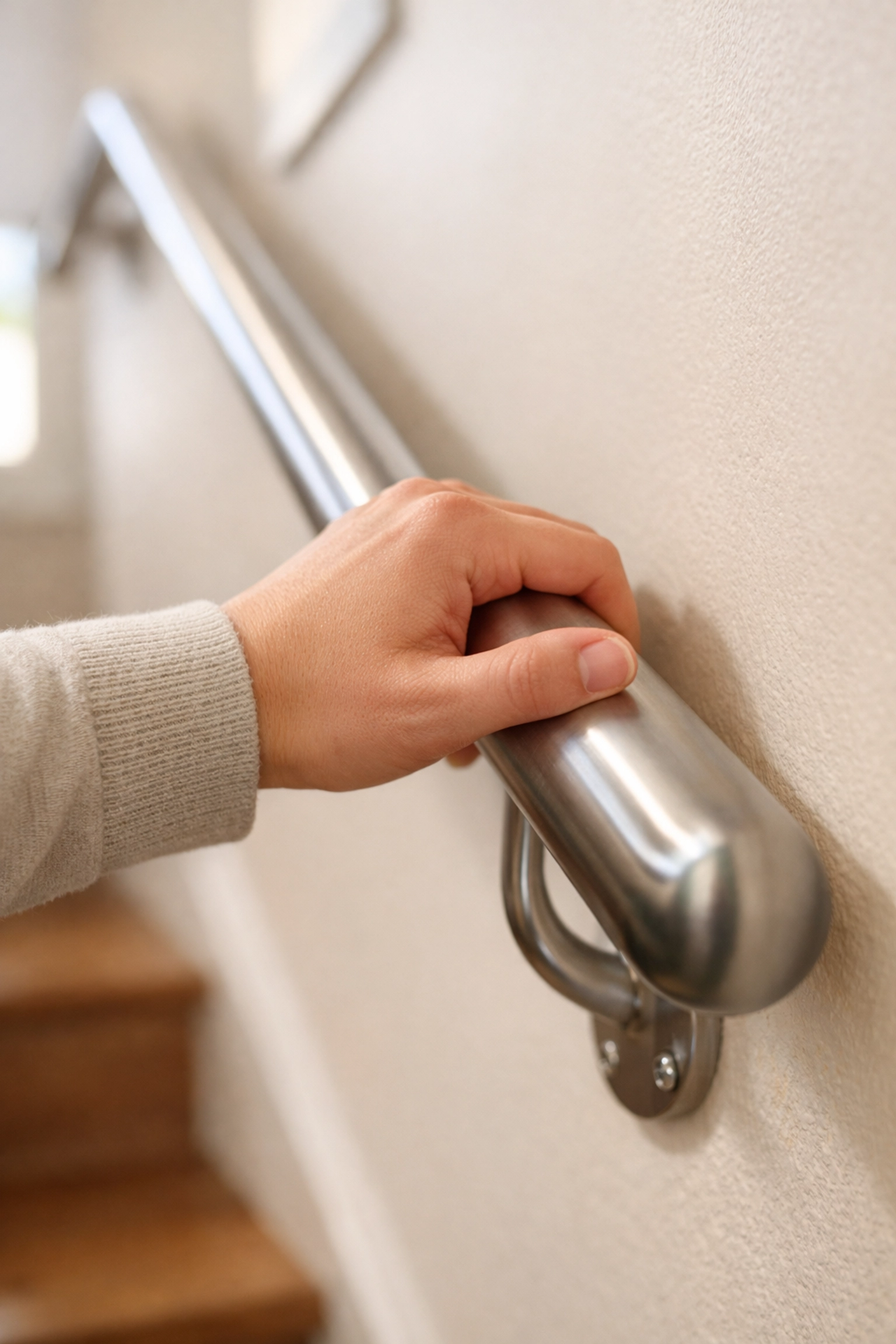
- Check the grip: A handrail should be round or oval, allowing your hand to wrap entirely around it. If it’s a wide "bread-loaf" style rail that you can only rest your palm on, it won't help you much if you actually start to slip.
- Check the length: Ideally, the rail should extend about 12 inches (300mm) beyond the top and bottom steps.
- Check the strength: It should be bolted into the wall studs, not just the drywall. Give it a firm shake; if it moves even a fraction of an inch, it needs to be reinforced. For more comprehensive home safety strategies, consult the physical therapist's guide to fall prevention at home.
4. Using the Stairs as a "Temporary" Storage Shelf
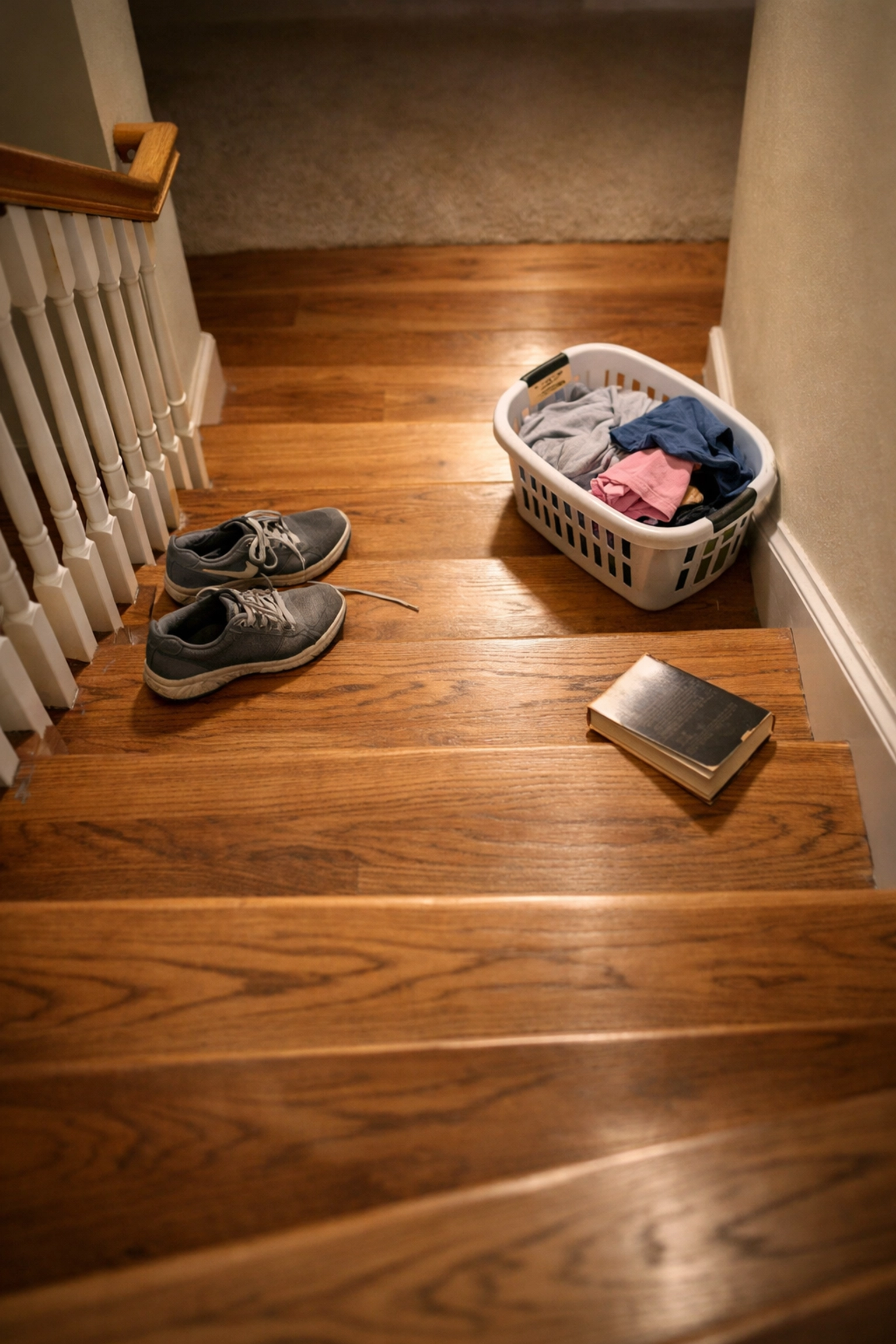
We’ve all done it: we place a book, a basket of laundry, or a pair of shoes on the bottom two steps, intending to take them up "on the next trip." This is one of the most dangerous habits a household can have. Stairs should never be used for storage, even for a few minutes. Objects on stairs create a narrow path and a significant tripping hazard, especially if you are distracted or carrying something else.
The Fix:
Adopt a "Zero Objects on Stairs" policy. If something needs to go up or down, but you aren't ready to carry it, place it on a side table near the stairs: never on the steps themselves.
If you find that clutter often accumulates because it's difficult to carry items while holding the handrail, consider using a small backpack. This keeps your hands free to grip the rails on both sides, which is the safest way to descend.
5. Overlooking Step Consistency
The human brain is incredible at pattern recognition. When we walk up a flight of stairs, our brain "maps" the height of the first two steps and assumes every other step will be exactly the same. If one step is even half an inch higher or lower than the others (often called a "phantom step"), it can cause a person to stumble. This often happens in older homes where the wood has shifted or during DIY renovations where the bottom or top step wasn't measured correctly to account for new flooring.
The Fix:
While you may not be able to rebuild your entire staircase, you can identify these hazards. Use a tape measure to check the "rise" (height) and "tread" (depth) of your steps. If you find a significant discrepancy, that step needs to be clearly marked with high-visibility tape to alert the user to the change.
Furthermore, keep an eye out for "nosing" issues. The nosing is the part of the step that overhangs the one below. If the nosing is too long, it can catch the heel of your shoe as you go down. If it's worn out or rounded, your foot may slip right off.
6. Wearing the Wrong Footwear
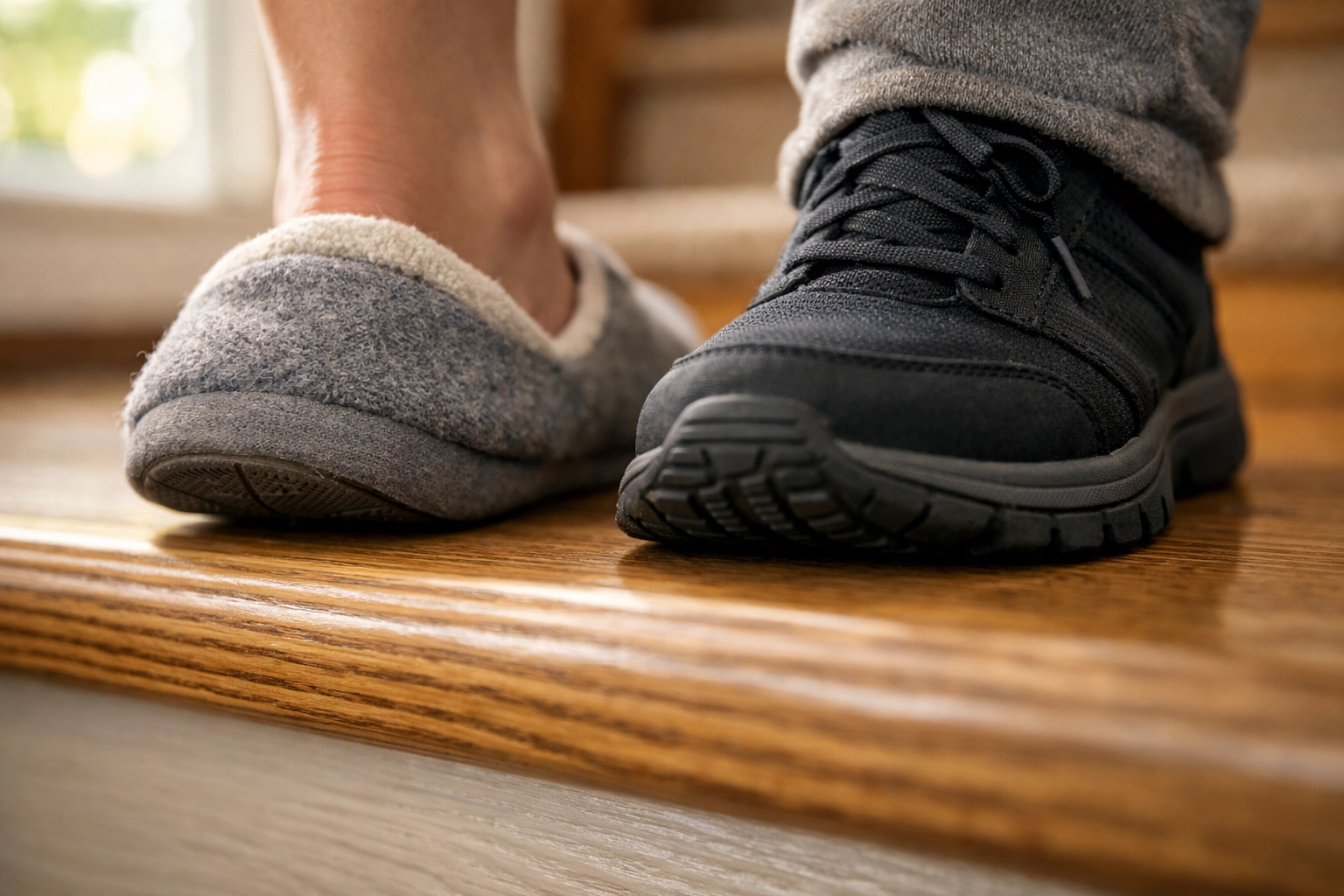
It’s tempting to run up the stairs in just socks or a pair of loose-fitting slippers, but this is a recipe for a fall. Socks provide zero traction on wood or tile, and backless slippers can easily slide off your foot mid-step, causing you to trip over your own footwear.
The Fix:
Always wear sturdy, well-fitting shoes with non-slip soles, even inside the house. If you prefer not to wear outdoor shoes inside, keep a dedicated pair of "house shoes" or supportive sneakers near the stairs.
If you or a loved one are experiencing balance issues, even with good shoes, it might be worth investigating the underlying cause. Sometimes, specialized care is needed; for instance, families can benefit from reading about fall prevention for dementia patients to understand how cognitive changes affect spatial awareness on stairs.
7. Carrying Large Objects that Block Your View
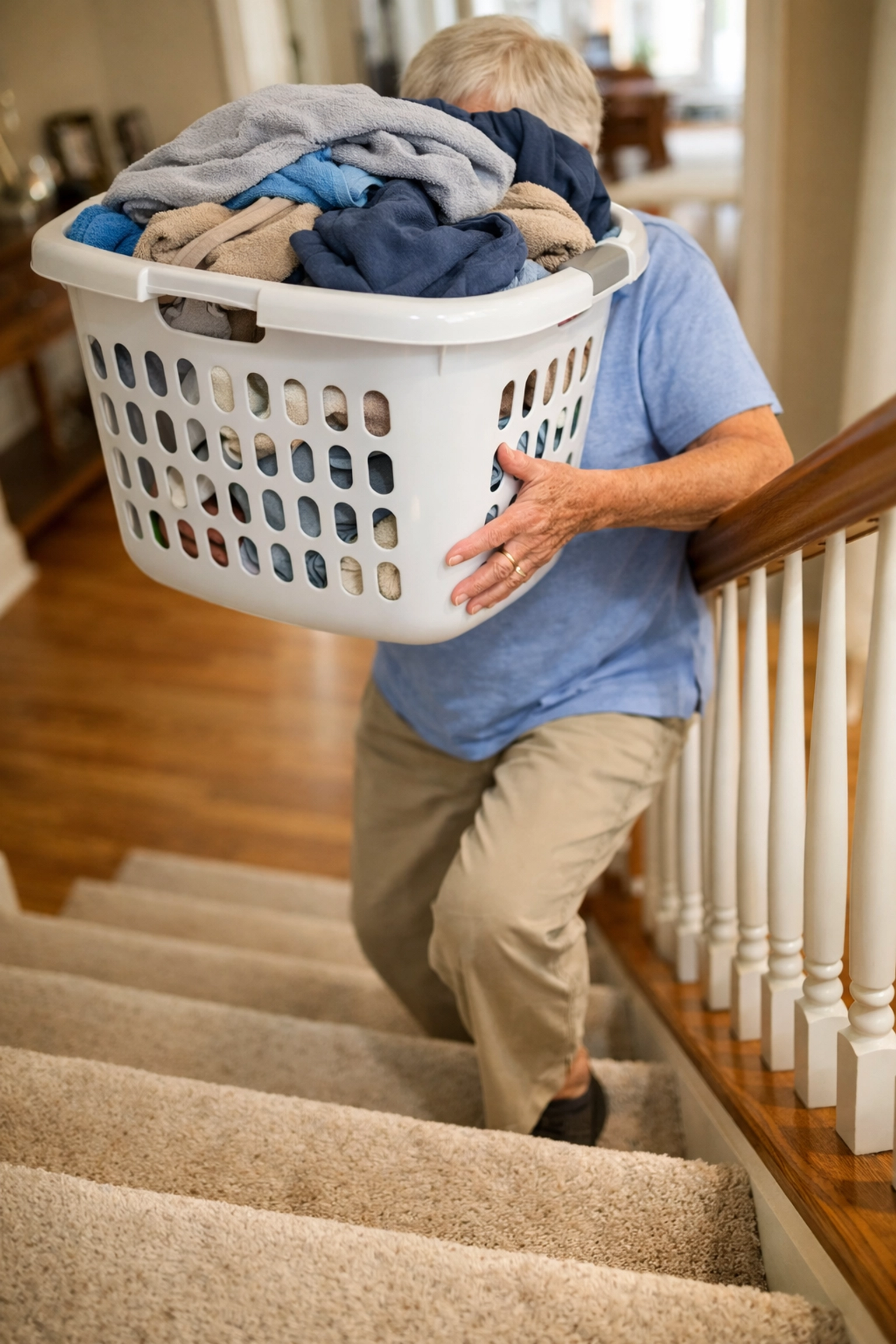
Mistake number seven is a matter of habit: carrying a large laundry basket, a stack of boxes, or even a bulky winter coat in a way that blocks your view of your feet and the steps ahead. If you cannot see the edge of the step you are about to put your foot on, you are essentially walking blind.
The Fix:
The rule of thumb for stair safety is "one hand for the rail, one hand for the cargo." If an item is too heavy or bulky to be carried with one hand, it shouldn't be carried up the stairs by one person.
- Break it down: Take two trips with smaller loads instead of one trip with a large one.
- The "Slide" Method: For soft items like laundry, some people find it safer to toss the bag or basket down to the landing first (if it’s clear) and then walk down with both hands on the rails.
- Ask for help: There is no shame in waiting for a family member or caregiver to help with heavy items.
What to Do If a Fall Occurs
Despite our best efforts, accidents can happen. Knowing how to react can prevent further injury. If you do experience a stumble on the stairs, the most important thing is to stay calm and not rush to get up.
Rushing can lead to a second fall or worsen a hidden injury. We highly recommend familiarizing yourself with safe techniques for recovery. You can read our detailed guide on how to get up after a fall when you're alone to prepare yourself or your loved ones for an emergency.
Final Thoughts on Stair Safety
Improving stair safety doesn't have to be a massive construction project. Often, it's the small, "boring" changes: a brighter bulb, a tighter screw in the handrail, or clearing away a stray pair of shoes: that make the biggest difference.
At Fall Guys Products, we believe that your home should be a place of comfort, not a place of worry. By taking a few minutes this weekend to audit your stairs for these seven common mistakes, you are taking a massive step toward long-term independence and safety. Stay proactive, stay observant, and remember that a safe home is a happy home.

