
As a physical therapist, I've seen firsthand how a single fall can change someone's life. But here's the good news: most falls are preventable. With the right approach, you can maintain your independence and confidence at home well into your later years.
This guide walks you through everything physical therapists recommend for fall prevention, from understanding your personal risk factors to making smart modifications in every room of your house.
Understanding Your Fall Risk
Before diving into solutions, let's talk about what puts you at risk. Physical therapists start every fall prevention plan with a thorough assessment because everyone's situation is unique.
Your risk factors might include muscle weakness, balance problems, vision changes, medications that cause dizziness, or a history of previous falls. Many people don't realize they're at risk until they have their first fall, which is why a proactive assessment makes such a difference.
During a professional evaluation, a physical therapist will test your strength, check how well you can stand from a chair, observe your walking pattern, and assess your balance in different positions. They'll also ask about your daily activities, the layout of your home, and any concerns you have about moving around safely.
This isn't about labeling you as "high risk" or making you feel limited. It's about understanding your starting point so you can build strength and make smart changes that match your lifestyle.
The Foundation: Strength and Balance Training
Let's start with what happens inside your body. Muscle strength and balance naturally decline as we age, but you can absolutely slow this process down, and even reverse some of it.
Physical therapists design exercise programs that target the specific muscles you need for stability. These aren't complicated gym routines. We're talking about exercises you can do at home with minimal or no equipment.
Key exercises typically include:
-
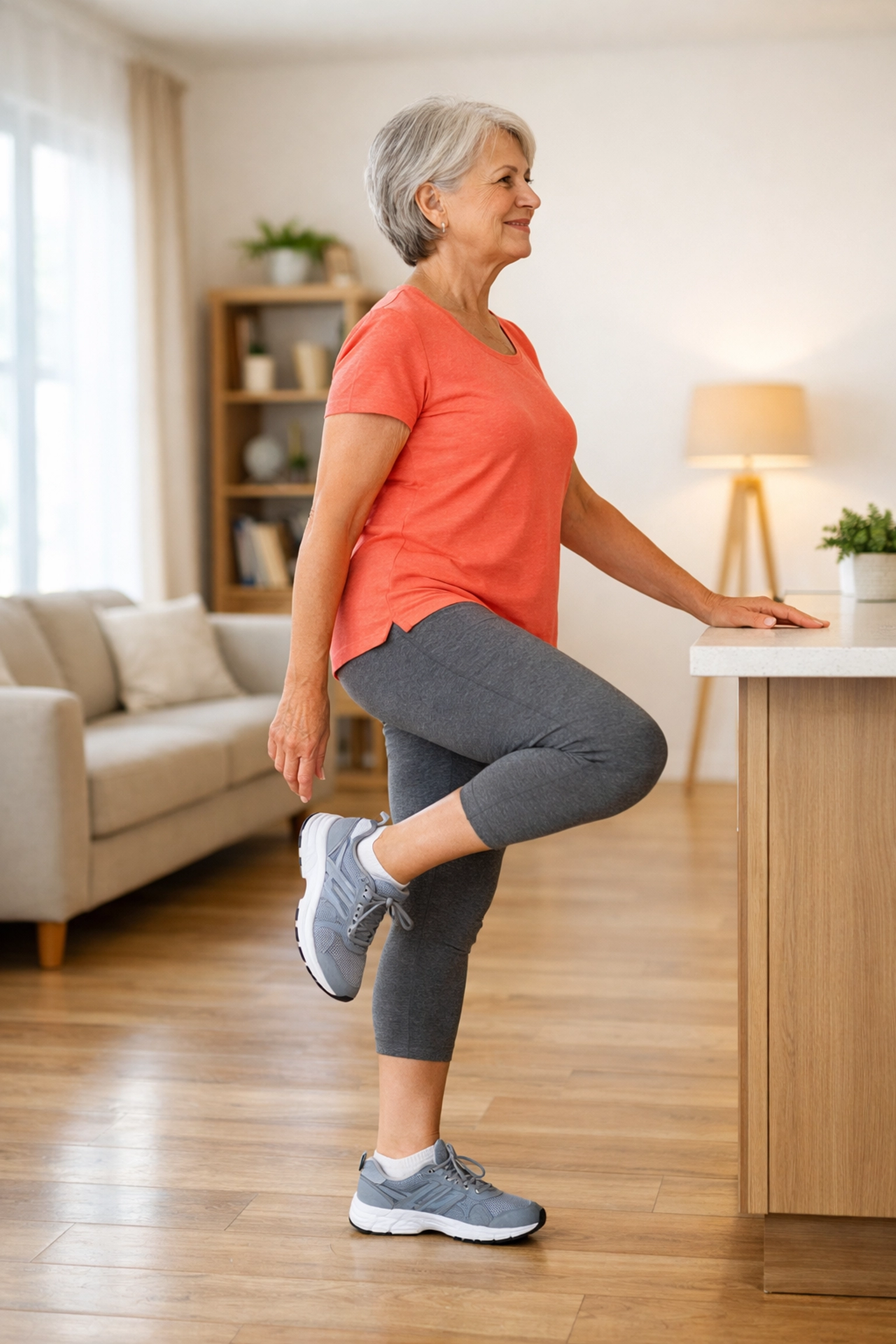
Standing balance practice: Start by standing near a counter for safety. Progress from holding on with both hands to one hand, then just fingertips, and eventually no hands at all.
-
Heel-to-toe walking: Walk in a straight line placing one foot directly in front of the other, like you're on a tightrope. This challenges your balance in a functional way.
-
Sit-to-stand repetitions: Use a sturdy chair and practice standing up and sitting down without using your hands. This builds the leg strength you need for daily activities.
-
Single-leg stands: Hold onto a counter and lift one foot slightly off the ground. Work up to 30 seconds on each leg.
-
Ankle strengthening: Point your toes up and down, or trace the alphabet with your foot. Strong ankles help you catch yourself if you stumble.
The secret is consistency, not intensity. Doing these exercises for 15 minutes a day, five days a week, produces better results than occasional marathon sessions.
Room-by-Room Safety Modifications
Now let's walk through your home with a therapist's eye. Each room presents different challenges and opportunities for making things safer.
The Bathroom
This is where many falls happen, often because of wet surfaces and quick position changes. Physical therapists recommend several modifications here.
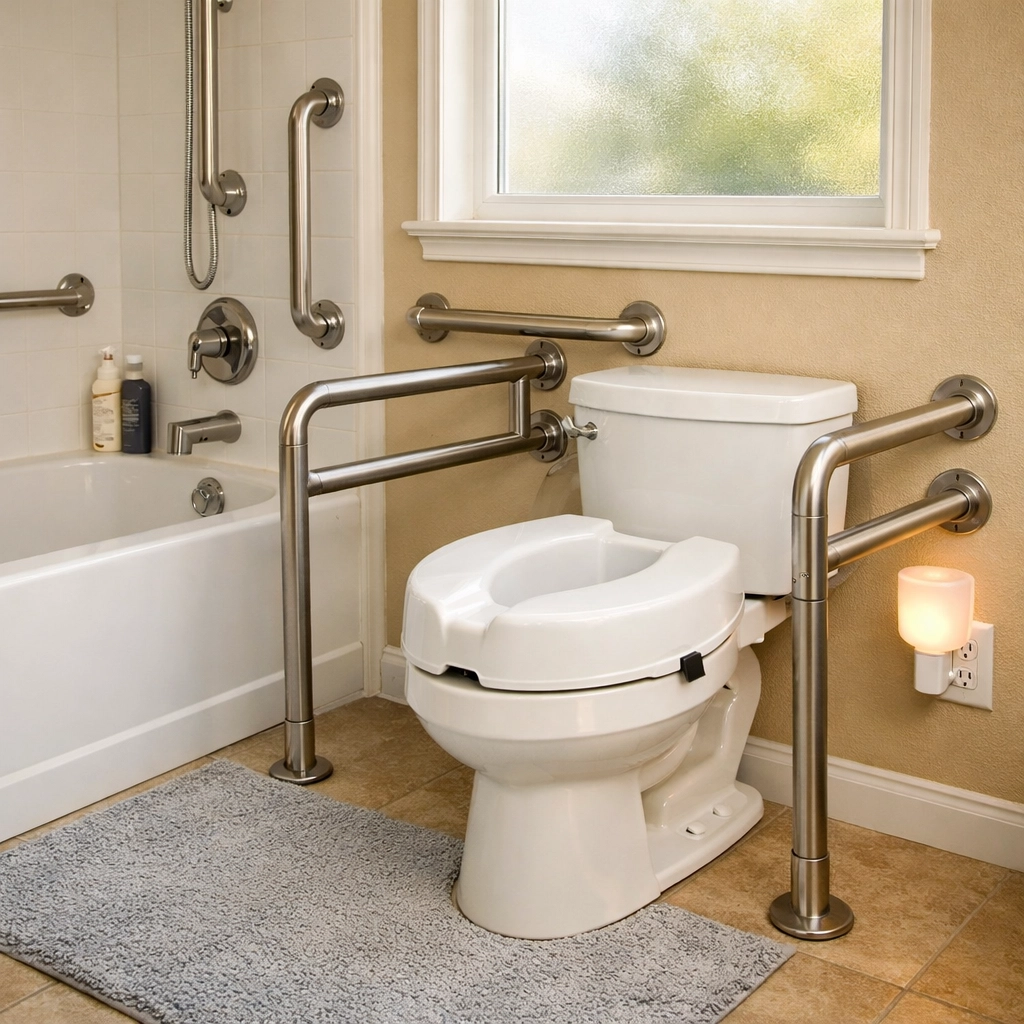
Install grab bars near the toilet, inside the shower or tub, and outside the tub for getting in and out. Make sure these are securely mounted to wall studs: towel bars won't hold your weight if you slip.
Consider a raised toilet seat if you have trouble getting up from low positions. Your feet should rest flat on the floor when seated, which prevents you from pitching forward as you stand.
Use non-slip mats in the tub or shower. The suction-cup kind that stick to the floor work better than adhesive strips that can peel up over time.
Keep a nightlight plugged in so you can see clearly during nighttime bathroom trips. Many falls happen in that groggy state between sleep and wakefulness.
The Bedroom
Your bedroom should be a safe haven, but it can harbor hazards too.
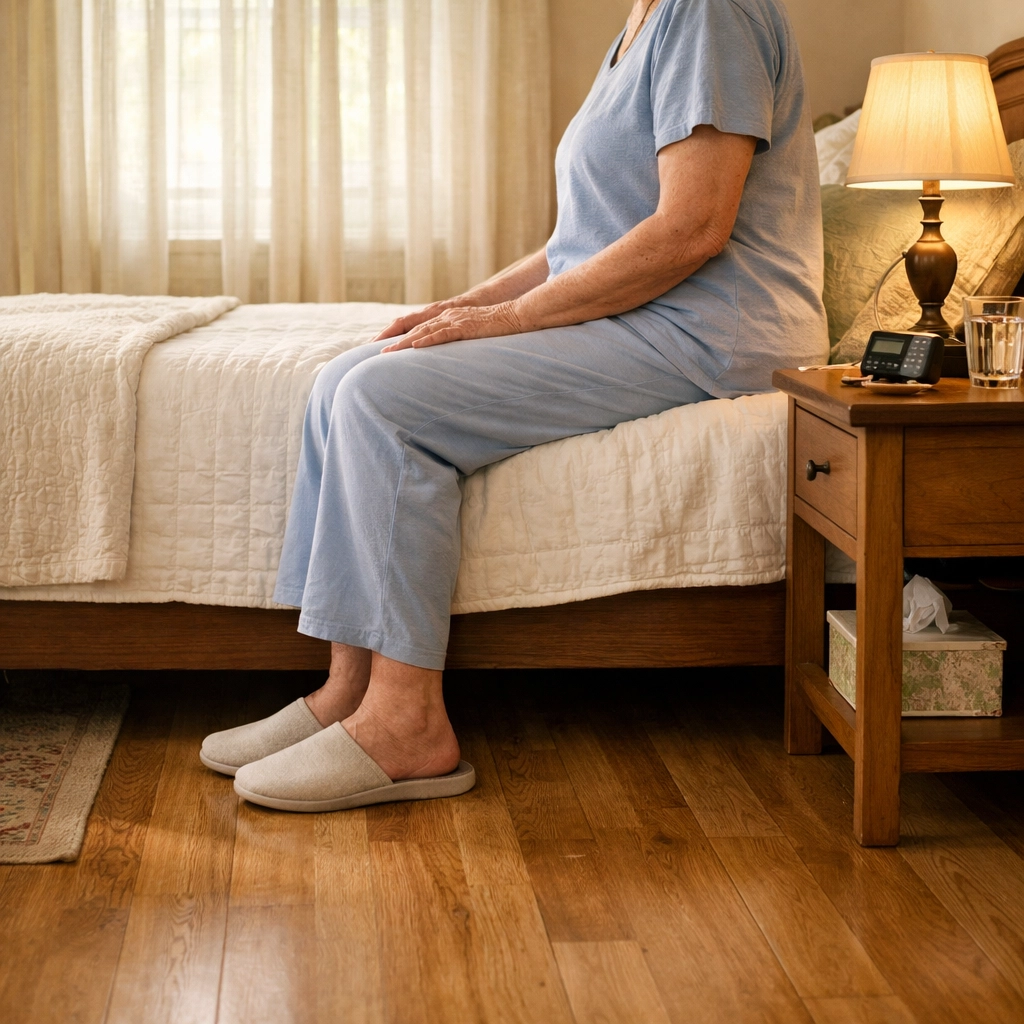
Your bed height matters more than you might think. When you sit on the edge, your feet should touch the floor flatly. If you're on tiptoes or your knees are too bent, the bed is the wrong height. You can raise or lower most beds with different frames or mattress foundations.
Keep a lamp within easy reach of your bed so you never have to navigate in the dark. Motion-sensor lights are even better: they turn on automatically when you get up.
Clear a direct path from your bed to the bathroom. No shoes, clothes, or other items should be on the floor along this route.
If you need to get up at night, sit on the edge of the bed for a moment before standing. This gives your blood pressure time to adjust and prevents that lightheaded feeling.
Stairways
Stairs require your full attention and good support systems.
Install handrails on both sides of the stairway if possible. They should extend the full length of the stairs and be securely fastened. When going up or down, always use the handrail: every single time, even if you feel steady.
Make sure every step is clearly visible. Add bright tape or paint to the edge of each step if needed, especially the top and bottom steps where most accidents occur.
Remove any items stored on stairs. That habit of leaving things on the steps to take up later is a recipe for disaster.
Good lighting is essential. Add switches at both the top and bottom of the stairway so you never have to navigate in darkness.
Living Areas and Hallways
These spaces often accumulate clutter without us realizing it.
Remove all loose rugs or secure them with non-slip backing. Physical therapists see countless falls caused by rugs that bunch up or slide. If you love your rugs, tape down the edges securely or use non-slip pads underneath.
Arrange furniture to create wide, clear pathways. You should be able to walk through any room without turning sideways or navigating around obstacles.
Secure electrical cords along baseboards or under furniture. Cords stretching across walkways are tripping hazards, especially if your vision isn't perfect.
The Footwear Factor
Your choice of shoes affects your stability more than most people realize. Physical therapists pay close attention to what you wear on your feet.
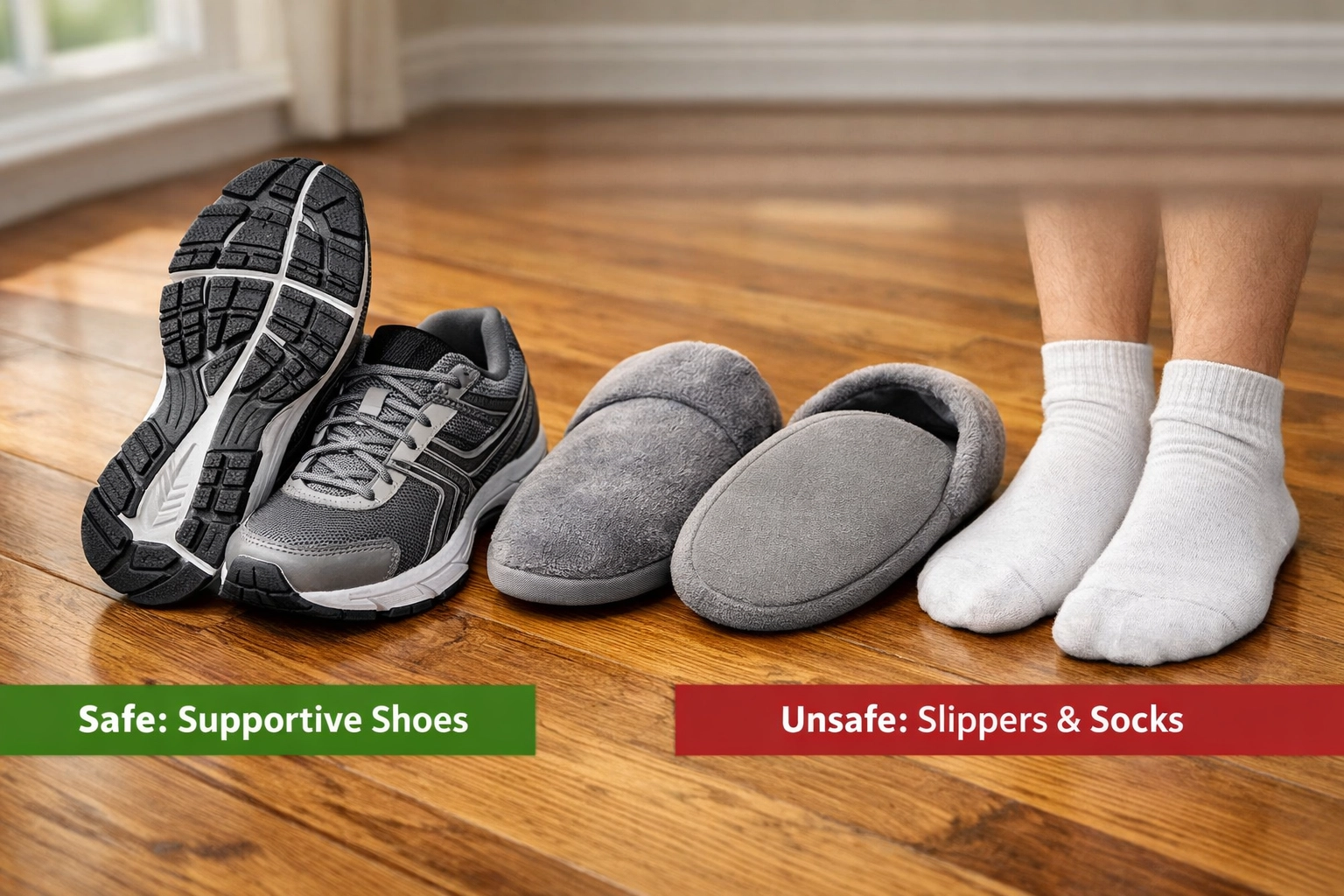
Wear closed-toe, closed-back shoes with non-slip soles that fit snugly. Avoid backless slippers, flip-flops, or loose-fitting shoes that don't move with your feet.
Inside the house, many people shuffle around in socks or smooth-soled slippers. This is risky, especially on hard floors. Keep a pair of supportive athletic shoes just for indoor use if you prefer not wearing outside shoes in the house.
Replace worn-out shoes even if they're comfortable. Once the tread is smooth or the support breaks down, they're not protecting you anymore.
Medication Management
This deserves its own section because medications are often overlooked fall risk factors.
Some medications cause dizziness, drowsiness, or blood pressure changes that increase your fall risk. These effects can be even stronger when you take multiple medications together.
Talk with your doctor or pharmacist about all the medications you take, including over-the-counter drugs and supplements. Ask specifically about fall risk and whether any alternatives might be safer.
Never skip medications or change doses on your own. Instead, have an honest conversation with your healthcare provider about any side effects you're experiencing.
Lifestyle Factors That Matter
Beyond your home environment, certain daily habits support better balance and stability.
Stay hydrated and well-nourished. Dehydration and low blood sugar can cause dizziness. Eat regular meals and drink water throughout the day, even if you don't feel thirsty.
Move regularly. Sitting for long periods makes you stiffer and less stable. Get up and move around every hour, even if it's just a short walk to the kitchen.
Get your vision checked annually. Depth perception and seeing obstacles clearly are crucial for preventing falls. Update your glasses prescription when needed, and make sure your lenses are clean.
Manage chronic conditions. Conditions like diabetes, Parkinson's disease, or arthritis can affect your balance and mobility. Work with your healthcare team to keep these conditions well-controlled.
When to Seek Professional Help
Consider consulting a physical therapist if you've had a fall, feel unsteady when walking, need to hold onto furniture when moving around your house, or worry about falling.
You don't need a recent fall to benefit from an assessment. Prevention is always easier than recovery.
Many physical therapists offer home assessments where they visit your house and provide personalized recommendations based on your specific environment and needs. This hands-on approach often reveals hazards you might not notice yourself.
Building Your Prevention Plan
Fall prevention isn't a one-time fix: it's an ongoing process. Start with the modifications that address your biggest risks, then build from there.
Work on your strength and balance exercises consistently. These create the foundation that supports everything else. Even if you make your home perfectly safe, you still need the physical ability to move through it confidently.
Review your home safety every few months. As your abilities change or your household shifts, new hazards might emerge or old solutions might need updating.
Stay connected with healthcare providers who understand fall prevention. Physical therapists, occupational therapists, and your primary care doctor all play important roles in keeping you safe.
Moving Forward With Confidence
The goal of fall prevention isn't to make you fearful or overly cautious. It's about maintaining your independence and doing the activities you love safely.
Small changes add up to significant protection. You don't need to overhaul your entire life overnight. Start with one room or one type of exercise and build from there.
Remember that asking for help is a sign of wisdom, not weakness. Physical therapists are experts at creating strategies that match your unique situation. We've helped thousands of people stay steady on their feet and confident in their homes.
Your stability and independence are worth protecting. With the right approach, you can significantly reduce your fall risk and keep living life on your own terms.

