
Hi, I’m Brian Kerr, the founder of Fall Guys Products. Over the years, I’ve spent a lot of time looking at how we can make our homes a bit friendlier as we get older. One of the biggest hurdles, literally and figuratively: is the staircase.
Stairs are often the most dangerous part of a home, but they don't have to be. Most of the time, the risks come from small things we overlook because we’ve walked those same steps thousands of times. We stop seeing the danger because it’s familiar. In this guide, I want to walk you through seven common mistakes people make with their stairs and, more importantly, how to fix them so you can feel confident and secure in your own home.
1. Prioritizing Design Over Safety and Functionality
We all want a beautiful home. Maybe you’ve seen those "floating" stairs in a modern architecture magazine: the ones where the steps seem to hover in mid-air without a back (risers) or a visible handrail. Or perhaps you love the look of highly polished hardwood that shines under the hallway lights.
The mistake here is choosing aesthetics that compromise your stability. Open risers (the gaps between steps) can cause "visual vertigo," making it hard to judge depth as you climb. Polished surfaces, while pretty, offer zero traction.
The Fix:
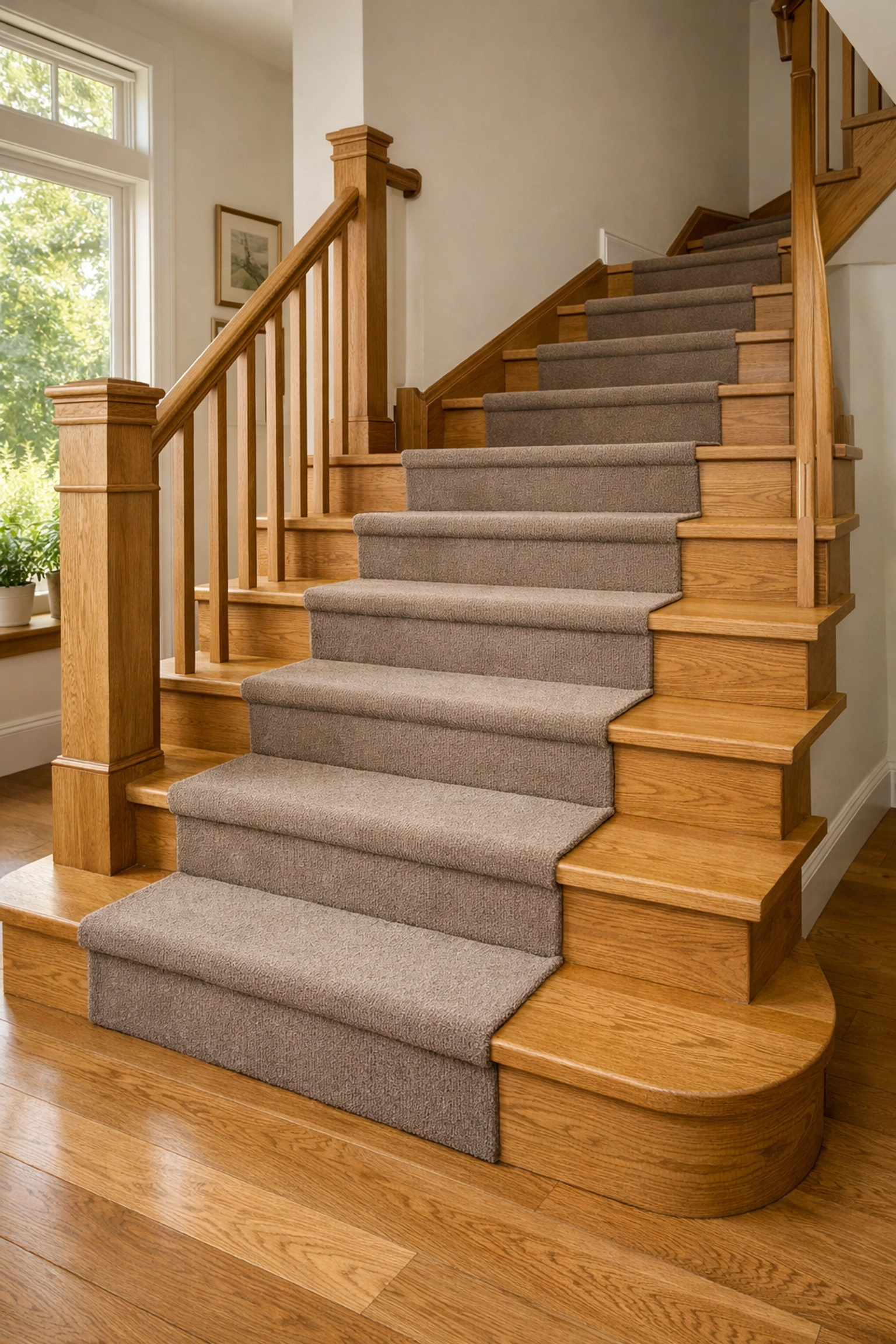
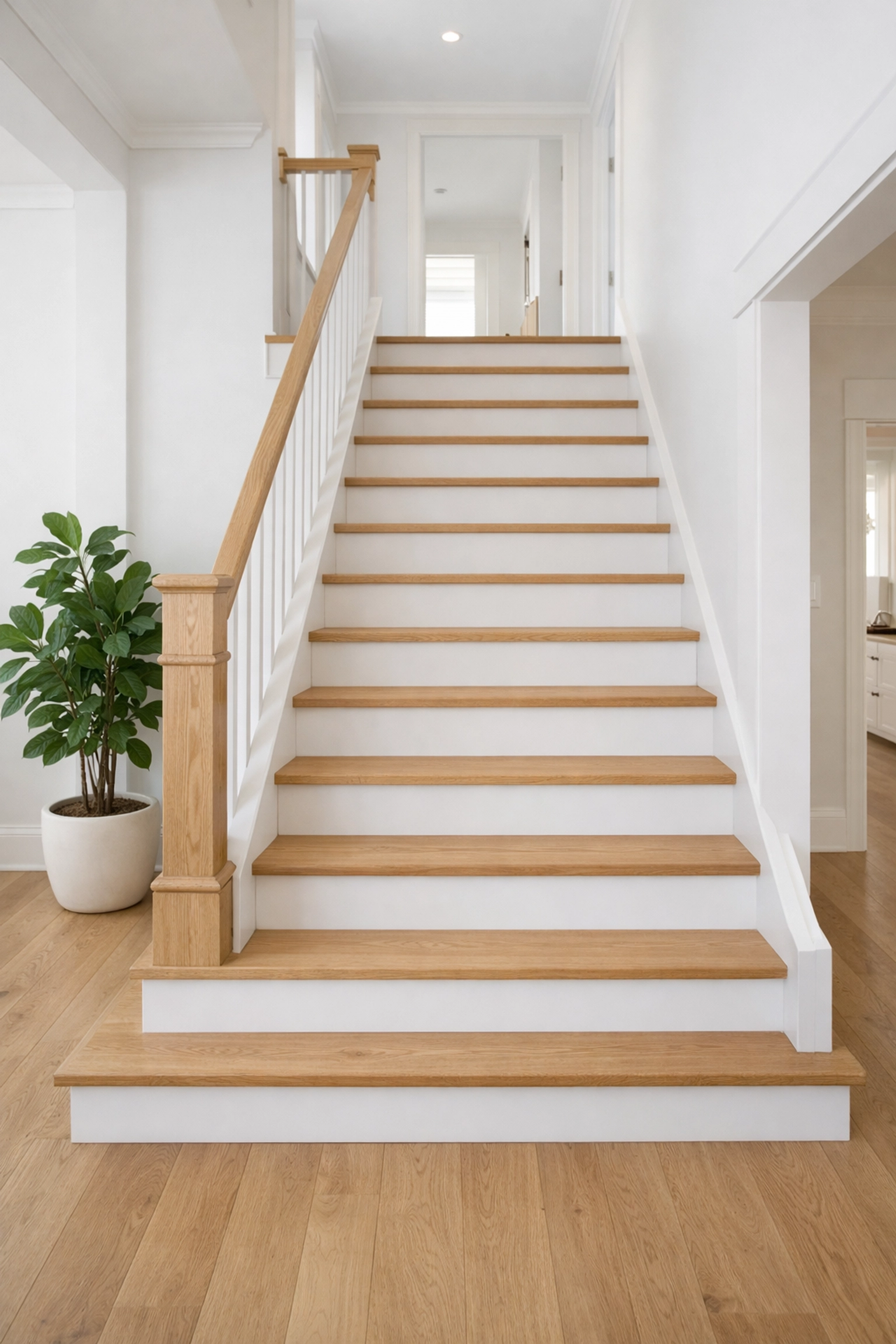
Balance is key. If you love the look of wood, you don't have to cover it up entirely. Use transparent non-slip adhesive strips or low-pile carpet runners that provide grip without hiding the grain. If you’re building or remodeling, ensure your stairs have closed risers. This creates a solid visual boundary for each step, which helps your brain process exactly where to place your foot. If you're unsure about your current setup, a free in-home assessment can help identify these design-based risks.
2. Using Incorrect Tread and Riser Proportions
Your brain works on muscle memory. When you walk up a flight of stairs, your body "measures" the first two steps and assumes every other step will be identical. The mistake many homeowners make is living with "irregular" stairs: where one riser is slightly taller than the others, or a tread (the part you step on) is too narrow for a full foot.
Narrow treads are particularly risky because they force you to turn your feet sideways or walk on your toes, which significantly reduces your balance.
The Fix:
Standard residential dimensions are there for a reason. Ideally, treads should be between 250mm and 300mm deep (about 10-12 inches), and risers should be around 150mm to 180mm high (about 6-7 inches).
If your stairs are already built and the proportions are off, you can’t easily move the wood, but you can improve the "perceived" safety. Adding a contrasting color strip to the edge of each tread helps the eye distinguish where one step ends and the next begins. This is a common tip found in our physical therapist's guide to fall prevention.
3. Creating Too Steep a Staircase Slope
Space is a premium in many homes, especially older ones. To save room, many staircases are built at a very steep angle. If your stairs feel more like a ladder than a walkway, you're dealing with a major fall risk. Steep stairs require more muscle strength and better balance to navigate, and the margin for error is much smaller.
The Fix:
The optimal angle for a home staircase is around 37 degrees. If your stairs are significantly steeper, it might be time to consider structural changes or, at the very least, extra support.
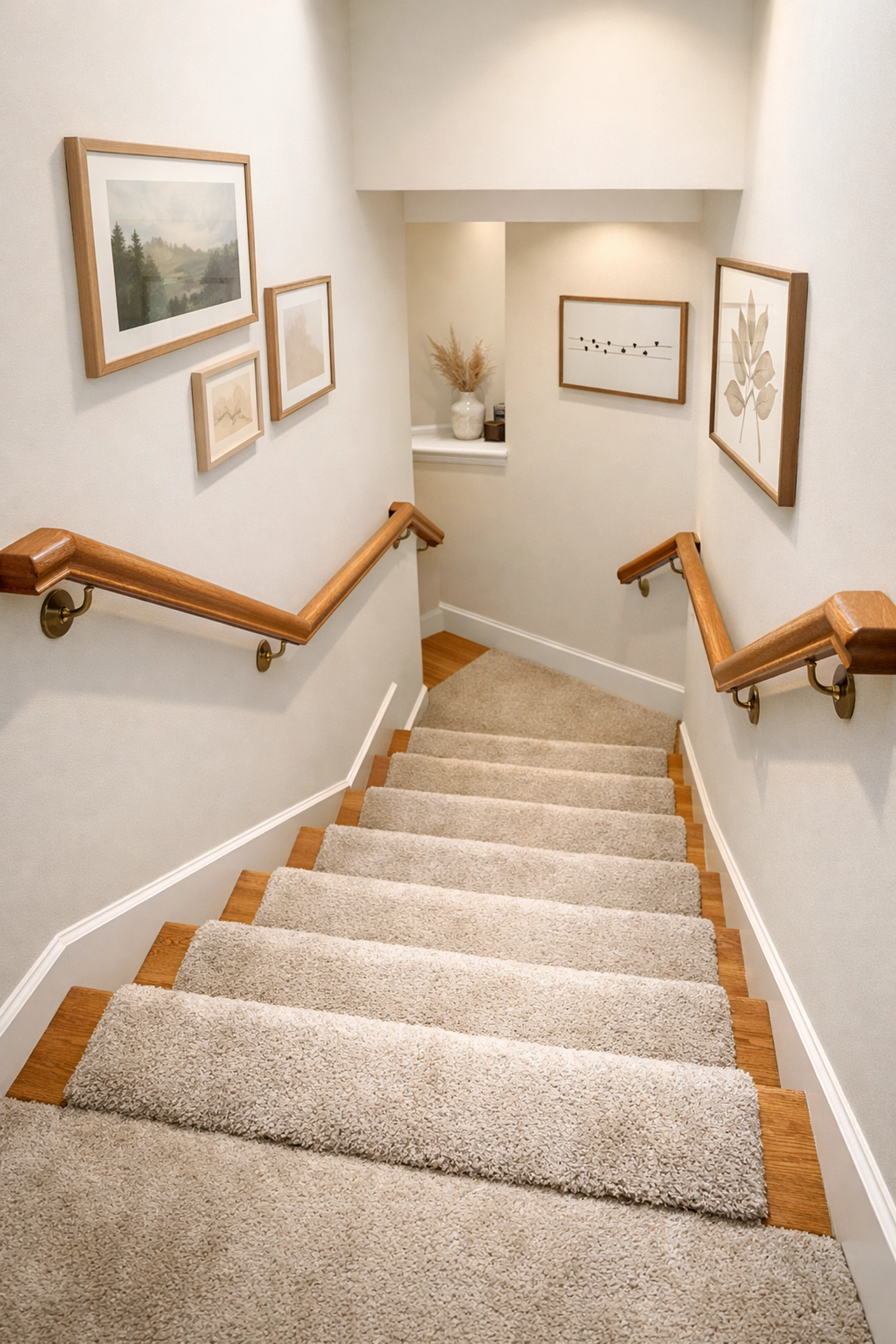
For steep stairs, the "fix" often involves slowing down. Installing double handrails (one on each side) allows you to use both arms to stabilize your weight, effectively taking the pressure off your knees and hips. It turns a "climb" back into a "walk."
4. Installing Weak or Poorly Positioned Handrails
This is perhaps the most common mistake I see. A handrail isn't just a decorative piece of trim; it’s a life-saving tool. Many homes have handrails that are too thick to grip properly, too flimsy to hold weight, or: worst of all: they stop before the stairs do.
If a handrail ends on the second-to-last step, you are most vulnerable at the very moment you are transitioning to a flat floor. That's when most stumbles happen.
The Fix:
A proper handrail should be "graspable." You should be able to wrap your hand entirely around it in a "power grip."
- Height: Ensure it is mounted between 34 and 38 inches above the stair nosing.
- Extension: The rail should extend at least 12 inches (300mm) beyond the top and bottom risers. This gives you a "landing" for your hand before your feet hit the floor.
- Sturdiness: It needs to support at least 200 pounds of force. If it wobbles when you tug it, it needs to be re-anchored into the wall studs.
5. Neglecting Adequate Lighting and Headroom
Have you ever walked down the stairs at night and thought you reached the bottom, only to find there was one more step? That "phantom step" feeling is usually caused by poor lighting. Shadows can hide the edges of steps, and low-light environments make it impossible for our eyes to depth-perceive correctly.
Furthermore, if a staircase has low headroom, you might subconsciously duck your head while walking. When you duck, your center of gravity shifts forward, and you stop looking at where your feet are going.
The Fix:
Lighting should be redundant. Don't rely on a single overhead bulb that creates long shadows. Instead, consider:
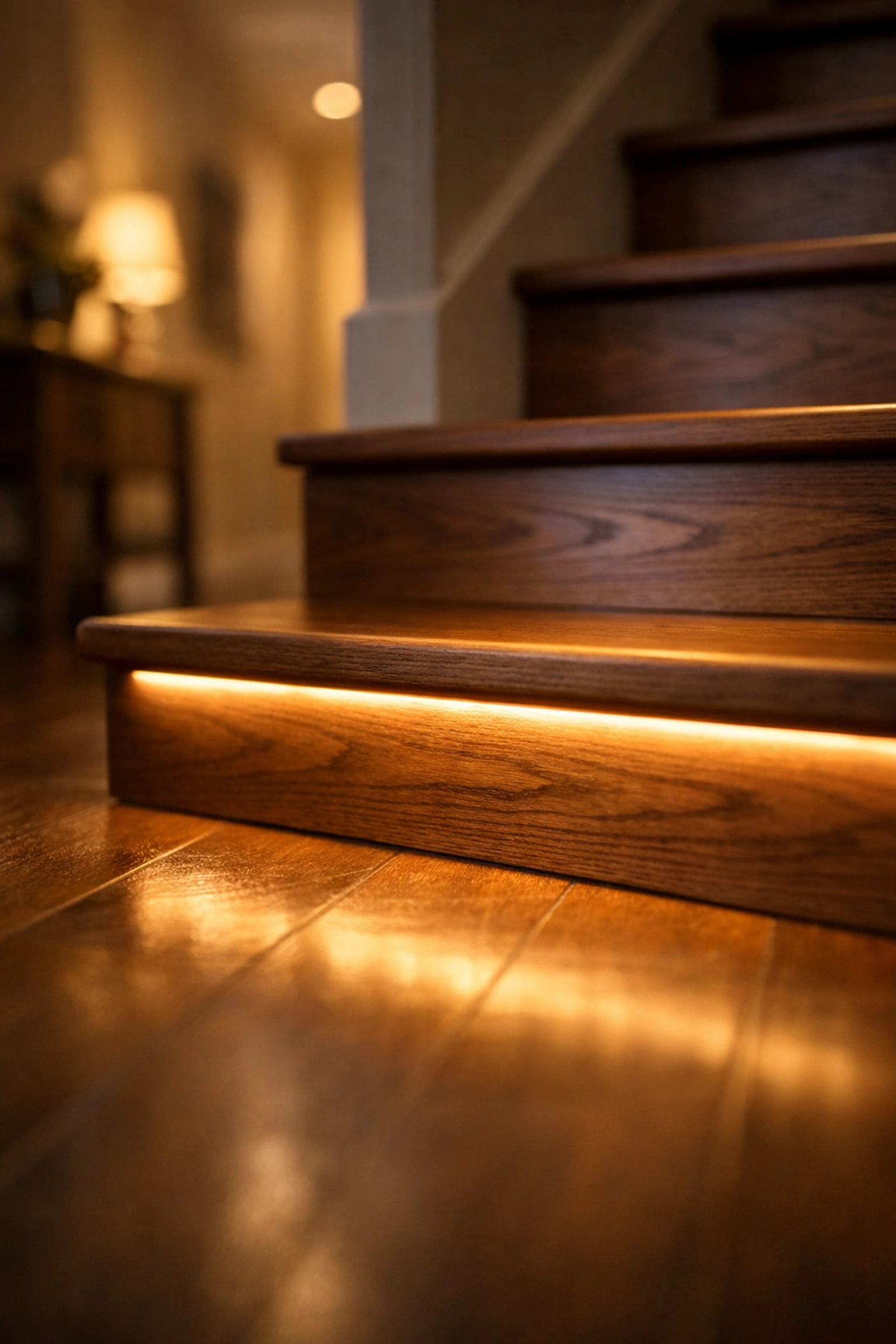
- Motion-sensor LED strips: These can be placed under the lip of each tread or along the baseboard. They light up as you approach, illuminating the exact path for your feet.
- Dual-end switches: Make sure there is a light switch at both the top and the bottom of the stairs.
- Increased Headroom: If your home has a low ceiling over the stairs, try to keep the area as bright as possible to avoid the "closed-in" feeling that causes ducking.
6. Ignoring Building Codes and Structural Requirements
When we do DIY projects, it’s easy to think, "It’s my house; I’ll do it my way." But building codes for stairs are written in the aftermath of accidents. They are the "lessons learned" by safety experts. Ignoring these codes: like the maximum gap allowed between balusters (the vertical poles under the handrail): can lead to accidents involving grandchildren or pets.
The Fix:
Always consult local building codes before making modifications. For example, balusters should usually be spaced no more than 4 inches apart to prevent a child from slipping through. If you’re moving into a new home or planning a renovation, check that everything is up to date. Safety isn't just about the person using the stairs today; it’s about everyone who might visit. Understanding the terms of safe construction is part of being a responsible homeowner.
7. Compromising Width to Save Space
Narrow staircases are difficult to navigate, especially if you’re carrying a laundry basket or using a cane. If a staircase is too narrow, you don’t have enough room to pivot or recover your balance if you slip. Furthermore, narrow stairs make it nearly impossible to install helpful aids later, like a stairlift.
The Fix:
Maintain a minimum width of 36 inches whenever possible. This provides enough "elbow room" to steady yourself. If your stairs are already narrow, the best fix is to keep them absolutely clear of clutter.
Many of us have a habit of leaving things on the steps to "take up later." In a narrow staircase, that book or pair of shoes becomes a high-risk obstacle. Keep the path 100% clear. If you find that you're struggling with the physical demand of your stairs, it might be time for a mobility assessment to see if more significant aids are needed.
Bonus: The Surface Matter
While not strictly a "structural" mistake, the material on your stairs matters immensely.
- Loose Carpeting: If your carpet is "waterfalling" over the edge and isn't tacked down tightly, it can shift under your foot.
- Area Rugs at the Base: A rug at the top or bottom of the stairs is a trip hazard waiting to happen.
- The Fix: Ensure all carpeting is tight and low-pile. Use non-slip backing for any rugs in the "landing zones" or, better yet, remove them entirely from the immediate vicinity of the stairs.
Final Thoughts
Stair safety is all about reducing the number of "surprises" your body has to deal with. When the lighting is good, the handrail is sturdy, and the steps are consistent, your brain can focus on movement rather than navigating hazards.
If you’ve realized your stairs have a few of these mistakes, don't worry: most are fixable with a weekend of DIY or a visit from a professional. Taking these steps now ensures your home remains a place of comfort and safety for years to come.
For more tips on keeping your home safe, you might want to read our guide on how to create a fall-safe bedroom or learn about what to do after a fall to be prepared for any situation.
Stay safe and keep moving!

