
Winter brings beautiful snowy landscapes, but it also introduces serious hazards for anyone walking outdoors. Ice and snow create slippery conditions that increase fall risk, especially for older adults. The good news? With the right preparation, techniques, and awareness, you can navigate winter safely and maintain your independence throughout the colder months.
Let's walk through practical strategies that actually work for preventing slips and falls during winter weather.
Understanding Winter Fall Risks
Winter conditions create unique challenges. Snow obscures uneven surfaces, ice forms in unexpected places, and cold temperatures can affect balance and reaction time. Black ice: that nearly invisible layer of ice on pavement: is particularly dangerous because you can't see it coming.
Falls on ice and snow can happen to anyone, but certain factors increase your vulnerability. Rushing, distraction, improper footwear, and unfamiliarity with winter walking techniques all contribute to accidents.
The key to winter safety isn't avoiding the outdoors entirely. It's about being prepared and making smart choices every time you step outside.
Choosing the Right Winter Footwear
Your shoes are your first line of defense against winter falls. The wrong footwear can turn a simple walk into a dangerous situation, while the right boots can keep you stable even in challenging conditions.
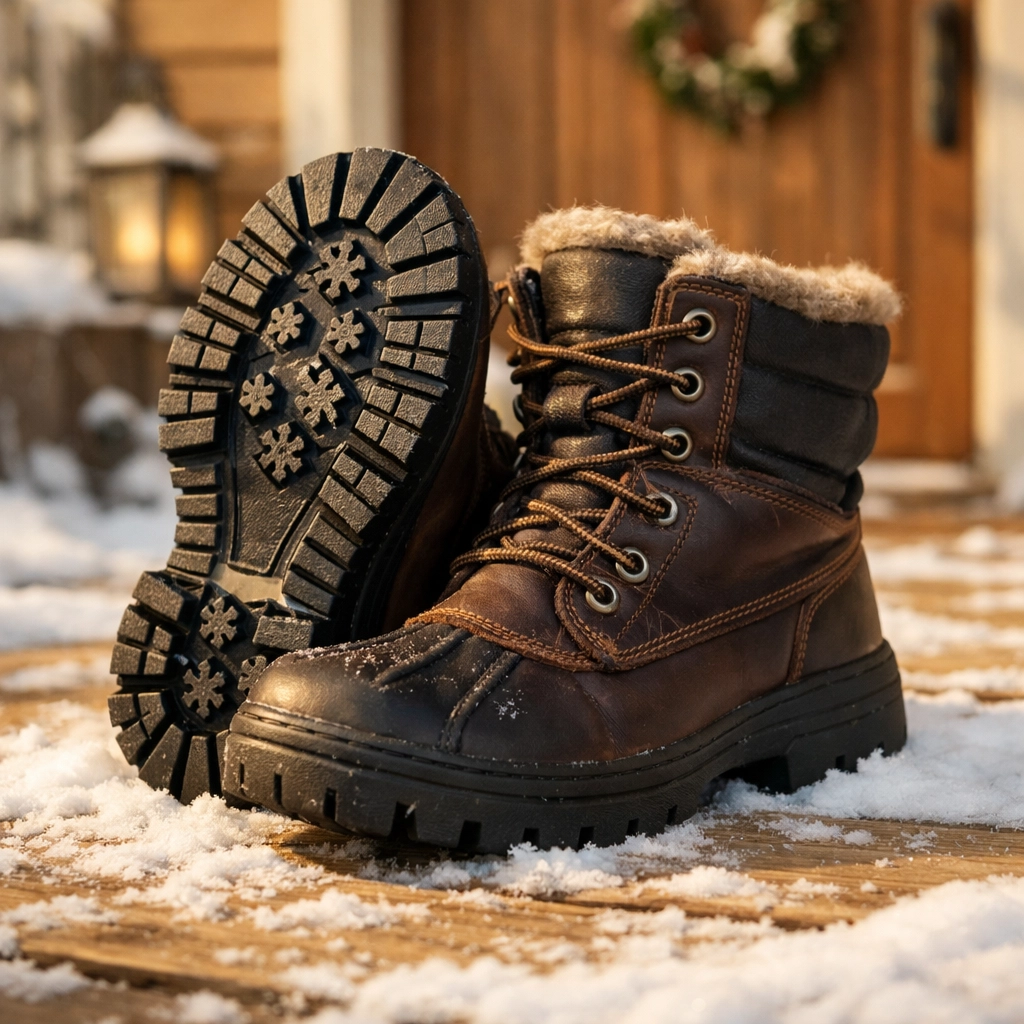
What to Look For in Winter Boots:
- Deep rubber treads that provide traction on ice and snow
- Insulated and waterproof materials to keep feet warm and dry
- Good ankle support to help prevent rolling
- A wide, stable heel rather than narrow or elevated heels
- Sufficient room for warm socks without cramping your toes
Rubber and neoprene composite soles offer excellent grip on icy surfaces. These materials maintain flexibility even in cold temperatures, unlike some plastics that become rigid and slippery.
What to Avoid:
- Shoes with smooth leather or plastic soles
- High heels or boots with narrow heels
- Worn-out boots with minimal tread remaining
- Fashion boots not designed for winter weather
- Shoes that don't fit properly with winter socks
If you have boots you love but they lack good traction, consider ice cleats or traction devices that slip over your existing footwear. These attachable grips feature metal coils or spikes that dig into ice, providing extra stability.
Keep a pair of indoor shoes at your destination so you can change out of wet boots. Wet floors indoors can be just as slippery as ice outside.
Dressing for Winter Safety
Proper clothing does more than keep you comfortable: it plays a significant role in fall prevention during winter months.
Layer Your Clothing:
Start with moisture-wicking base layers, add insulating middle layers, and finish with a waterproof outer layer. This system keeps you warm without bulk that could restrict movement.
Protect Your Extremities:
Cold hands and feet can affect your dexterity and balance. Wear insulated gloves, warm socks, and a hat. Your body loses significant heat through your head, and staying warm helps maintain the coordination needed for safe movement.
Stay Dry:
Wet clothing loses its insulating properties rapidly and can lead to dangerous drops in body temperature. If you get wet, change into dry clothes as soon as possible. Carry extra gloves if you'll be outside for extended periods.
Consider Visibility:
Shorter winter days mean you may be walking in low light conditions. Wear bright colors or reflective elements so drivers can see you clearly, especially if you need to walk near roads.
Mastering Safe Winter Walking Techniques
How you walk matters just as much as what you wear. Adjusting your walking style for winter conditions significantly reduces your fall risk.
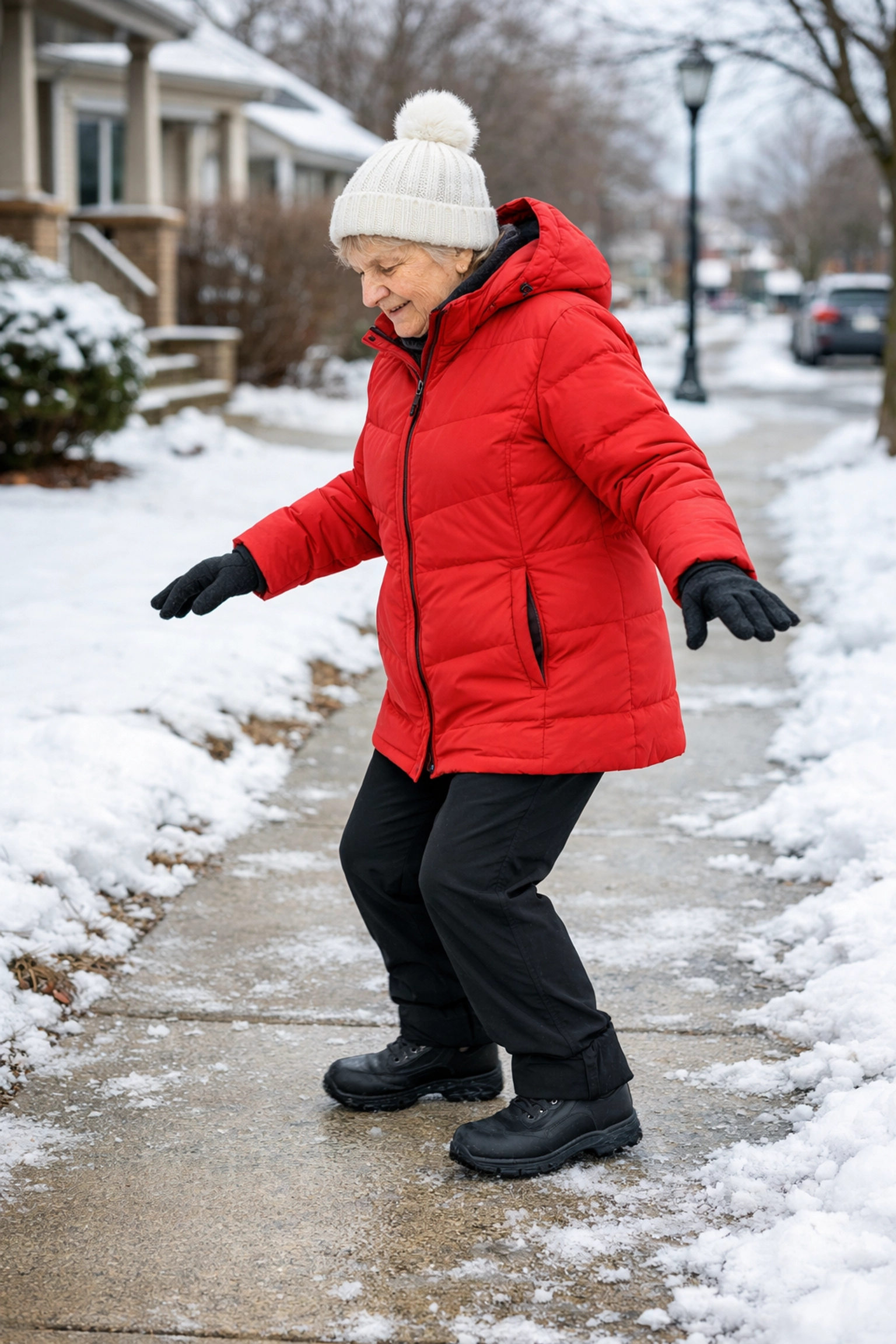
The Winter Shuffle:
Take shorter steps and slow your pace. This "penguin walk" keeps your center of gravity more stable and gives you better control. Small, shuffling steps are especially important on very icy surfaces where long strides increase the chance of slipping.
Stay Flat-Footed:
Walk with your feet pointed slightly outward and your full foot making contact with the ground. Curl your toes slightly under while walking to help grip the ground through your shoes. This flat-footed approach distributes your weight more evenly and provides better stability than walking heel-to-toe.
Keep Your Hands Free:
Don't walk with your hands in your pockets. You need your arms for balance, and if you do start to slip, your hands help you catch yourself. Avoid carrying heavy loads that could throw off your balance. If you must carry items, use a backpack to keep your hands free.
Focus on Walking:
This isn't the time to check your phone or dig through your purse. Give walking your full attention. Watch where you're stepping and scan ahead for icy patches or other hazards.
Test Suspicious Surfaces:
If an area looks potentially slick, tap your foot on it first to check the traction before committing your full weight. Dark, wet-looking patches on pavement often indicate black ice.
Use Available Support:
Hold handrails whenever they're available, especially on stairs and ramps. When getting out of a vehicle, use the door or vehicle frame for support and look down to check for ice before stepping onto the ground.
Preparing Walking Surfaces: Salt, Sand, and More
Treating surfaces before you walk on them is one of the most effective prevention strategies, whether you're maintaining your own property or need to check conditions before venturing out.
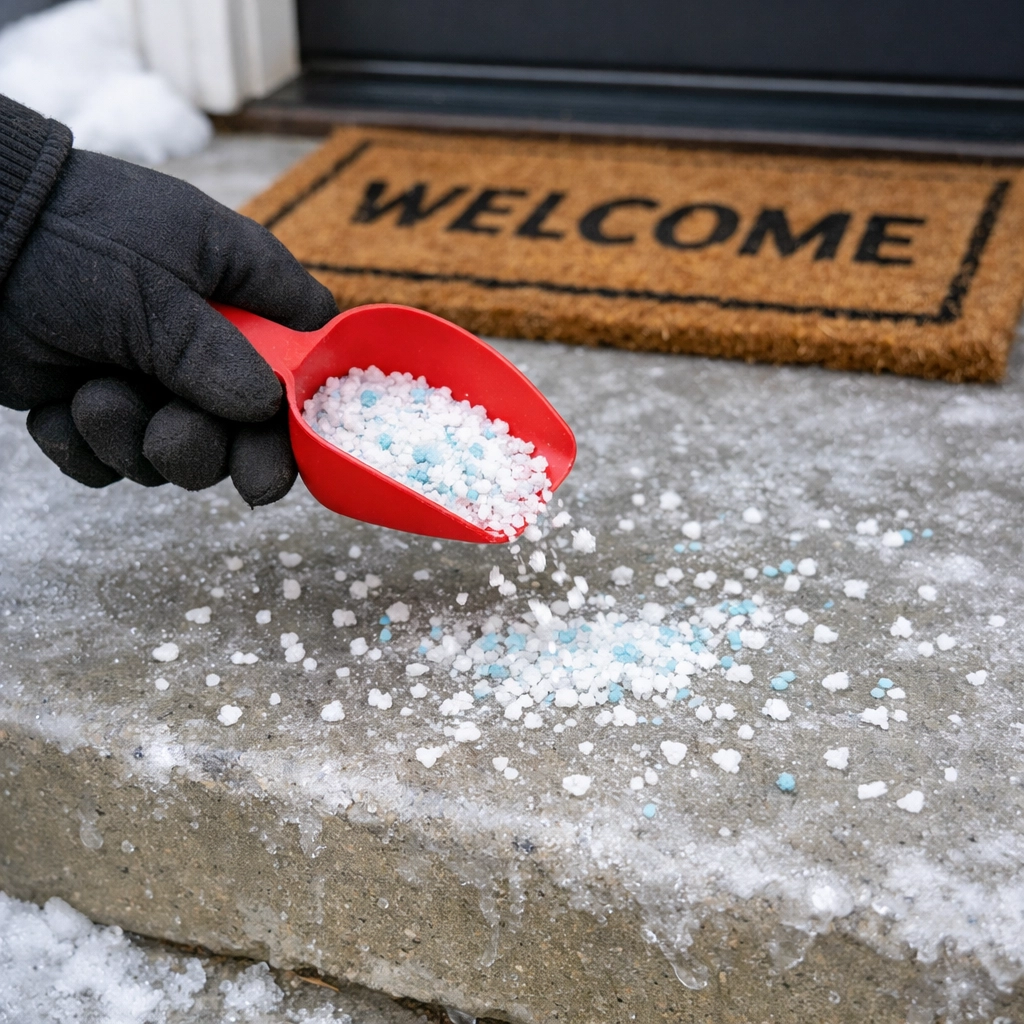
Ice Melt Products:
Rock salt (sodium chloride) is the most common ice melter and works well down to about 15°F. For colder temperatures, calcium chloride works down to -25°F. Spread ice melt products on walkways, steps, and driveways before snow and ice accumulate for best results.
Apply ice melt according to package directions: more isn't always better. Too much can damage concrete and plants, and excess product can be tracked indoors where it becomes a slip hazard.
Sand and Grit:
When temperatures drop too low for ice melt to work effectively, sand or kitty litter provides traction without melting ice. These materials don't prevent ice formation, but they make walking on ice safer by creating friction between your feet and the surface.
Sand is particularly useful on sloped areas where you need reliable footing. It's also safer for pets and plants than chemical deicers.
Shoveling Strategy:
Clear snow promptly after storms, before it gets packed down or turns to ice. Shovel in layers if snow is deep rather than trying to remove everything at once. Push snow to the sides rather than lifting when possible to avoid strain.
Timing Matters:
Even treated surfaces can refreeze overnight as temperatures drop. Be especially cautious in the early morning and evening when refreezing is most likely. Shaded areas stay icy longer than sunny spots, even on mild winter days.
If You're Not Responsible for Maintenance:
Before walking on paths, parking lots, or sidewalks you don't maintain, take a moment to assess conditions. Look for obvious ice patches, and notice whether surfaces appear treated. Don't assume a cleared path is safe: ice can form after clearing.
Additional Winter Safety Considerations
Beyond footwear, clothing, and walking techniques, several other factors contribute to winter safety for seniors.
Plan Your Route:
Stick to well-maintained, heavily trafficked areas when possible. Main walkways typically receive better snow and ice treatment than shortcuts or less-used paths. Avoid taking shortcuts across snowy or icy areas.
Time Your Outings:
If possible, wait until after maintenance crews have cleared and treated walking surfaces. Mid-day, when temperatures are warmest and surfaces have had time to thaw, is often safest for winter walking.
Check Weather Conditions:
Pay attention to weather forecasts and temperature changes. Wet conditions followed by temperature drops create particularly hazardous ice. After freezing rain or sleet, conditions may be more dangerous than after regular snowfall.
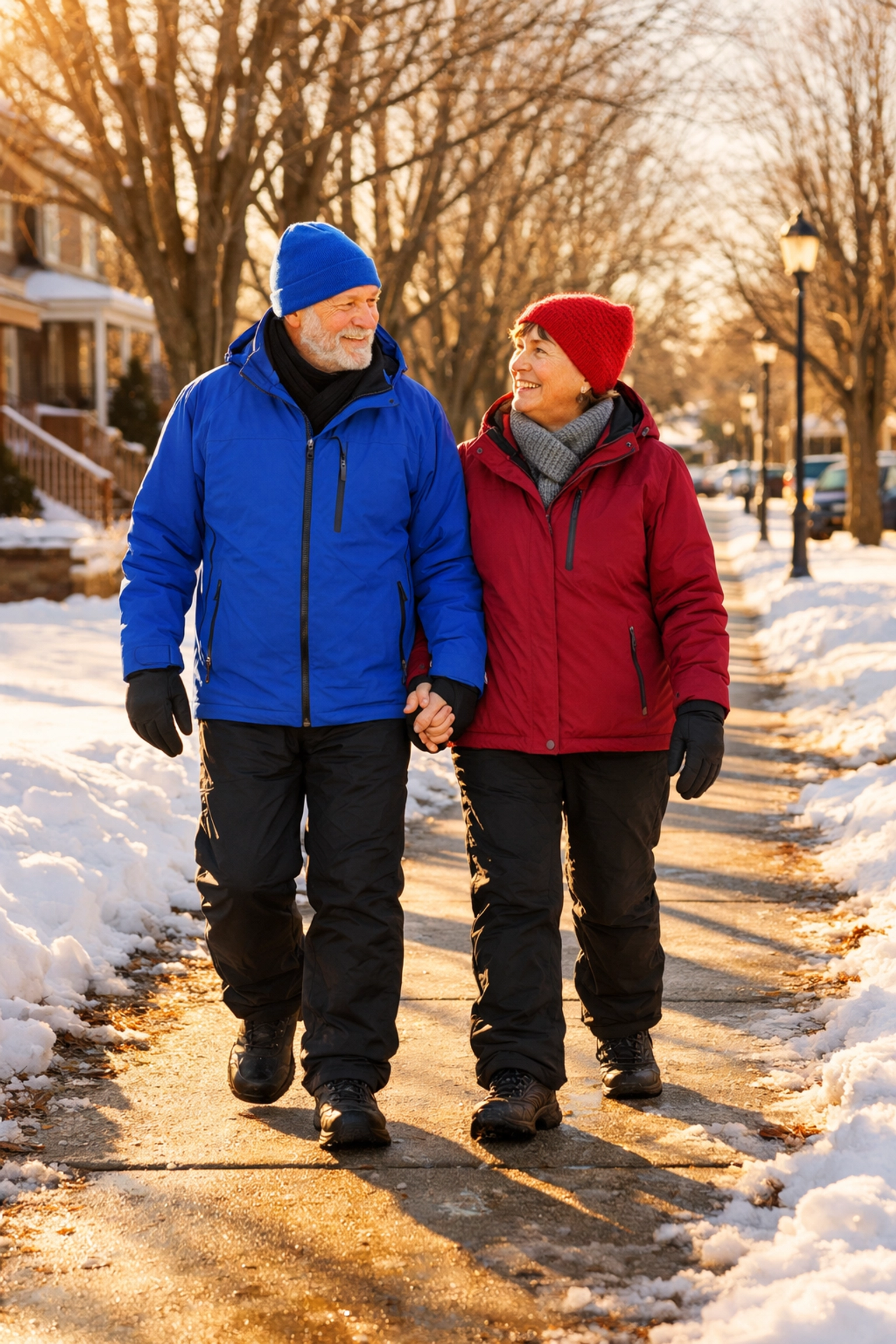
Build Your Strength and Balance:
Regular exercise improves your stability and reaction time year-round, making you better equipped to navigate winter challenges. Simple balance exercises done indoors prepare you for outdoor conditions.
Know Your Limits:
There's no shame in asking for help or postponing non-essential trips during particularly bad weather. Having groceries delivered or asking someone to drive you during icy conditions is a smart choice, not a sign of weakness.
Walking in Streets:
If sidewalks are impassable and you must walk in the street, walk against traffic and stay as close to the curb as safely possible. Your bright, reflective clothing becomes especially important in this situation.
Getting In and Out of Vehicles:
Car surfaces become slippery in winter too. Use door frames and handles for support when entering or exiting vehicles. Check the ground for ice before stepping out, using the vehicle for balance while you test the surface.
Creating Your Personal Winter Safety Plan
Winter safety for seniors isn't about following a single rule: it's about developing consistent habits that work together to keep you stable and secure.
Start by assessing your current winter gear. Do your boots have adequate tread? Is your winter coat warm enough that you won't rush when walking? Do you have ice melt on hand for treating your walkways?
Next, practice winter walking techniques before you need them. Try the penguin walk in a safe area. Get comfortable with shorter steps and a slower pace. Build these skills so they become automatic when you encounter actual ice.
Finally, prepare mentally for winter conditions. Accept that walking will take longer. Plan extra time for trips so you're never rushing. Develop the patience to wait for better conditions when weather is particularly severe.
Moving Forward Safely
Winter doesn't have to mean staying inside until spring. With proper preparation, appropriate gear, and smart techniques, you can maintain your active lifestyle throughout the colder months.
The strategies outlined here work because they address multiple aspects of winter safety simultaneously. Good boots provide physical protection. Proper technique gives you control. Surface preparation reduces environmental hazards. Together, these elements create layers of protection that significantly reduce your fall risk.
Remember that prevention is always easier than recovery. The few extra minutes spent preparing for winter conditions and using proper walking techniques are a small investment compared to the consequences of a fall.
Stay warm, stay aware, and keep moving safely through winter.

