
If you've noticed it's harder to stand on one foot while putting on your shoes, or you feel a bit unsteady when turning quickly, you're not imagining things. Balance naturally declines as we age, and the changes often become more noticeable after 65.
But here's the encouraging news: balance loss isn't inevitable, and it's never too late to make meaningful improvements. Understanding why these changes happen, and what you can do about them, can help you maintain your independence and confidence for years to come.
What Happens to Your Balance After 65
Balance isn't controlled by just one system in your body. It's actually a complex coordination between your muscles, inner ear, vision, joints, and brain. As we age, each of these systems experiences changes that can affect how well they work together.
Muscle Loss Changes Everything
Starting as early as your 30s, you begin to gradually lose muscle mass and strength. This process, called sarcopenia, accelerates as you get older. By your 70s, you may have lost up to 50 percent of your muscle mass compared to when you were younger.
Your leg muscles, in particular, play a crucial role in keeping you steady. When these muscles weaken, your body has a harder time making the quick adjustments needed to maintain balance, whether you're walking on an uneven surface or simply standing still.
Your Inner Ear Changes Too
Around age 40, the tiny hair cells in your inner ear that help you sense movement and position start to deteriorate. By age 50, your vestibular system, the balance center in your inner ear, begins to weaken significantly.
Think of your vestibular system as your body's internal level. When it's not working at full capacity, your brain receives less accurate information about where your body is in space. This makes it harder for your brain to send the right signals to correct your position when you start to tip or sway.
Joints and Ligaments Stiffen
Your joints naturally become stiffer with age. Cartilage decreases, ligaments shorten, and your range of motion becomes more limited. These changes affect your ankles, knees, and hips, all critical joints for maintaining balance and absorbing the impact when you walk or move.
When your joints can't move as freely, your body has fewer options for adjusting your position. This is why you might feel less stable when navigating stairs or stepping over obstacles.
Other Contributing Factors
Several other age-related changes can affect your balance:
- Blood pressure fluctuations can cause temporary dizziness, especially when standing up quickly
- Reduced circulation may affect oxygen delivery to your brain
- Vision changes make it harder to judge distances and see obstacles
- Certain medications can cause dizziness or lightheadedness as side effects
- Medical conditions like Parkinson's disease, multiple sclerosis, or inner ear infections
The Real Impact of Balance Problems
The statistics are sobering but important to understand. One in five people over 65 experiences balance issues every year. One-third of adults over 65 fall annually, and that number rises to more than half for those over 75.
Falls are the leading cause of injury for people over 65. But beyond the physical injuries, falls can shake your confidence. Many people who've fallen become fearful of falling again, leading them to limit their activities. This creates a harmful cycle: less activity leads to weaker muscles, which increases fall risk even more.
The good news? Most falls are preventable, and improving your balance is one of the most effective ways to protect yourself.
The 7 Simple Exercises That Actually Work
Research consistently shows that targeted balance and strength exercises can preserve and even improve your balance at any age. These exercises don't require special equipment, and you can do them at home. Always start near a counter or sturdy chair that you can hold onto if needed.
1. Single-Leg Stands
Stand near a counter or chair back. Lift one foot off the ground and hold for 10 seconds. Switch legs. As you improve, try to work up to 30 seconds on each leg.
This exercise strengthens the muscles in your standing leg and trains your body to maintain stability on one foot, exactly what happens when you're walking.
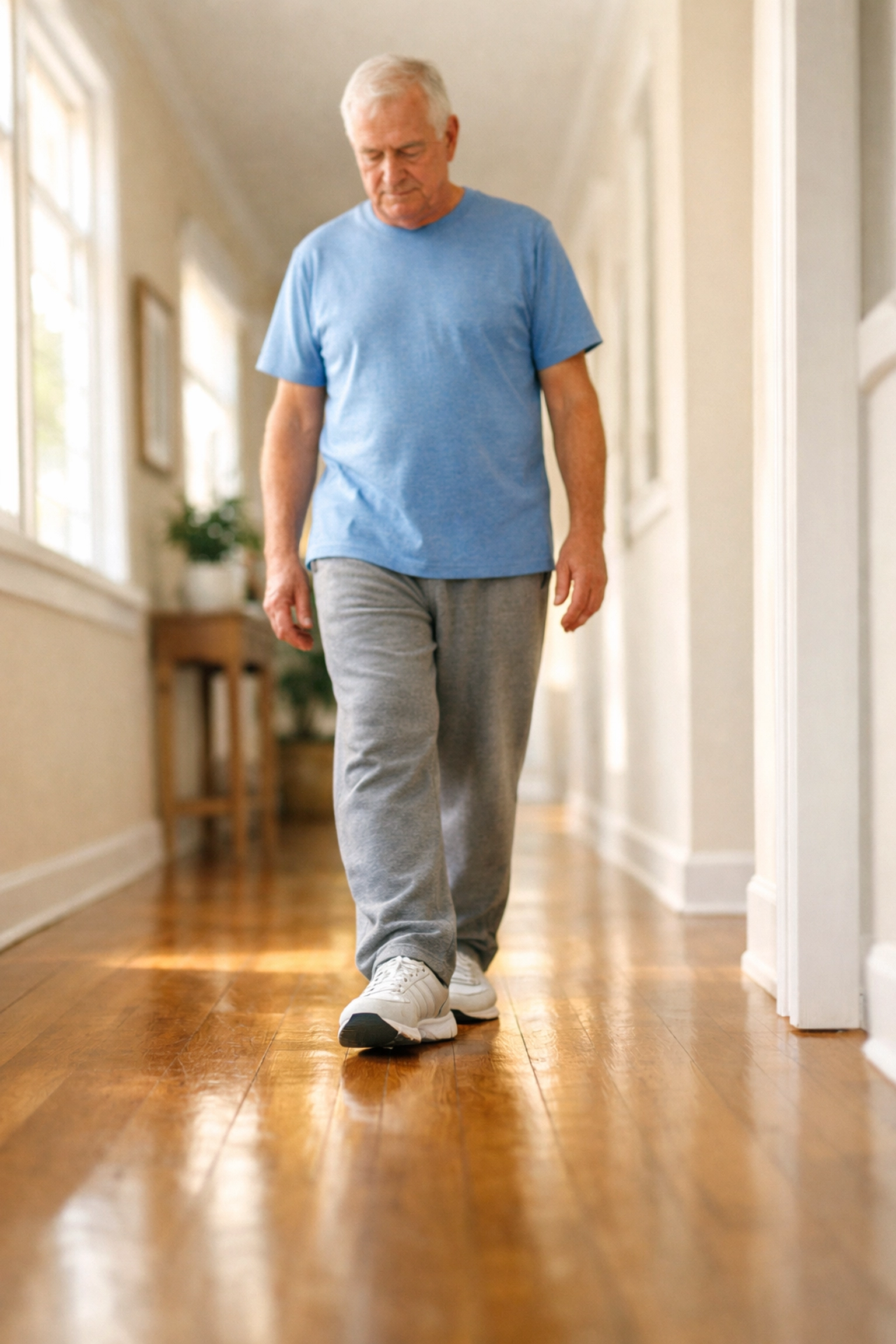
2. Heel-to-Toe Walk
Walk in a straight line, placing the heel of one foot directly in front of the toes of your other foot with each step. Take 10 to 20 steps this way.
This challenges your balance in motion and improves coordination. It's similar to a sobriety test because it genuinely requires good balance control.
3. Sit-to-Stand Practice
Sit in a sturdy chair. Stand up without using your hands for support, then sit back down slowly. Repeat 10 times.
This builds leg strength, particularly in your quadriceps and glutes, which is essential for everyday activities and preventing falls.

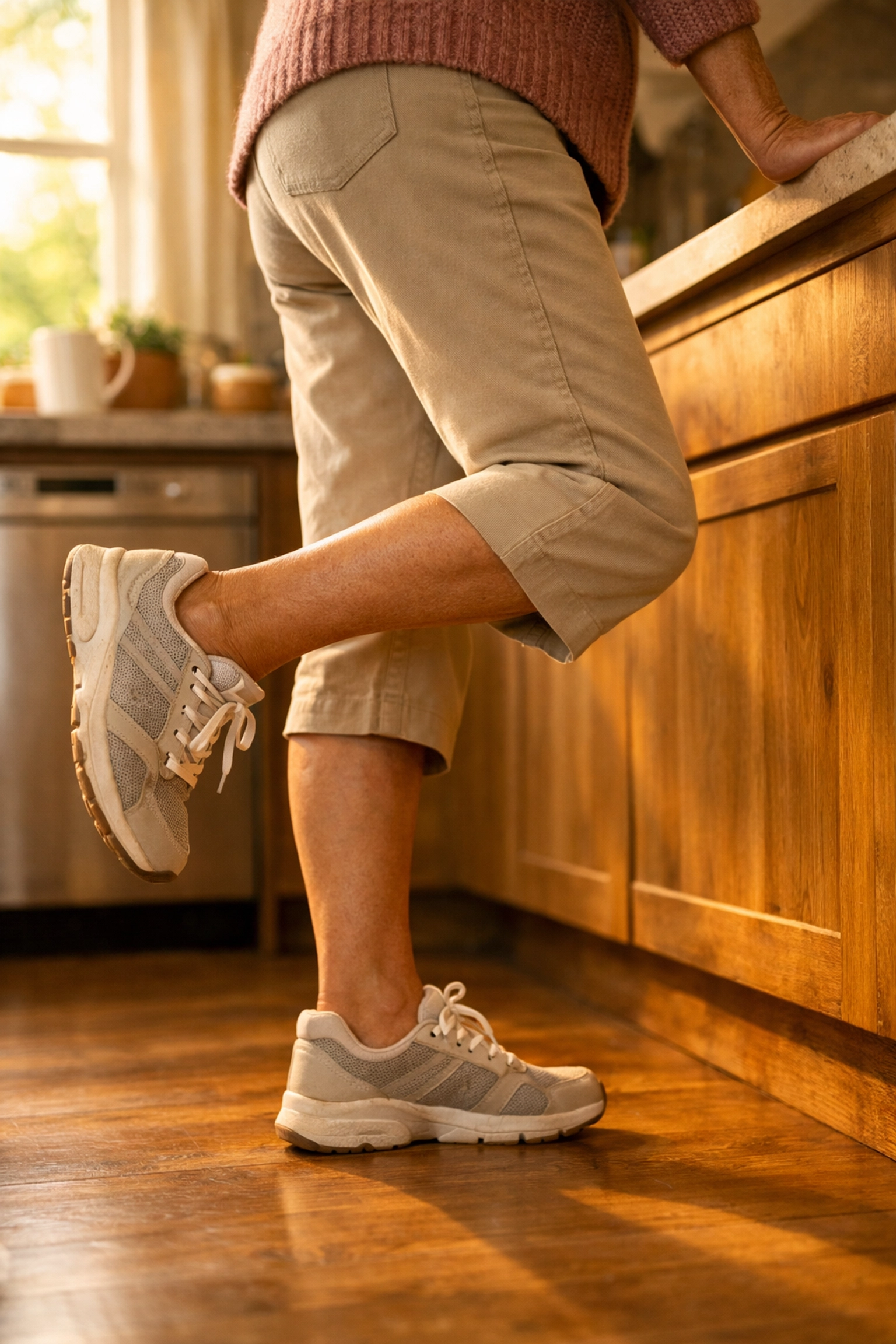
4. Standing Marches
While holding onto a counter, lift one knee up toward your chest, then lower it back down. Alternate legs for 20 repetitions (10 per leg).
This exercise strengthens your hip flexors and core muscles while practicing the weight-shifting that happens during walking.
5. Side Leg Raises
Stand behind a chair, holding it lightly for balance. Lift one leg straight out to the side, keeping your back straight and toes pointing forward. Lower slowly. Repeat 10 times on each side.
Your hip abductor muscles keep you stable side-to-side. Strengthening them helps prevent falls when you step sideways or turn.
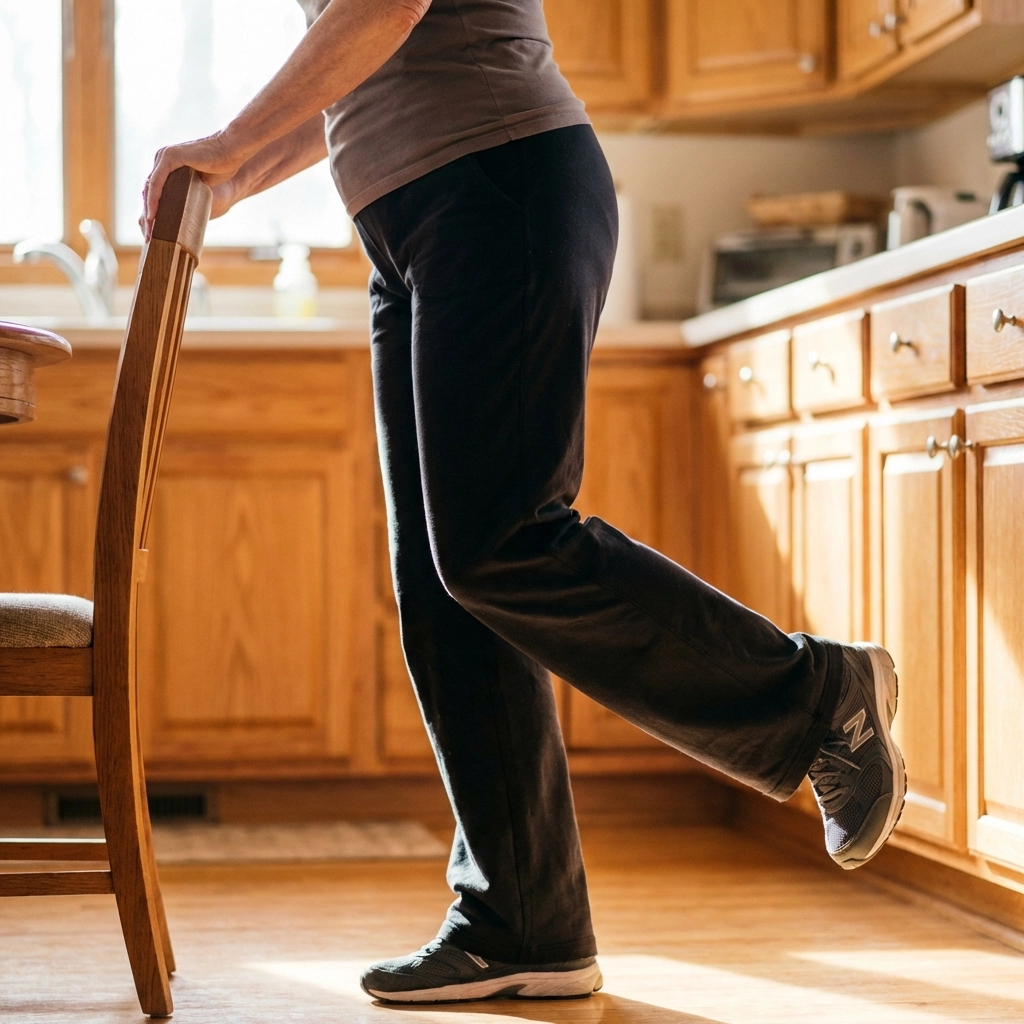
6. Back Leg Raises
Standing behind a chair, lift one leg straight back without bending your knee or pointing your toes. Hold for one second, then lower. Repeat 10 times per leg.
This strengthens your glutes and lower back muscles, which support your posture and help you recover if you start to fall backward.
7. Ankle Circles
While seated or standing (with support), lift one foot slightly off the ground and rotate your ankle in circles, 10 clockwise, then 10 counterclockwise. Switch feet.
Flexible, strong ankles are your first line of defense against losing your balance on uneven surfaces. This simple exercise maintains ankle mobility and strength.
Getting Started Safely
Before beginning any new exercise program, check with your doctor, especially if you have existing health conditions or have fallen recently.
Start slowly. You don't need to do all seven exercises on day one. Begin with two or three exercises that feel comfortable, and add more as you build confidence.
Be consistent. Aim to practice these exercises at least three times per week. You'll see better results from regular, moderate practice than from occasional intense sessions.
Always have support nearby. Keep a sturdy chair or counter within reach until you're confident in your balance.
Pay attention to your body. If an exercise causes pain (not just mild discomfort), stop and consult with a physical therapist or doctor.
Track your progress. Notice how long you can balance on one leg this week compared to next month. These small improvements add up and provide motivation to keep going.
Beyond Exercise: Supporting Your Balance
While these exercises are powerful tools, they work best as part of a broader approach to healthy aging.
Stay hydrated. Dehydration can cause dizziness and affect your balance. Aim for six to eight glasses of water daily.
Review your medications with your doctor. Some medications cause dizziness or affect balance. Your doctor may be able to adjust dosages or timing.
Manage chronic conditions. Keep conditions like diabetes, high blood pressure, and heart disease well-controlled, as they can all affect balance.
Get regular vision and hearing checkups. Both senses play important roles in maintaining balance.
Stay active throughout the day. Walking, gardening, and other regular activities complement your balance exercises and keep your body strong overall.
The Bottom Line
Yes, balance typically gets worse after 65 due to natural changes in your muscles, inner ear, and joints. But these changes don't have to limit your independence or quality of life.
With consistent practice of simple balance exercises, you can maintain: and often improve: your stability. You're not trying to have the balance of a 20-year-old. You're building the strength and stability you need to move confidently through your daily life.
Start with one or two exercises today. Hold onto that counter. Stand on one leg while you're waiting for the coffee to brew. These small moments of practice add up to significant improvements over time.
Your balance is worth the effort. Every exercise you complete is an investment in your independence, your confidence, and your ability to keep doing the things you love.

