
If you've ever stumbled to the bathroom in the middle of the night, you know that familiar feeling of disorientation. Your eyes haven't quite adjusted, your brain is foggy, and even the hallway you've walked a thousand times feels unfamiliar. For seniors and their caregivers, these nighttime journeys represent some of the highest-risk moments for falls.
Here's the thing: nighttime falls aren't just daytime falls that happen in the dark. They're fundamentally different, involving a unique combination of physical, environmental, and behavioral factors that stack the odds against safe mobility. Understanding these differences is the first step toward preventing them.
Why Nighttime Falls Present Unique Risks
Visibility Isn't the Only Problem
The obvious culprit is darkness. When you wake up at 2 a.m. needing to use the bathroom, that pair of shoes left in the hallway becomes invisible. The edge of the rug you step over every morning? Completely hidden. Even doorways and furniture corners seem to appear out of nowhere.
But poor lighting does more than just hide obstacles. It also eliminates the visual cues your brain uses to maintain balance. During the day, your eyes constantly scan the environment, helping your body make tiny adjustments to stay upright. At night, your balance system is essentially flying blind, relying heavily on other senses that may already be diminished with age.
Your Body Works Differently at Night
When you've been lying down for hours, your cardiovascular system is in rest mode. Blood pressure drops, and your circulation slows down. This is perfectly normal and healthy: until you suddenly swing your legs out of bed and stand up.
That quick transition from horizontal to vertical doesn't give your body enough time to adjust. Blood pressure needs a moment to regulate, and the fluid in your inner ear (which controls balance) needs to resettle. The result? Lightheadedness, dizziness, and unsteady footing.
Add to this the fact that you're probably still half-asleep. Your cognitive function is impaired, reaction times are slower, and your judgment isn't at its sharpest. You might feel the urgent need to reach the bathroom quickly, leading you to move faster than you safely should while your brain is still booting up.
This half-awake state is particularly dangerous because you're operating on autopilot without full awareness of your surroundings or your body's limitations in that moment.
The Bathroom Becomes a Danger Zone
Bathrooms are already the most common location for falls in the home, and nighttime amplifies every risk factor. The combination of hard, slippery surfaces and dim lighting creates a perfect storm of hazards.
Even a small amount of water on the tile floor: from condensation, a leaky faucet, or a previous shower: becomes treacherous when you can't see it clearly. Stepping from carpet or wood flooring onto wet tile in low light is asking for trouble.
The urgency factor plays a huge role here too. When nature calls in the middle of the night, especially for seniors dealing with incontinence issues, the rush to reach the toilet can override caution. You're moving quickly, you're not fully awake, you haven't grabbed your walker or cane, and you're not being as careful as you would be during the day.
Medication Timing Matters
Many medications taken before bedtime can affect nighttime mobility. Sleep aids, antihistamines, blood pressure medications, and even some pain relievers can cause drowsiness, dizziness, or balance problems that persist if you wake up during the night.
Unlike daytime medication effects, which you might notice and compensate for, nighttime side effects catch you off guard. You wake up already impaired without realizing it, making that trip to the bathroom even riskier than usual.
Practical Steps to Prevent Nighttime Falls
The good news is that nighttime falls are highly preventable with some straightforward modifications and habit changes. None of these solutions are complicated, but together they create multiple layers of protection.
Light Your Way
Adequate lighting is your first and most important line of defense. The goal isn't to light up your home like a shopping mall, but to provide enough illumination to see obstacles and maintain your orientation.
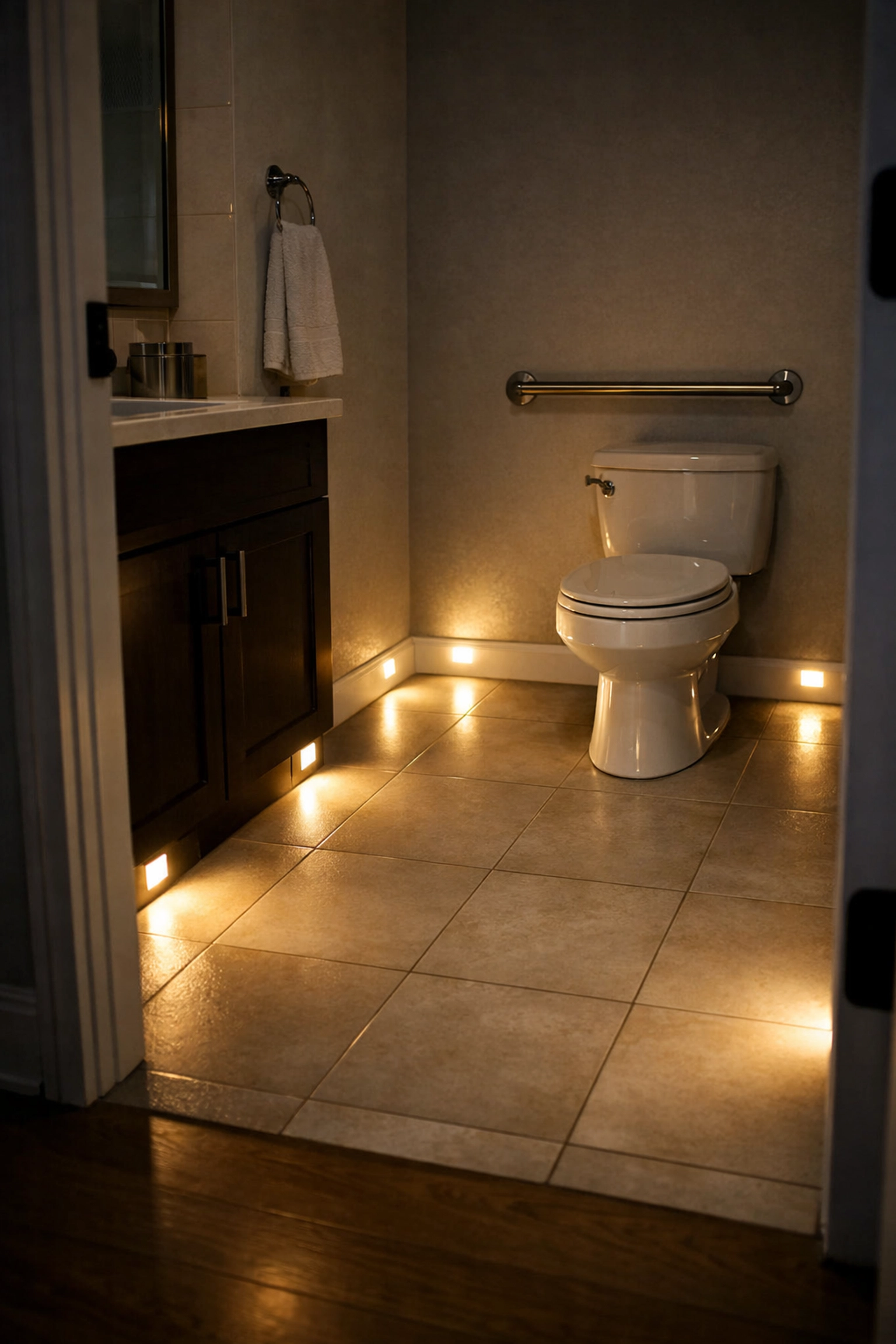
Start with nightlights in strategic locations. Place them in hallways, bathrooms, and bedrooms: anywhere you might walk during the night. Modern LED nightlights are affordable, energy-efficient, and provide a soft glow that won't disrupt your sleep.
Motion-sensor lights are even better because they activate automatically when you get up, eliminating the need to fumble for switches in the dark. Install these in bathrooms and hallways for hands-free illumination exactly when you need it.
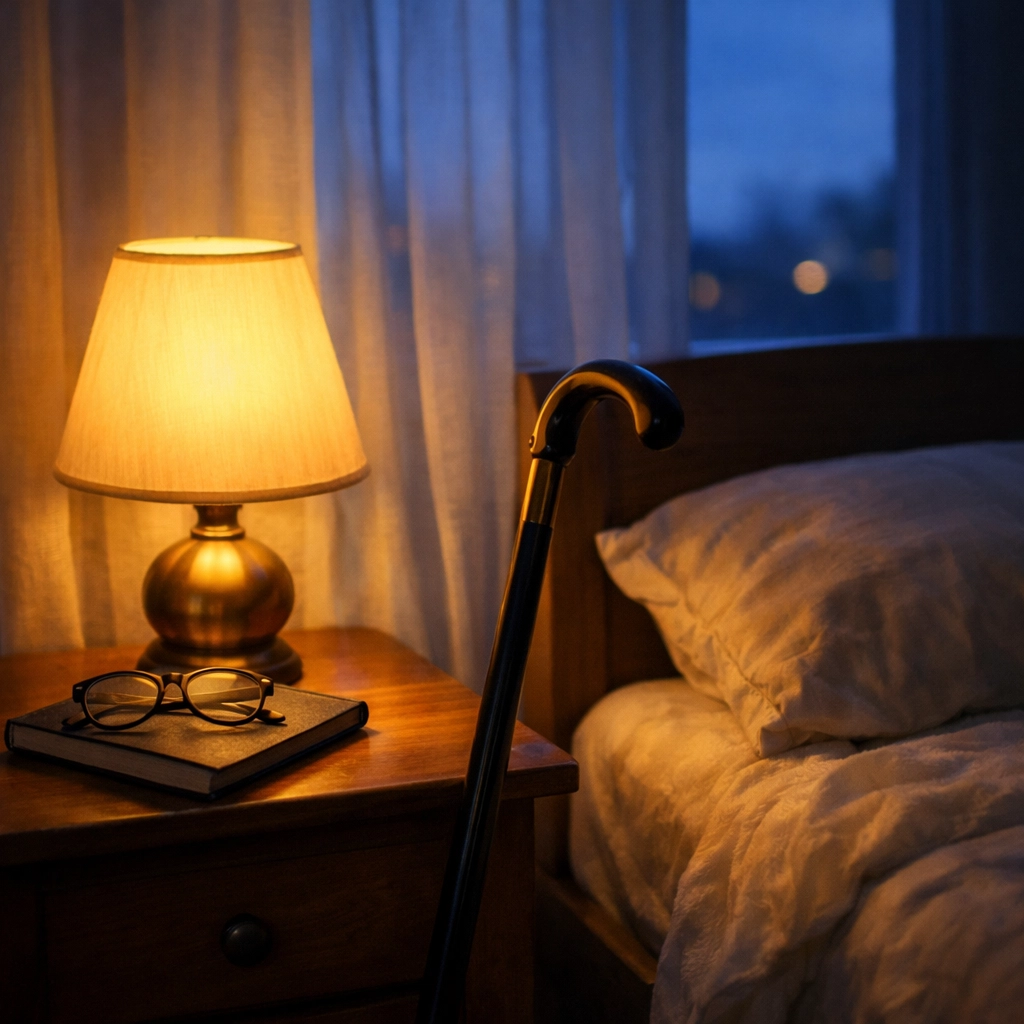
Keep a lamp on your nightstand within easy reach. Before you even stand up, turn on that lamp so you can see what you're doing. Some people find it helpful to use a lamp with a large, easy-to-find switch or even a touch-activated model.
Consider illuminated or glow-in-the-dark light switches that are visible even in complete darkness. These small touches make it easier to control your lighting without having to navigate in the dark first.
Keep Everything Within Reach
Assistive devices don't help if they're across the room when you need them. Organize your bedroom so everything you might need is immediately accessible from your bed.
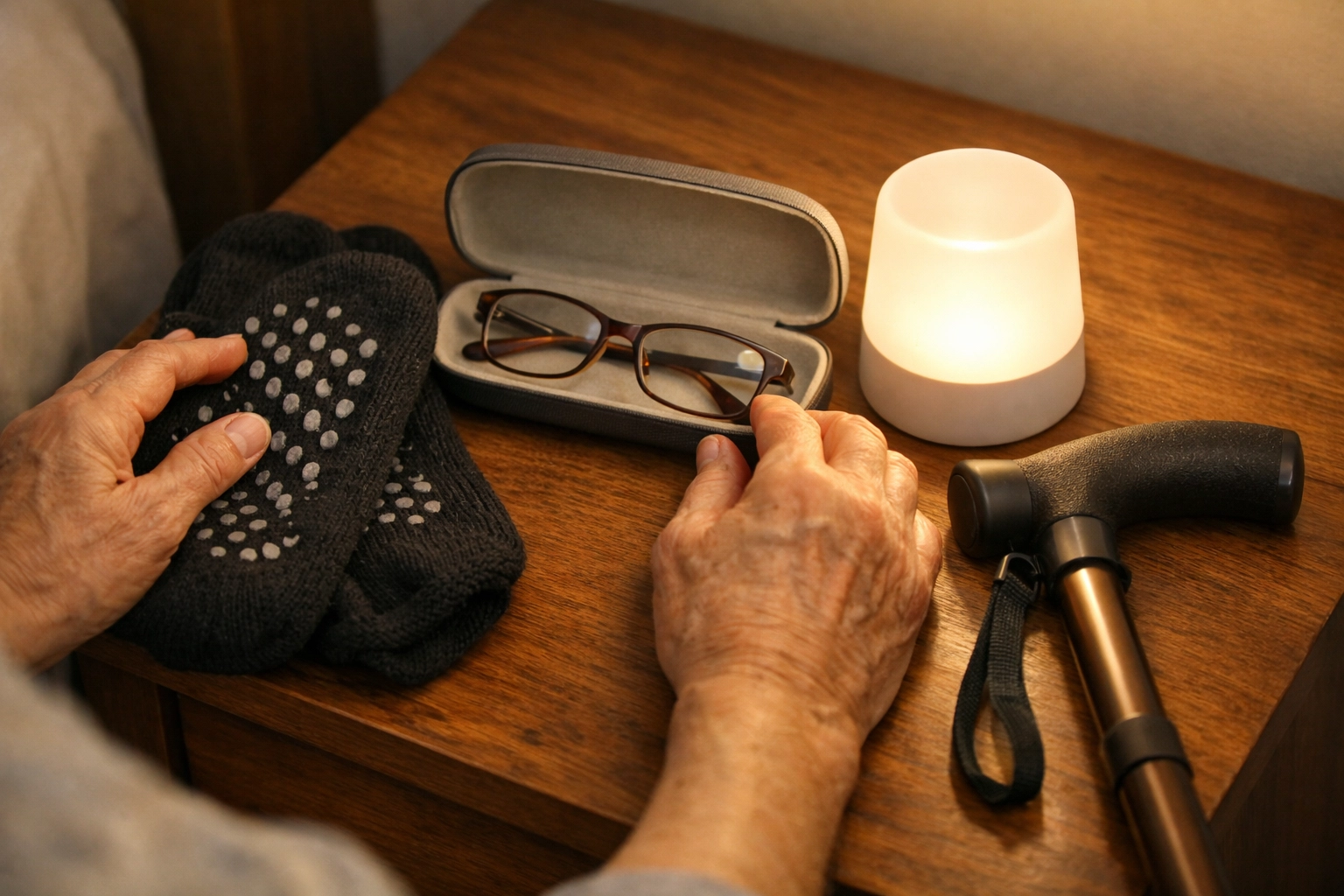
Your cane or walker should be positioned right next to your bed: close enough to grab before you stand up. If you use glasses, keep them on your nightstand so you can put them on while still seated.
A sturdy nightstand itself serves as a support point when transitioning from sitting to standing. Make sure it's stable and won't tip if you lean on it.
Some people find it helpful to keep a flashlight or headlamp on the nightstand as backup lighting. This gives you portable illumination if you need to check something or if a bulb burns out.
The Right Footwear Makes a Difference
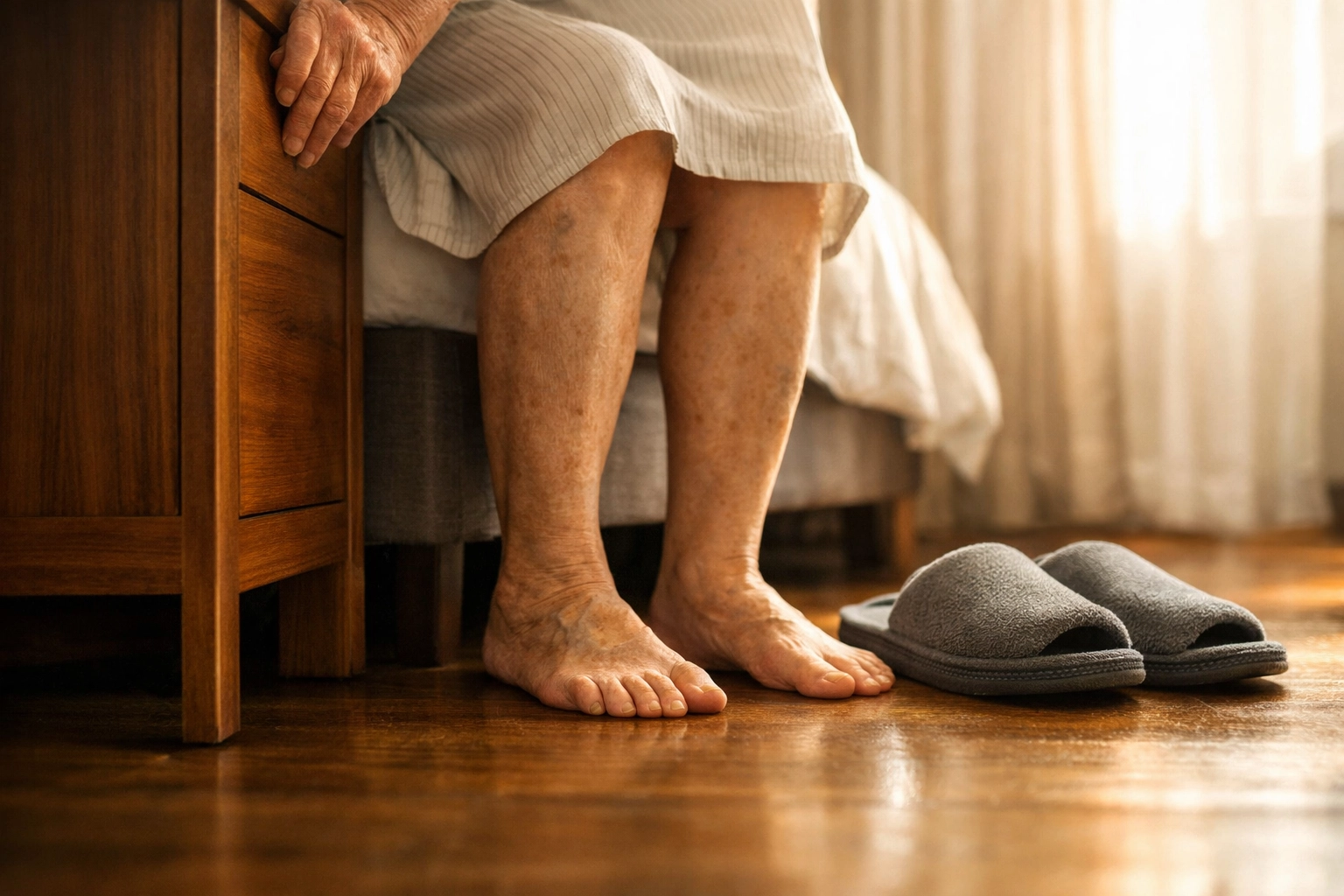
Going barefoot or wearing regular socks at night is a recipe for slips. Your feet need traction, especially on smooth flooring surfaces.
Invest in non-slip footwear specifically for nighttime use. Grip socks with rubber treads on the bottom work well and are easy to slip on. Non-slip slippers with back straps (not slip-ons that can fall off) provide even more stability.
Keep these next to your bed so putting them on is part of your routine before standing up. It might seem like a small detail, but proper footwear dramatically improves traction and confidence.
Bedroom Setup Matters More Than You Think
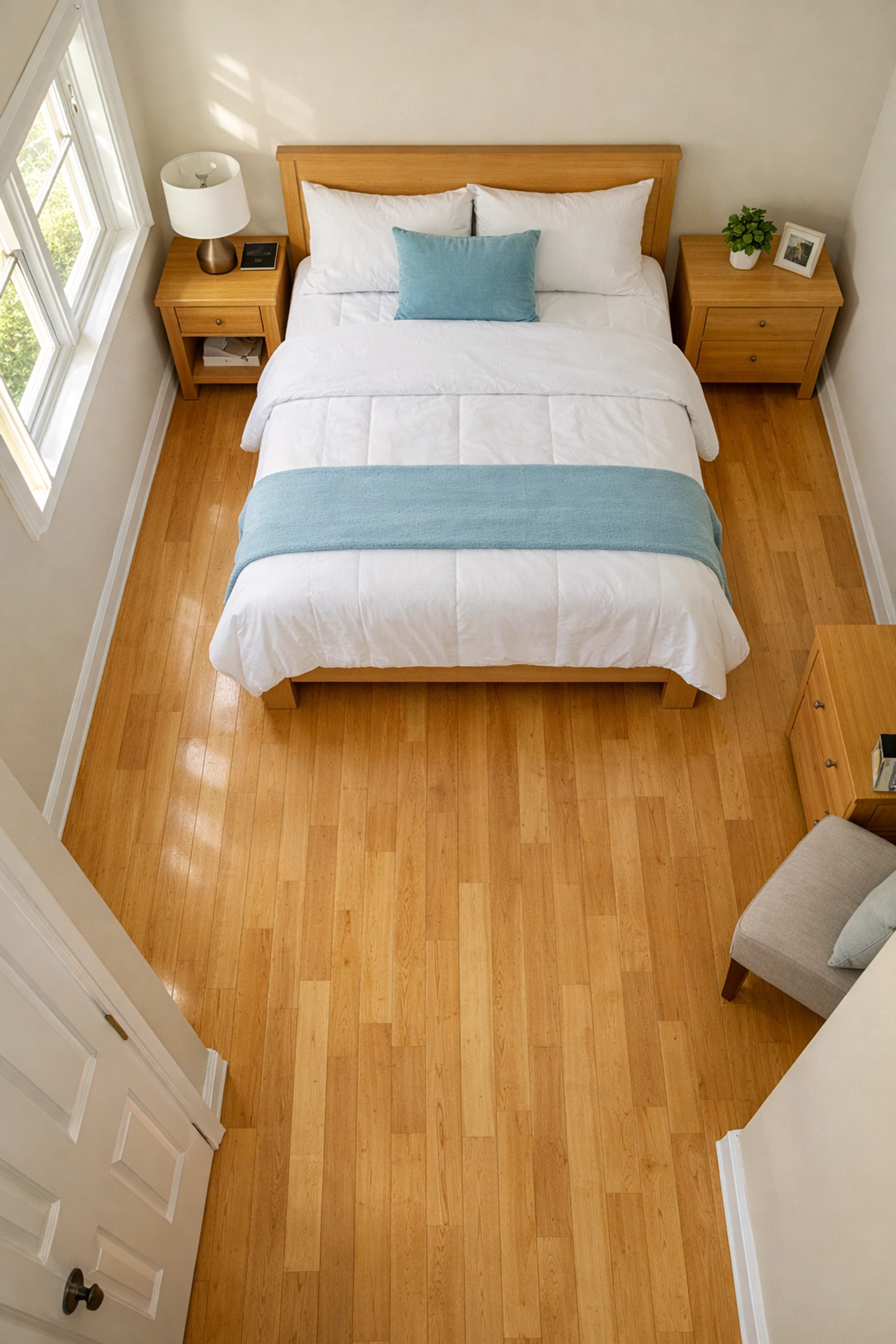
The arrangement of your bedroom can either support safe mobility or create unnecessary obstacles. Take a fresh look at your space with nighttime navigation in mind.
Clear pathways are essential. Remove any clutter, throw rugs, or electrical cords from the route between your bed and bathroom. Your nighttime path should be completely obstacle-free.
Bed height deserves attention too. When sitting on the edge of your bed, your feet should rest flat on the floor. If your bed is too high or too low, getting in and out becomes unnecessarily difficult and risky.
Some people benefit from positioning the bed against a wall. This eliminates the risk of rolling out on one side and provides a stable surface to brace against when getting up.
If you have a bedside table on the side where you get out of bed, ensure it's sturdy enough to provide support but positioned so you won't bump into it in the dark.
Move Slowly and Deliberately
Changing your behavior is just as important as changing your environment. The single most effective habit you can develop is moving slowly and deliberately when getting up at night.
Here's a safe sequence to follow:
- Wake up fully before moving. Take a moment to orient yourself.
- Turn on your bedside lamp.
- Sit up slowly, pausing if you feel dizzy.
- Put on your glasses and footwear while sitting.
- Sit on the edge of the bed with feet flat on the floor for at least 30 seconds.
- Grab your cane or walker if you use one.
- Stand up slowly, using the nightstand or bed for support.
- Wait a moment standing before you start walking.
This might sound overly cautious, but giving your body time to adjust to position changes prevents the dizziness and disorientation that lead to falls. Rushing defeats all your other safety measures.
Consider a Bedside Solution
For some seniors, especially those dealing with frequent nighttime bathroom needs or significant mobility challenges, keeping a commode in the bedroom eliminates the need for nighttime hallway trips altogether.
This isn't about giving up independence: it's about reducing risk during the most vulnerable hours. A bedside commode provides a safe, accessible option when you're at your groggiest and most unsteady.
Talk with your doctor about any medications that might be affecting your nighttime balance or alertness. Sometimes adjusting the timing or dosage of certain medications can reduce fall risk without compromising their effectiveness.
Creating Your Nighttime Safety Plan
Preventing nighttime falls requires a combination of environmental modifications, proper equipment, and behavioral changes. Start by addressing the easiest changes first: adding nightlights and clearing pathways costs little and makes an immediate difference.
Walk through your typical nighttime route during the day and identify potential hazards. Better yet, try navigating it with minimal lighting to see what you might encounter in the dark. This exercise often reveals obstacles you wouldn't otherwise notice.
Involve family members or caregivers in creating and maintaining your safety plan. They can help install lighting, rearrange furniture, and provide accountability for following safe habits.
Remember that preventing nighttime falls isn't about living in fear: it's about making smart adjustments that let you move confidently and independently, even in the middle of the night. Small changes in your environment and habits can make the difference between a safe trip to the bathroom and a dangerous fall.
The effort you put into nighttime fall prevention pays dividends in safety, confidence, and peace of mind for both seniors and their loved ones. And that's worth a few simple modifications and a little extra patience when the clock strikes 2 a.m.

