
Falling is scary, and lying on the floor unable to get up can feel overwhelming. But knowing what to do in this situation can make all the difference between a minor incident and a serious problem. This guide walks you through exactly what to do if you fall and can't immediately stand back up.
First Things First: Stay Calm and Don't Rush
Your first instinct might be to jump up quickly, but resist that urge. Take a few deep breaths and give yourself a moment. Panicking uses energy you'll need, and rushing can lead to another fall or worsen an injury you haven't yet noticed.
Falling doesn't mean something is terribly wrong. It happens to everyone at some point. What matters now is handling the situation safely and methodically.
Assess Yourself for Injuries
Before you try to move, do a quick body scan. Lie still for about 30 seconds and mentally check from head to toe:
- Does anything hurt sharply or intensely?
- Can you feel all your limbs?
- Did you hit your head?
- Is anything numb or tingly?
- Do you feel dizzy or confused?
Try some gentle movements: wiggle your fingers and toes, rotate your ankles slightly, turn your head slowly. If any of these movements cause severe pain, stop immediately. Sharp pain, especially in your hip, leg, wrist, or head, could indicate a fracture or serious injury.

When to Stay Put and Call for Help
Sometimes the safest choice is not to try getting up on your own. Call for help immediately if:
- You're experiencing severe or sharp pain anywhere
- You suspect you've broken a bone
- You hit your head and feel confused or dizzy
- You can't move a limb
- You tried gentle movements and they caused significant pain
- You feel too weak or exhausted to attempt getting up
If you're alone and can't reach a phone, try to scoot yourself toward one. Push with your elbows and heels to inch your body across the floor. It's slow, but it works. If you're wearing a medical alert device, press the button now.
While waiting for help, try to keep warm. Pull any nearby blankets, coats, cushions, or even rugs over yourself. Lying on a cold floor can lead to hypothermia faster than you'd think, especially if you're elderly.
The Safe Step-by-Step Method to Get Up
If you've assessed yourself and feel you can safely move, here's the technique emergency responders and physical therapists recommend. Take your time with each step: there's no prize for speed here.
Step 1: Roll Onto Your Side
From whatever position you're in, carefully roll onto your side. Choose whichever side feels more comfortable. Bend your knees slightly as you roll. This position is much easier to work from than lying flat on your back.
Step 2: Push Up to Hands and Knees
Use the arm that's against the floor to push your upper body up slightly. Then place your other hand flat on the ground and push with both arms to rotate yourself onto your hands and knees (a crawling position).
Take a breath here. Make sure you feel stable before moving on.
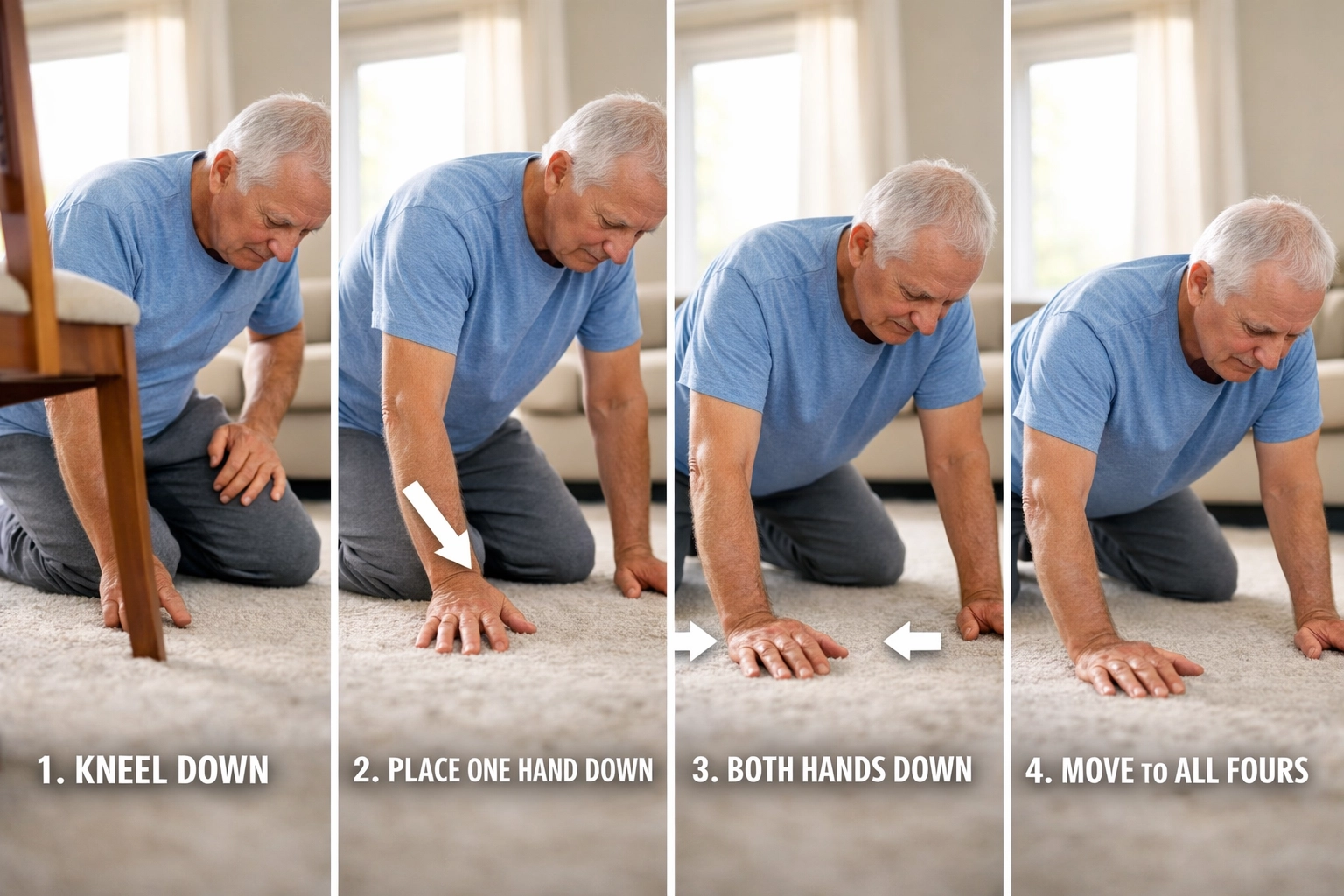
Step 3: Crawl to Something Sturdy
Look around for the nearest stable piece of furniture: a sturdy chair, couch, coffee table, or bed frame. It needs to be something that won't slide or tip when you put weight on it. Avoid things on wheels, folding chairs, or lightweight side tables.
Crawl slowly toward it. There's no shame in crawling: it's the safest way to move when you're low to the ground.
Step 4: Get Into a Kneeling Position
Once you reach your sturdy furniture, place both hands firmly on it. Push yourself up so you're kneeling with both knees on the ground, still holding onto the furniture for support. Rest here for a moment if you need to.
Step 5: Move One Leg Forward
Bring your stronger leg forward so your foot is flat on the floor, creating a sort of lunge position. Keep holding onto the furniture. Your stronger leg is typically the one you naturally lead with when walking or climbing stairs.
Step 6: Push Up to Standing
Push through the foot that's flat on the floor while pulling on the furniture for extra support. Rise slowly to a standing position. Keep your grip on the furniture until you feel completely stable.
Step 7: Sit Down and Rest
Don't try to walk away immediately. Turn carefully and sit down on the chair or furniture you used to get up. Sit for at least five minutes. Catch your breath, let your heart rate settle, and make sure you're not dizzy or lightheaded before you do anything else.
Alternative Method Using Low Furniture
If you fell near a couch, bed, or other low, sturdy furniture, there's an alternative technique:
Roll onto your side with your back against the furniture. Carefully drop your legs over the edge while pushing with your arms to sit up. It's similar to how you might get out of bed in the morning.
Once you're sitting on the edge with your feet on the floor, pause and breathe. Make sure you feel okay before standing up. When you're ready, scoot to the edge, place your feet firmly on the ground, and use your arms to push yourself to standing.

What to Do If You're Stuck
Sometimes you might not be able to get up, even without obvious injury. Maybe you're too tired, the furniture is too far away, or you just don't feel confident attempting it. That's okay.
Stay calm and conserve your energy. If you can reach a phone, call someone: family, friends, neighbors, or 911. If you can't reach a phone, try the scooting technique mentioned earlier to inch toward one.
If you have neighbors close by, try calling out or banging on the floor or a wall if you have the energy. If you're near a door, try to get to it and open it, even just slightly, so help can get in easier when they arrive.
Keep yourself as warm and comfortable as possible while you wait. Movement generates heat, so if you're getting cold, try gentle exercises like squeezing your hands or tensing and relaxing your muscles.
After You're Up: Important Next Steps
Getting up is just the beginning. Once you're safely seated or standing, there are some important things to do:
Check yourself again: Now that you're up and your adrenaline is settling, do another assessment. Any new pains? Any soreness that wasn't there before? Even if you feel fine initially, some injuries don't show up right away.
Tell someone: Even if you feel completely fine, let a family member, friend, or your doctor know you fell. They need to know, and it's not something to keep to yourself or feel embarrassed about.
See your doctor: Schedule an appointment within the next few days, even if you feel okay. Some injuries, like hairline fractures or internal bruising, don't show symptoms immediately. Plus, your doctor needs to know about the fall to assess your overall fall risk.
Document what happened: Write down the details while they're fresh: what you were doing, what caused the fall, how you felt, how long you were down. This information helps your doctor understand what happened and why.
Think About Prevention
After a fall, it's natural to think about how to prevent it from happening again. Consider asking your doctor about:
- A comprehensive fall risk assessment
- Physical therapy to improve strength and balance
- A home safety evaluation
- A review of your medications (some can affect balance)
- Vision and hearing checks
- Whether balance exercises might help
The CDC recommends strength and balance exercises at least three times per week for seniors. These exercises can significantly reduce your fall risk going forward.

Practice Makes Prepared
Here's something most people don't think about: practicing the getting-up technique when you haven't fallen. It might feel odd, but practicing these movements when you're calm, energized, and not in pain makes them much easier to remember and execute if you do fall.
With a family member or caregiver present, try the technique on a carpeted area. Go slowly through each step. This practice serves two purposes: it builds the muscle memory so you'll know what to do instinctively, and it shows you whether you can physically perform these movements. If you can't, you and your doctor can work on alternatives or assistive strategies.
The Bottom Line
Falling and being unable to get up immediately is frightening, but it doesn't have to become a crisis. The key is staying calm, assessing the situation, and either getting yourself up safely or calling for help without hesitation.
Remember: there's no shame in any of this. Not in falling, not in needing help to get up, and not in taking precautions afterward. Every fall is an opportunity to learn something about your home environment, your body, or your risk factors. Taking falls seriously and addressing them proactively is one of the smartest things you can do for your long-term health and independence.
Keep emergency numbers handy, consider a medical alert system if you live alone, and don't hesitate to ask for help from family, friends, or healthcare providers. You're not being a burden; you're being smart and taking care of yourself.

