
Falls are one of the most common yet preventable health concerns for older adults. Understanding why they happen and what you can do about them is the first step toward creating a safer living environment.
Every year, millions of adults over 65 experience falls at home. While some result in minor bruises, others lead to fractures, head injuries, or long hospital stays. The good news is that most falls can be prevented once you know what to look for.
This guide will walk you through the main causes of falls at home and give you practical, straightforward steps to reduce your risk or help protect a loved one.
Why Falls Happen More Often as We Age
Falling isn't just bad luck. As we get older, several natural changes in our bodies make us more vulnerable to losing our balance.
Physical changes that affect stability:
- Muscles become weaker, especially in the legs and core
- Balance and coordination naturally decline
- Reflexes slow down, making it harder to catch yourself
- Vision becomes less sharp, even with glasses
- Joints stiffen due to arthritis or general wear and tear
These changes don't mean you can't stay active and independent. They simply mean it's time to pay closer attention to your surroundings and make adjustments where needed.
Common Internal Causes of Falls
Internal factors are the health-related reasons someone might lose their balance. These often go unnoticed until a fall happens.
Medical Conditions
Certain health conditions increase fall risk significantly:
- Heart problems can cause dizziness or fainting spells
- Diabetes may lead to nerve damage in the feet, reducing sensation
- Parkinson's disease affects movement and balance
- Arthritis limits joint flexibility and mobility
- Stroke can weaken one side of the body
- Dementia impacts judgment and spatial awareness
If you or a loved one has been diagnosed with any of these conditions, it's important to discuss fall prevention with your healthcare provider.
Medications and Side Effects
Many common medications cause dizziness, drowsiness, or confusion. The more medications someone takes, the higher their fall risk becomes.
Medications that commonly increase fall risk include:
- Blood pressure medications
- Sleep aids and sedatives
- Antidepressants
- Pain relievers
- Diuretics (water pills)
- Certain diabetes medications
Never stop taking a prescribed medication without talking to your doctor first. Instead, ask if there are alternatives or if dosages can be adjusted to reduce side effects.
Blood Pressure Changes
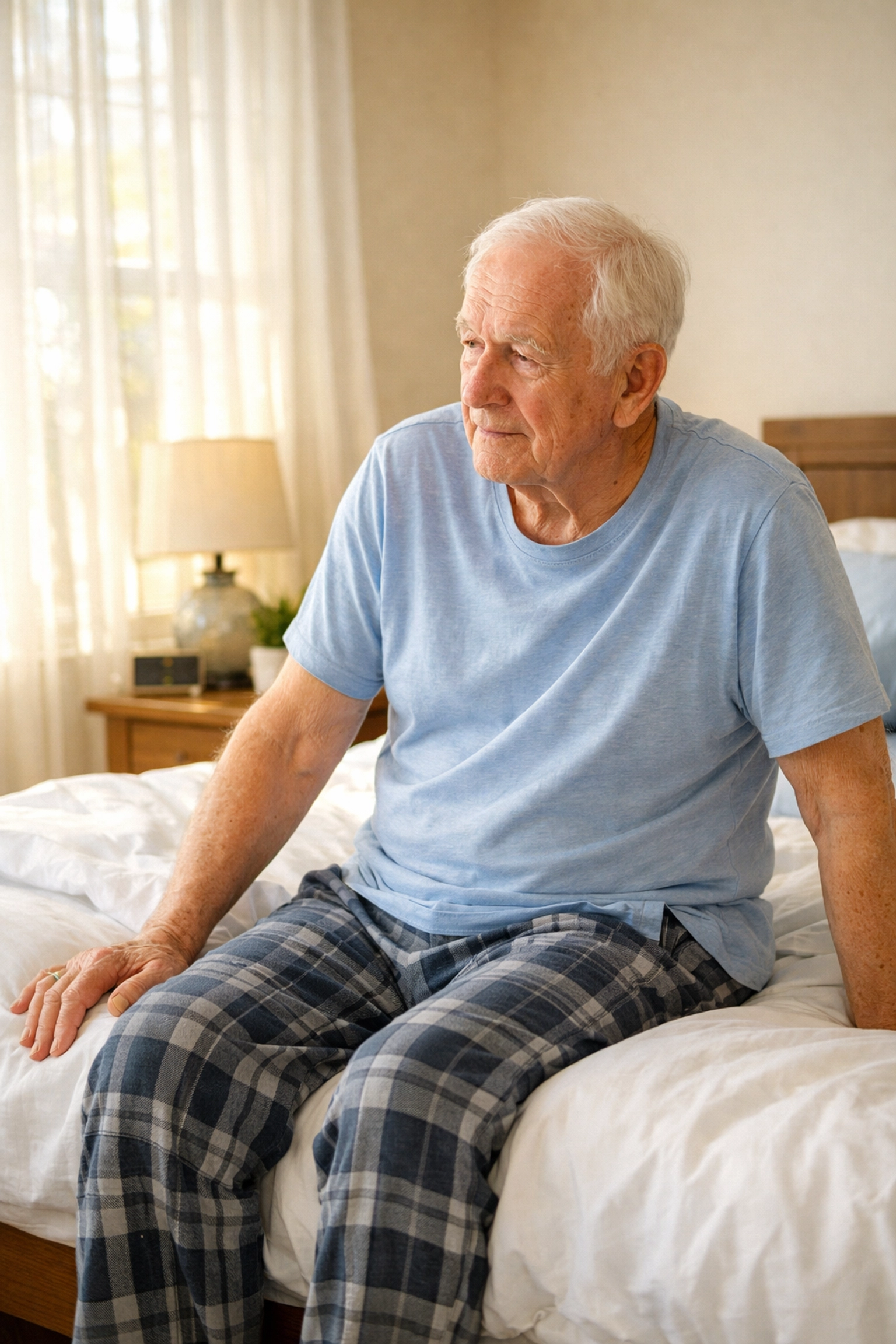
Some people experience a sudden drop in blood pressure when they stand up. This is called postural hypotension, and it can make you feel lightheaded or unsteady.
This is especially common in the morning or after sitting for long periods. Taking a moment to sit on the edge of the bed before standing can help prevent this type of fall.
Vision and Hearing Problems
Your eyes and ears work together to keep you balanced. When either sense declines, your risk of falling increases.
Vision problems that contribute to falls include cataracts, glaucoma, and macular degeneration. Poor depth perception makes it harder to judge distances and notice changes in floor height.
Hearing loss also affects balance because your inner ear plays a major role in spatial awareness.
Environmental Hazards in the Home
Even the safest-looking home can hide fall risks. Most falls happen in familiar places where people feel comfortable and may not be paying close attention.
Poor Lighting
Dim hallways, dark stairways, and shadowy corners make it hard to see obstacles. Many falls happen at night when someone gets up to use the bathroom without turning on lights.
Slippery and Uneven Surfaces
Bathrooms are high-risk areas because of wet floors and hard surfaces. Kitchen spills, freshly mopped floors, and throw rugs without non-slip backing can all cause slips.
Uneven surfaces like door thresholds, cracked sidewalks, and transitions between flooring types catch feet and cause trips.
Clutter and Tripping Hazards
Items left on the floor are easy to trip over, especially in low light:
- Electrical cords stretched across walkways
- Shoes, bags, or pet toys
- Stacks of books or magazines
- Low furniture like ottomans or footstools
Missing Safety Features
Homes that lack proper support systems put older adults at greater risk:
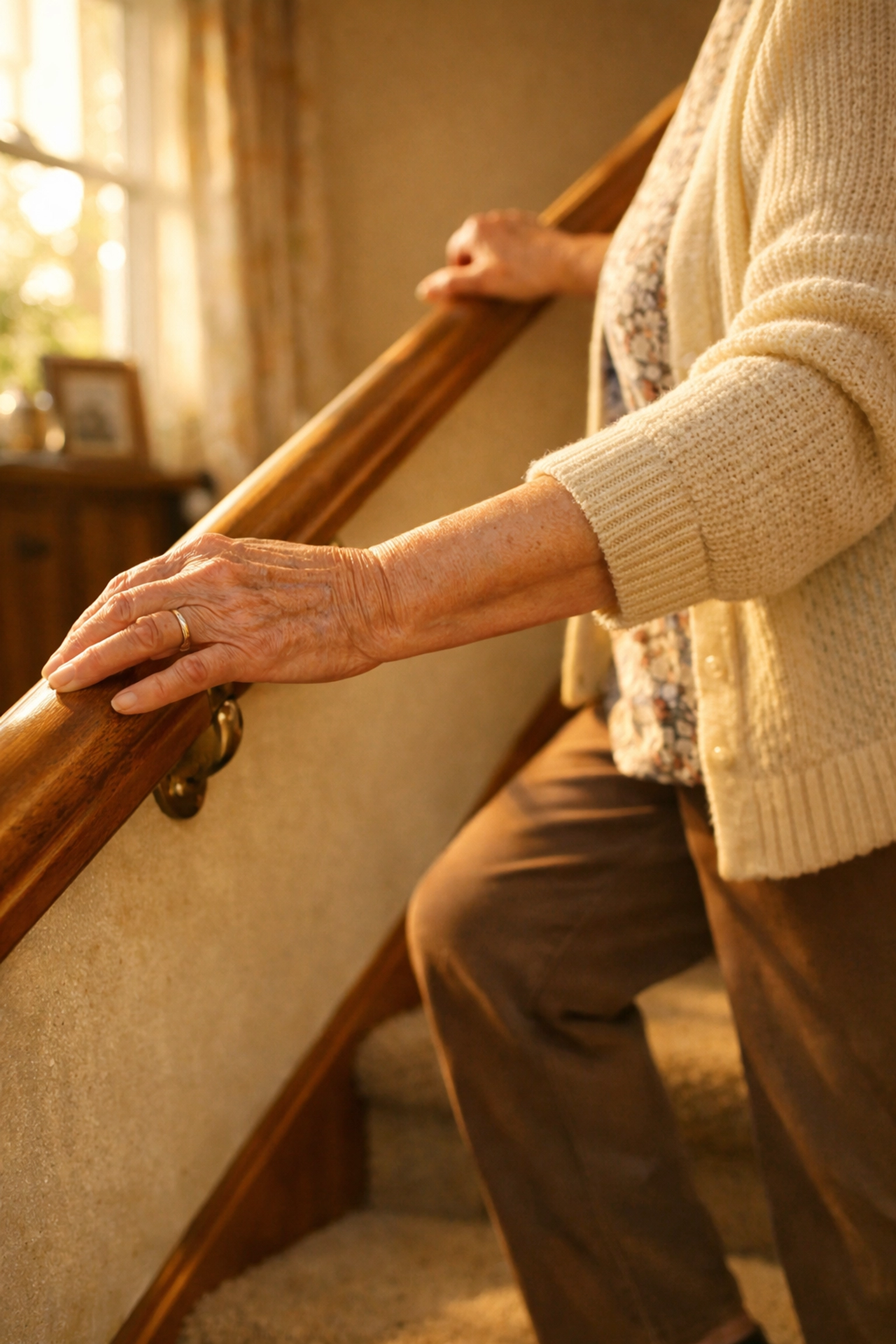
- Stairs without handrails on both sides
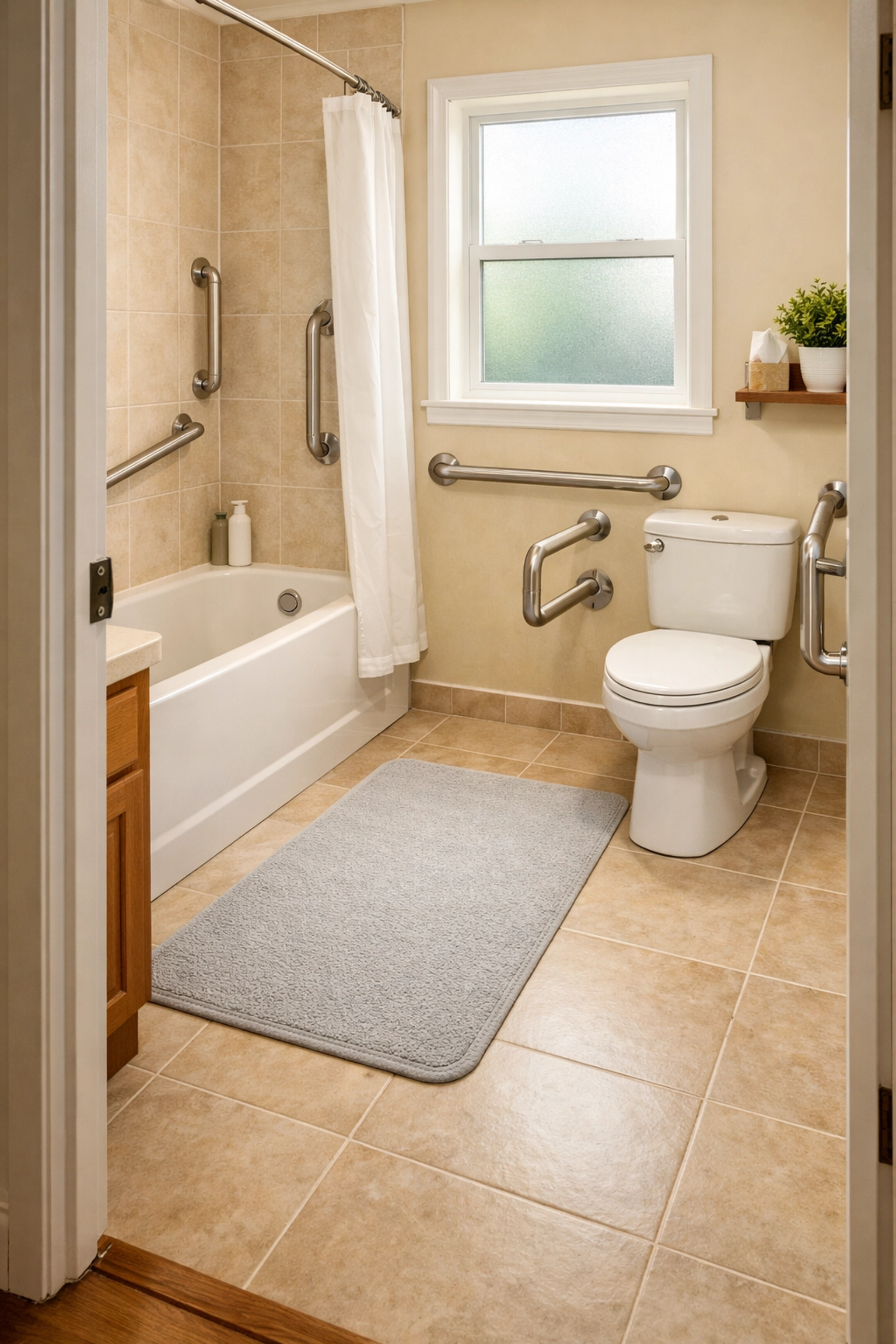
- Bathrooms without grab bars
- Entryways with no place to sit while putting on shoes
- Unstable furniture that people lean on for support
Footwear and Clothing
What you wear on your feet matters more than you might think. Certain types of footwear increase fall risk significantly.
High-risk footwear includes:
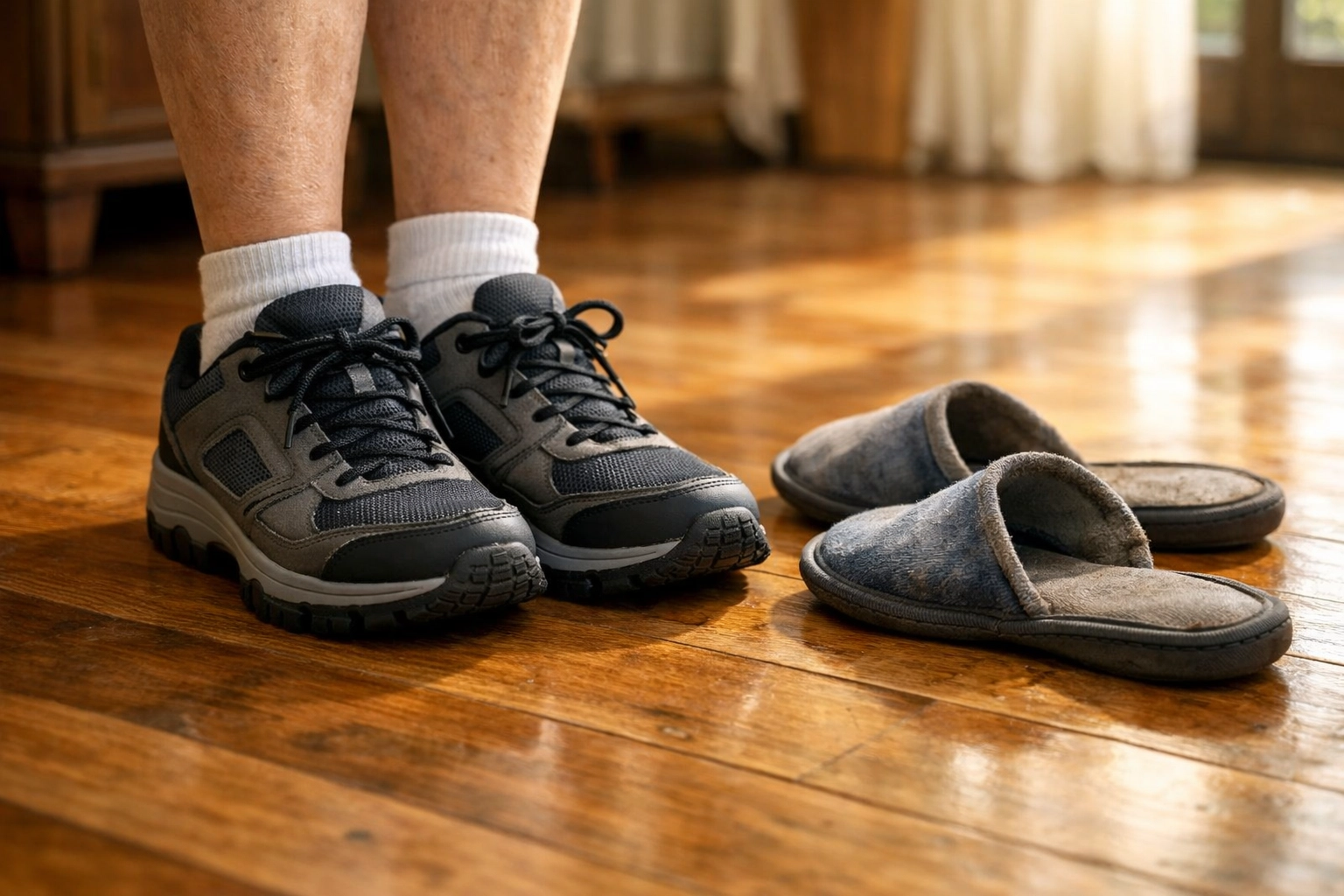
- Backless slippers or sandals
- Shoes with smooth soles
- High heels or platform shoes
- Socks without shoes on slippery floors
- Shoes that are too big or too tight
Long robes, loose pants, or baggy sleeves can also catch on furniture or get stepped on.
How to Prevent Falls at Home
Prevention doesn't require a complete home renovation. Small, thoughtful changes make a big difference.
Improve Lighting Throughout Your Home
Good lighting is one of the simplest and most effective fall prevention strategies.
Steps to take:
- Install brighter bulbs in hallways, stairways, and bathrooms
- Add nightlights in bedrooms, bathrooms, and hallways
- Place light switches at both ends of stairways
- Keep flashlights or touch-activated lamps within reach of the bed
- Use motion-sensor lights for automatic illumination
Remove Tripping Hazards
Walk through each room with fresh eyes and clear anything that could cause a trip.
- Secure or remove loose rugs and mats
- Tape down electrical cords or run them along walls
- Keep floors clear of clutter
- Store frequently used items at waist height to avoid bending or reaching
- Repair loose floorboards or damaged carpet
Add Support Where It's Needed
Installing handrails and grab bars provides stability in key areas.
Priority locations:
- Both sides of all stairways
- Inside and outside the bathtub or shower
- Next to the toilet
- Along hallway walls in homes with long corridors
Make sure these are properly installed into wall studs, not just drywall. Improper installation can make them dangerous rather than helpful.
Make Bathrooms Safer
Bathrooms account for a large percentage of home falls because of the combination of hard surfaces, water, and frequent use.
- Place non-slip mats inside the tub or shower
- Use a shower chair or bench if standing is difficult
- Install a raised toilet seat if needed
- Keep towels and toiletries within easy reach
- Wipe up water spills immediately
Maintain Your Physical Health
Staying active helps maintain the strength and balance needed to prevent falls.
Activities that help:
- Walking regularly
- Chair exercises
- Tai chi or gentle yoga
- Strength training with light weights or resistance bands
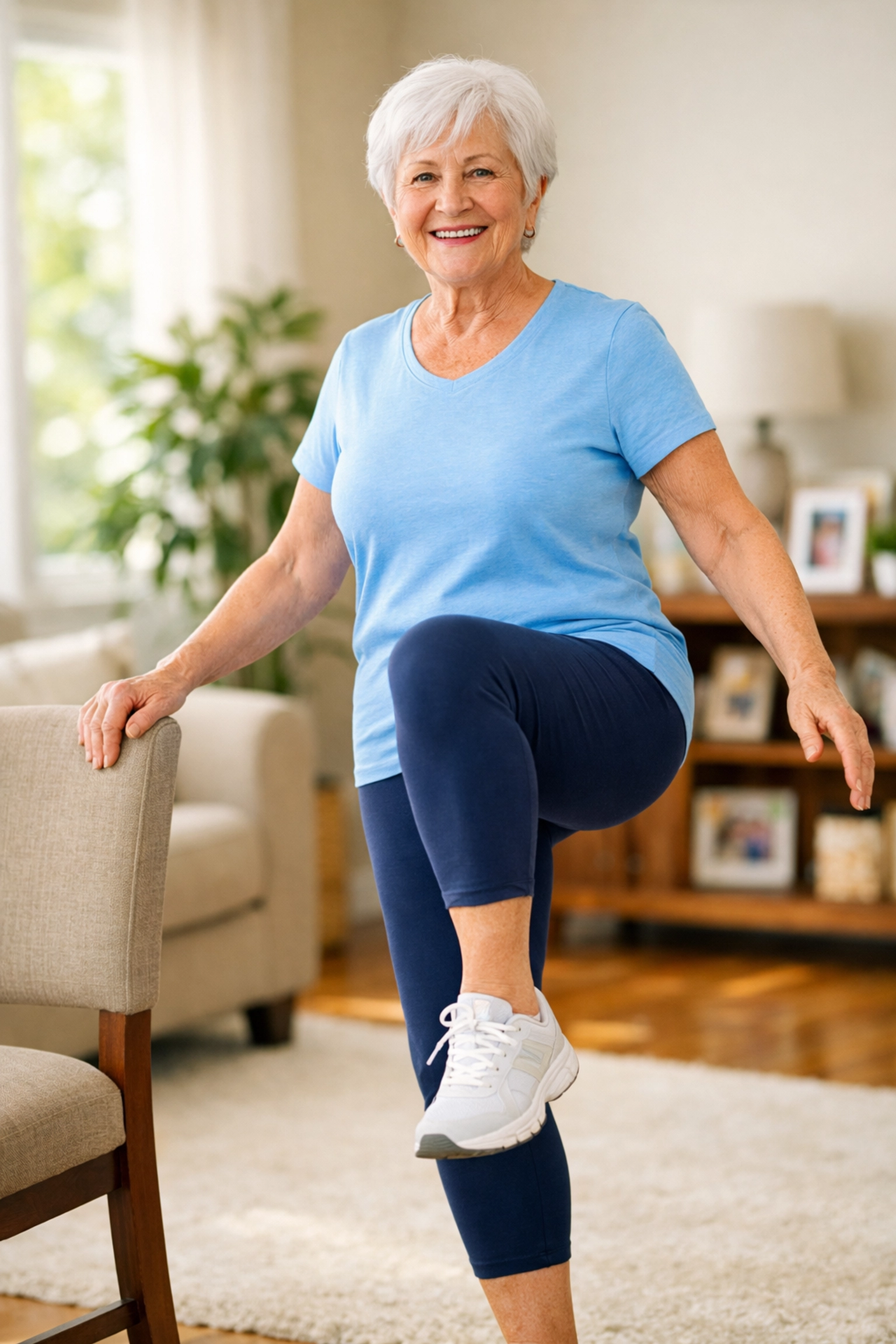
- Balance exercises like standing on one foot
Even 15 minutes a day can make a meaningful difference over time.
Review Your Medications
Schedule regular medication reviews with your doctor or pharmacist. Bring all your medications, including over-the-counter drugs and supplements.
Ask specifically about side effects related to dizziness, drowsiness, or confusion. Sometimes, timing adjustments or alternative medications can reduce these risks.
Get Your Vision and Hearing Checked
Schedule regular eye exams and update your prescription as needed. Adults over 65 should have their eyes checked every one to two years.
If you wear glasses, keep them clean and within reach. Consider getting a stronger prescription for reading glasses if you often look down at the floor while walking.
Hearing aids should be worn as prescribed and maintained properly. If you're having trouble with your current devices, talk to your audiologist about adjustments.
Wear Proper Footwear
Choose shoes that fit well and provide good support:
- Flat or low-heeled shoes with non-slip soles
- Shoes that fasten securely (laces, velcro, or buckles)
- Sturdy slippers with backs and non-skid soles for indoor use
- Replace worn-out shoes regularly
Understanding the Impact of Falls
Falls affect more than just physical health. Many people who fall develop a fear of falling again, which leads to reduced activity and social isolation. This creates a cycle where decreased movement leads to weaker muscles, which further increases fall risk.
Staying informed and taking preventive steps helps maintain both physical independence and confidence.
Creating a Long-Term Prevention Plan
Fall prevention isn't a one-time checklist. It's an ongoing process that adapts as needs change.
Regular review points:
- Assess your home environment seasonally
- Schedule annual health checkups
- Monitor any changes in balance, strength, or mobility
- Update safety features as needed
- Stay connected with healthcare providers
Key Takeaways
Falls at home are common but largely preventable. They result from a combination of age-related physical changes, medical conditions, medications, and environmental hazards.
The most effective prevention strategies include improving home lighting, removing tripping hazards, installing support features, maintaining physical fitness, reviewing medications regularly, and wearing appropriate footwear.
Small changes today can prevent serious injuries tomorrow. Start with one or two improvements and build from there. Your safety is worth the effort.

