
Stairs are often the most daunting part of a home for seniors and their families. While they represent the path to a bedroom, a laundry room, or a cherished hobby space, they also represent one of the most significant environmental hazards for falls.
In my years working with mobility aids and home safety, I’ve found that many people view stair safety as an "all or nothing" proposition: either the stairs are fine, or you need to move to a single-story home. The reality is much more nuanced. There are dozens of small, medium, and large adjustments you can make to your environment to significantly reduce the risk of a tumble.
The goal isn't just to make the stairs "safe" in a technical sense; it's to provide the confidence and peace of mind that allows you to move freely through your own home. Here are ten in-depth ideas to help you secure every level of your house.
1. Optimize Lighting for Maximum Visibility
Shadows are a stairwell’s worst enemy. If you can’t clearly see where one tread ends and the next begins, your brain has to guess. That guesswork is where many missteps happen.
Proper lighting starts with the basics: make sure there are light switches at both the top and the bottom of the stairs. It sounds simple, but many older homes only have a switch at one end, leading people to "brave the dark" rather than walking back to turn off a light.
Beyond the switches, consider the quality of the light. Bright, glare-free LED bulbs are usually the best choice. They last a long time, so you won't have to climb a ladder to change them often. If your stairwell has "hot spots": areas where the light is so bright it causes a glare on polished wood: try using frosted bulbs or repositioning the fixtures.
For extra security, motion-activated night lights or strip lighting installed under the lip of each tread can provide a clear "runway" effect, guiding your feet even if you’re just getting up for a glass of water in the middle of the night.
2. Enhance Traction on Every Surface
Slip resistance is the foundation of stair safety. Whether your stairs are hardwood, tile, or stone, they can become incredibly slick, especially if you are wearing socks or smooth-soled slippers.
There are several ways to add traction without ruining the aesthetic of your home:
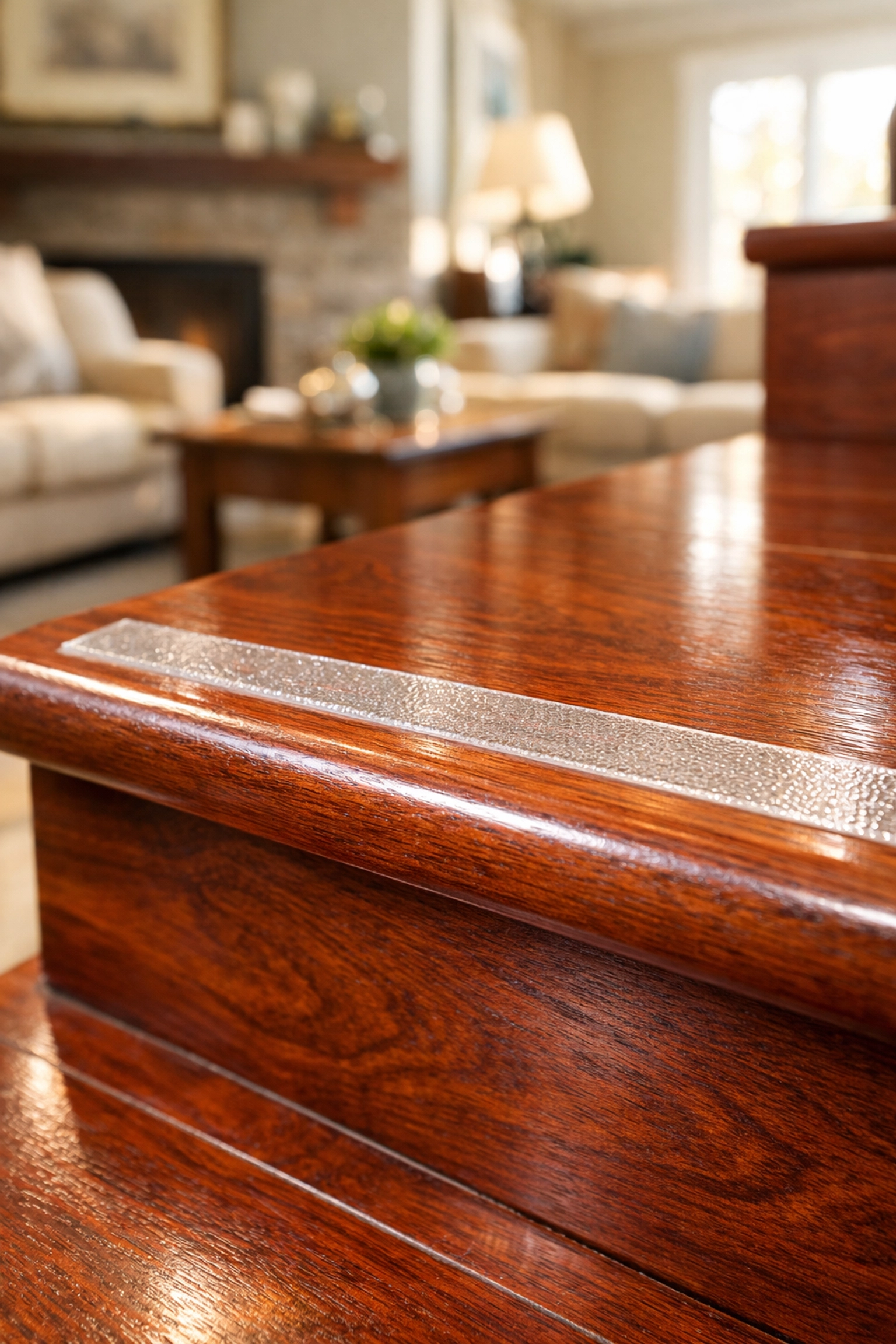
- Abrasive Transparent Tape: This is a low-profile option that provides a "sandpaper" grip on the edge of the step while allowing the wood grain to show through.
- Rubber Stair Treads: These are often used on basement or outdoor stairs. They provide a high-friction surface that is very difficult to slip on.
- Non-Slip Coatings: There are clear, grit-based finishes that can be painted onto the wood or tile to create a more tactile surface.
If you have a favorite pair of indoor shoes, ensure they have rubber soles. Avoid walking on stairs in stocking feet, as this is one of the most common precursors to a fall.
3. The Power of Dual, Rounded Handrails
Most building codes require at least one handrail, but for optimal safety, "at least one" isn't enough. Having handrails on both sides of the stairway allows you to use both arms for balance and leverage. This is especially helpful if one side of your body is weaker than the other due to a previous injury or health condition.
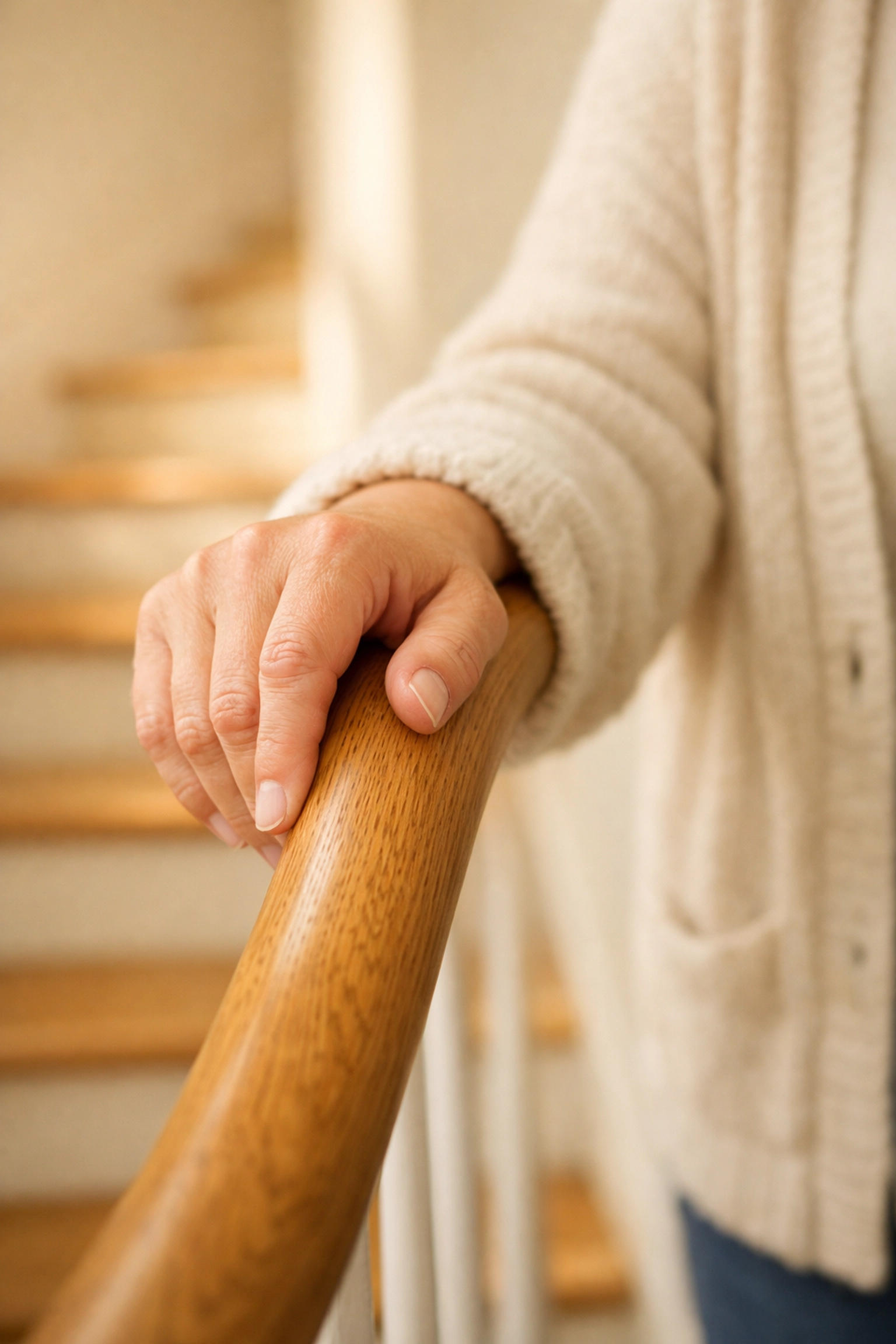
The shape of the handrail matters more than you might think. Many decorative handrails are too wide or oddly shaped to be gripped effectively. The safest design is a "full-circle" or "power-grip" rail. This means you can wrap your thumb and fingers all the way around the wood or metal.
Check that the handrail is continuous. You shouldn’t have to "let go" to navigate a turn or a landing. If the rail stops and restarts, it creates a moment of vulnerability where you are unsupported.
4. Ensure Structural Consistency and Integrity
Human movement is largely based on rhythm and muscle memory. When we walk up stairs, our brains expect every step to be exactly the same height (the "rise") and depth (the "run"). Even a quarter-inch difference between steps can cause a person to trip.
Take a tape measure and check your stairs. If you find that the top step is shorter than the rest, or that one tread is slightly slanted, it’s time to call in a professional. These structural inconsistencies are "hidden" hazards that you might not even notice until they catch your toe.
Additionally, check for loose boards, protruding nails, or creaking treads. A "squeak" is often a sign that a board is shifting under your weight, which can lead to a loss of balance.
5. Eliminate Stairwell Clutter Habits
It is a common habit to leave items at the bottom of the stairs to be "carried up later." Whether it’s a basket of laundry, a stack of mail, or a pair of shoes, these items are major tripping hazards.
To keep stairs clear, adopt a "nothing on the steps" rule. If you need to transport items between floors, use a sturdy shoulder bag or a backpack so your hands remain free to hold onto the handrails.
If there are transitions at the top or bottom of the stairs: like a rug in the hallway: make sure they are secured with double-sided tape or a non-slip pad. A rug that bunches up right as you reach the top of the stairs can be just as dangerous as a slippery tread.
6. Evaluate and Secure Floor Coverings
If your stairs are carpeted, the carpet must be taut. Loose or "bubbled" carpet can slide under your foot or catch a heel. Over time, the padding underneath the carpet can compress, or the carpet can pull away from the "tack strips" that hold it in place.
If you are choosing new carpet for a staircase, go with a low-pile, high-density option. Thick, shaggy carpets might feel nice underfoot, but they can hide the edge of the step, making it harder to gauge where to place your foot. They also tend to be "squishier," which can decrease your sense of stability.
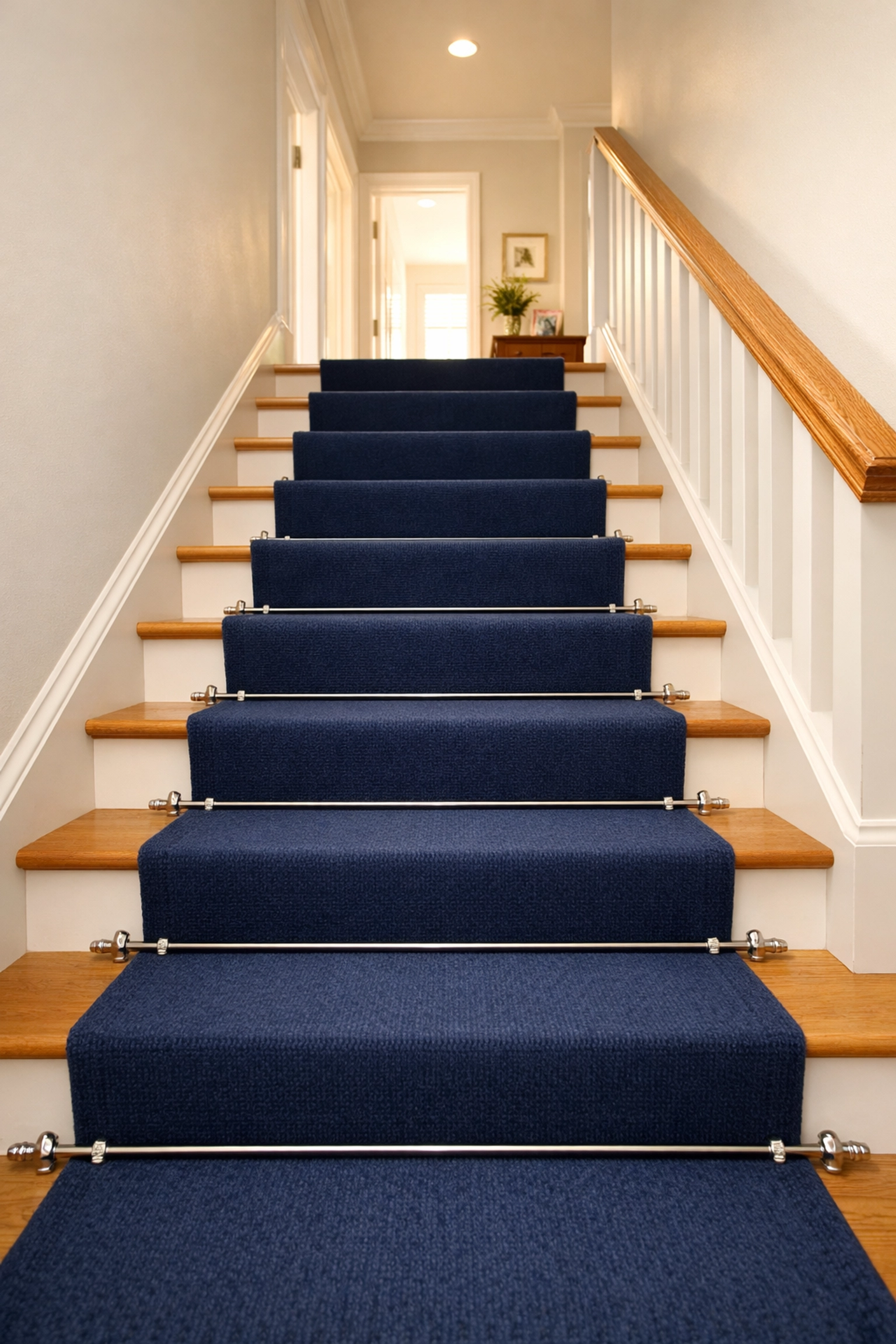
For homes with hardwood stairs, consider a "runner": a strip of carpet that goes down the middle. This provides the traction of carpet while keeping the beauty of the wood on the edges. Just ensure the runner is professionally installed and extremely tight.
7. Use Visual Contrast for Depth Perception
As we age, our depth perception can change. This makes it difficult to distinguish where one step ends and the floor begins, especially on stairs that are all the same color.
A simple and effective fix is to create a visual "edge." You can do this by painting a stripe of a contrasting color on the leading edge (the "nose") of each step. For example, if you have dark wood stairs, a thin line of white or light-colored paint can help the eye differentiate the levels.
If you don't want to paint your stairs, you can use colored non-slip tape. This provides two benefits at once: better visibility and better traction. Pay extra attention to the very top and very bottom steps, as these are the transition points where most falls occur.
8. Environmental Modifications and "Safe Zones"
Sometimes, the best way to handle stairs is to modify the environment around them. For instance, if you have a landing in the middle of a long flight of stairs, ensure that landing is treated like a "safe zone." It should be well-lit and have enough space for you to stand comfortably and catch your breath if needed.
For homes with children or pets, safety gates are essential, but they must be the right kind. Avoid "pressure-mounted" gates at the top of stairs, as they can dislodge if you lean on them. Always use "hardware-mounted" gates that are screwed into the wall studs for the most secure fit.
If mobility has become a significant challenge, you might consider installing a stairlift. While this is a larger investment, it removes the physical strain of climbing and can allow a person to remain in their multi-story home safely for many more years.
9. Adjusting Your "Stair Technique"
Safety isn't just about the stairs; it's about how we use them. It’s easy to get in a hurry, but rushing is a primary cause of falls.
Try to adopt these habits:
- The Three-Point Contact Rule: Always have at least one hand on a rail. If possible, use two hands.
- Full Foot Placement: Make sure your entire foot is on the step. Many people only place the ball of their foot on the tread when going up, which offers less stability.
- Vision Check: If you wear bifocals or trifocals, be extra careful. The bottom portion of the lens is for reading, which can blur your vision when you look down at your feet. Many seniors find it helpful to have a separate pair of single-vision glasses specifically for moving around the house.
10. Maintaining Physical Readiness
At the end of the day, your body is your best tool for fall prevention. Even the safest stairs in the world won't help if you lack the strength or balance to navigate them.
Exercises that focus on leg strength: like sit-to-stands or calf raises: can make climbing stairs feel much easier and more controlled. Balance exercises, such as standing on one leg (while holding onto a sturdy counter), can help your body react more quickly if you do happen to lose your footing.
Regular vision and hearing checks are also vital. Your inner ear plays a massive role in your sense of balance, and your eyes provide the data your brain needs to navigate elevation changes. Keeping these systems in tip-top shape is a core part of stair safety.
A Reassuring Approach to Home Safety
Improving stair safety doesn't have to happen all at once. You can start by simply clearing the clutter today, then move on to upgrading your light bulbs tomorrow. Every small change adds a layer of protection between you and a potential fall.
Remember, your home is your sanctuary. Taking these steps isn't about admitting weakness; it's about being proactive so you can continue to enjoy every level of your home with confidence and independence. If you’re ever unsure about a structural issue or the best type of handrail for your specific needs, don’t hesitate to consult with a physical therapist or a home accessibility specialist. They can provide a personalized assessment that takes your unique mobility needs into account.
By focusing on lighting, traction, and solid support, you turn a potential hazard into just another part of your safe, comfortable home.

