
Maintaining independence is a priority for most of us as we get older. We want to stay in our homes, enjoy our hobbies, and move through our daily routines without a second thought. However, a single fall can change that trajectory quickly. The good news is that falling isn't an inevitable part of aging. Most falls are caused by a combination of environmental factors and physical habits: both of which are well within our control.
At Fall Guys Products, we believe that safety shouldn't feel like a clinical overhaul of your life. It’s about making smart, reassuring adjustments that give you back your confidence. Here are ten practical fall prevention ideas that combine home modifications with daily habits to keep you or your loved ones steady on your feet.
1. Eliminate the "Invisible" Trip Hazards
The most common causes of falls are often the things we walk past every day without noticing. Clutter has a way of accumulating in hallways and near entryways. For a senior, a small pile of mail, a stray power cord, or a pet’s toy can become a major hazard.
Start by doing a "floor-level sweep" of your home. Clear all walkways of furniture that sticks out too far. Pay special attention to transitions between rooms.
The biggest culprit? Throw rugs. While they add a nice touch of color to a room, they are notorious for catching the edge of a slipper or sliding across a hardwood floor. If you aren't ready to get rid of them entirely, use double-sided tape or non-slip backing to secure them firmly to the floor. However, the safest option is always a clear, unobstructed floor surface.
2. Brighten Every Corner
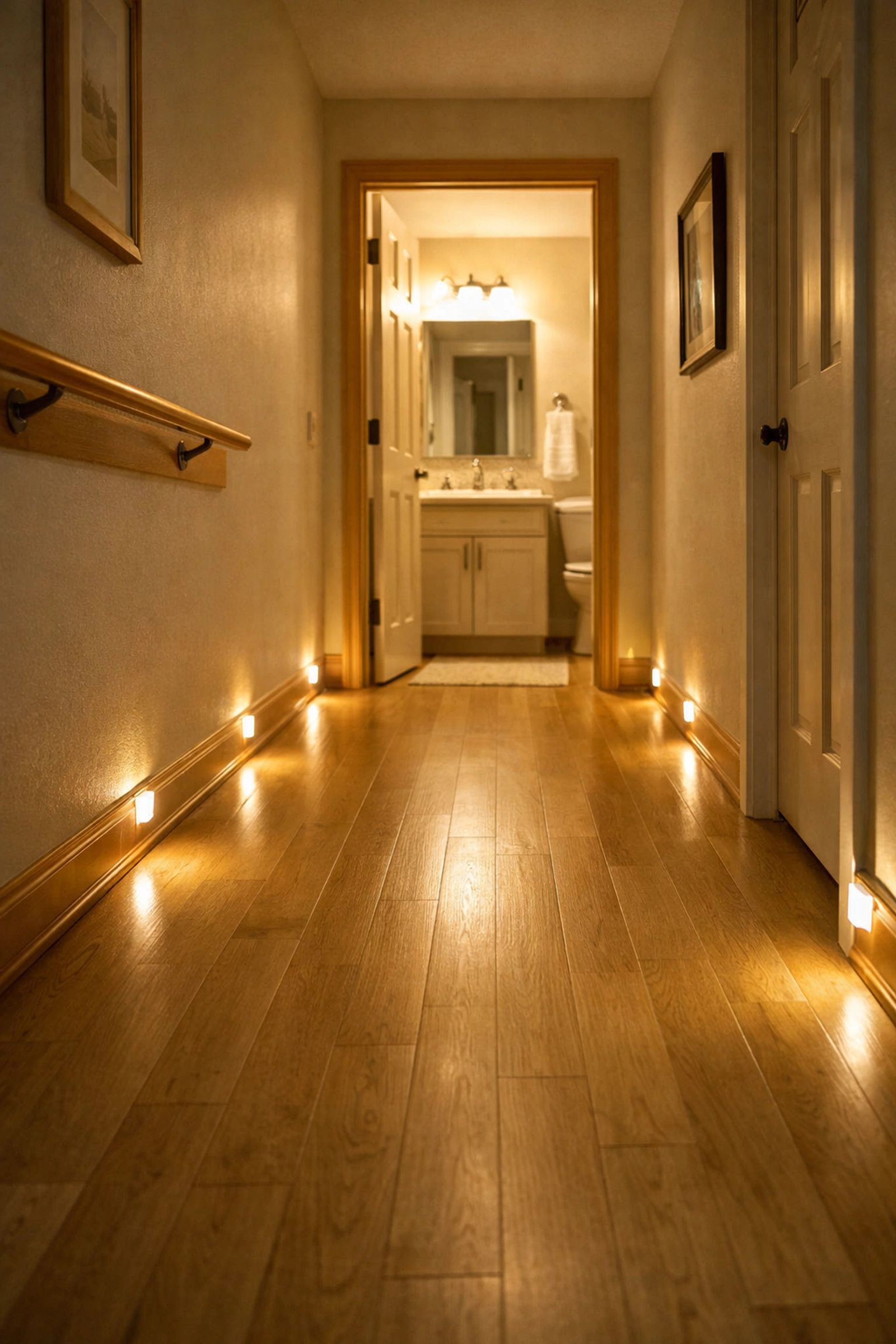
Our vision naturally changes as we age. We need more light to see clearly, and our eyes take longer to adjust when moving from a bright room to a dark one. Poor lighting is a silent contributor to many falls, especially during middle-of-the-night trips to the bathroom.
Update your home’s lighting by:
- Replacing dim bulbs with bright, high-quality LEDs.
- Installing motion-sensor nightlights in hallways, bathrooms, and bedrooms.
- Ensuring there are light switches at both the top and bottom of every staircase.
- Adding "glow-in-the-dark" tape to the edge of steps to make them more visible in low light.
3. Reinforce the Bathroom "Wet Zone"
The bathroom is statistically the most dangerous room in the house. Between slippery surfaces and the physical effort required to get in and out of a tub or off a toilet, it’s a high-risk area for slips.
Installing grab bars is one of the most effective ways to prevent bathroom injuries. Unlike a towel rack: which is not designed to support human weight: a grab bar is anchored into the wall studs and provides a rock-solid point of stability. Place them inside the shower, next to the tub, and beside the toilet.
Additionally, use non-slip mats both inside and outside the shower. A weighted shower curtain can also help keep water from splashing onto the floor, reducing the risk of a slip after you step out.
4. Double Up on Handrails
Most homes have a handrail on one side of the stairs, but for many seniors, having support on both sides provides much better balance. Having a rail for each hand allows you to distribute your weight more evenly and gives you a "backup" if one hand loses its grip.
Check that your existing handrails are sturdy and run the full length of the stairs. Sometimes handrails stop a step or two early, which can cause confusion and loss of balance at the most critical point. Extending these rails ensures you have support from the very first step to the very last.
5. Choose Footwear with Purpose
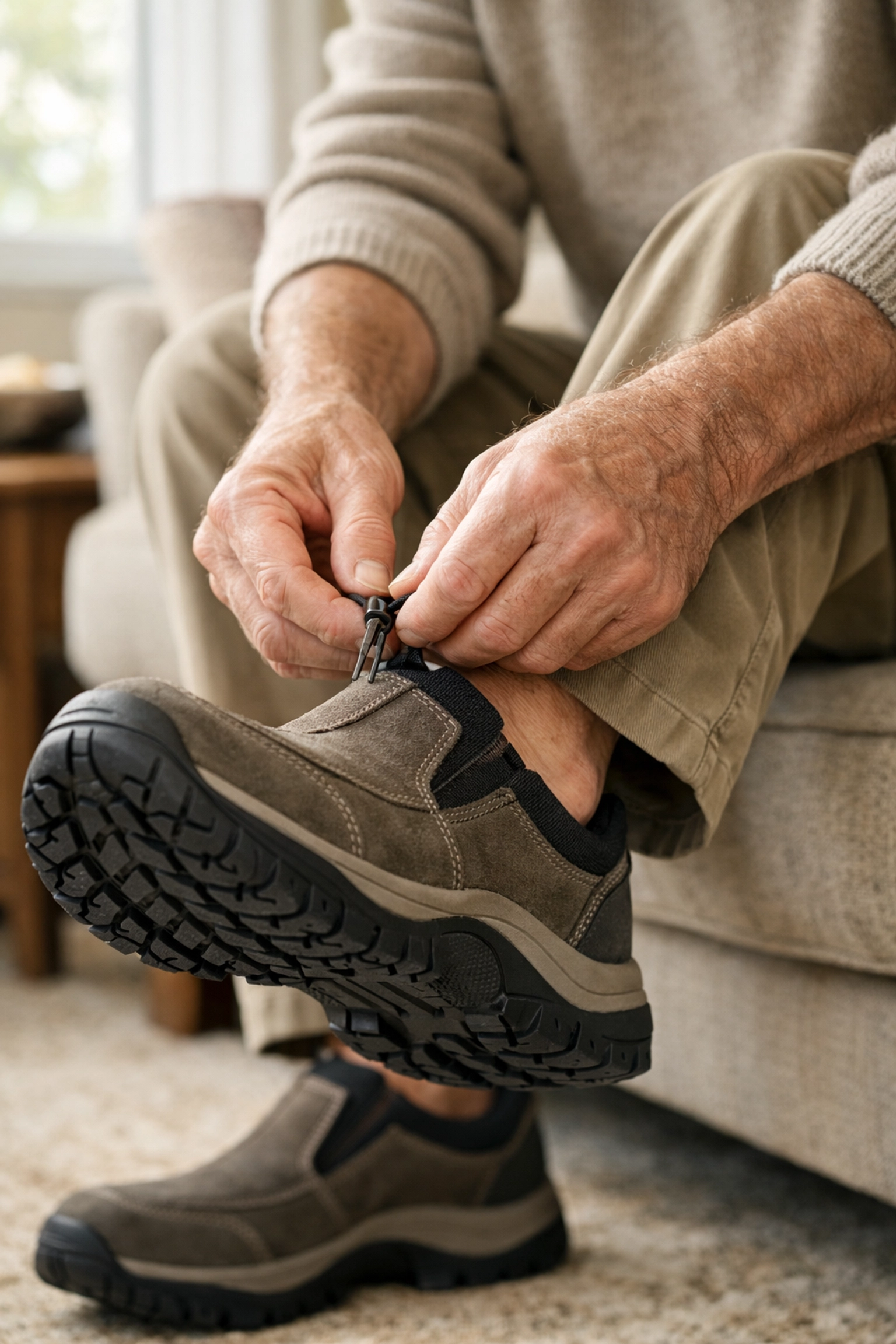
It’s tempting to walk around the house in socks or loose-fitting slippers, but these offer very little traction or support. In fact, walking in stocking feet on wood or tile floors is a major fall risk.
The ideal shoe for fall prevention should:
- Have a firm, non-skid rubber sole.
- Fit snugly (avoid "backless" slippers that can slip off).
- Provide arch support to help with overall balance.
- Have a low heel to keep your center of gravity stable.
Inside the house, consider "house shoes" that are never worn outside. This keeps your floors cleaner while ensuring your feet are always protected and gripped to the surface.
6. Build Strength Through Functional Movement
You don't need to be a marathon runner to prevent falls, but you do need "functional strength." This refers to the muscles we use for everyday tasks, like standing up from a chair or stepping over a curb.
Consistency is more important than intensity. Simple exercises practiced three times a week can significantly improve your stability:
- Sit-to-Stands: Sit in a sturdy chair, stand up without using your hands (if possible), and sit back down. This builds leg and core strength.
- Tai Chi: This ancient practice focuses on slow, controlled movements and has been scientifically proven to reduce fall risk in seniors.
- Heel-to-Toe Walking: Walk in a straight line, placing the heel of one foot directly in front of the toes of the other, as if you’re on a tightrope.
Always consult with a doctor or physical therapist before starting a new exercise routine to ensure the movements are safe for your specific health needs.
7. Audit Your Medications
Dizziness and loss of balance are common side effects of many medications, including those for blood pressure, sleep, and anxiety. Sometimes, the way two different drugs interact can cause unexpected lightheadedness.
At your next check-up, bring all your medications (including over-the-counter vitamins and supplements) to your doctor or pharmacist. Ask them specifically if any of these could increase your risk of falling. They may be able to adjust your dosage or change the time of day you take a pill to ensure you aren't feeling "wobbly" during your most active hours.
8. Prioritize Vision and Hearing Checks
Balance isn't just about your legs; it’s about your brain processing information from your surroundings. If your vision is blurry, you might misjudge the height of a step. If your hearing is impaired, your inner ear (which controls balance) may not be functioning optimally.
- Vision: Get an annual eye exam. If you wear bifocals or trifocals, be extra cautious when walking outside or on stairs, as these lenses can distort your depth perception when looking down.
- Hearing: Recent studies have shown a strong link between hearing loss and an increased risk of falls. Hearing aids don’t just help you follow a conversation; they help you maintain spatial awareness.

9. Use Assistive Devices the Right Way
There is often a stigma around using a cane or a walker, but these tools are designed to give you freedom, not take it away. Using a mobility aid correctly can prevent the fatigue that often leads to stumbles.
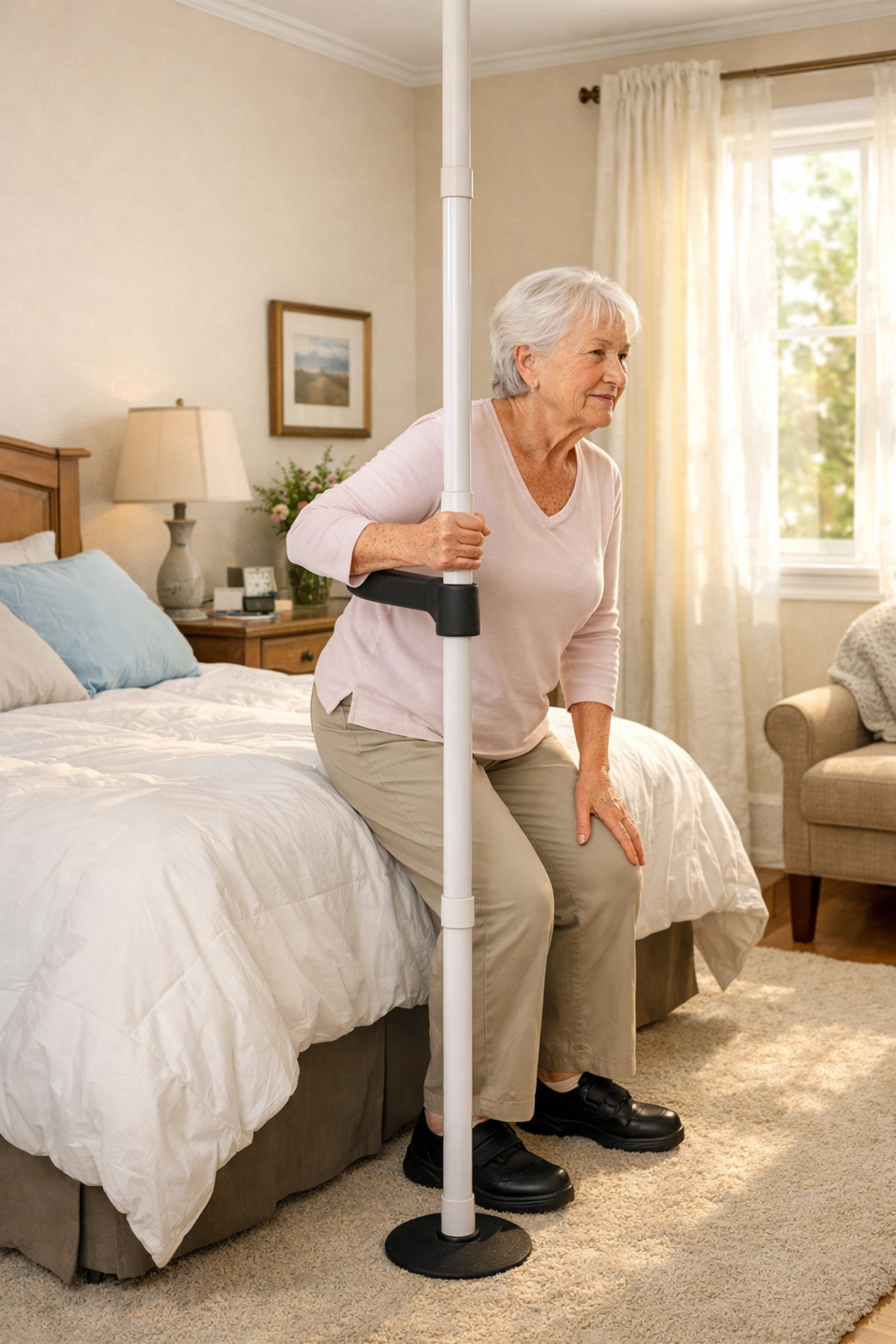
If your doctor has recommended a device, make sure it is properly fitted to your height. A cane that is too tall or too short can actually cause back pain and further instability. Similarly, for areas of the home where you need a little extra help transitioning: like getting out of bed or a favorite armchair: stationary poles or rails can provide a steady handhold without cluttering the room.
10. Optimize the Bedroom for Safety
Many falls occur when we are tired or rushing. The bedroom should be a place of rest, but it needs to be set up so that your first steps in the morning are secure.
- Bed Height: Your bed should be at a height where your feet touch the floor firmly when you sit on the edge.
- Reachability: Ensure your phone, glasses, and a lamp are all within arm’s reach of the bed. You should never have to get out of bed in the dark to turn on a light.
- The "Sit and Wait" Rule: Before standing up from bed, sit on the edge for 30 seconds. This allows your blood pressure to stabilize, preventing the "head rush" that can cause a fall.
Confidence is Key
Falling is a serious concern, but fear shouldn't keep you from living your life. When we become too afraid of falling, we often move less, which leads to weaker muscles and: ironically: an even higher risk of a fall.
By taking these ten steps, you are creating a "safety net" for yourself. You are making your home a place that supports your movement rather than hindering it. Start small: perhaps by clearing a hallway today or ordering a motion-sensor nightlight: and build your way up to a fully fall-proof home.
Prevention is a daily habit, and with the right environment and a few simple adjustments, you can maintain your mobility and independence for years to come. Stay steady, stay active, and most importantly, stay confident in your ability to navigate your world safely.

