
When we talk about making a home safe for aging in place, we often spend a lot of time focusing on the bathroom or the kitchen. It makes sense: those are high-traffic areas where water and hard surfaces create obvious risks. But there is one area that acts as the literal bridge between the sanctuary of your home and the unpredictable world outside: the entryway.
The transition from the driveway or sidewalk into the house is one of the most common places for falls to occur. Between uneven pavement, changing weather conditions, and the physical act of navigating steps while perhaps carrying groceries or keys, the entryway demands a lot from our balance and coordination.
Creating a safe entryway isn't just about adding a ramp; it’s about a holistic approach to visibility, stability, and maintenance. Whether you are a homeowner looking to stay independent or a caregiver looking out for a loved one, this guide will walk you through everything you need to know to make the front door a place of confidence rather than concern.
The Foundation of Stability: Stairs and Handrails
For many, the front door involves at least one or two steps. While these might seem manageable on a good day, they can become significant obstacles when it’s raining, when you’re tired, or when your vision isn't at its best.
The Importance of Double Handrails
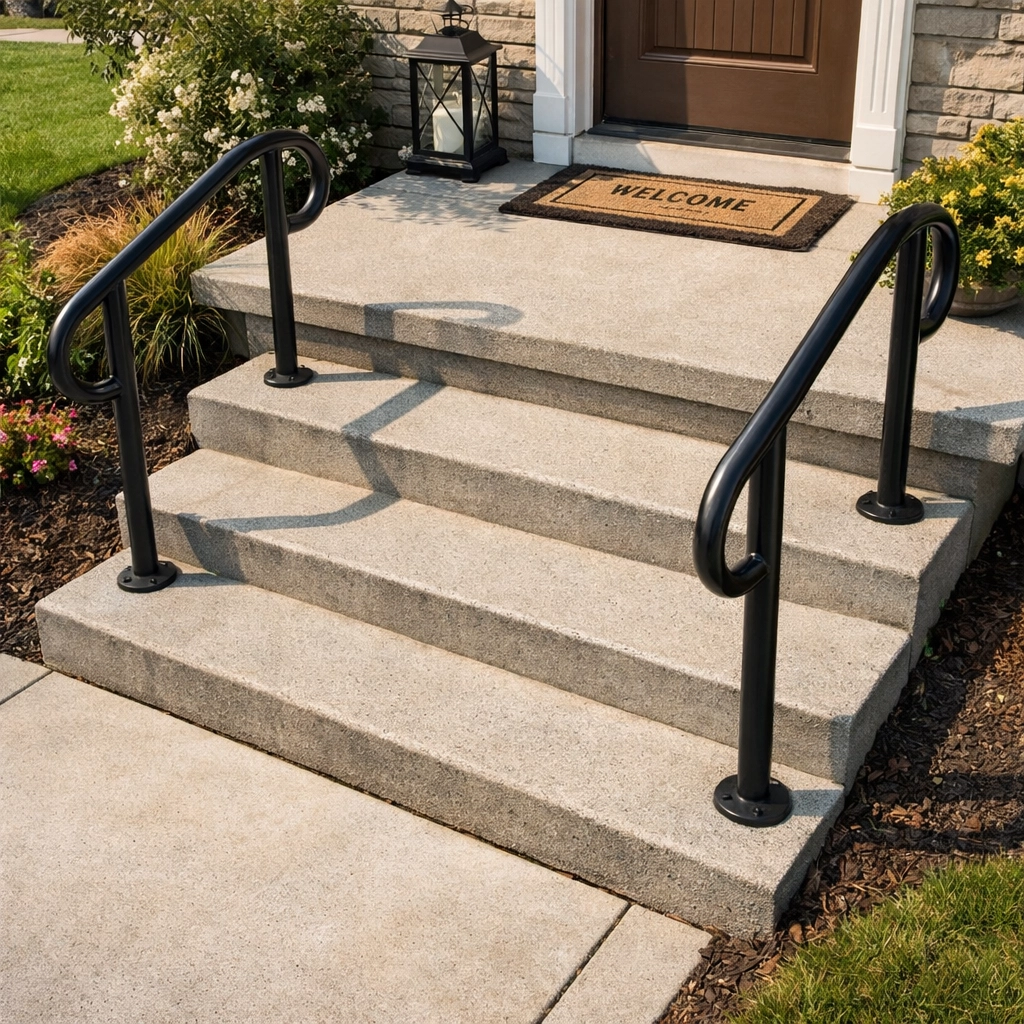
Most residential codes only require a handrail on one side of a stairway. However, for maximum safety, having rails on both sides is a game-changer. This allows a person to use their strongest side for support regardless of whether they are going up or down.
When installing handrails, height and grip are key. A handrail should typically be between 34 and 38 inches high. Perhaps more importantly, the rail should be "contoured" so that the hand can wrap around it completely. A flat 2×4 board might be sturdy, but it doesn't allow for a secure "power grip" the way a rounded rail does.
Step Geometry
The physical dimensions of your steps matter. If you have the opportunity to remodel or build, "low-rise" steps are much safer. Standard steps are often 7 inches high, but for those with limited mobility, a 4-to-5-inch rise is much easier on the knees and hips. Additionally, ensure the "tread" (the part you step on) is deep enough to accommodate the entire foot. A shallow step forces the heel to hang off the edge, which significantly decreases stability.
Creating Smooth Transitions: Thresholds and Ramps
Even a house without stairs usually has a "threshold": that small bump at the bottom of the door frame. While it’s designed to keep water out, it’s also a classic tripping hazard.
Threshold Ramps
A threshold ramp is a simple, low-profile wedge made of rubber or aluminum. It creates a tiny bridge over that 1-inch or 2-inch lip. This is essential for anyone using a walker or wheelchair, as it prevents the front wheels from catching, but it’s equally beneficial for those who may not lift their feet as high when they walk.
Modular Ramps
If the height difference between the ground and the door is more than a few inches, a full ramp might be necessary. The gold standard for ramp steepness is a 1:12 ratio: for every 1 inch of vertical rise, you need 12 inches of horizontal ramp length. This ensures the slope is gentle enough to navigate without excessive physical exertion or the risk of a wheelchair tipping backward.
The Power of Visibility: Lighting Strategies
You can have the sturdiest handrails in the world, but if you can’t see where the step begins, you’re still at risk. Aging eyes often require more light to see clearly, and they take longer to adjust when moving from a bright exterior to a dimmer interior.
Motion-Sensor Lighting
The most effective lighting for an entryway is motion-activated. This ensures that the path is illuminated the moment you arrive, without you having to fumble for a switch in the dark. Look for sensors that have a wide field of vision so they trigger while you are still a safe distance from the first step.
Reducing Glare and Shadows
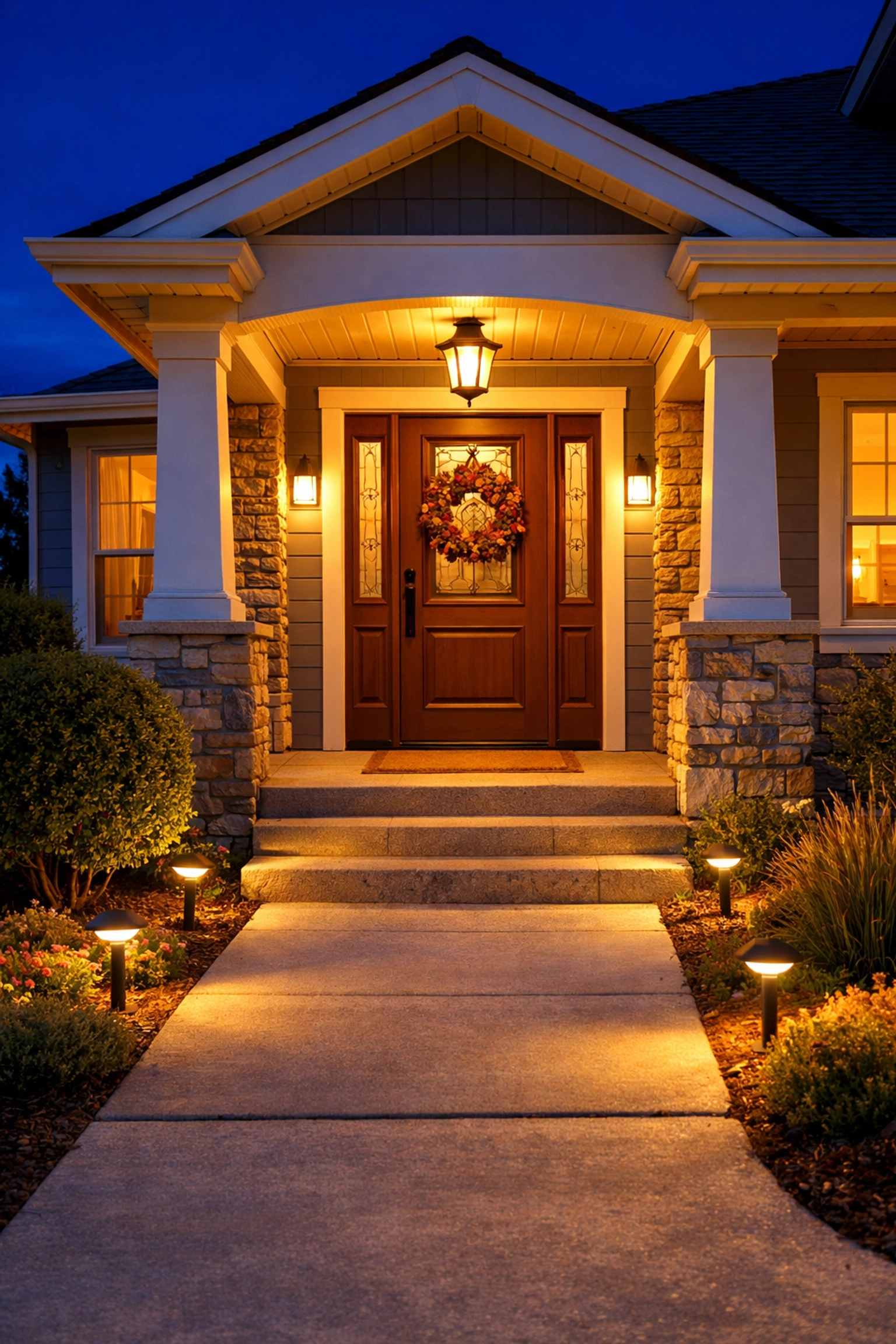
It’s not just about the amount of light; it’s about the quality. Harsh, single-source lights can create deep shadows that hide the edge of a step. Using multiple light sources: such as overhead lights combined with low-level path lights: fills in those shadows.
When choosing bulbs, look for "daylight" or "cool white" LED options (around 4000K to 5000K). These provide better contrast than the yellow-hued bulbs of the past, making it easier to distinguish between different surfaces.
Surface Materials and Traction
The material of your porch or walkway dictates how much "grip" you have. Smooth concrete, tile, or painted wood can become incredibly slick with just a light dusting of morning dew.
Non-Slip Treatments
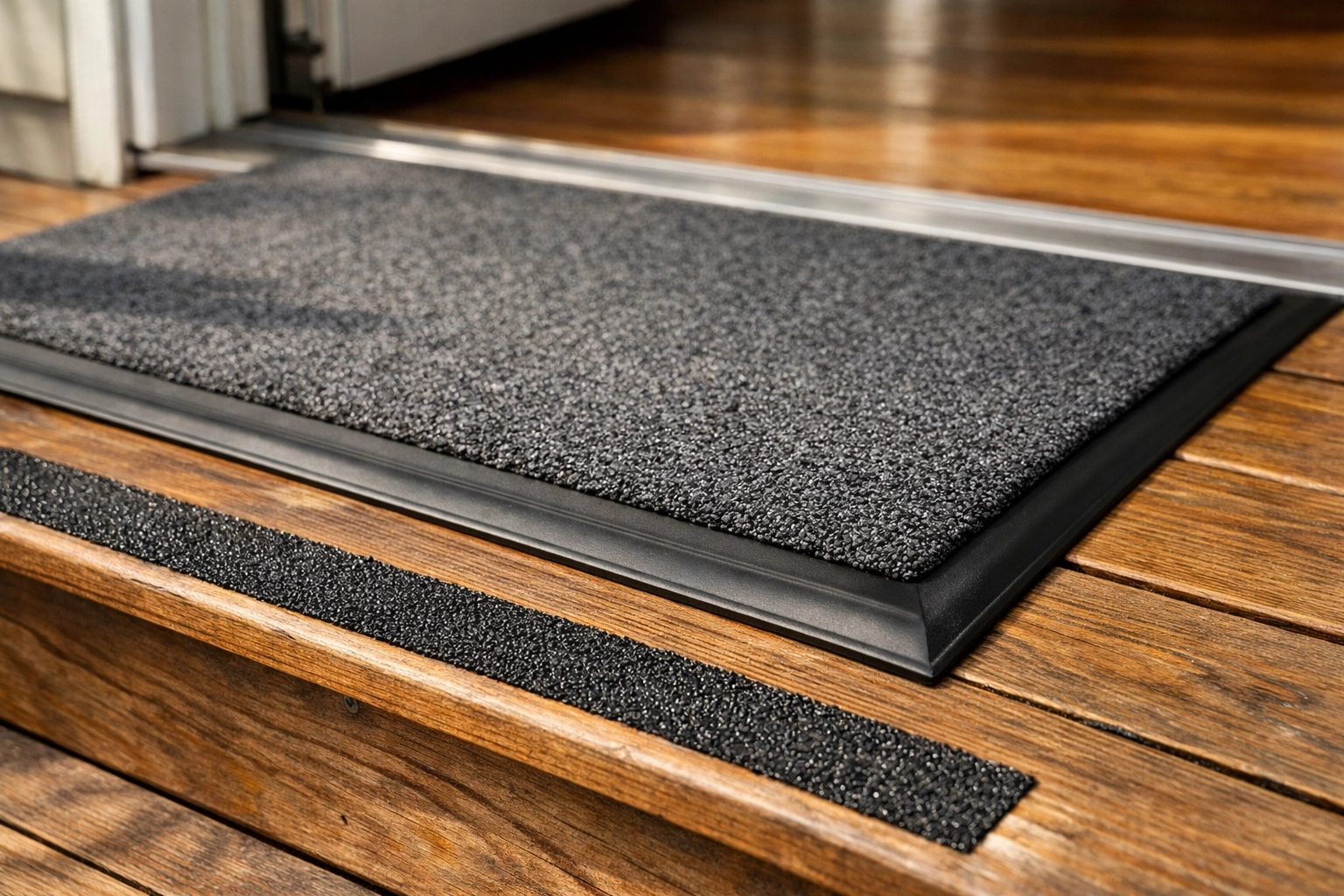
If you have wooden or concrete stairs, consider applying a non-slip coating. There are specialized paints that contain fine grit or sand to provide a sandpaper-like texture. Alternatively, heavy-duty anti-slip tapes (often called "grit tape") can be applied to the leading edge of each step. This not only provides traction but also creates a visual "stripe" that helps the eye identify the edge of the step.
The Science of Entry Mats
Mats are your first line of defense against tracking moisture into the house. However, a loose, thin mat can actually be more dangerous than no mat at all if it slides underfoot.
- The Six-Step Rule: To effectively dry the soles of your shoes, a person needs to take about five to six steps on an absorbent surface. A small, square mat isn't enough. Consider a long runner that extends into the hallway.
- Backing: Always ensure mats have a heavy-duty, non-slip rubber backing.
- Low Profile: The edges of the mat should be tapered (beveled) so they don’t create a new tripping hazard.
Dealing with the Elements: Weather Management
Weather is the great equalizer when it comes to falls. Even the most athletic person can lose their footing on a patch of black ice or a pile of wet leaves.
Drainage and Overhangs
Standing water is the enemy of safety. Ensure that your gutters are clear and that downspouts are directed away from walking paths. If water pools on your landing, it can grow algae in the summer (which is slippery) or turn into ice in the winter.
Installing an awning or a porch roof over the entryway is a major safety upgrade. It provides a dry place to stand while you’re looking for your keys, preventing you from rushing or getting distracted by the rain.
Winter Safety
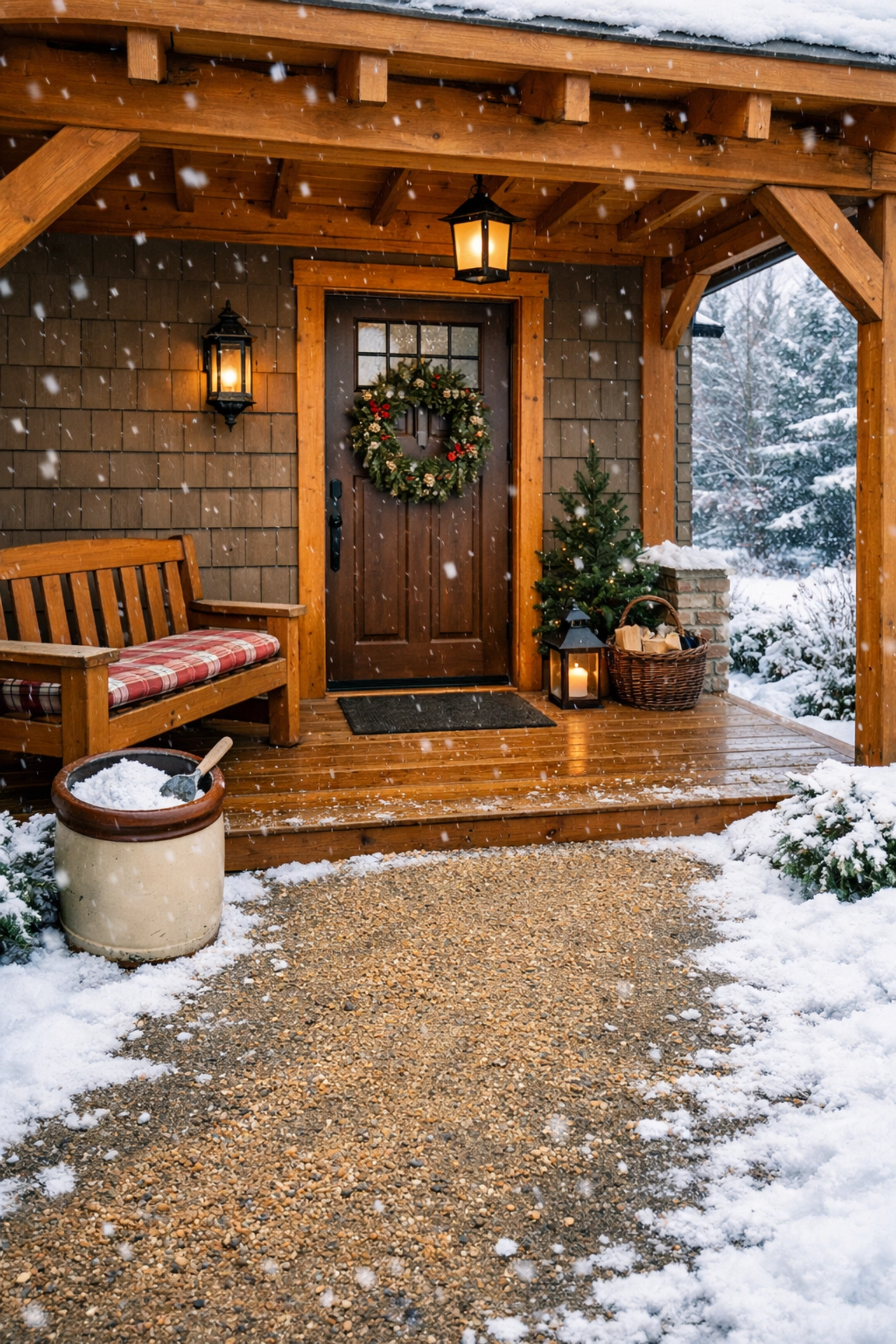
If you live in a climate with snow and ice, keep a bucket of sand or salt right next to the door inside the house. This allows you to treat the landing before you even step outside. For those with mobility issues, using "ice cleats" that stretch over standard shoes can provide incredible stability on frozen surfaces.
The "Landing Pad" Concept: Freeing Your Hands
One of the most dangerous things you can do in an entryway is try to balance on one leg while fumbling for keys or shifting heavy grocery bags. Balance is much harder to maintain when your hands are full.
The Entryway Bench or Shelf
A very simple but effective safety modification is placing a small, sturdy bench or a waist-high shelf just outside the door. This gives you a place to set down bags, mail, or packages. By "offloading" your items, you free up your hands to use the handrails and focus entirely on your footing.
Door Hardware Upgrades
Traditional round doorknobs can be difficult to turn, especially if you have arthritis or if your hands are cold or wet. Replacing a knob with a "lever-style" handle allows you to open the door with a simple downward push: even with an elbow if your hands are full.
Pathway Evaluation: The Journey to the Door
Safety doesn't start at the porch; it starts at the car or the sidewalk. Walk your approach path and look for "heaved" sidewalk sections where tree roots have pushed up the concrete. Even a half-inch difference in height is enough to catch a toe.
Landscaping Maintenance
Overgrown bushes can crowd a walkway, forcing you to walk near the edge where the ground might be uneven. Furthermore, bushes can block the light from your path lamps or provide a hiding spot for "surprises" like wet leaves or fallen branches. Keep your landscaping trimmed back at least 12 inches from the edge of any walking surface.
Summary Checklist for a Safe Entryway
As you evaluate your own entryway or that of a loved one, keep this checklist in mind:
- Handrails: Are there rails on both sides? Are they sturdy and easy to grip?
- Lighting: Is the path bright enough? Do the lights turn on automatically?
- Traction: Are the steps slippery when wet? Can you add grit tape or non-slip paint?
- Thresholds: Is there a bump at the door that could cause a trip?
- Landing Zone: Is there a place to set items down so your hands are free?
- Mats: Are they large enough to dry feet, and do they stay firmly in place?
- Maintenance: Is the path clear of debris, leaves, and ice?
Taking the time to address these outdoor hazards creates a "safety buffer" for the home. When you know the entryway is secure, the simple act of coming and going becomes a source of freedom rather than a source of stress. Safety is a journey, and it starts exactly where you step out of the door.

