
When we think about home safety, we often gravitate toward the bathroom or the kitchen. While those are certainly high-risk areas, the entryway is perhaps the most overlooked transition point in a house. It is the bridge between the controlled environment of your interior and the unpredictable elements of the outside world.
For many seniors, the front or back door represents a significant hurdle. Whether it is a small raised threshold, a lack of support while fumbling for keys, or poor lighting during the evening hours, the entryway is a hotspot for "micro-trips": those small stumbles that can lead to major injuries. Creating a safe entryway isn't just about preventing a fall today; it is about ensuring that you or your loved ones can continue to move in and out of the home with confidence and independence.
The Hidden Hazard: Understanding Thresholds
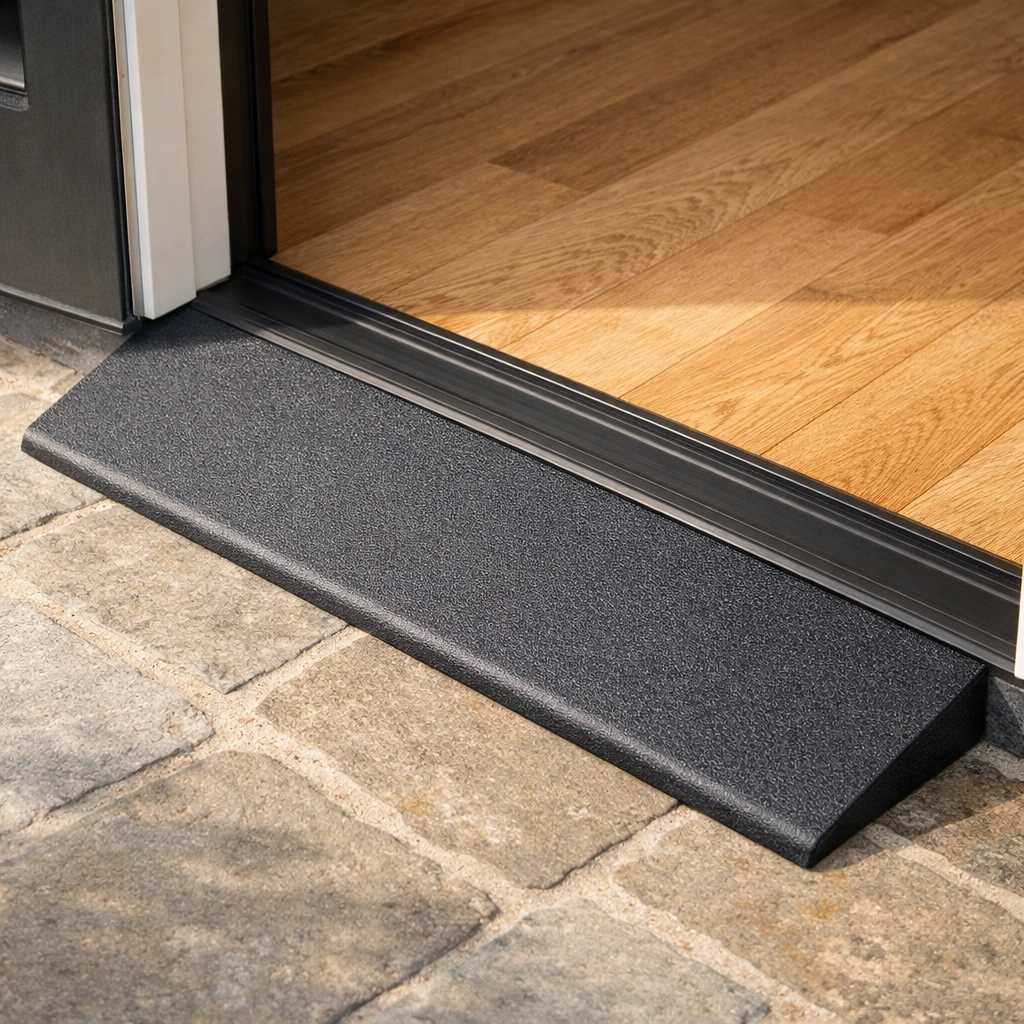
One of the most common causes of trips at the door is the threshold. In many homes, the transition from the porch to the foyer involves a lip or a raised edge designed to keep out drafts and rain. While these are great for energy efficiency, they are often just high enough to catch a toe or a walker wheel.
Even a rise of half an inch can be enough to cause a trip. As we age, our gait naturally changes; we tend to lift our feet less than we used to. This "shuffling" gait makes even the smallest obstruction a serious hazard.
Solutions for Raised Transitions
The goal is to create a seamless transition. For thresholds that are 1/2 inch to 3 inches high, threshold ramps are an excellent solution. These are small, angled wedges made of rubber, aluminum, or composite materials that sit against the lip of the door. They turn a vertical "bump" into a gentle slope.
If you aren't ready for a ramp, consider "transition strips" for interior doorways. If you are moving from a carpeted living room to a tiled entryway, ensure the transition strip is flush and secure. Loose metal strips or curling carpet edges should be tacked down immediately.
Lighting: Seeing the Path Clearly
Fall prevention is as much about vision as it is about physical strength. Many falls at the entryway happen at dusk or night because the person cannot accurately judge the distance to the step or the location of the door handle.
Exterior Lighting Strategies
Your exterior lighting should do more than just illuminate the house number. It needs to provide a clear view of the ground and any changes in elevation.
- Motion Sensors: These are game-changers. Instead of fumbling for a light switch inside, motion-activated lights ensure the porch is bright the moment you approach.
- Dual-Sided Lighting: If possible, have lights on both sides of the door. This eliminates shadows that can play tricks on your depth perception.
- Pathway Lights: Low-voltage LED lights along the walkway leading to the door help guide the way and define the edges of the path.
Interior Foyer Lighting
Once you step inside, your eyes need time to adjust from the bright outdoors to a dimmer interior.
- Illuminated Switches: Use rocker-style light switches that glow in the dark. This makes them easy to find the moment you cross the threshold.
- High-Lumen Bulbs: Ensure the foyer is bright enough to reveal any shoes, umbrellas, or packages that might be sitting on the floor.
Door Hardware and Ergonomics
If you have to exert significant force to open a door or if you have to twist a round knob while balancing on one foot, you are at risk.
The Power of Lever Handles
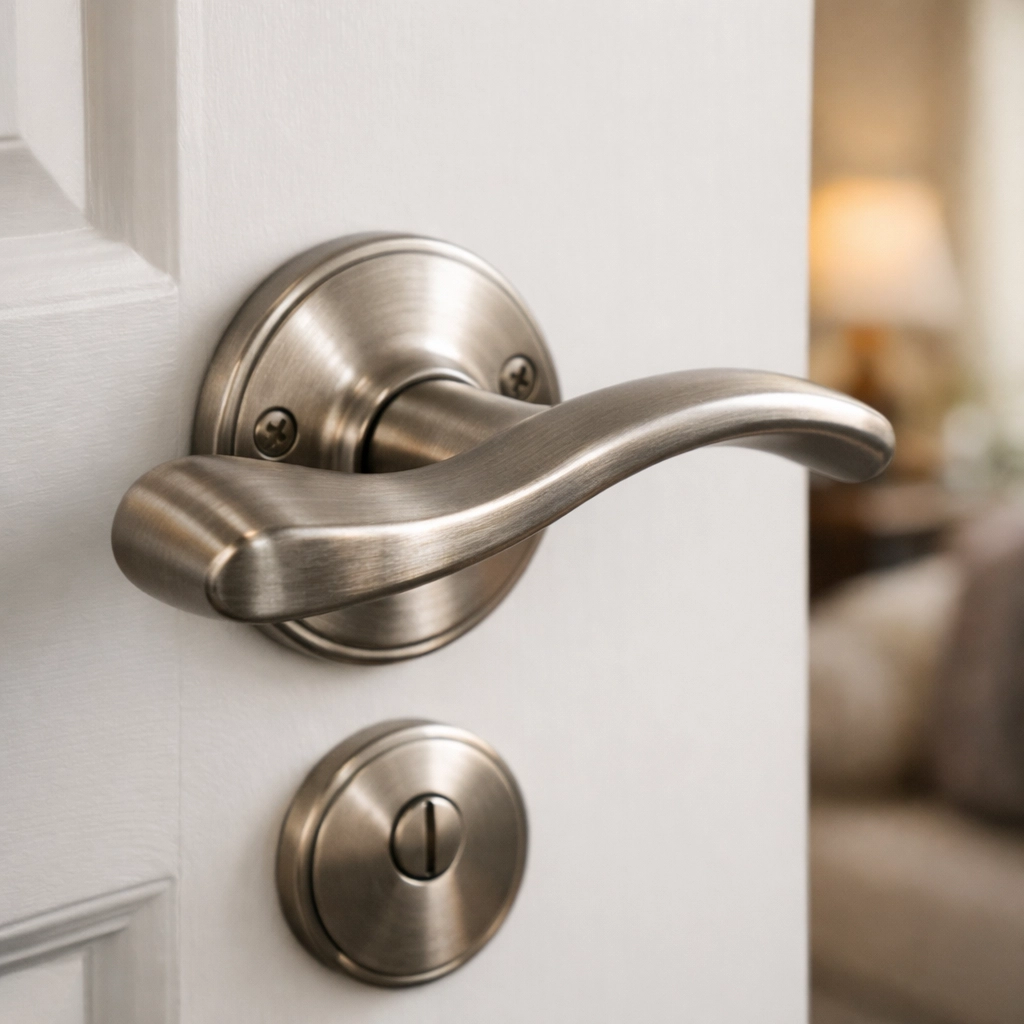
Standard round doorknobs require a "pinch and twist" motion that can be difficult for anyone with arthritis or limited grip strength. Replacing these with lever-style handles allows you to open the door with a simple downward push: even using an elbow if your hands are full.
Door Width and Swing
Standard doors are often 32 inches wide, which can be a tight squeeze for a walker or wheelchair. If a full renovation isn't in the cards, you can install "offset hinges" or "expandable hinges." These allow the door to swing completely clear of the frame, adding about two inches of precious clearance.
Additionally, pay attention to which way the door swings. An exterior door should ideally open into the home. This prevents the person from having to step backward: a movement that often leads to loss of balance: while pulling the door open.
Support Systems: Something to Hold Onto
When you are standing at the door, you are often "unanchored." You might be reaching for a package, locking the deadbolt, or shifting your weight to wipe your feet. This is when a grab bar or an assist rail becomes essential.
Exterior Grab Bars
A weather-resistant grab bar mounted to the wall next to the door provides a "third point of contact." This stability is crucial when navigating a threshold. It gives you something to hold onto while you navigate the lock or wait for someone to answer the door.
The "Landing Pad" Concept
Inside the door, consider a sturdy bench or a small table. Having a place to set down groceries or a purse immediately upon entering prevents you from carrying heavy, unbalanced loads while trying to navigate the rest of the house. A bench also provides a safe place to sit down while putting on or taking off shoes, which is a common time for balance mishaps.
Managing the "Trip Zones": Mats and Rugs
We often put mats at the door to keep the house clean, but "throw rugs" are one of the leading causes of falls in the home.
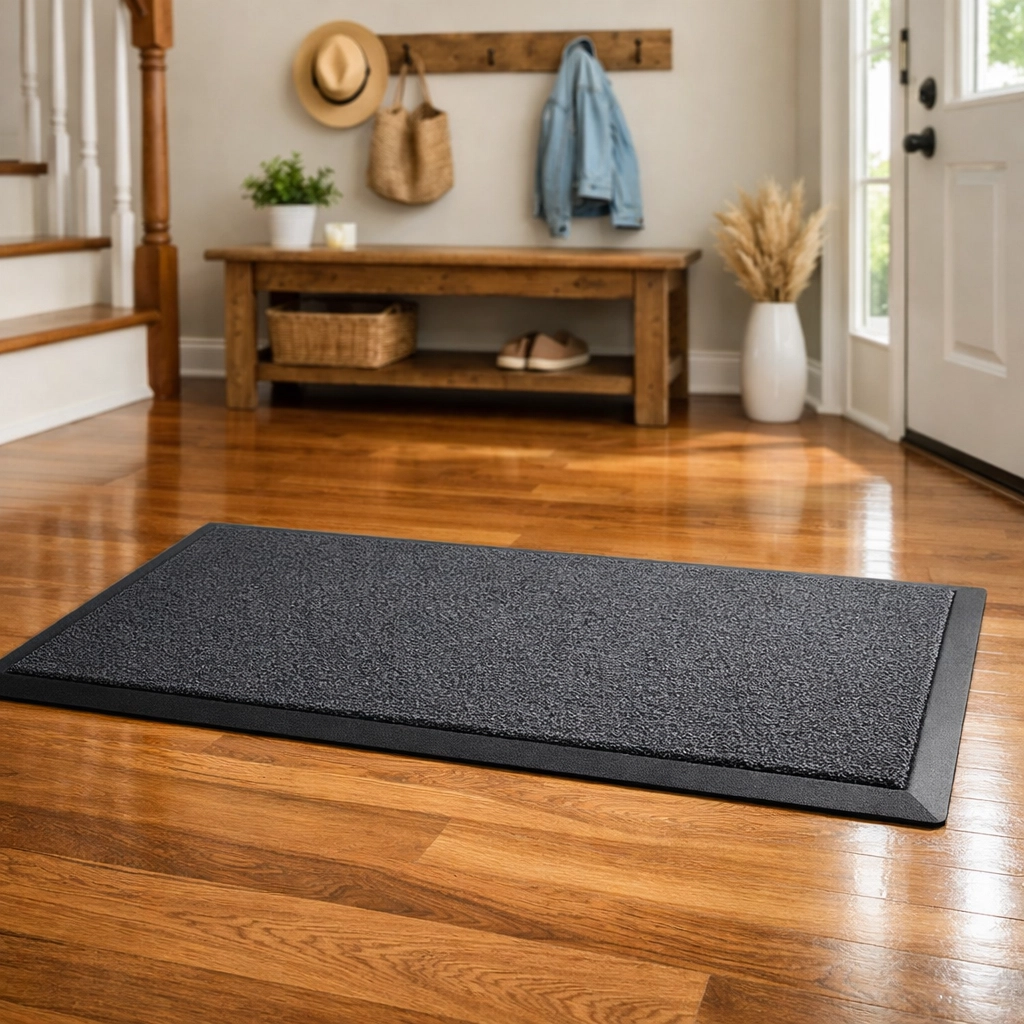
- The Problem with Mats: Many mats have thick edges or tend to slide across the floor. If a mat isn't heavy-duty or secured, it can easily bunch up under a walker or catch a heel.
- The Solution: Use low-profile, non-slip mats with beveled edges. These lay flatter against the floor. For interior rugs, use double-sided rug tape or a high-quality rubberized backing to ensure the rug cannot move even an inch when stepped on.
Stairs and Walkways Leading to the Entry
The entryway safely starts several feet before the actual door. If your entrance has steps, they require specific attention.
Handrail Consistency
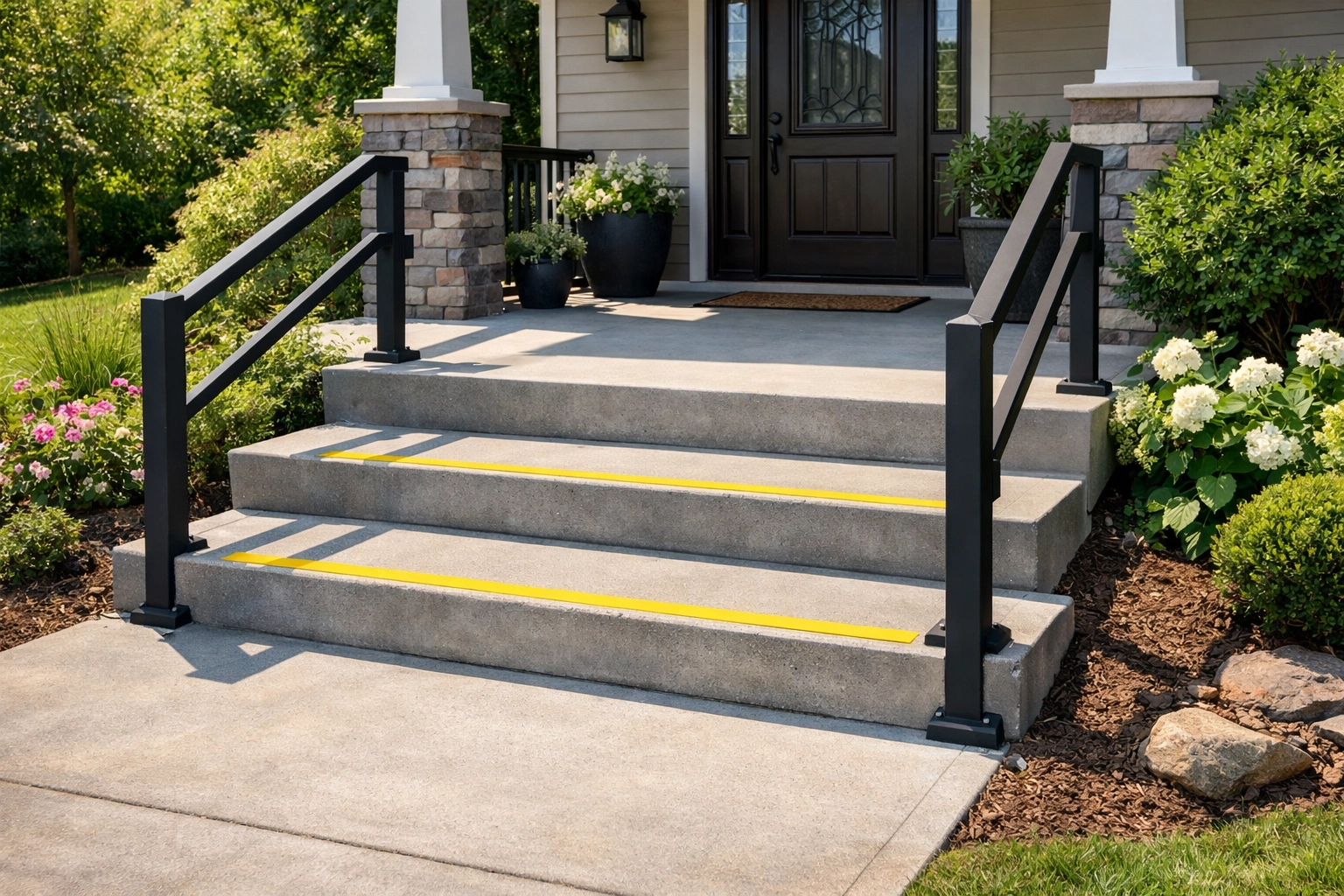
There should be a handrail on both sides of the steps, extending slightly beyond the top and bottom steps. This allows the user to gain stability before they even start climbing and maintain it until they are fully on level ground.
Step Visibility
To improve depth perception, you can apply a strip of contrasting colored paint or non-slip tape to the edge (the "nosing") of each step. If the steps are grey concrete, a white or yellow strip makes the end of each step unmistakably clear.
Surface Texture
Rain, ice, and even wet leaves can turn a porch into a skating rink.
- Non-slip coatings: You can add "grit" or sand-based additives to exterior paint or sealants to provide extra traction.
- Clearing the path: Ensure that gutters are clean so water doesn't overflow and pool (or freeze) directly in front of the door.
Universal Design: A Proactive Approach
Safe entryways fall under the umbrella of "Universal Design": the idea that a home should be accessible to everyone, regardless of age or ability. One of the gold standards of universal design is the "zero-step entry."
A zero-step entry means there is no lip, no stair, and no threshold between the driveway and the inside of the house. While this often requires professional construction (grading the land or building a long, gentle permanent ramp), it is the ultimate way to "future-proof" a home.
Technology as a Safety Tool
In 2026, technology has made entryways significantly safer. Smart home features aren't just for convenience; they are safety tools.
- Video Doorbells: These allow a senior to see who is at the door from their phone or a tablet while sitting down. This eliminates the need to rush to the door: a common cause of trips.
- Smart Locks: These can be unlocked via a smartphone or a proximity sensor. This removes the need to fumble with keys, which often requires a person to look down and lose focus on their balance.
- Voice-Activated Lighting: "Alexa, turn on the porch light" is a powerful tool for someone returning home after dark.
Maintenance Checklist for a Safe Entryway
A safe entryway requires ongoing attention. Use this checklist once a season to ensure everything stays in top shape:
- Check for Loose Boards: If you have a wooden porch, check for "popped" nails or warping boards that create uneven surfaces.
- Inspect the Lighting: Replace any flickering bulbs and clean the glass covers on exterior lights to ensure maximum brightness.
- Test the Door: Does it stick? Does it require a hard shove? Lubricate hinges and adjust the strike plate so the door opens and closes smoothly.
- Clear Obstructions: Ensure that bushes or potted plants haven't overgrown the walkway, forcing you to step off the path.
- Secure Rugs: Check that rug tape is still sticky and that mats haven't developed curled "dog-ear" corners.
Final Thoughts
The entryway is your first and last interaction with your home every time you leave. By taking the time to smooth out thresholds, brighten the lighting, and add sturdy support rails, you turn a potential hazard into a welcoming, safe passage.
Fall prevention is rarely about one big change; it is about a series of small, intentional adjustments. When you look at your front door, don't just see an entrance: see a path. Making that path as clear and stable as possible is one of the best investments you can make in your long-term independence. Reassuring yourself or a loved one that "the door is safe" provides a peace of mind that carries through the rest of the day.

