
Experiencing a fall can be a jarring and frightening event. Whether it happens in the kitchen, on the stairs, or in the garden, the moments immediately following a fall are often filled with a mix of adrenaline, confusion, and sometimes pain. While our first instinct is usually to scramble back up as quickly as possible: often out of embarrassment or a desire to prove we’re okay: rushing can actually lead to further injury.
Recovery isn't just about the five minutes after you hit the floor; it’s a comprehensive process that includes immediate physical assessment, safe movement techniques, medical follow-up, and long-term rehabilitation. This guide is designed to walk you through every stage of that process, providing a roadmap to help you or a loved one heal safely and regain the confidence to move freely again.
The Golden Rule: Don’t Rush to Get Up
The very first thing to do after a fall is actually nothing. Stay still.
When you fall, your body goes into a minor state of shock. Adrenaline can mask pain, meaning you might have an injury you don’t feel yet. If you try to jump up immediately, you risk aggravating a fracture or causing a secondary fall because your legs are shaky or your blood pressure hasn't stabilized.
Take a few deep breaths. Focus on calming your heart rate. While you’re lying there, perform a quick "body scan." Gently wiggle your fingers and toes. Move your arms and legs slowly. Do you feel any sharp pains? Any numbness? Any wetness that might indicate bleeding? If something feels "off" or if you experience intense pain in your hips or back, do not attempt to move. This is the time to call for help using a mobile phone, a medical alert button, or by shouting.

A Step-by-Step Guide to Getting Up Safely
If you’ve done your body scan and feel confident that you aren't seriously injured, you can begin the process of getting up. It’s important to use a structured method that minimizes the strain on your joints and reduces the risk of getting dizzy.
1. The Roll
Slowly roll onto your side. Take your time with this movement. If you feel any sudden dizziness as your head shifts position, stop and wait for it to pass. Being on your side is the strongest position to begin the transition to your hands and knees.
2. The Transition to Hands and Knees
From your side, use your arms to push your upper body up while pulling your knees toward your chest. You want to end up on all fours. If you have carpet burn concerns or sore knees, you can use your hands to "walk" your weight into a stable quadruped position.
3. The Crawl
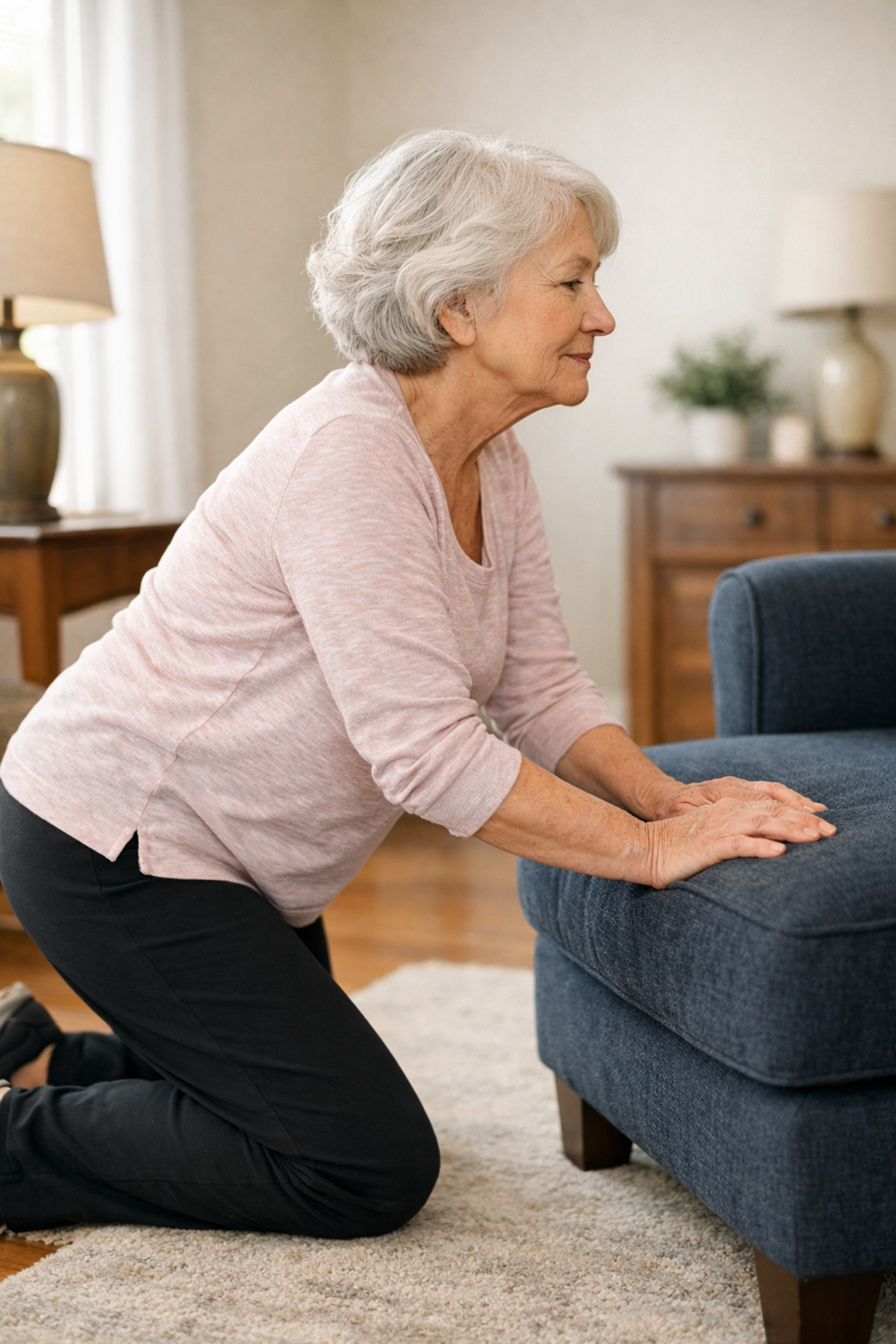
Look around the room for the sturdiest piece of furniture nearby. This should be something heavy that won't slide or tip over, like a sofa, a heavy armchair, or a sturdy bed frame. Avoid using light dining chairs or rolling office chairs. Crawl toward that object slowly.
4. The Half-Kneel
Place both hands firmly on the seat of the furniture. Choose one leg: usually your stronger leg: and bring that foot forward so it is flat on the floor. You should now be in a half-kneeling position (one knee on the floor, one foot flat).
5. The Rise and Pivot
Push down through your hands and your forward foot simultaneously. Slowly straighten your legs until you are standing. Don't walk away immediately. Turn around slowly and sit down on the piece of furniture you just used for support.
The First 24 Hours: Monitoring for "Hidden" Injuries
Even if you managed to get up and feel relatively fine, the recovery process has only just begun. Many fall-related injuries don't show symptoms for several hours or even a day.
Soft Tissue and Bone Health
Keep an eye out for swelling and bruising. If a joint starts to look deformed or if you cannot put weight on a limb after a few hours, you need a professional evaluation. Hairline fractures, especially in the wrist or hip, can be deceptive. You might think it’s just a "bad bruise" when it’s actually a bone injury that needs stabilization to heal correctly.
Head Injuries and Concussions
If you bumped your head during the fall, monitoring is non-negotiable. Symptoms of a concussion or a slow brain bleed (subdural hematoma) can be subtle. Watch for:
- Persistent or worsening headaches.
- Nausea or vomiting.
- Confusion or "brain fog."
- Changes in sleep patterns or mood.
- Sudden slurring of speech or vision changes.
If any of these occur, seek medical attention immediately.
Why a Medical Evaluation is Essential
It is a common misconception that you only need to see a doctor after a fall if something is broken. In reality, a fall is often a "symptom" of an underlying health issue. A post-fall medical check-up serves two purposes: treating current injuries and diagnosing why the fall happened in the first place.
A doctor might review your medications. Many common prescriptions for blood pressure, sleep, or anxiety can cause dizziness or "orthostatic hypotension" (a drop in blood pressure when standing up). They may also check your vision or inner ear health, both of which are critical for balance.
By identifying the root cause: be it a new medication interaction or a gradual change in muscle strength: you can prevent the next fall from happening.

The Role of Physical Therapy in Recovery
Physical therapy (PT) is perhaps the most powerful tool in the recovery arsenal. After a fall, it’s natural to become protective of your body. You might start walking with shorter, choppier steps or avoiding certain rooms in your house. This "fear of falling" actually increases your risk because it leads to muscle stiffness and a loss of functional range of motion.
A physical therapist helps break this cycle. They focus on:
- Gait Training: Re-learning a steady, confident walking pattern.
- Proprioception: Improving your body’s ability to sense where it is in space.
- Strength Building: Strengthening the core and lower body muscles that keep you upright.
- Safe Landing Techniques: Learning how to fall in a way that minimizes impact, which paradoxically reduces the fear of falling.
Working with a professional provides a safe environment to push your limits, ensuring that your recovery leads to more independence, not less.
Managing the Psychological Impact
We often talk about the physical bruises, but the "emotional bruises" after a fall can be just as debilitating. It is very common to experience a loss of confidence. You might find yourself turning down social invitations or giving up hobbies like gardening because you’re afraid of uneven ground.
This is sometimes called "Post-Fall Syndrome." To recover mentally:
- Acknowledge the fear: It’s okay to be shaken up. Don't dismiss your feelings.
- Take small wins: Start by walking short distances in a controlled environment with a partner.
- Educate yourself: The more you understand about balance and safety, the less "mysterious" and scary a potential fall feels.
- Modify your environment: Sometimes, simply knowing you have handled the "trouble spots" in your home can provide the peace of mind needed to move confidently again.

Creating a Fall-Resistant Environment for Healing
As you heal, take a look at the environment where the fall occurred. This isn't about blaming the house; it’s about making the house work better for your current needs. Recovery is much easier when you aren't worried about the environment tripping you up again.
- Lighting is everything: Ensure pathways from the bedroom to the bathroom are brightly lit, especially at night. Motion-activated lights are excellent because they don't require you to fumble for a switch in the dark.
- Clear the "Runways": Remove loose rugs, stacks of magazines, or electrical cords that cross walking paths.
- Add Support where needed: If the fall happened in the bathroom, consider where a handhold would have helped. If it happened while getting out of bed, look at how the transition from lying to standing can be made more stable.
Nutrition and Bone Health During Recovery
Your body needs fuel to repair tissues and strengthen bones. During recovery, focus on a diet rich in Calcium and Vitamin D. Calcium provides the building blocks for bone density, while Vitamin D acts as the "key" that allows your body to absorb that calcium.
Hydration is also a hidden factor in fall recovery. Dehydration can lead to dizziness and confusion, which makes you unsteady on your feet. Aim for consistent water intake throughout the day to keep your blood pressure stable and your muscles functioning at their peak.
Practicing the "Floor Recovery" Skill
Once you are fully healed and cleared by a professional, one of the best ways to ensure future safety is to practice getting up from the floor. This might sound counterintuitive: why get on the floor if you’re afraid of falling?
However, practicing the "Roll, Crawl, and Rise" technique in a controlled setting builds "muscle memory." If you ever do find yourself on the floor again, your brain won't panic. It will say, "I know what to do. I’ve practiced this." This sense of agency is the ultimate goal of post-fall recovery.
Moving Forward with Confidence
A fall is a significant event, but it doesn't have to define your mobility for the future. By taking the time to stay still, getting up using a safe technique, seeking medical advice, and engaging in physical rehabilitation, you can come back stronger.
Recovery is a marathon, not a sprint. Be patient with your body as it heals, and be proactive about making the changes necessary to keep your home a sanctuary of safety. With the right approach, you can move past the shock of a fall and return to the activities you love with a renewed sense of security and strength.

