
The bathroom is one of the most hazardous rooms in any home. When you combine wet surfaces, soap residue, and quick movements, you've got the perfect recipe for a fall. In fact, over 230,000 bathroom-related injuries occur each year in the United States alone, with many of these incidents happening in the shower or bathtub.
Bathroom safety rails: sometimes called grab bars or shower rails: are one of the most effective tools for reducing this risk. But not all safety rails are created equal, and knowing how to choose, install, and use them properly makes all the difference.
What Are Bathroom Safety Rails?
Bathroom safety rails are sturdy bars installed on bathroom walls, tubs, or shower enclosures. They provide additional points of contact when you're moving through wet, slippery environments. Think of them as an extra hand to steady yourself when stepping into the shower, shifting your weight, or reaching for soap.
These rails aren't just for older adults or people with diagnosed mobility issues. Anyone can benefit from the added stability, especially in moments when balance is compromised: like when you're groggy in the morning, recovering from an illness, or dealing with an injury.
Understanding the Different Types of Safety Rails
Not every bathroom is the same, and not every person needs the same level of support. That's why safety rails come in several configurations.
Straight Grab Bars
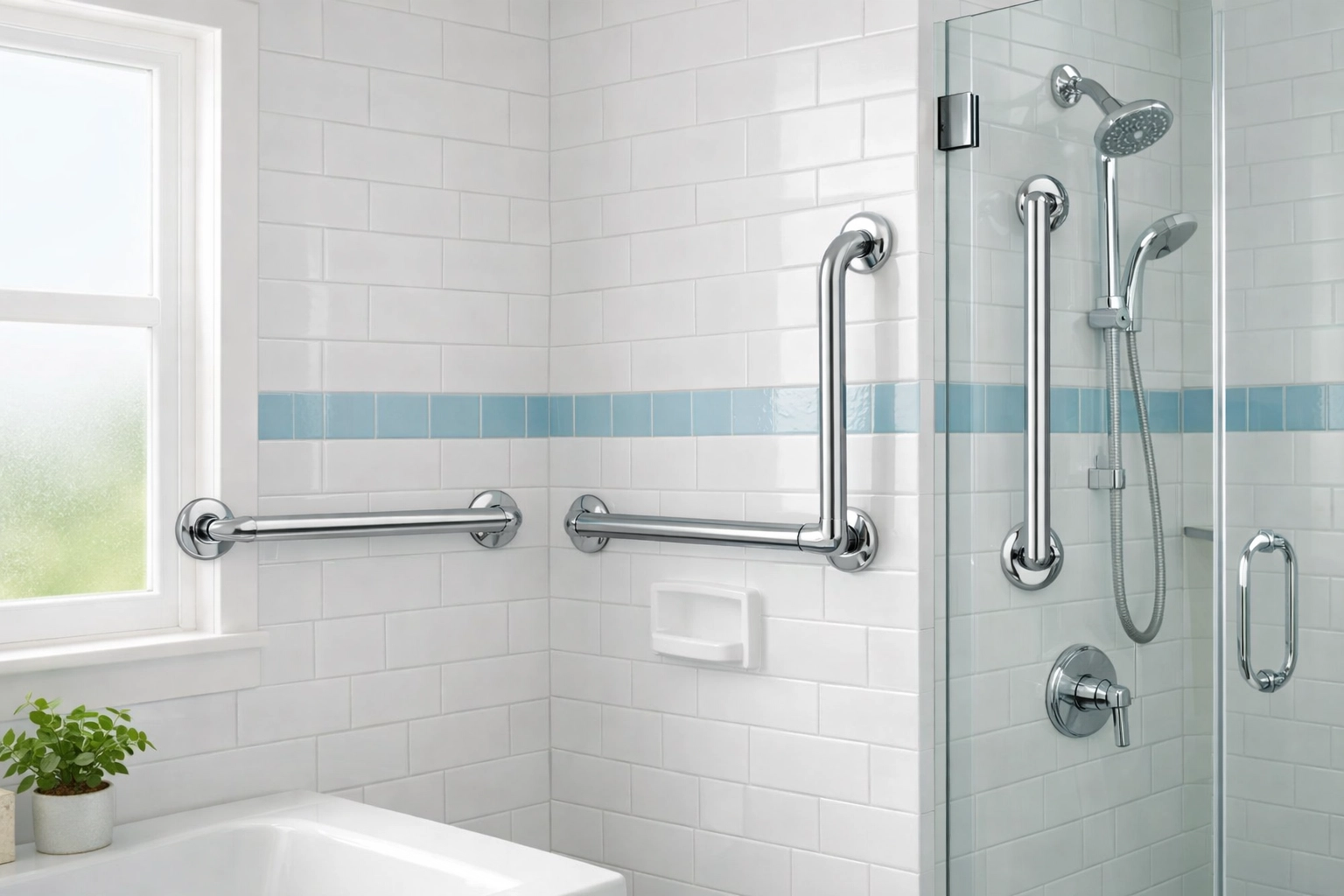
These are the most common type. They're simple bars that can be mounted horizontally, vertically, or at an angle depending on your needs. Horizontal bars work well for balance when standing, while vertical bars are helpful when transitioning from sitting to standing or stepping over a tub edge.
L-Shaped Grab Bars
L-shaped bars provide support along two adjacent walls, forming a 90-degree angle. These are particularly useful in corner showers where you might need stability from multiple directions.
U-Shaped Grab Bars
U-shaped rails create a three-sided support system, often installed in bathtub corners or around shower seats. They offer more comprehensive support for people who need extra assistance with balance.
Flip-Up and Adjustable Rails
Some safety rails can be folded up when not in use, which is helpful in smaller bathrooms or homes with multiple users who have different needs. However, these moving parts require regular inspection to ensure they remain secure.
A Word About Suction-Cup Grab Bars
You'll find suction-cup grab bars available in many stores. While they might seem convenient because they don't require drilling, they're not recommended for critical support. They can lose suction over time, especially in humid environments, and may fail exactly when you need them most.
Where to Place Safety Rails for Maximum Effectiveness
Placement matters more than you might think. A grab bar installed in the wrong location won't do much good, no matter how strong it is.
The Side Wall
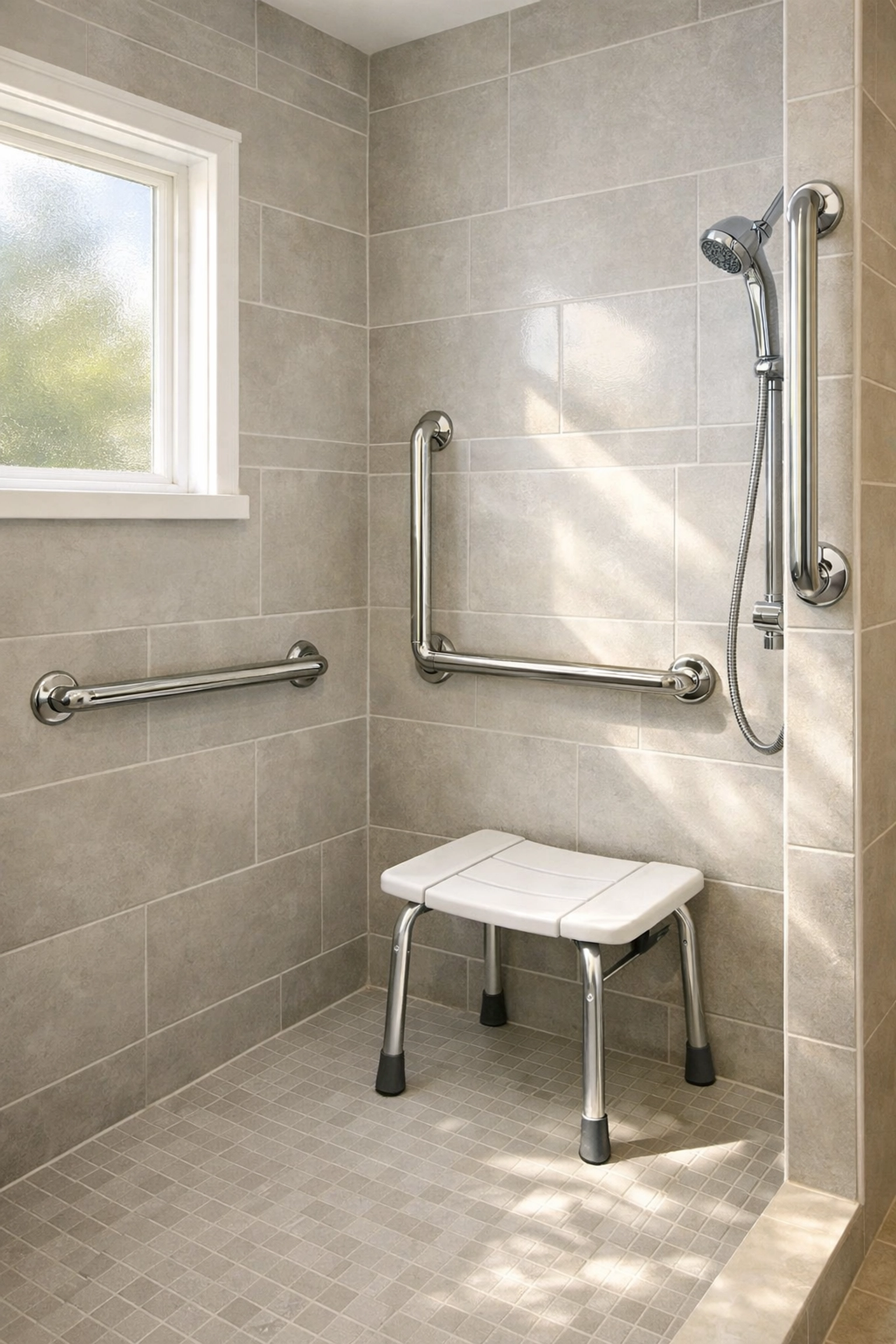
For bathtubs and tub-shower combinations, install a horizontal grab bar on the side wall at a height of 34 to 36 inches above the floor. This provides stability while you're standing, bathing, or stepping in and out of the tub.
The Back Wall
If you use a shower seat or transfer bench, mount a horizontal bar on the back wall approximately 9 inches above the seat height. This helps with sitting down and standing up safely.
Vertical Entry Rails
A vertical rail near the entrance to your shower or tub provides something to hold onto during that critical transition from dry to wet surfaces. Position it where your hand naturally falls as you step in: typically spanning 31 to 47 inches in height.
Corner Installations
In walk-in showers, corner placements work well because they're accessible from multiple positions. This is where L-shaped or U-shaped bars really shine.
What About Shower Heads and Towel Bars?
Here's a critical safety note: never use shower riser rails (the pipe that holds your showerhead) or towel bars to steady yourself. These fixtures aren't designed to bear weight and will fail if you rely on them during a fall. This can turn a minor slip into a serious injury.
Weight Capacity and Structural Requirements
All bathroom safety rails must meet specific strength requirements. Any grab bar you install should support a minimum of 250 pounds of weight. Many quality bars support 300 pounds or more.
But weight capacity only matters if the rail is properly mounted. This means:
- Securing the bar into wall studs whenever possible
- Using heavy-duty anchors specifically designed for bathroom installations when studs aren't available
- Never mounting directly into drywall alone
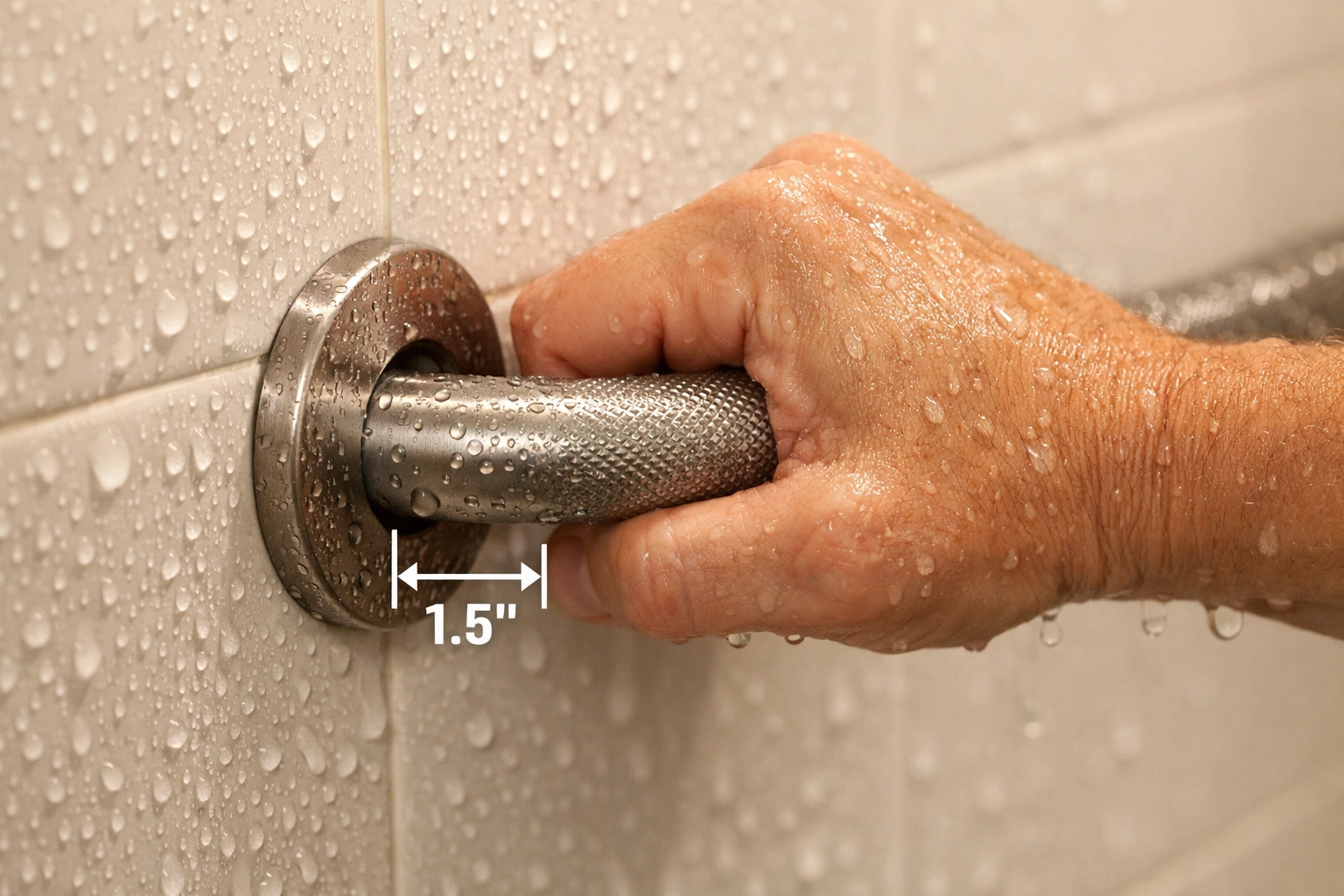
- Maintaining 1.5 inches of clearance between the bar and the wall for adequate grip space
Professional installation is worth considering. An improperly installed grab bar creates a false sense of security and may fail precisely when you need it most.
Materials That Matter
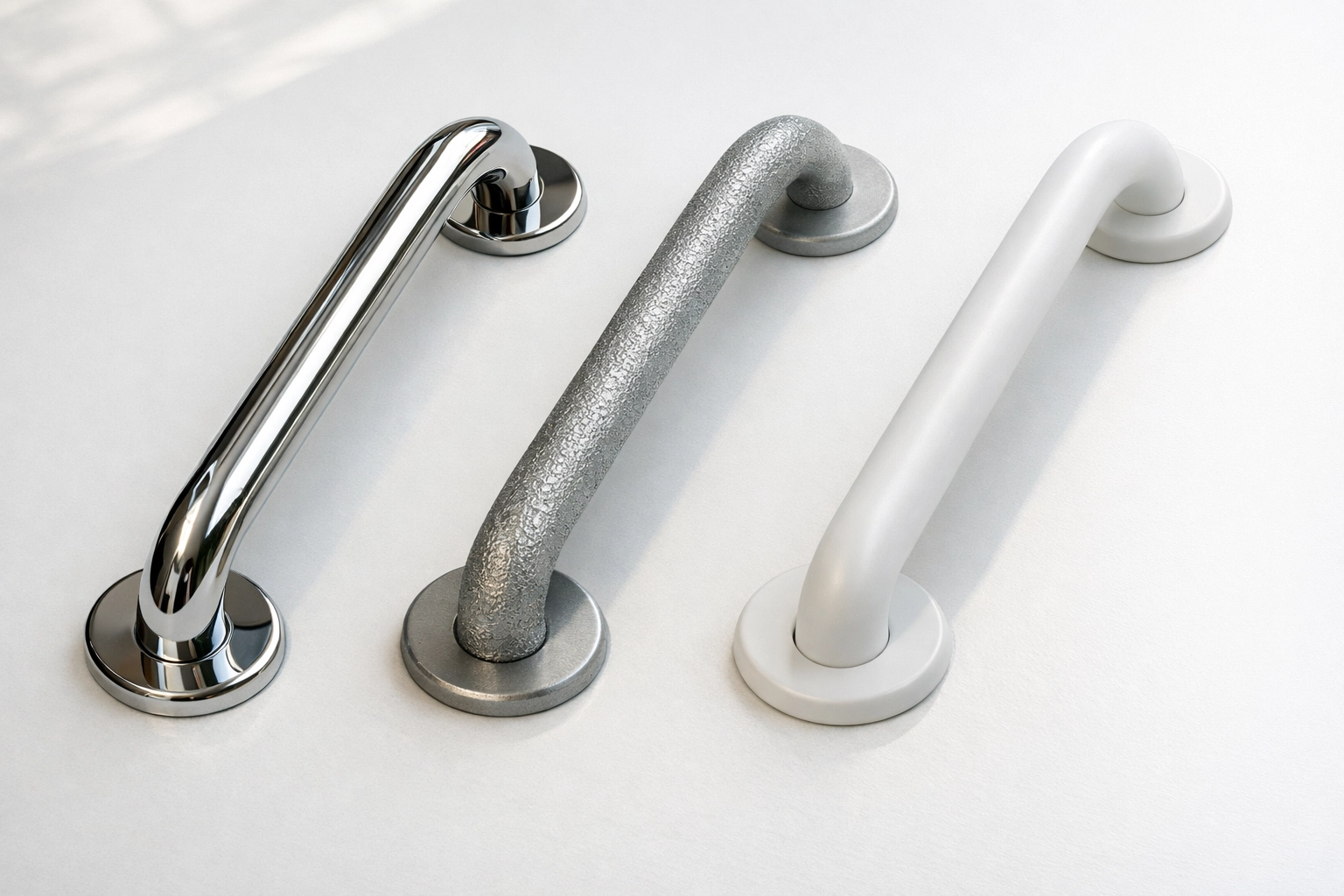
Most bathroom safety rails are made from metal: either aluminum or stainless steel: or durable plastic. Each material has its advantages.
Stainless Steel
Stainless steel bars offer excellent strength and durability. They resist corrosion in humid bathroom environments and can support heavy weight loads. Look for marine-grade stainless steel for the best longevity.
Aluminum
Aluminum bars are lighter than steel but still strong enough for most applications. They resist rust naturally and are often more affordable than stainless steel options.
Coated Metals
Some bars feature textured coatings that improve grip, especially when hands are wet or soapy. These coatings should be slip-resistant but comfortable to grip.
Plastic and Composite Materials
High-quality plastic bars can work well in certain applications. They're often warmer to the touch than metal, which some people find more comfortable. However, ensure any plastic bar you choose meets the 250-pound minimum weight requirement.
Installation Best Practices
Even the best safety rail won't help if it's not installed correctly. Here's what proper installation looks like.
Finding Wall Studs
Wall studs provide the strongest anchor points. Use a stud finder to locate them, and plan your grab bar placement around stud locations when possible. Studs are typically spaced 16 or 24 inches apart in most homes.
Using Proper Anchors
When studs aren't in the right location, use toggle bolts or other anchors rated for bathroom use and capable of supporting the required weight. Standard drywall anchors aren't sufficient for grab bars.
Ensuring Level Installation
An unlevel grab bar can feel awkward to use and may create uneven stress on the mounting hardware. Use a level during installation and double-check before tightening all fasteners completely.
Testing After Installation
Once installed, test the grab bar thoroughly before relying on it. Apply firm pressure from multiple angles. If you notice any movement, loosening, or creaking, address it immediately.
Maintenance and Regular Inspection
Installing safety rails isn't a one-and-done task. Regular maintenance keeps them safe and functional.
Monthly Checks
Once a month, physically test each grab bar by applying firm pressure. Look for:
- Any movement or loosening at the mounting points
- Visible rust or corrosion
- Cracks in the bar itself
- Loose or missing mounting hardware
Cleaning Properly
Clean your safety rails with mild soap and water, then dry them thoroughly. Harsh chemicals can degrade protective coatings and potentially corrode mounting hardware. Keeping the bars dry after each shower prevents rust and maintains the grip surface.
When to Replace
Replace or repair any grab bar that shows signs of damage, significant rust, or loosening that can't be corrected by tightening. Don't wait until a rail fails: address issues as soon as you notice them.
Common Mistakes to Avoid
Understanding what not to do is just as important as knowing best practices.
Relying on Aesthetic Appeal Over Function
Some decorative towel bars or bathroom accessories might look sturdy, but they're not designed to support body weight. Purchase products specifically labeled as safety grab bars that meet weight capacity standards.
Insufficient Number of Bars
One grab bar often isn't enough. Think about your movement patterns through the bathroom. You may need bars at multiple locations: entering the shower, inside the shower, near the toilet, and at the tub.
Installing at the Wrong Height
A grab bar that's too high won't help when you're sitting. One that's too low won't provide adequate support when standing. Follow the height guidelines based on how you'll use each bar.
Forgetting About Grip Diameter
Grab bars that are too thick or too thin are difficult to grip securely. The ideal diameter is typically 1.25 to 1.5 inches, which fits comfortably in most hands.
Who Benefits Most from Bathroom Safety Rails?
While anyone can benefit from added bathroom stability, certain groups find safety rails particularly valuable.
Older Adults
Age-related changes in balance, strength, and vision increase fall risk. Safety rails provide consistent support that helps maintain independence.
People Recovering from Surgery or Injury
Temporary mobility limitations during recovery make bathroom safety rails essential for preventing setbacks.
Individuals with Chronic Conditions
Arthritis, Parkinson's disease, multiple sclerosis, and other conditions affecting mobility or balance make wet bathroom surfaces especially hazardous.
Pregnant Women
Changes in balance and center of gravity during pregnancy can make bathroom navigation more challenging.
Planning Your Bathroom Safety Rail Installation
Before you start drilling holes, take time to plan your installation thoughtfully.
Start by observing how you currently move through your bathroom. Where do you naturally reach for support? Where do you feel unsteady? These observations guide ideal placement.
Consider future needs as well. Installing additional mounting points now, even if you don't immediately need all of them, makes future additions easier.
If you live with multiple people with different heights or abilities, placement becomes more complex. In these cases, vertical bars often work better than horizontal ones because they provide support at multiple heights.
Beyond the Shower: Comprehensive Bathroom Safety
While this guide focuses on shower safety rails, remember that bathroom safety extends beyond the shower. Consider grab bars near the toilet and anywhere you transition from sitting to standing or vice versa.
Non-slip mats, adequate lighting, and keeping the floor dry all work together with safety rails to create a safer bathroom environment overall.
Making the Decision
Bathroom safety rails aren't an admission of weakness or a sign of giving up independence. They're a practical tool that helps you maintain independence safely. Many people report feeling more confident and comfortable in their bathrooms after installing grab bars, which actually increases their quality of life.
The key is choosing the right type for your specific needs, placing them strategically, installing them properly, and maintaining them regularly. When all these pieces come together, bathroom safety rails become an effective, reliable tool for fall prevention that works quietly in the background, exactly when and where you need them most.

