
You've noticed things. Maybe your mom held the railing a little tighter last time you visited. Maybe your dad mentioned he "had a little stumble" in the bathroom. Or perhaps you walked into their home and saw throw rugs everywhere, dim lighting, and clutter that wasn't there before.
Now you're facing one of the toughest conversations adult children have with their parents: talking about home safety. It feels awkward, even a little role-reversal-y, and you're worried about offending them or making them feel like you're taking away their independence.
Here's the thing, you're not alone in feeling this way, and there absolutely is a better approach than just blurting out "Mom, your house is a death trap!" (Please don't do that.)
Let's talk about how to have this conversation with empathy, respect, and actual results.
Why This Conversation Matters (And Why It's So Hard)
Falls send 3 million older adults to emergency rooms every year in the United States, resulting in about 1 million hospitalizations. Many of these falls happen at home, in familiar spaces where your parents have lived for years or even decades.
But here's why the conversation is so difficult: you're essentially asking your parents to acknowledge vulnerability in the place where they feel most comfortable and in control. Their home represents independence, memories, and autonomy. Suggesting changes can feel like you're questioning their ability to take care of themselves.
That's a big deal. And it deserves to be handled with care.

Timing Is Everything
The best time to talk about home safety is before a crisis happens: not after your parent has taken a fall or had a close call. Waiting until after an incident means emotions are running high, and your parent may be dealing with pain, fear, or embarrassment on top of everything else.
Look for natural conversation openers:
- After a friend or neighbor has had a fall or health emergency
- Following a doctor's appointment where mobility or balance was discussed
- When your parent mentions something challenging (even casually) like "I tripped over that rug again" or "I couldn't quite reach that shelf"
- During family gatherings when the topic of aging or health comes up organically
- When seasons change and you're visiting to help with seasonal tasks
These moments create openings that don't feel forced or accusatory. You're simply continuing a conversation that's already started.
The Right Mindset: Partnership, Not Parenting
Before you even start the conversation, check your own attitude. This isn't about parenting your parents or taking control of their lives. It's about partnering with them to protect something you both care about: their independence and wellbeing.
The framing matters tremendously. Consider these two approaches:
Approach A: "Dad, you can't keep living like this. These stairs are dangerous and you need grab bars everywhere."
Approach B: "Dad, I want you to be able to stay in this house as long as possible. Can we talk about some small changes that might make that easier?"
See the difference? One sounds like judgment and control. The other sounds like collaboration and support.
Your parents spent decades making their own decisions. They're not suddenly going to respond well to being told what to do: especially by their kids. Respect that they're still the decision-makers here. Your role is to provide information, share concerns, and offer help.
How to Start the Conversation
Open-ended questions are your best friend. Instead of making statements about what they should do, ask questions that help them voice their own concerns:
- "How do you feel about getting around the house these days?"
- "Have you had any close calls recently that worried you?"
- "What would you do if you fell and couldn't reach your phone?"
- "Is there anything about the house that feels harder to manage than it used to?"
These questions invite your parent to be part of the assessment rather than the subject of it. You're genuinely asking for their perspective, not lecturing.
When you do need to mention specific concerns, use observations rather than judgments:
Instead of: "Mom, you're going to kill yourself on these rugs!"
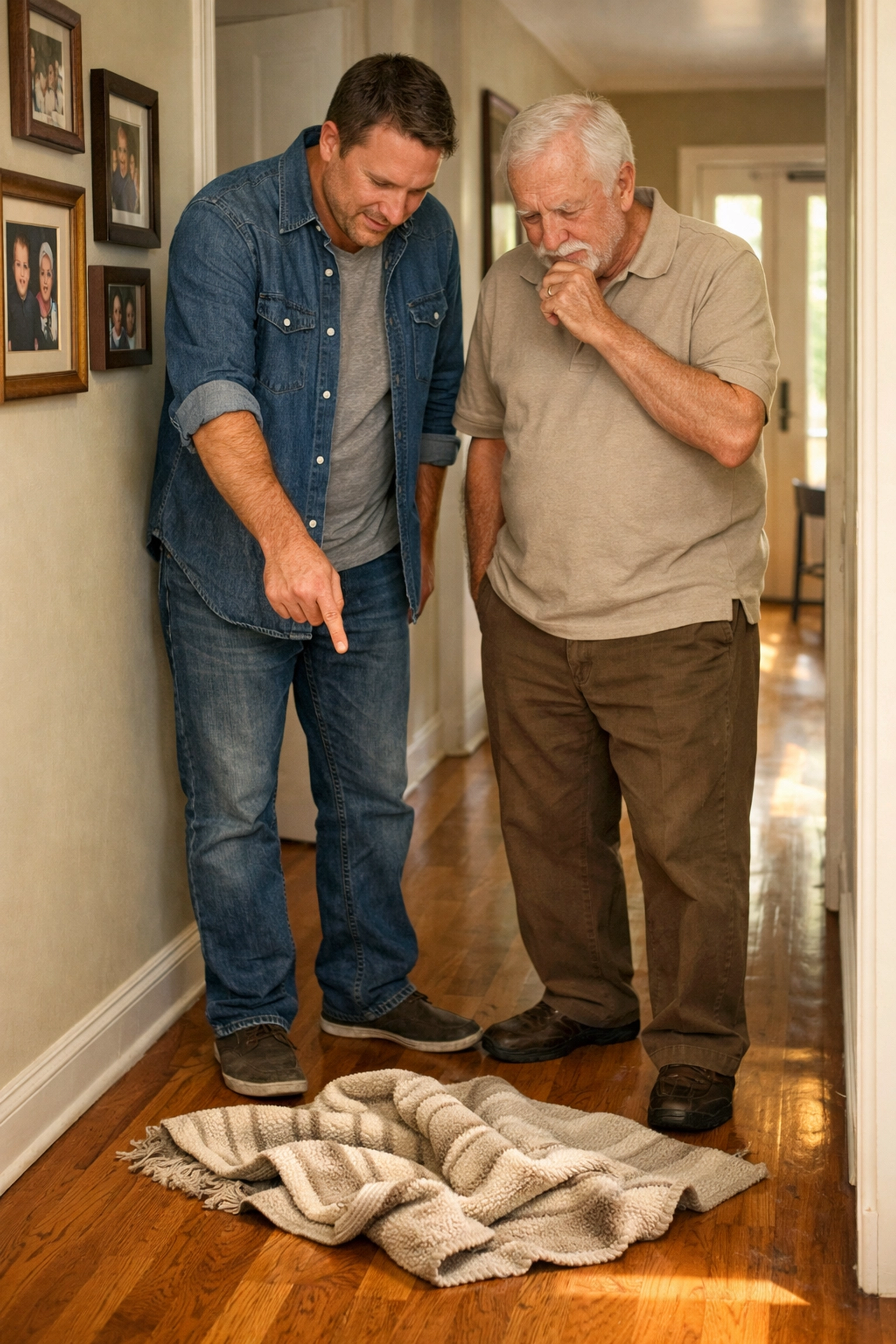
Try: "Mom, I noticed the rug in the hallway seems to bunch up. Has it ever caught your foot?"
Facts, not fear. Specific, not sweeping. This approach opens dialogue instead of shutting it down.
Key Safety Topics to Cover
Once you've established a collaborative tone, here are the main areas to discuss:
Fall Prevention Basics
Falls are the elephant in the room, so address them head-on (but gently). Talk about:
- Removing tripping hazards: Loose rugs, electrical cords across walkways, clutter on floors, and items left on stairs
- Lighting improvements: Adequate lighting in hallways, stairs, and bathrooms, with easy-to-reach switches or motion-activated options
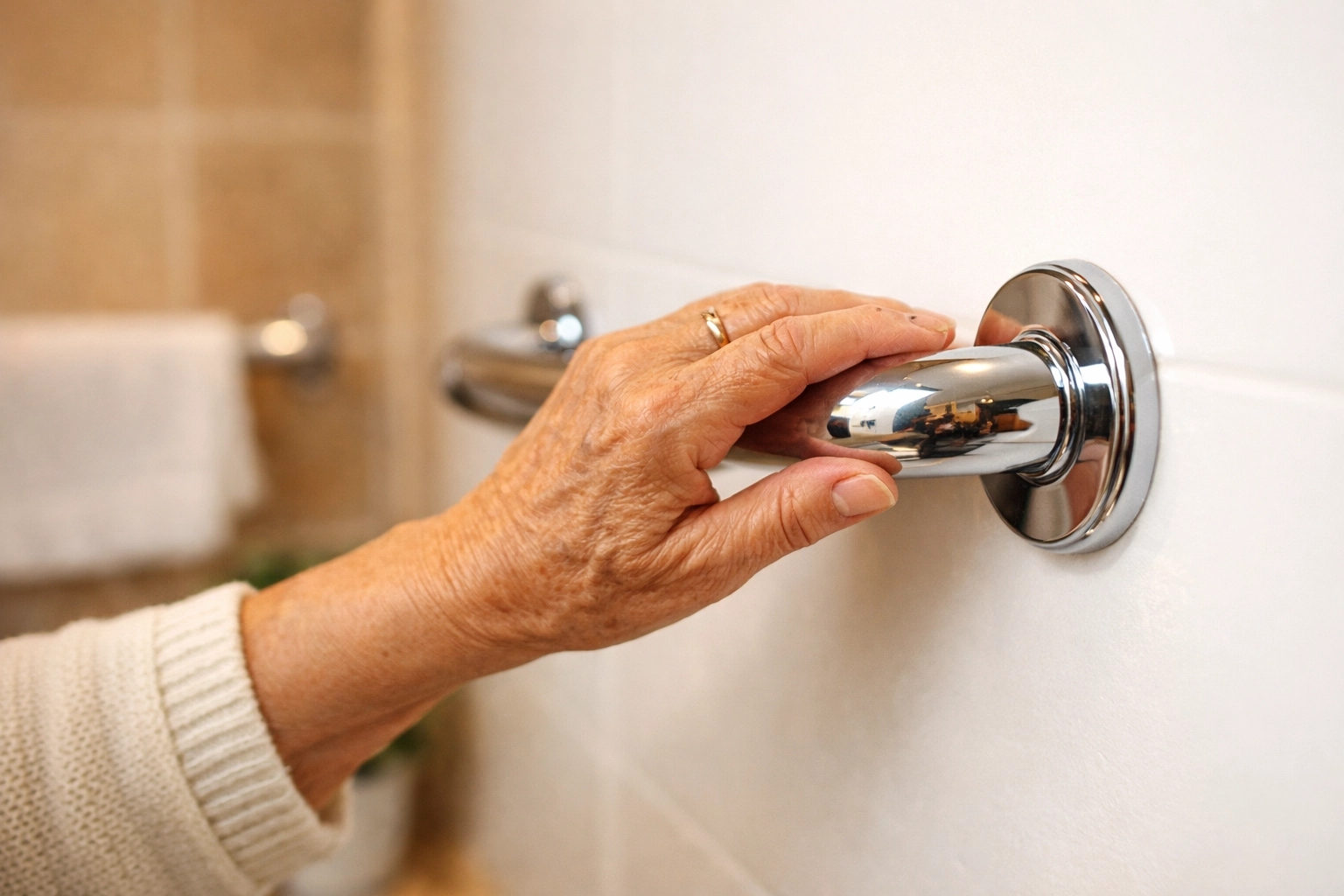
- Bathroom safety: Where most falls happen at home: discuss grab bars, non-slip mats, and raised toilet seats
- Stair safety: Secure handrails on both sides, good lighting, and keeping stairs clear
- Furniture arrangement: Clear pathways, sturdy furniture that won't tip if leaned on, and frequently-used items within easy reach
Daily Living Adjustments
- Medication management: Are they keeping track of multiple medications? Would a pill organizer help?
- Phone accessibility: Can they reach a phone from anywhere they might fall?
- Emergency contacts: Do they have a list posted? Does someone check in regularly?
- Assistive devices: Would a cane, walker, or grab bars help them feel more stable?
Professional Assessment
Sometimes suggesting a professional home safety evaluation can take pressure off the family dynamics. An occupational therapist can assess the home through their primary care provider and make specific, personalized recommendations. This gives your parent expert advice that doesn't come from "their worried kid."
Handling Resistance and Pushback
Let's be real: your parent might push back. They might say "I'm fine" or "I've lived here for 40 years without any problems" or "You're overreacting."
Here's how to navigate resistance:
Give Them Time
You're planting seeds, not issuing ultimatums. If they're not ready to hear it today, that's okay. Say something like, "I hear you. I just want you to know I'm here when you're ready to talk about it."
Sometimes people need to sit with information before they're ready to act on it.
Share Stories (Not Statistics)
Personal stories resonate more than scary statistics. If you know someone who benefited from grab bars or a medical alert device, share that story. "You know how Aunt Linda got that alert button? She said it gave her so much more confidence to stay active because she knew help was just a button-press away."
Reframe Safety Tools
Instead of framing safety improvements as admissions of weakness, position them as smart preparation:
"Getting grab bars isn't about needing help: it's about being prepared, like wearing a seatbelt. You hope you never need it, but it's there if you do."
Involve Others (Carefully)
Sometimes hearing the same concern from multiple family members shows it's not just one person being paranoid. However, be careful not to "gang up" on your parent. The goal is to show widespread love and concern, not to overwhelm or corner them.

Start Small
If they're resistant to big changes, start with the smallest possible adjustment. Maybe it's just replacing one light bulb with a brighter one, or moving one throw rug. Small wins build momentum and trust.
What Success Looks Like
Here's an important reframe: success doesn't mean your parent immediately agrees to every safety change you suggest. Success looks like:
- Having an open, respectful conversation without anyone feeling attacked
- Your parent considering even one or two changes
- Establishing that this is an ongoing dialogue, not a one-time lecture
- Your parent knowing they can come to you with concerns without judgment
- Making even small improvements over time
This is a process, not an event. Some conversations take months or even years. That's normal.
Moving Forward Together
After the initial conversation, keep the momentum going gently:
- Follow up with helpful information (not nagging)
- Offer to help with specific tasks: "I'm free Saturday if you want to tackle that bathroom lighting together"
- Check in regularly without making it all about safety concerns
- Celebrate the changes they do make, no matter how small
- Revisit the conversation naturally as circumstances change
Remember, the goal isn't to make your parent's home into a hospital or rehab facility. The goal is to make thoughtful adjustments that let them continue living independently in the place they love, for as long as possible.
That's not taking away their autonomy: it's protecting it.
The Bottom Line
Talking to your parents about home safety requires balancing concern with respect, urgency with patience, and your needs with theirs. It's not easy, but approaching the conversation with empathy, partnership, and a focus on preserving independence makes all the difference.
Your parents raised you. They taught you to ride a bike, drive a car, and navigate the world safely. Now, in the most loving way possible, you're returning the favor: helping them navigate this stage of life with dignity, safety, and as much independence as possible.
Start the conversation. Keep it going. And remember( you're all on the same team here.)

