
Most of us view our homes as a sanctuary: a place of comfort, familiarity, and safety. However, as we age or face changes in mobility, the very environment we’ve lived in for decades can begin to present hidden challenges. A rug that was once a stylish accent becomes a trip hazard; a doorway that seemed standard now feels narrow; a bathroom that was once a place of relaxation becomes a site of anxiety.
The goal of a home mobility assessment isn't to point out "problems" or make a home feel like a clinical facility. Instead, it is about empowerment. By identifying specific environmental risks and matching them with a person’s physical capabilities, we can create a space that supports independence rather than hindering it.
You don't need a degree in physical therapy to perform an effective initial sweep of a home. Using this 20-minute framework, you can systematically identify the most common risks and begin the process of making the home a safer, more navigable space.
The Philosophy of the 20-Minute Assessment
Why 20 minutes? Because mobility safety shouldn't feel like an overwhelming home renovation project. Most falls are caused by a combination of small factors that, when addressed, significantly lower the risk of injury.
This assessment is divided into two parts: the Environmental Scan (the "where") and the Functional Observation (the "how"). You’ll spend about 15 minutes looking at the physical space and 5 minutes observing how a person moves through it.
Your Assessment Toolkit
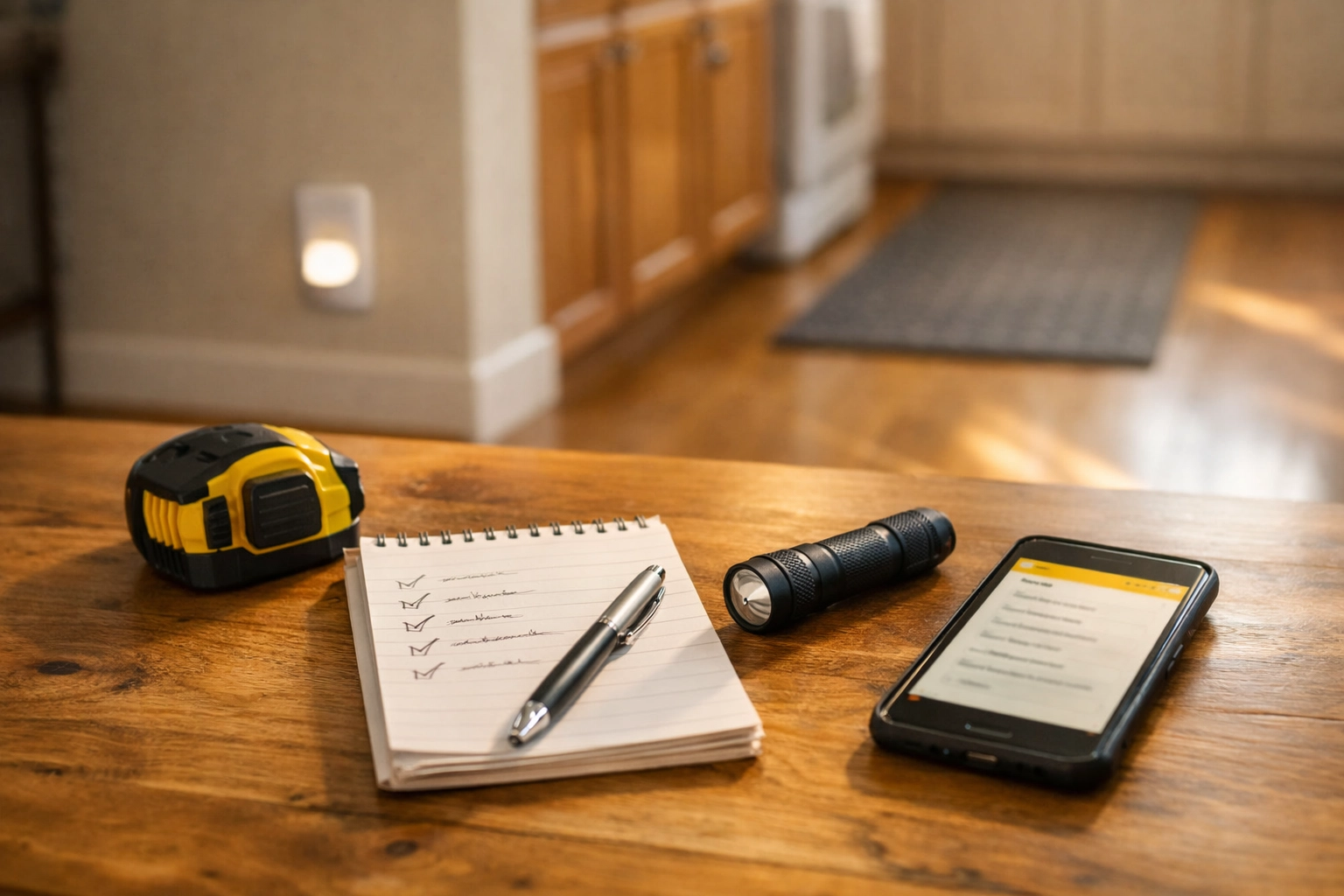
Before you start the timer, grab these three simple items:
- A Flashlight: To check for shadows and poorly lit corners.
- A Notepad or Phone: To jot down specific areas of concern.
- A Measuring Tape: For checking the width of paths and the height of chairs or beds.
Phase 1: The Room-by-Room Environmental Scan (15 Minutes)
The Entryway and Porch (3 Minutes)
Safety starts before you even cross the threshold. Many falls occur during the transition from the "uncontrolled" outdoor environment to the "controlled" indoor one.
- The Threshold: Is there a high lip or "step-up" at the door? Even a half-inch rise can catch a toe if someone is using a walker or has a shuffling gait.
- Lighting: Is the porch light bright enough to see the keyhole and any steps at night? Motion-sensor lights are excellent for these areas.
- Support: Is there something sturdy to grab onto while navigating the door? Often, people find themselves grabbing the doorknob for balance, which is unstable because the door can swing.
The Living Room and Common Areas (3 Minutes)
This is where most people spend the majority of their waking hours. The risks here are usually related to "clutter" and furniture placement.
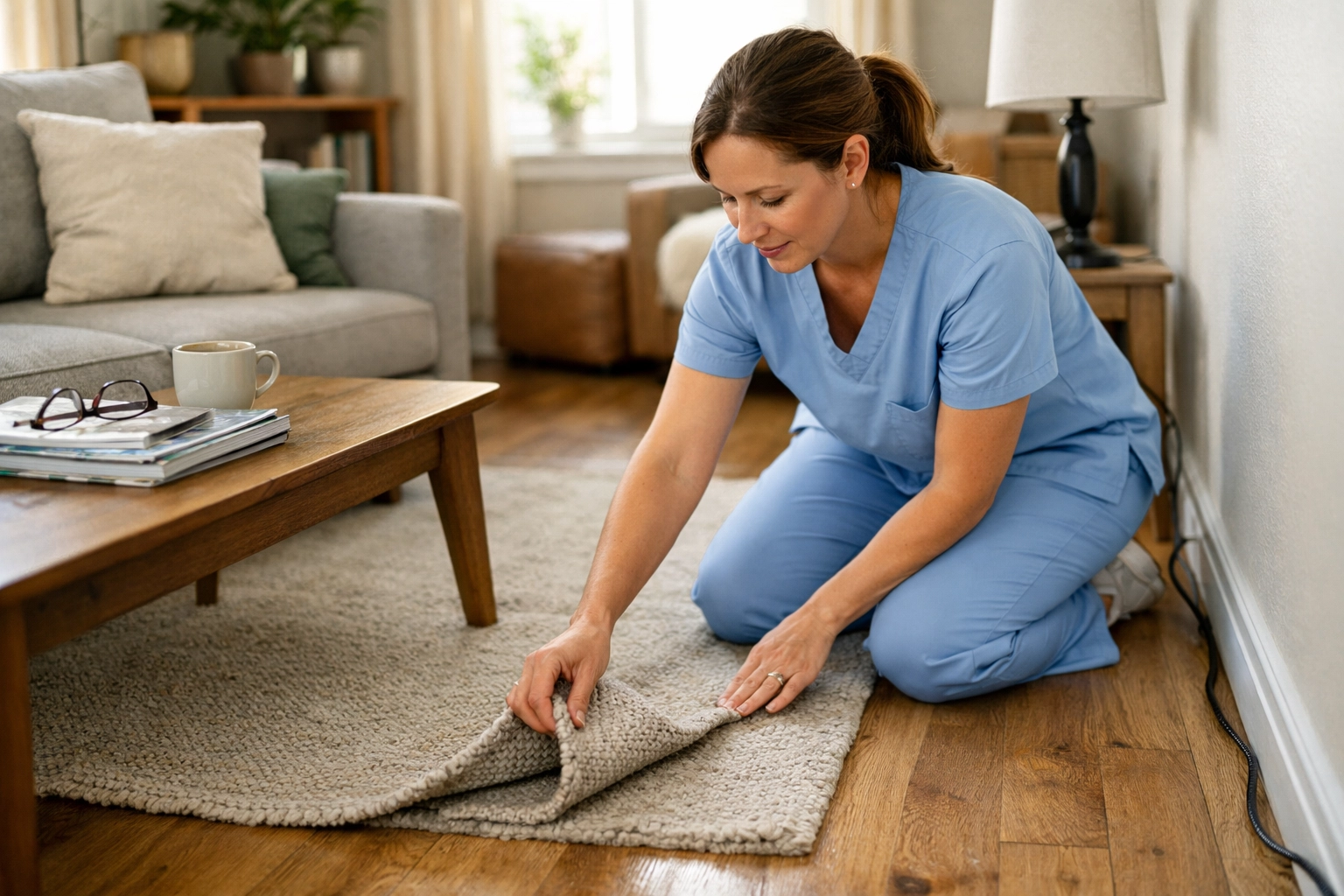
- The "Flooring Obstacle Course": Look for throw rugs. Even if they have "non-slip" backing, the edges can curl over time. In a mobility assessment, "no rugs" is almost always safer than "some rugs."
- Clear Paths: There should be a 36-inch wide path through the room. If someone has to "shimmy" between a coffee table and a sofa, the risk of a trip increases.
- Furniture Height: Low, deep sofas might be comfortable, but they are difficult to exit. If a person has to "rock" multiple times to stand up, the furniture is too low or too soft.
The Kitchen (2 Minutes)
The kitchen is a high-activity zone involving reaching, bending, and often, wet floors.
- The Reach Zone: Are the most frequently used items (coffee mugs, plates, favorite skillet) stored between waist and shoulder height? Reaching for high cabinets or bending into deep low cupboards can cause a loss of balance.
- Spill Hazards: Is the flooring material slippery when wet? Non-slip mats in front of the sink are helpful, provided they have beveled edges to prevent tripping.
- Lighting: Under-cabinet lighting is not just a design choice; it helps eliminate shadows on countertops where sharp knives or hot appliances are used.
Hallways and Stairs (2 Minutes)
Transitions between rooms are prime locations for falls because we tend to move faster in these "connector" spaces.
- Contrast: Can the person see where the floor ends and the wall begins? For those with visual impairments, a dark floor against a dark baseboard can make depth perception difficult.
- Stair Continuity: Do handrails extend past the top and bottom steps? Many falls happen on the very first or very last step because the person lets go of the rail too early.
- Nighttime Navigation: Is the path from the bedroom to the bathroom illuminated at night? Plug-in light sensors are essential here.
The Bathroom (3 Minutes)
Statistically, the bathroom is the most dangerous room in the house due to hard, wet surfaces and the physical exertion required for bathing and toileting.
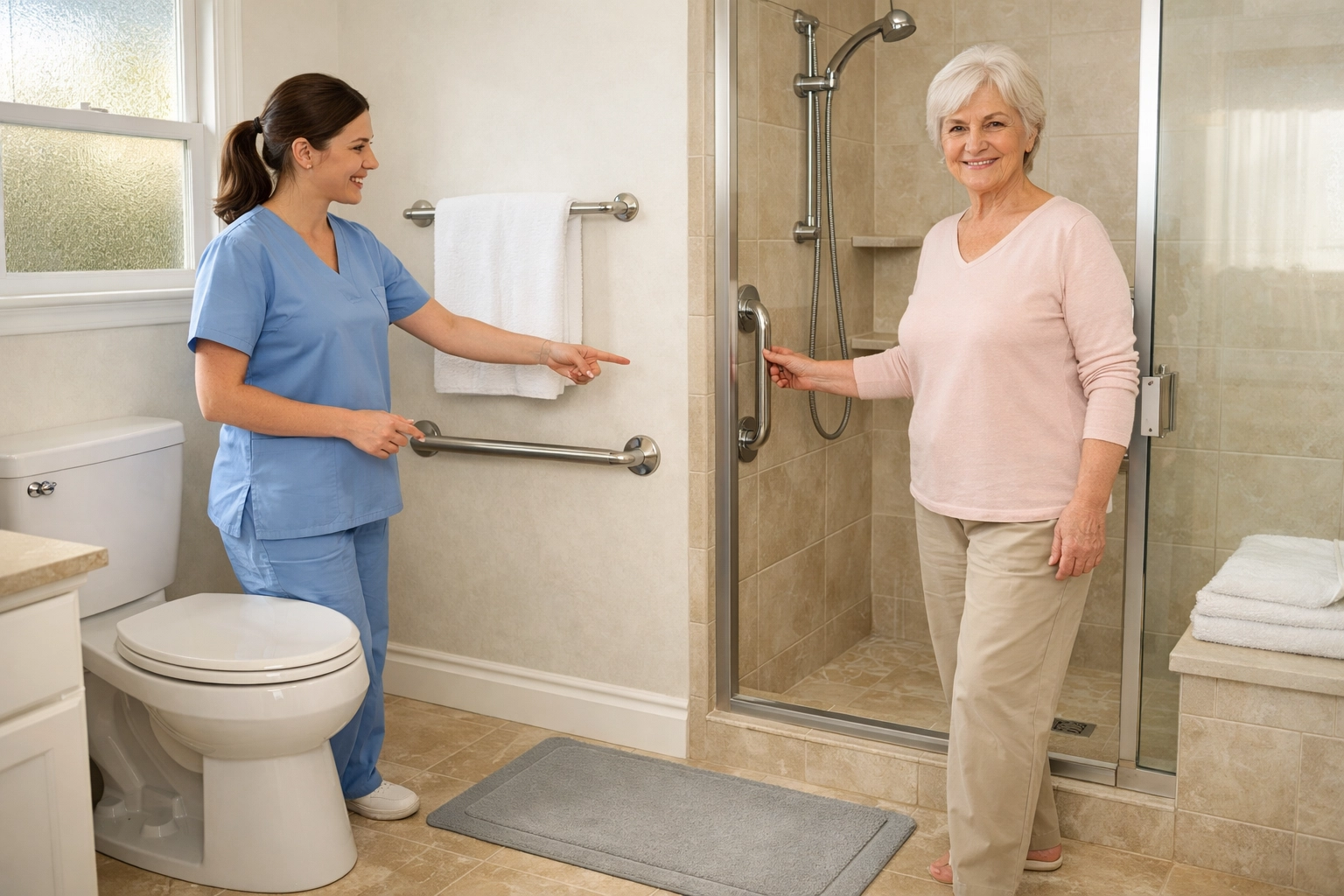
- The "Grab Bar" Test: Are there sturdy, professionally installed bars near the toilet and inside the shower? Note: Towel racks and soap dishes are NOT grab bars and will pull out of the wall if weight is applied.
- Entry/Exit: How high is the side of the bathtub? Stepping over a 15-inch tub wall while balancing on one wet foot is a high-risk activity.
- Toilet Height: A standard toilet is quite low. If someone struggles to stand, a raised seat or a safety frame can make a significant difference.
The Bedroom (2 Minutes)
The bedroom assessment focuses on the beginning and end of the day, when a person may be groggy or stiff.
- Bed Height: When sitting on the edge of the bed, are the person’s feet flat on the floor? If the bed is too high, they may slide off; if too low, they may struggle to stand.
- Bedside Access: Is there a clear, uncluttered path to the door? Are the light switch and phone within arm's reach of the pillow?
- Floor Surface: Is there a rug next to the bed? If so, ensure it is firmly secured and does not have thick, plush pile that can catch a foot during a midnight bathroom run.
Phase 2: Functional Observation (5 Minutes)
Once you’ve scanned the environment, the most important part of the assessment is watching the person interact with their space. We often adapt to risks without realizing it: this is called "environmental compensation." For example, someone might always grab the back of a chair when walking past it. This is a sign that they feel unstable.
The "Sit-to-Stand" Observation
Ask the person to sit in their favorite chair and then stand up.
- Do they use their arms to push off?
- Do they look steady once they reach a full standing position, or do they "sway" for a few seconds?
- If they seem unsteady, the furniture may be too low, or they may need a stable hand-hold nearby.
The Walking Path
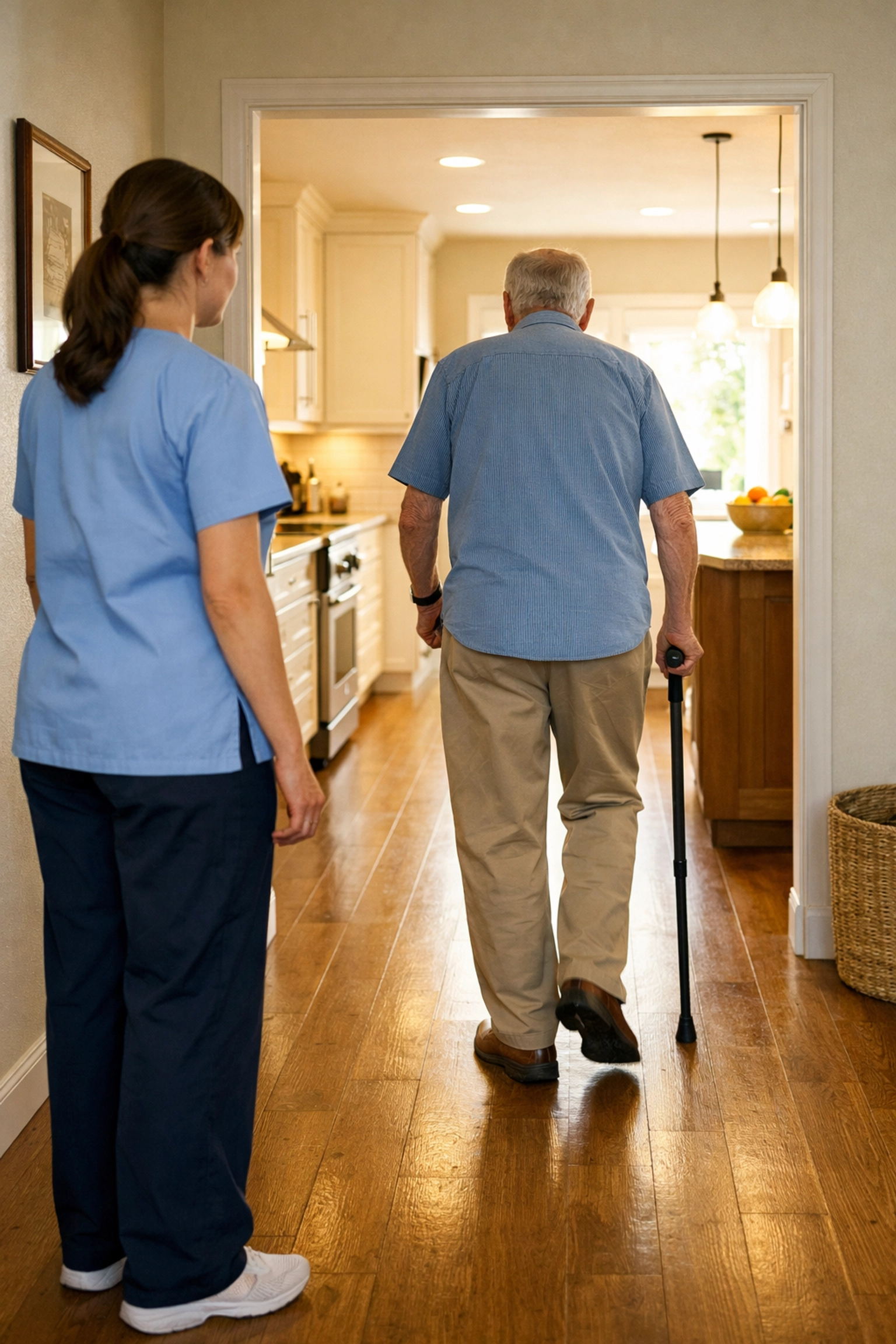
Watch them walk from the living room to the kitchen.
- Are they "wall-surfing" (touching walls or furniture for balance)?
- Are they picking up their feet completely, or is there a slight shuffle? Shuffling increases the risk of catching a toe on a rug or threshold.
- Do they have enough room to turn around safely? Turning 180 degrees is a common point of failure for balance.
The "Functional Task" Check
Ask them to perform a simple task, like reaching for a glass in the kitchen or pretending to get into the shower.
- Do they seem to lose their center of gravity when reaching upward?
- When stepping into the shower, do they have a "plan" for what to hold onto?
Phase 3: Prioritizing Your Findings
After your 20 minutes are up, you likely have a list of potential issues. Don’t try to fix everything at once. Categorize your notes into three levels:
-
Level 1: Immediate Safety Fixes (Do these today)
- Remove loose throw rugs.
- Replace burnt-out light bulbs.
- Clear clutter from hallways.
- Place a phone and flashlight by the bed.
-
Level 2: Minor Modifications (Do these this week)
- Install plug-in motion lights.
- Apply non-slip tape to slippery steps.
- Move frequently used kitchen items to lower counters.
- Add a raised toilet seat or a simple safety rail.
-
Level 3: Professional Consultations (Schedule soon)
- Have a professional install permanent grab bars in the bathroom.
- Consult with an Occupational Therapist (OT) for a more in-depth clinical assessment.
- Consider more permanent solutions like a walk-in shower or a ramp for the entryway.
Why Consistency Matters
A home mobility assessment isn't a "one and done" event. Our needs change, and our homes change. Seasonal shifts: like ice in the winter or different footwear in the summer: can introduce new risks.
Perform this 20-minute sweep every six months, or after any change in health or medication. By staying proactive, you transform the home from a place of potential hazards into a supportive environment that fosters confidence and independence.
Remember, the goal isn't just to prevent a fall; it's to preserve the quality of life that comes with being able to move freely and safely in your own home. When the environment is right, the focus can shift away from "be careful" and back toward "enjoying life."

