
When we think about staying healthy, we often focus on things like blood pressure, heart rate, or cholesterol levels. While those are incredibly important, there is another vital sign that often goes overlooked until a problem arises: mobility.
As a physical therapist might tell you, mobility isn't just the ability to walk from point A to point B. It is the complex coordination of strength, balance, cognitive processing, and environmental awareness that allows a person to navigate their world safely.
A home-based mobility assessment is a systematic way to look at how a person functions within their specific living environment. It is one thing to walk down a flat, well-lit hallway in a clinic, but it’s quite another to navigate a cluttered living room, step over a rug, or transition from a soft sofa to a standing position. This guide explores how these assessments work, why they are essential, and how you can look at mobility through the lens of a professional.
Why Assess Mobility at Home?
The primary goal of a mobility assessment is to identify "functional decline" before it leads to an injury. Most falls don’t happen because of a single catastrophic event; they happen because a person’s physical abilities have slowly drifted away from the demands of their environment.
By conducting an assessment at home, we get a "real-world" view of safety. We can see if the lighting is sufficient in the hallway at 10:00 PM, or if the height of the bed makes it difficult to get up in the morning. A professional assessment identifies these gaps and provides a roadmap for maintaining independence.
Core Physical Performance Measures
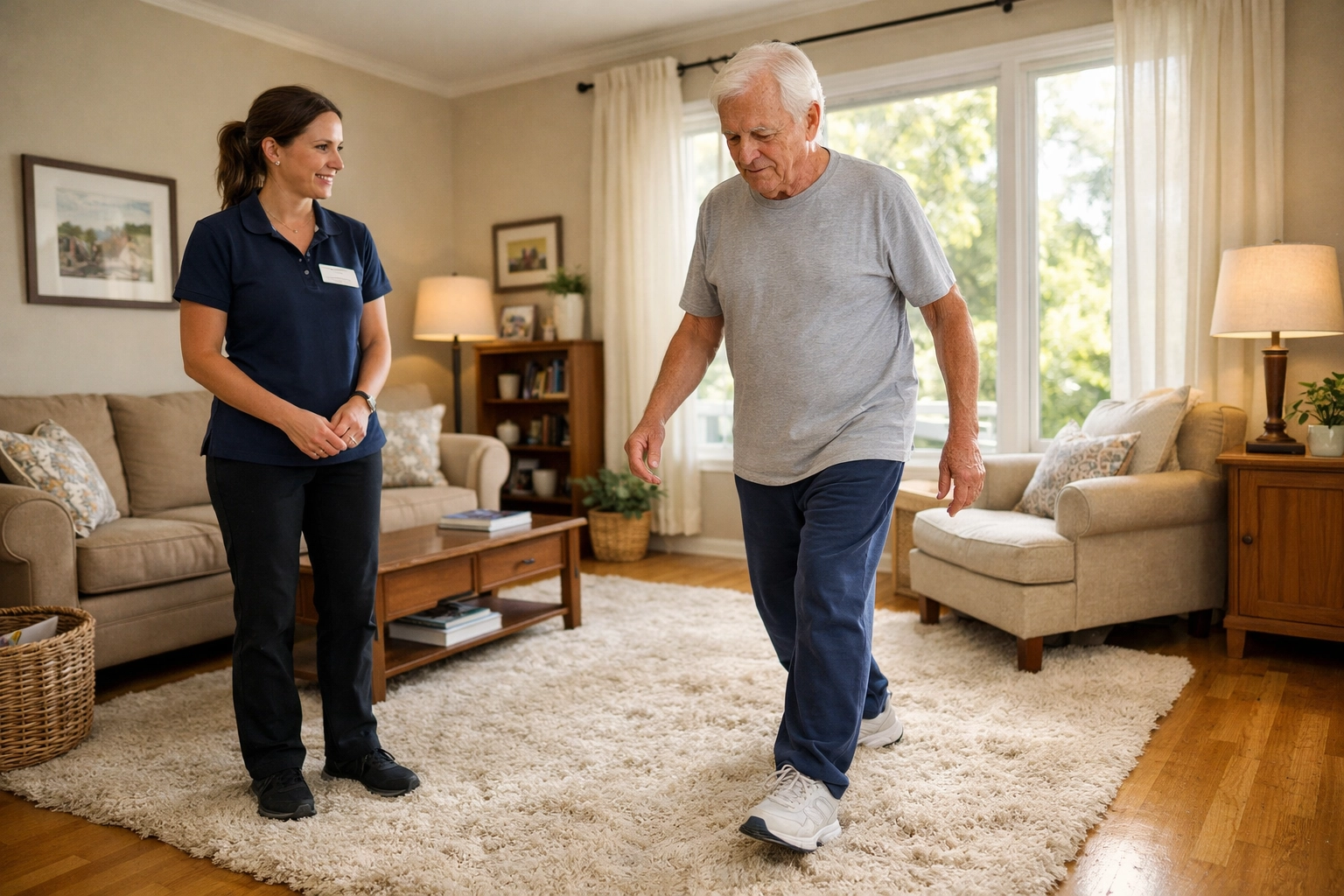
Physical therapists rely on standardized tests to take the guesswork out of mobility. These tests provide "normative data," which means we can compare an individual's results to what is expected for their age group. Here are the four "gold standard" tests often used in a home setting.
1. The Timed Up and Go (TUG) Test
The TUG test is perhaps the most widely used screening tool for fall risk. It measures a person's ability to stand up from a chair, walk three meters (about 10 feet), turn around, walk back, and sit down.
- What it measures: Dynamic balance, gait speed, and the ability to change directions.
- The Process: Use a standard armchair. Mark a line 10 feet away. Start the timer when the person’s back leaves the chair and stop it when they are seated again.
- The Results: Generally, completing the task in under 12 seconds indicates a low risk for falls. If it takes longer than 12–15 seconds, it suggests a higher risk and a need for further intervention.
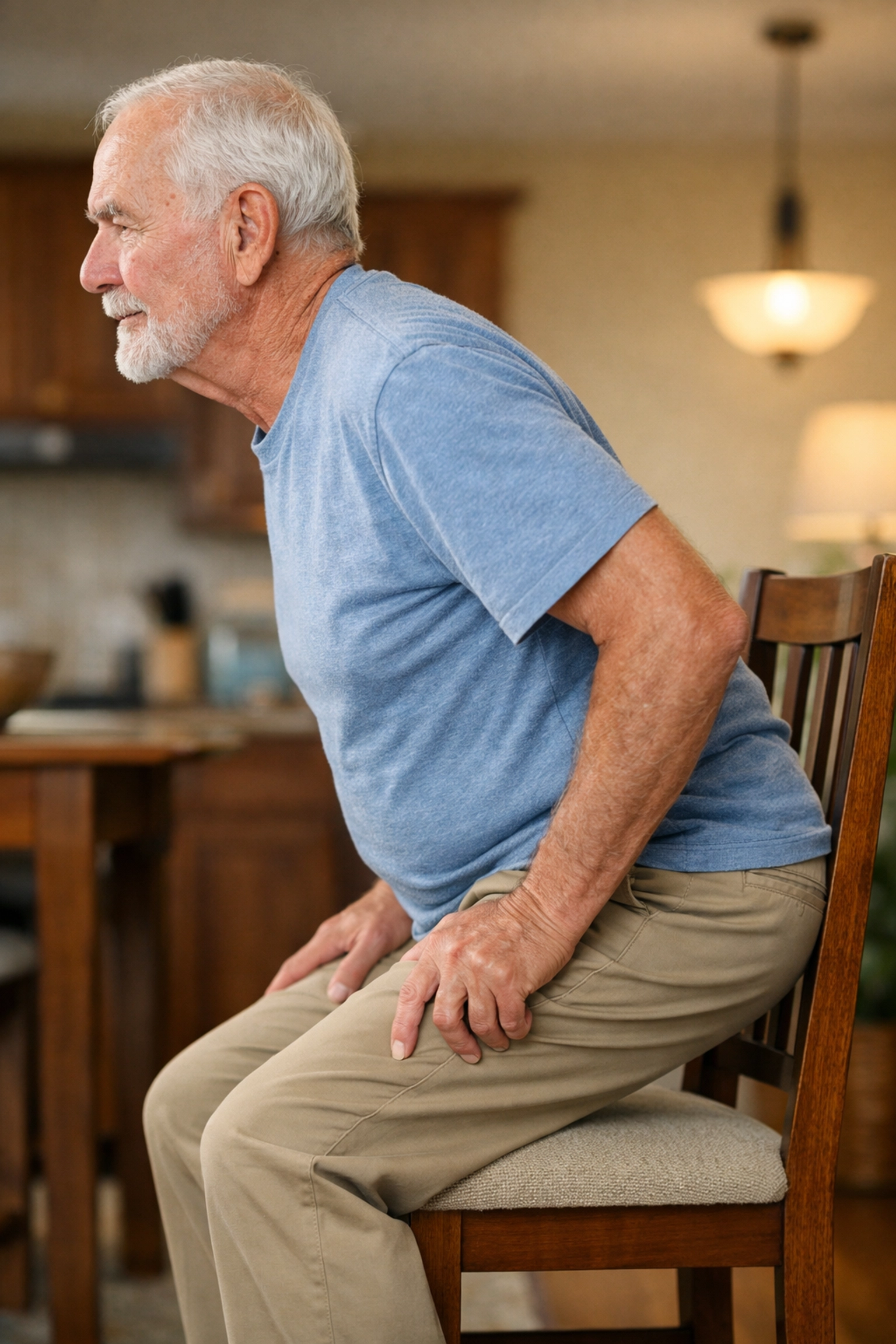
2. The 30-Second Sit-to-Stand Test
Lower body strength is the foundation of mobility. If the legs aren't strong enough to lift the body's weight, balance becomes secondary.
- What it measures: Leg strength and endurance.
- The Process: Using a chair without using arms for support, the individual stands up and sits down as many times as possible in 30 seconds.
- The Results: The number of repetitions is compared to age-based averages. For example, a man in his 70s should ideally be able to complete 12 or more repetitions. Falling below this threshold indicates a loss of "functional reserve."
3. The Four Square Step Test (FSST)
Mobility isn't just forward motion. We often need to step sideways or backward to avoid obstacles or navigate tight spaces like bathrooms.
- What it measures: The ability to clear obstacles and move in multiple directions.
- The Process: Four canes or pieces of tape are placed in a cross shape on the floor. The person must step into each square in a specific sequence (clockwise then counter-clockwise) as fast as possible without touching the markers.
- The Results: Taking longer than 15 seconds to complete the sequence is often associated with an increased risk for falls.
4. The TUG Cognitive
This is a variation of the TUG test where the person is asked to perform a mental task while walking: such as counting backward by threes from 100.
- What it measures: Divided attention. Many falls occur when a person is distracted or talking while walking. If a person’s walking speed slows down significantly when they start talking or thinking, it indicates that their brain is working extra hard just to maintain balance.
The Environmental Assessment: Beyond the Body
A physical therapist doesn't just look at the person; they look at the "interaction" between the person and the home. You could have excellent balance, but if you are tripping over a loose floorboard every night, you are still at risk.
Thresholds and Transitions
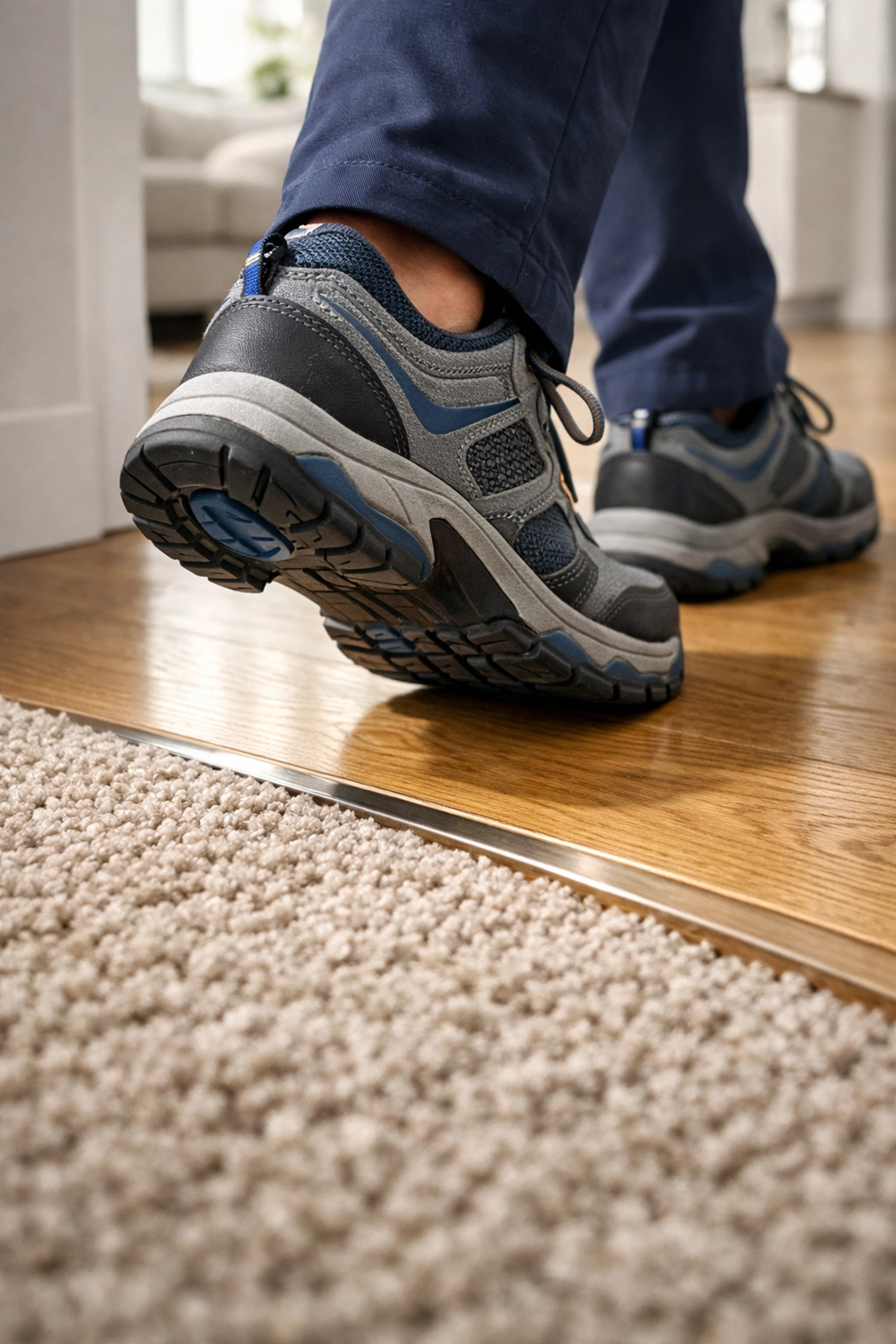
One of the most common places for a mobility "hiccup" is at a transition. This could be moving from carpet to hardwood, or stepping over the threshold of a doorway. During an assessment, we watch for "foot clearance." Does the person lift their feet high enough, or are they shuffling? Shuffling is a major red flag for falls.
Furniture Stability and Height
"Furniture walking" is the habit of touching tables, backs of chairs, and walls for balance while moving through a room. During an assessment, we identify which pieces of furniture a person relies on. If those pieces are unstable (like a rolling chair or a lightweight end table), they become hazards rather than helps. We also look at the height of chairs and toilets. If a seat is too low, it requires significantly more muscle power to stand up, which can lead to fatigue and instability.
Lighting and Contrast
Vision plays a massive role in balance. As we age, our eyes need more light to see clearly and more time to adjust to changes in light levels. We look for "glare" on polished floors and ensure that the edges of stairs are clearly visible.
The Bedside Mobility Assessment Tool (BMAT)
For those who may have more significant mobility challenges, physical therapists use the BMAT. This tool is designed to determine how much assistance a person needs for basic movements. It follows a four-level progression:
- Sit and Shake: Can the person sit up at the edge of the bed and reach across their body? This tests core stability.
- Stretch and Point: Can the person extend their legs and flex their ankles? This tests the strength needed to stand.
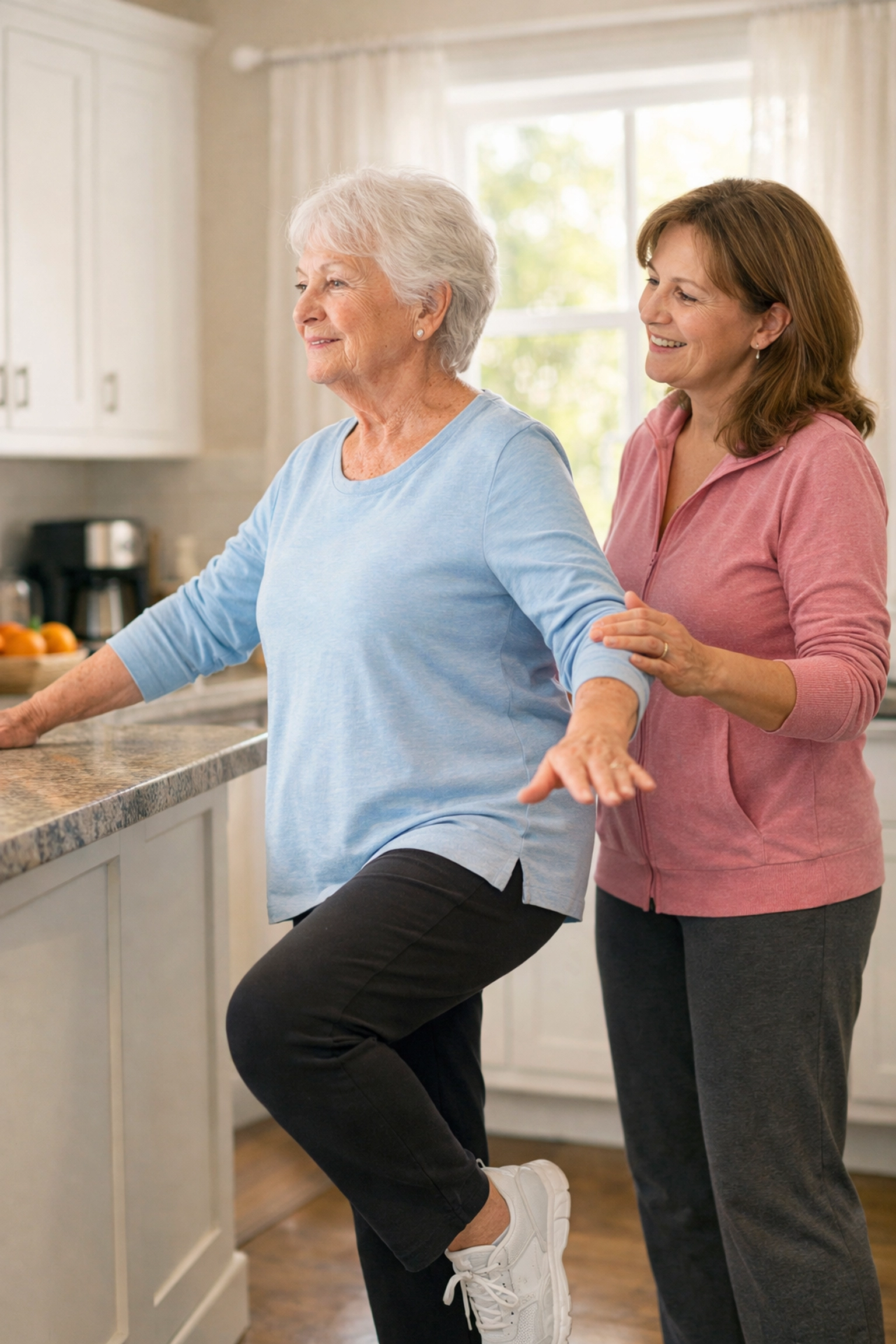
- Stand: Can the person stand up and hold their balance for five seconds?
- Walk: Can the person take steps and maintain their balance?
By categorizing a person’s mobility level, we can recommend the right types of support: whether that’s a specific type of exercise or a piece of equipment to help with transitions.
Conducting a Safe Self-Screening at Home
While a professional assessment is always best, caregivers and seniors can perform informal screenings to stay proactive. However, safety is the absolute priority.
- Always have a spotter: Never perform balance tests alone. A second person should be standing nearby (without touching the person) ready to provide support if they lose their balance.
- Use sturdy equipment: Only use heavy, non-slip chairs for tests.
- Listen to the body: If a test causes pain or extreme shortness of breath, stop immediately.
Red Flags to Watch For
During your daily routine, keep an eye out for these subtle signs of declining mobility:
- Using the arms of a chair to "push off" with great effort.
- Taking multiple small steps to turn around instead of a fluid motion.
- A "wide-based gait" (walking with feet far apart to feel more stable).
- Avoiding certain rooms or activities because they feel "too hard" or "scary."
Analyzing the Results
Once an assessment is complete, the results shouldn't just sit in a folder. They provide a baseline. If a person can do 10 sit-to-stands today, and six months from now they can only do seven, we know that their strength is declining and we need to adjust their activity level.
Low scores on these tests are not a "failure." They are simply data points that indicate where we should focus our energy. For example, if the TUG score is high (slow), we might focus on gait training and clearing floor clutter. If the sit-to-stand count is low, we focus on leg-strengthening exercises.
Next Steps and Recommendations
If an assessment reveals mobility concerns, the next steps are usually focused on three areas:
1. Targeted Exercise
Physical therapists often prescribe specific movements to address the weaknesses found during the assessment. This might include "heel-to-toe" walking for balance or "wall squats" for leg strength. Consistency is key; even 10 minutes a day can make a significant difference in functional scores over a few months.
2. Home Modifications
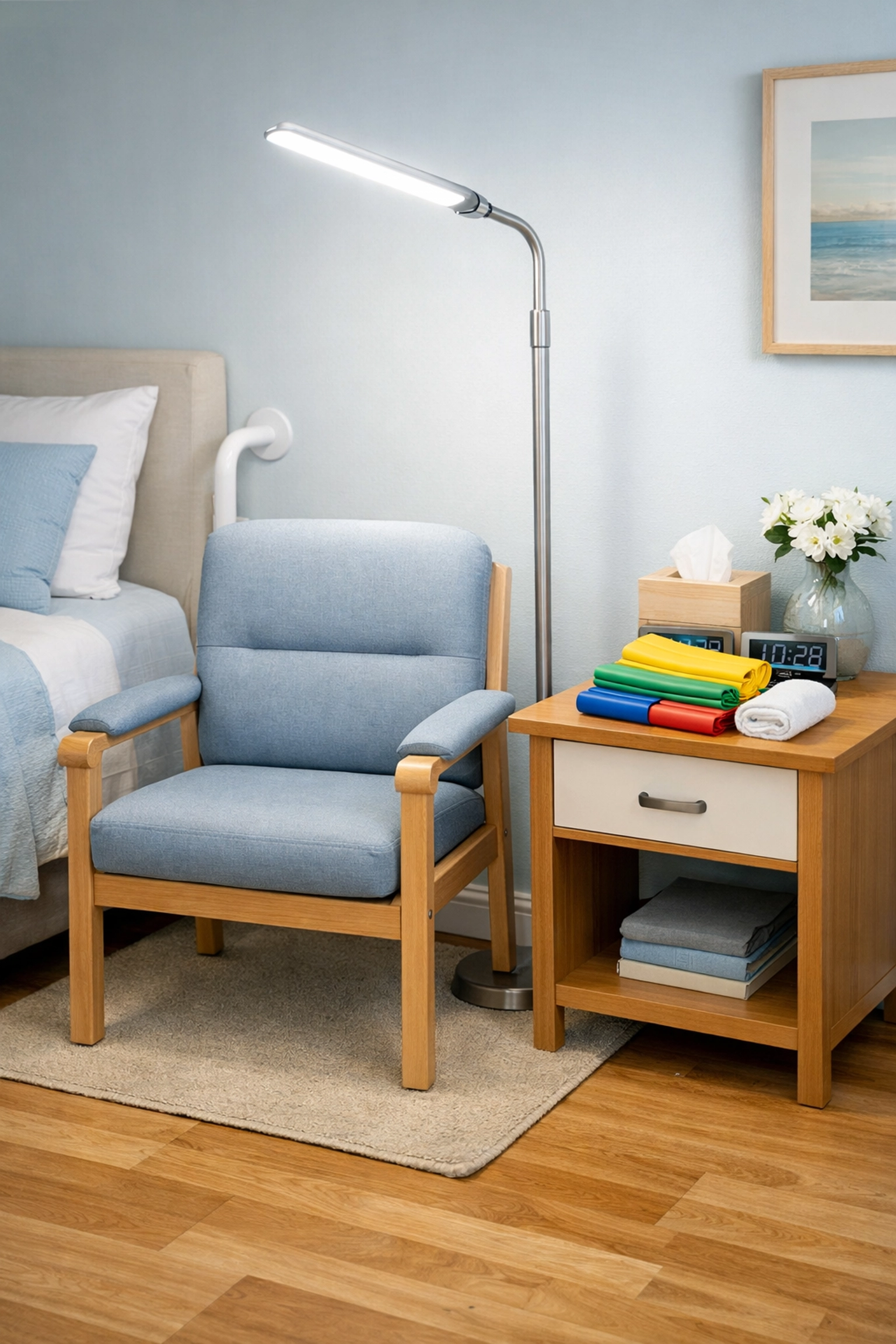
The environment should be adjusted to match the person's current mobility level. This might mean removing throw rugs, adding brighter LED bulbs to hallways, or installing grab bars in the bathroom to provide a stable "anchor" point during transitions.
3. Consultation with Professionals
If the assessment shows a high risk for falls, it is important to speak with a primary care physician or a physical therapist. They can check for underlying issues like medication side effects, inner ear problems, or vision changes that might be contributing to the mobility decline.
Maintaining Independence Through Awareness
Mobility is the currency of independence. The more mobile we are, the more we can engage with our families, our hobbies, and our communities. By looking at the home through the eyes of a physical therapist, we can identify risks while they are still manageable.
A mobility assessment isn't about pointing out what a person can't do. It is about empowering them to continue doing what they love safely. By taking a proactive, educational approach to how we move within our homes, we can create an environment that supports aging with confidence and grace.
Regularly checking in on these metrics: perhaps every six months: allows for a "preventative" lifestyle, ensuring that the home remains a place of comfort and safety for years to come.

