
As a physical therapist, I've worked with hundreds of people who've experienced falls at home. Here's what most people don't realize: about 60% of falls happen in your own house, not out in the world. That means your home: the place you feel safest: is actually where you need to be most mindful about fall prevention.
The good news? Most falls are preventable. You don't need expensive renovations or major lifestyle changes. What you need is a clear understanding of what puts you at risk and practical steps you can take today to make your home safer.
Understanding Fall Risk: More Than Just Balance
When people think about fall prevention, they often focus solely on balance. But as a PT, I look at the bigger picture. Your fall risk involves multiple factors working together:
Physical factors include muscle strength, flexibility, balance, and how well your body moves through space. If your legs feel weak when you stand up, if you feel unsteady turning around, or if you notice yourself reaching for walls or furniture more often: these are signs we need to address.
Environmental factors are the hazards in your home: loose rugs, poor lighting, clutter in walkways, or the lack of grab bars where you need them most.
Health-related factors include medications that cause dizziness, vision problems that affect depth perception, or conditions that impact your coordination and reflexes.
All these factors interact. You might manage perfectly fine during the day when you're alert and the house is well-lit, but struggle at 2 AM when you're groggy and the hallway is dark.
Building Your Foundation: Strength and Balance Exercises
Here's something I tell every patient: your body is the most important piece of equipment in fall prevention. Without adequate strength and balance, even a perfectly safe home won't prevent falls.
Exercises That Actually Help
Before starting any exercise program, talk with your doctor or physical therapist. Once you get the green light, focus on activities that challenge multiple aspects of your physical function:
Walking remains one of the best exercises. It's weight-bearing, improves cardiovascular health, and helps maintain the muscle memory needed for steady movement. Aim for regular walks, even if you start with just five minutes around your house or yard.
Tai chi has strong research backing for fall prevention. The slow, controlled movements improve balance, coordination, and body awareness. Many community centers offer classes specifically for older adults.
Resistance training builds the leg and core strength you need to catch yourself if you stumble. You don't need a gym membership: exercises using your body weight or simple resistance bands can be highly effective.
Water workouts offer a safe environment to build strength without stress on joints. The buoyancy supports your body while the water provides natural resistance.
What a PT Looks For
When I assess someone's fall risk, I watch how they move. Can you stand from a chair without using your hands? Can you walk heel-to-toe in a straight line? Can you stand on one foot for even a few seconds?
These simple movements tell me where you need support. A physical therapist can design a customized exercise program that targets your specific weaknesses and gradually builds your strength and confidence.
Room-by-Room Safety Assessment
Let's walk through your home the way I would during a home safety evaluation. Grab a notepad and follow along.
Hallways and Living Areas
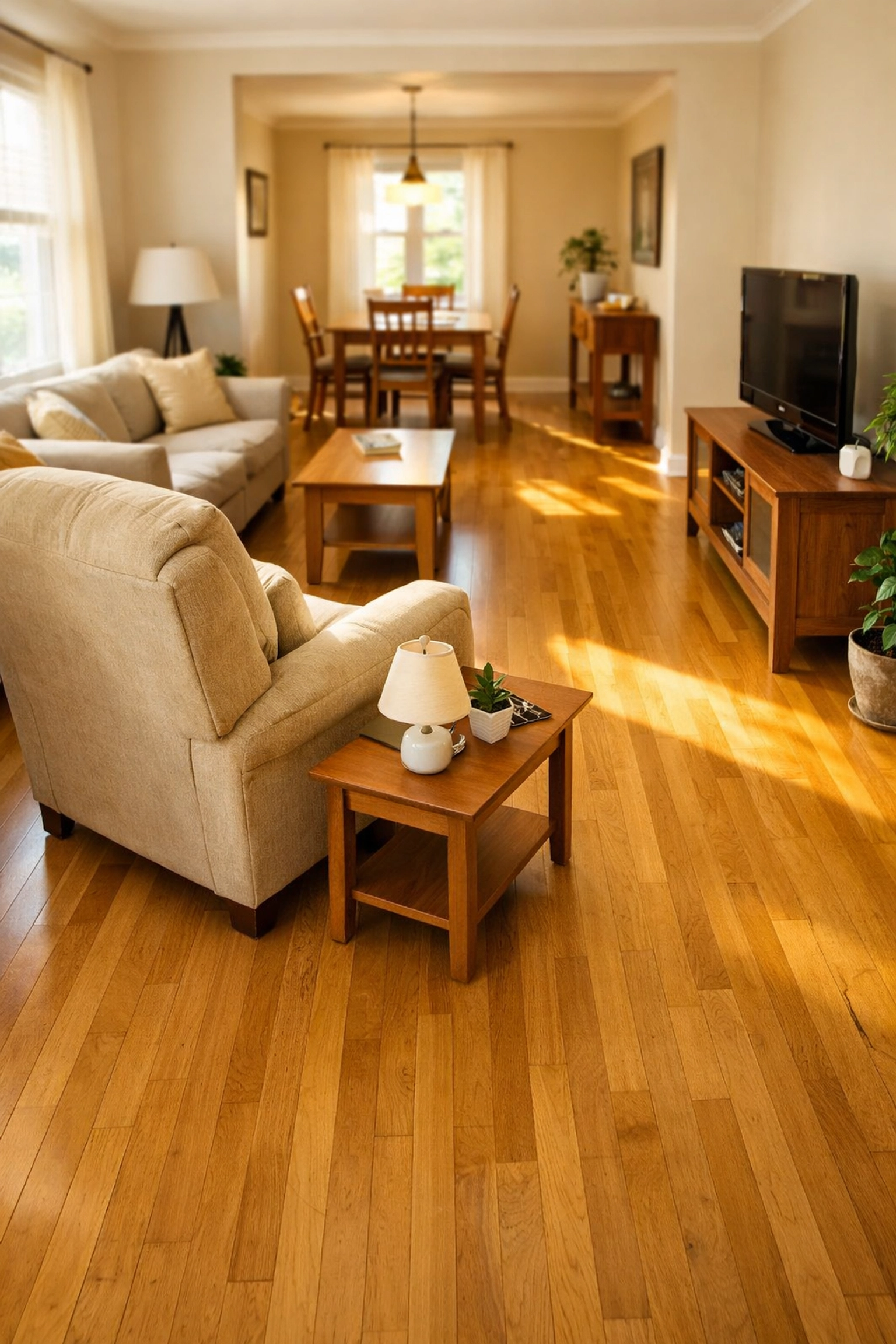
Start by looking down. What's on your floors? Remove newspapers, magazines, books, and any items that don't belong on the floor. Pay special attention to electrical cords and phone cords: these are notorious tripping hazards that can be rerouted along walls or secured with cord covers.
Throw rugs are one of the most common culprits in home falls. If you love your rugs, make sure they have non-slip backing or use rug tape to secure all edges firmly to the floor. Better yet, remove them entirely from high-traffic areas.
Check your furniture arrangement. You should have clear, wide walking paths through every room. If you find yourself squeezing between furniture or turning sideways to pass through spaces, it's time to rearrange.
Stairs: Your Highest-Risk Area
Stairs deserve special attention because falls here often result in more serious injuries. Install sturdy handrails on both sides of every stairway. The rails should extend beyond the top and bottom steps.
Make sure every step is clearly visible. If your stairs are carpeted, ensure the carpet is firmly attached with no loose edges. For wooden stairs, consider adding non-slip treads.
Lighting at stairs is critical. You should be able to light the entire stairway from both top and bottom with easily accessible switches.
The Bathroom: Where Many Falls Happen
The bathroom combines slippery surfaces with awkward movements: getting in and out of the tub, sitting and standing from the toilet, reaching for items. This makes it a high-risk zone.
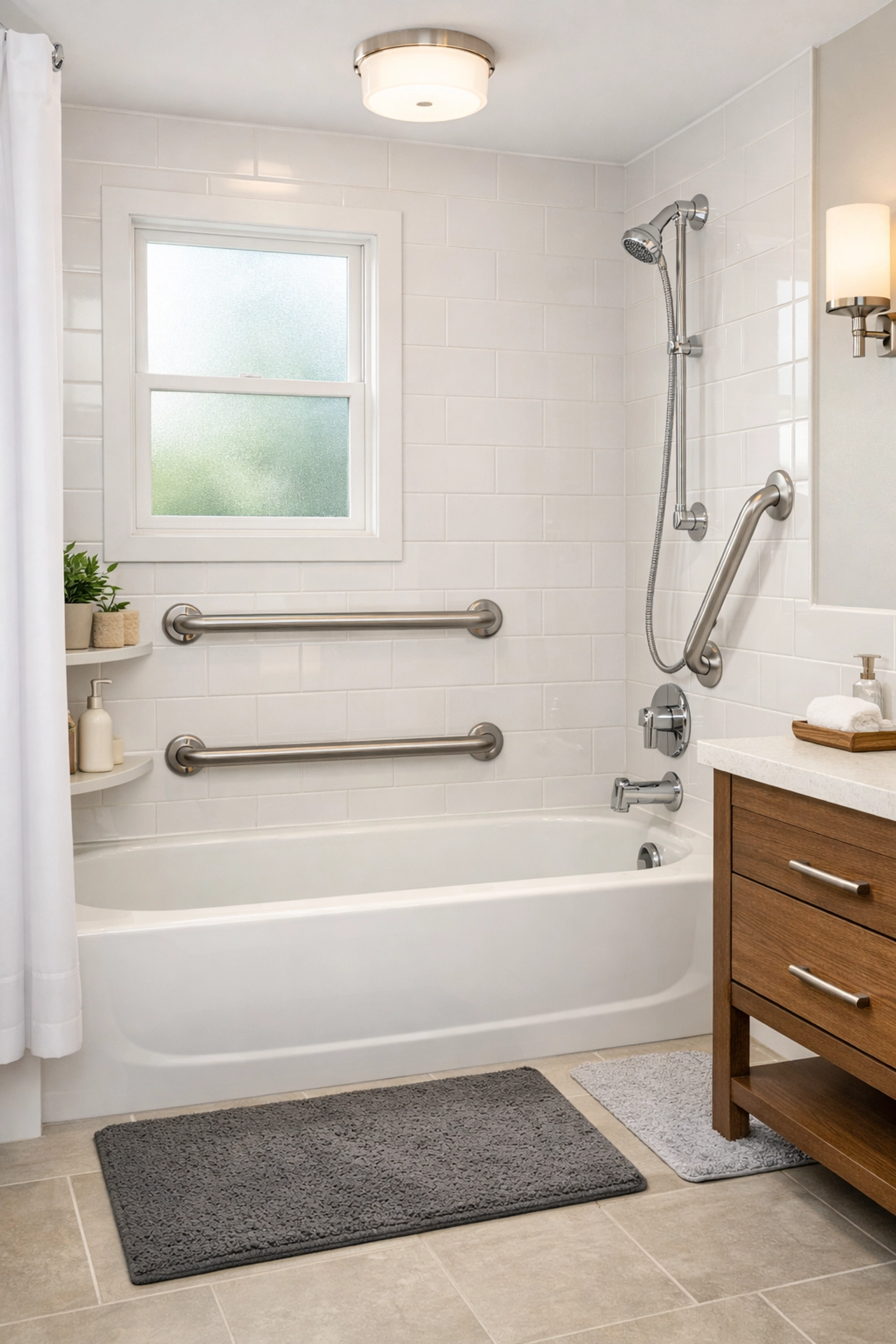
Install grab bars, not just towel bars. Towel bars aren't designed to hold body weight and can pull right out of the wall. You need grab bars near the toilet and inside the tub or shower. Professional installation ensures they're anchored properly.
Place non-slip mats both inside and outside your shower or tub. If stepping over the tub edge feels precarious, consider a bath seat or transfer bench. A hand-held shower nozzle makes bathing safer and easier.
The Bedroom: Nighttime Safety
Most falls happen during transitions: getting in and out of bed ranks high on that list. Keep a lamp within easy reach of your bed so you never have to get up in the dark. Better yet, install nightlights that create a lit pathway from your bedroom to the bathroom.
Your bed height matters. When you sit on the edge, your feet should rest flat on the floor with your knees at about a 90-degree angle. Too high or too low makes getting up and down harder and less stable.
Keep essential items: glasses, phone, water: on your nightstand so you don't have to get up for them during the night.
Kitchen Considerations
Store items you use regularly at waist level or lower. Save the high shelves for items you rarely need. If you must reach high shelves, use a sturdy step stool with a handle: never stand on chairs.
Clean up spills immediately. Water, cooking oil, and food on the floor create slick surfaces. Keep a small mop or towels easily accessible specifically for spills.
The Furniture Surfing Problem
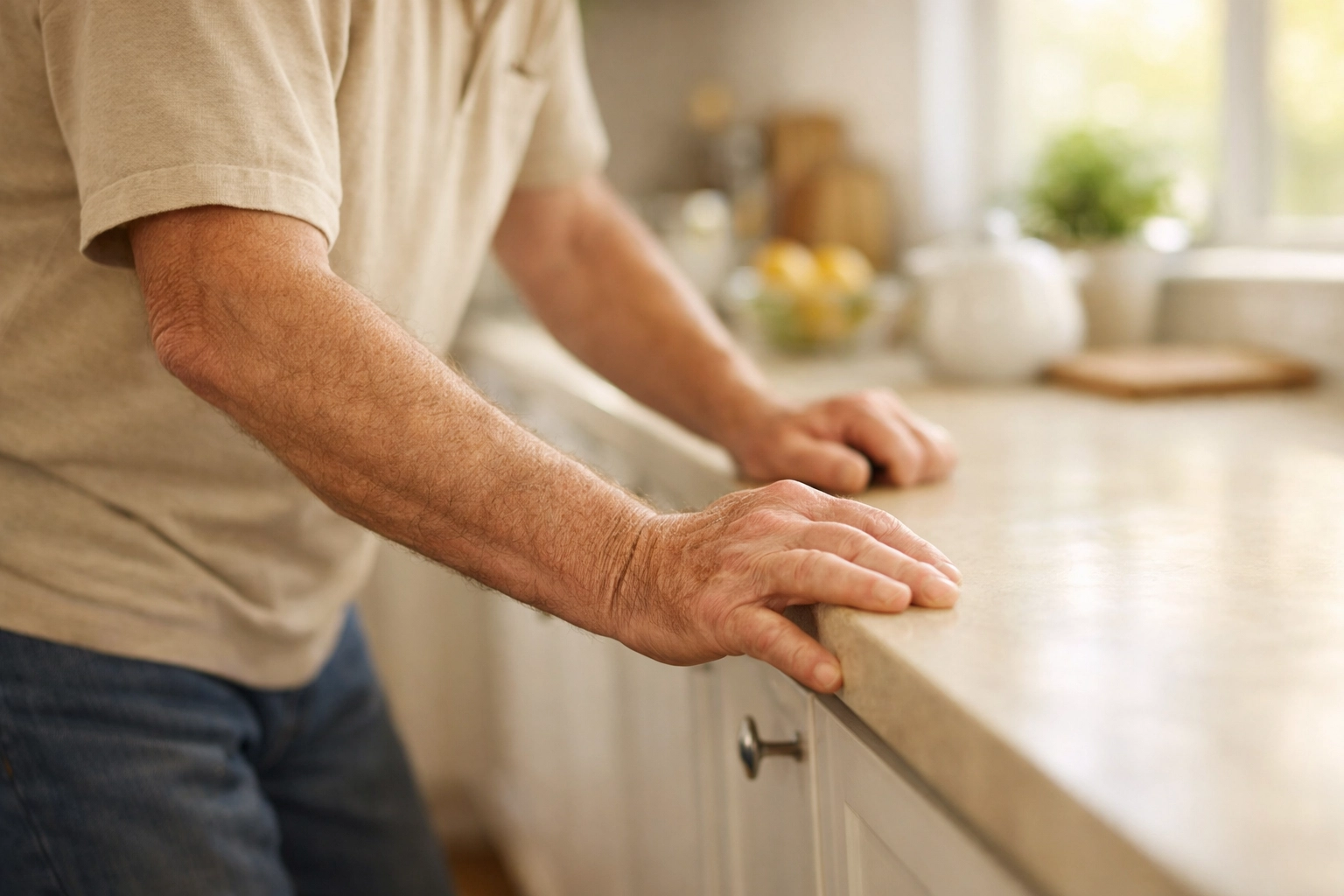
Here's a habit I see constantly: people holding onto walls, counters, or furniture edges to move around their house. In the PT world, we call this "furniture surfing," and while it might feel safer, it actually increases your fall risk.
Why? Because you're training your body to be dependent on external support rather than developing the strength and balance you need to walk independently. Your muscles get weaker, your balance gets worse, and you become more vulnerable when you're in a space without furniture to grab.
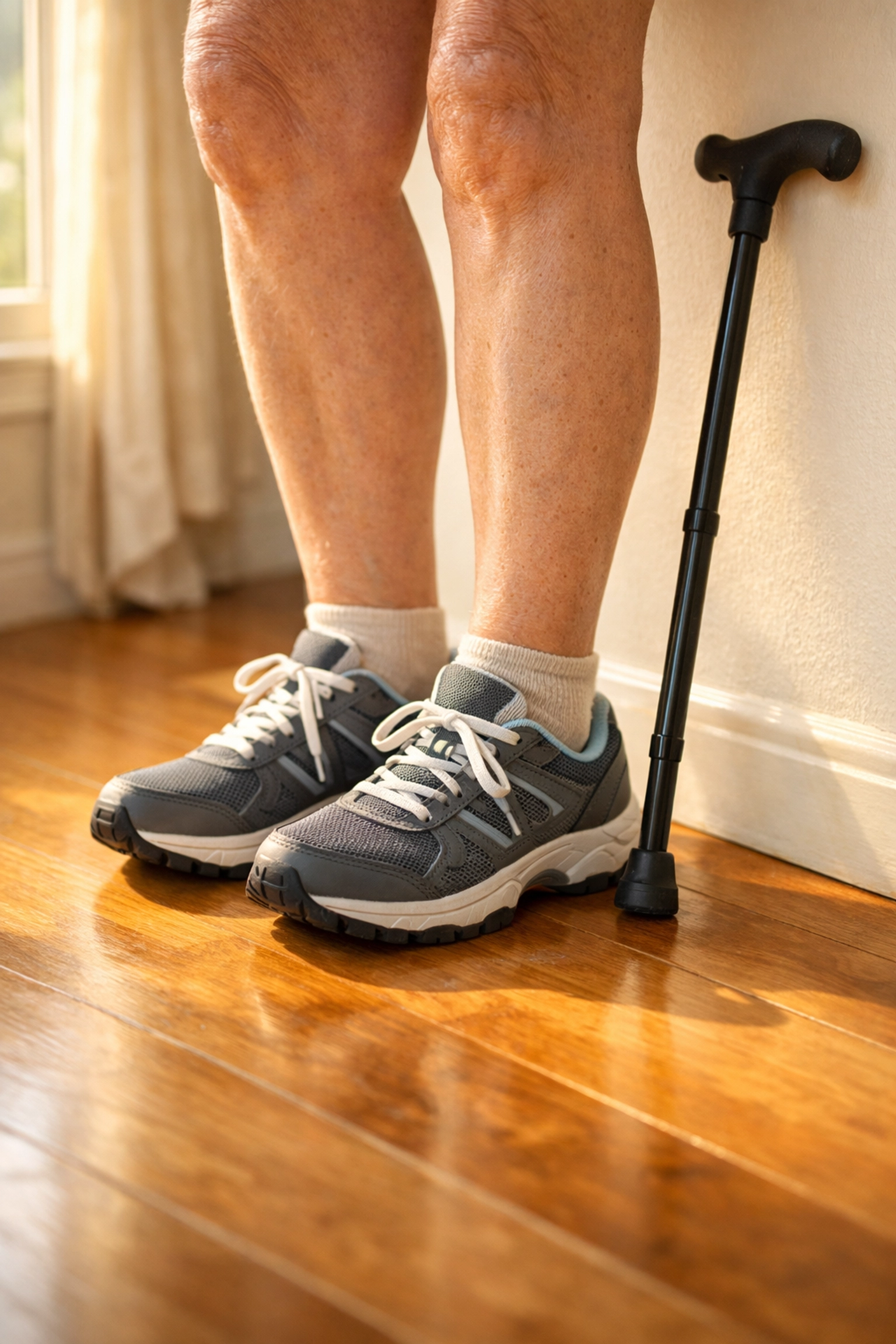
If you're furniture surfing, you need a proper assistive device: a cane, walker, or other mobility aid recommended by your healthcare provider. These devices are designed to provide stable, reliable support that furniture can't offer.
Footwear: Your Foundation Matters
What you wear on your feet significantly impacts your stability. I've seen people fall simply because they were wearing the wrong shoes: or no shoes at all.
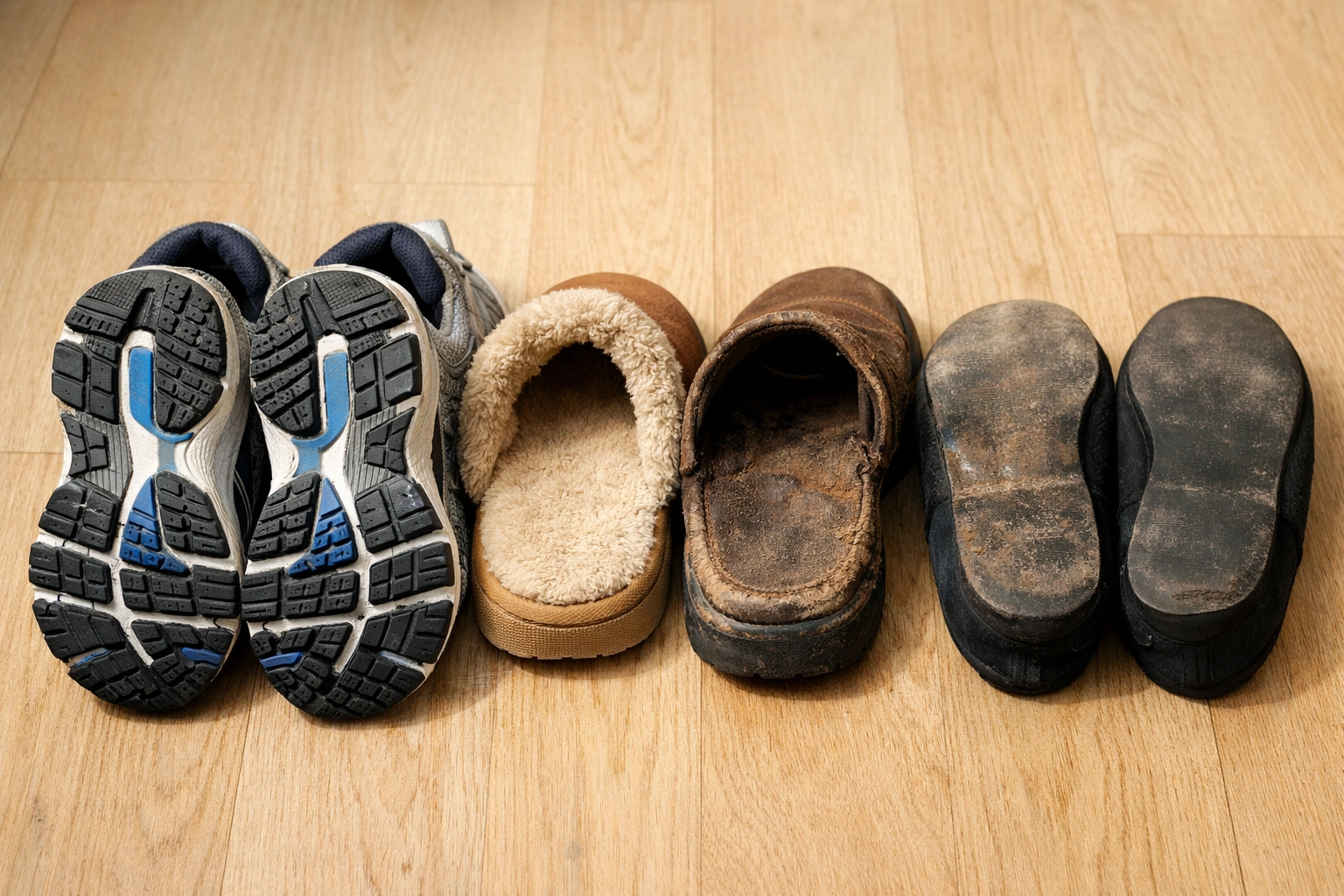
Wear supportive shoes inside your house. I know this feels unnecessary at home, but good shoes provide arch support, cushioning, and most importantly, grip. Your bare feet or socks on hardwood or tile floors create a slipping hazard.
Avoid backless slippers and flip-flops. These don't secure to your feet, which changes how you walk and reduces stability. Every step becomes a small risk.
Check your soles regularly. Worn-down treads lose their grip. If you can't see the tread pattern anymore, it's time for new shoes.
Choose the right fit. Shoes should fit snugly but not tightly, with enough room for your toes. Loose shoes or shoes that are too tight both affect how you walk.
Managing Health-Related Risk Factors
Medications and Dizziness
Certain medications can increase fall risk by causing dizziness, drowsiness, or low blood pressure. Common culprits include blood pressure medications, sedatives, antidepressants, and pain medications.
Talk with your doctor about all your medications. Ask specifically: "Do any of these increase my fall risk?" Sometimes switching medications or adjusting doses can help. Never stop taking prescribed medications without medical guidance.
Be especially careful when standing up, particularly from lying down or sitting for extended periods. Stand slowly, pause for a moment, then proceed once you feel steady.
Vision and Depth Perception
Even minor changes in your vision can affect your ability to judge distances and see obstacles. Get your eyes checked annually and update your glasses prescription as needed.
Make sure you're wearing the right glasses for the activity. If you use bifocals, the bottom lens distorts depth perception when you look down: like when walking down stairs. Talk with your eye doctor about whether separate reading glasses might be safer for you.
Blood Sugar and Hydration
Low blood sugar can cause dizziness and weakness. If you have diabetes, maintain consistent eating schedules and monitor your blood sugar as directed.
Dehydration also affects balance and increases fall risk, especially in older adults. Keep water accessible throughout your home and sip regularly throughout the day, even if you don't feel thirsty.
When to Seek Professional Help
You don't have to wait until you've fallen to get help. Consider scheduling an evaluation with a physical therapist if:
- You've had a fall or near-fall in the past year
- You feel unsteady when walking or turning
- You find yourself holding onto furniture to move around
- You avoid certain activities because you're worried about falling
- Your legs feel weak when you stand up
- You have concerns about your balance
Physical therapists and occupational therapists can perform comprehensive fall risk assessments. A PT will evaluate your strength, balance, and mobility, then create a personalized exercise program. An occupational therapist can visit your home, identify specific hazards, and recommend modifications tailored to your space and needs.
The Bottom Line
Fall prevention isn't about living in fear or restricting your activities. It's about being smart and proactive. Small changes: clearing clutter, improving lighting, wearing proper shoes, building strength: add up to significant risk reduction.
Start with one area. Maybe it's your bathroom or your path from bedroom to bathroom. Make it safer. Then move to the next area. You don't have to tackle everything at once.
Remember, most falls are preventable. With the right approach and support, you can maintain your independence and confidence in your own home for years to come.

