
When most people think about fall prevention, they picture grab bars, better lighting, or removing tripping hazards around the home. While these environmental modifications are absolutely important, there's another critical piece of the puzzle that often gets overlooked: core strength.
Your core is the foundation of nearly every movement you make throughout the day. It's what keeps you upright when you reach for something on a high shelf, helps you recover when you step on an uneven surface, and provides the stability you need to move confidently through your daily routine. Understanding how core strength affects your balance and fall risk can be a game-changer in maintaining your independence as you age.
Understanding Your Core: More Than Just Abs
When you hear the term "core strength," you might immediately think of six-pack abs or crunches at the gym. But your core is actually much more comprehensive than that.
Your core includes all the muscles in your torso that work together to stabilize your spine and pelvis. This means:
- The deep abdominal muscles that wrap around your midsection like a natural corset
- The muscles along your spine that keep you upright
- The muscles in your lower back
- The obliques on the sides of your torso
- The muscles in your pelvic floor
- Even the diaphragm you use for breathing
Think of your core as the central link between your upper body and lower body. Every time you move your arms or legs, your core muscles engage to keep you stable and balanced. When you walk, turn, bend, or reach, your core is working behind the scenes to coordinate these movements and keep you steady.
How Core Strength Affects Balance and Stability
Your balance depends on three main systems working together: your vision, your inner ear (vestibular system), and your proprioception (your body's awareness of where it is in space). But even when all three systems are functioning well, weak core muscles can still compromise your balance.
Here's why: your core muscles are responsible for keeping your center of gravity over your base of support. When you're standing still, this might seem simple. But when you're in motion: walking, turning, reaching, or adjusting your position: your center of gravity is constantly shifting. Your core muscles make hundreds of tiny adjustments throughout the day to keep you upright and stable.
When core muscles are strong, they respond quickly and effectively to these shifts. If you start to lose your balance, strong core muscles can help you recover before a fall occurs. They give you that crucial split second to catch yourself, adjust your footing, or grab onto something for support.
When core muscles are weak, however, these responses are slower and less effective. You might feel unsteady on your feet, have difficulty maintaining good posture, or find it harder to recover when you stumble.
The Connection Between Weak Core and Fall Risk
Research has shown a clear link between weak core strength and increased fall risk in older adults. One of the most significant ways this connection manifests is through posture changes.
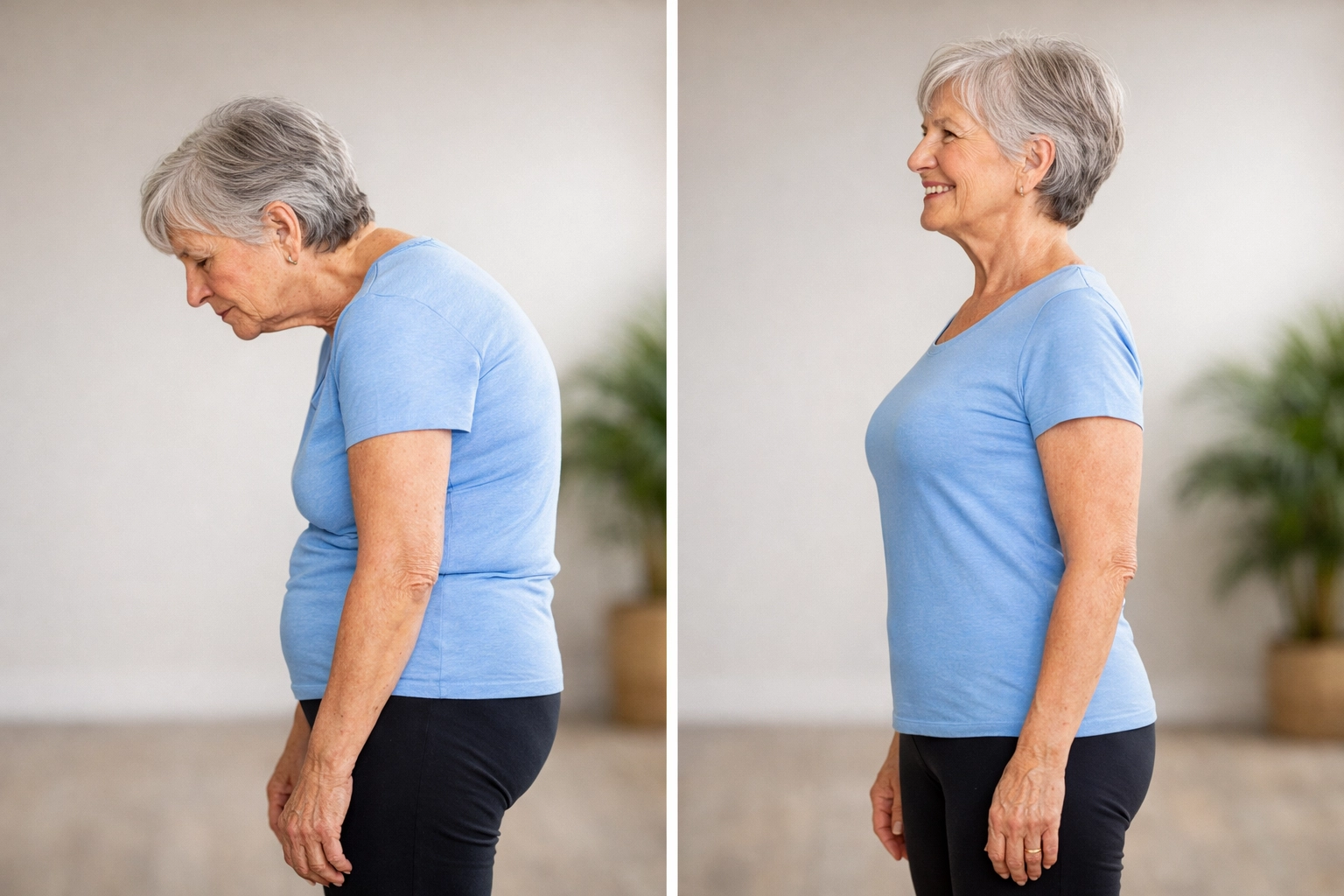
As core muscles weaken, many people develop what's called a forward flexed posture: essentially, a stooped or hunched position. This happens because the muscles that keep you upright are no longer strong enough to maintain that position against gravity throughout the day.
Forward flexed posture creates several problems:
Shifted center of gravity: When you're hunched forward, your center of gravity moves forward as well, making you less stable and more prone to forward falls.
Reduced field of vision: Looking down instead of straight ahead means you're less likely to see obstacles in your path.
Compromised balance reactions: It's harder to step backward to catch yourself when your weight is already pitched forward.
Increased strain on joints: Poor posture puts extra stress on your hips, knees, and ankles, which can affect your mobility and stability.
In severe cases, weak core muscles can make it difficult to stand up straight even when you try. At this point, maintaining balance becomes extremely challenging, and the risk of falls increases dramatically.
Core Muscles in Everyday Movements
To truly appreciate why core strength matters for fall prevention, it helps to understand just how often you rely on these muscles throughout a typical day.
Walking: Every step you take requires core stability. As you shift your weight from one leg to the other, your core muscles keep your torso steady and upright. Without this stability, walking becomes unsteady and uncertain.
Turning: Whether you're turning to look behind you or pivoting to change direction, your core controls this rotational movement. Weak core muscles can make turning feel off-balance and increase your risk of falling during directional changes.
Reaching: When you reach for something on a shelf or bend to pick something up, your center of gravity shifts. Your core muscles work to counterbalance this shift and keep you stable. This is why people with weak cores often feel unsteady when reaching or bending.
Standing up and sitting down: These transitions require significant core strength to control your movement and maintain balance. Many falls occur during these transitions when core muscles aren't strong enough to support the movement safely.
Carrying objects: Holding groceries, laundry, or other items shifts your center of gravity. Your core muscles adjust to maintain balance under these changing conditions.
The bottom line is that your core is working constantly throughout the day, whether you're aware of it or not. When these muscles are weak, every one of these common activities becomes a potential fall risk.
How Core Strength Supports Recovery from Slips and Trips
One of the most important aspects of fall prevention isn't just avoiding loss of balance: it's being able to recover when balance is disrupted. This is where core strength becomes especially crucial.
When you step on an uneven surface, slip on something slick, or trip over an obstacle, your body needs to react quickly to prevent a fall. This recovery process happens in fractions of a second and involves:
Rapid muscle activation: Your core muscles need to contract quickly to help stabilize your body.
Coordinated movement: Your core works with your leg and hip muscles to help you take a quick step to regain balance or grab onto something for support.
Postural adjustment: Your core helps you shift your weight and adjust your position to stay upright.
When your core is strong, these recovery reactions are faster and more effective. You're better able to "catch yourself" before a slip becomes a fall. When your core is weak, these protective responses are compromised, and minor balance disruptions are more likely to result in falls.

Building Core Strength Safely for Seniors
The good news is that core strength can be improved at any age. You don't need to do intense workouts or spend hours at the gym. Simple, gentle exercises done regularly can make a significant difference in your core strength and, consequently, your fall risk.
Start where you are: If you haven't exercised in a while, begin with very gentle movements. Even seated exercises can help build core strength.
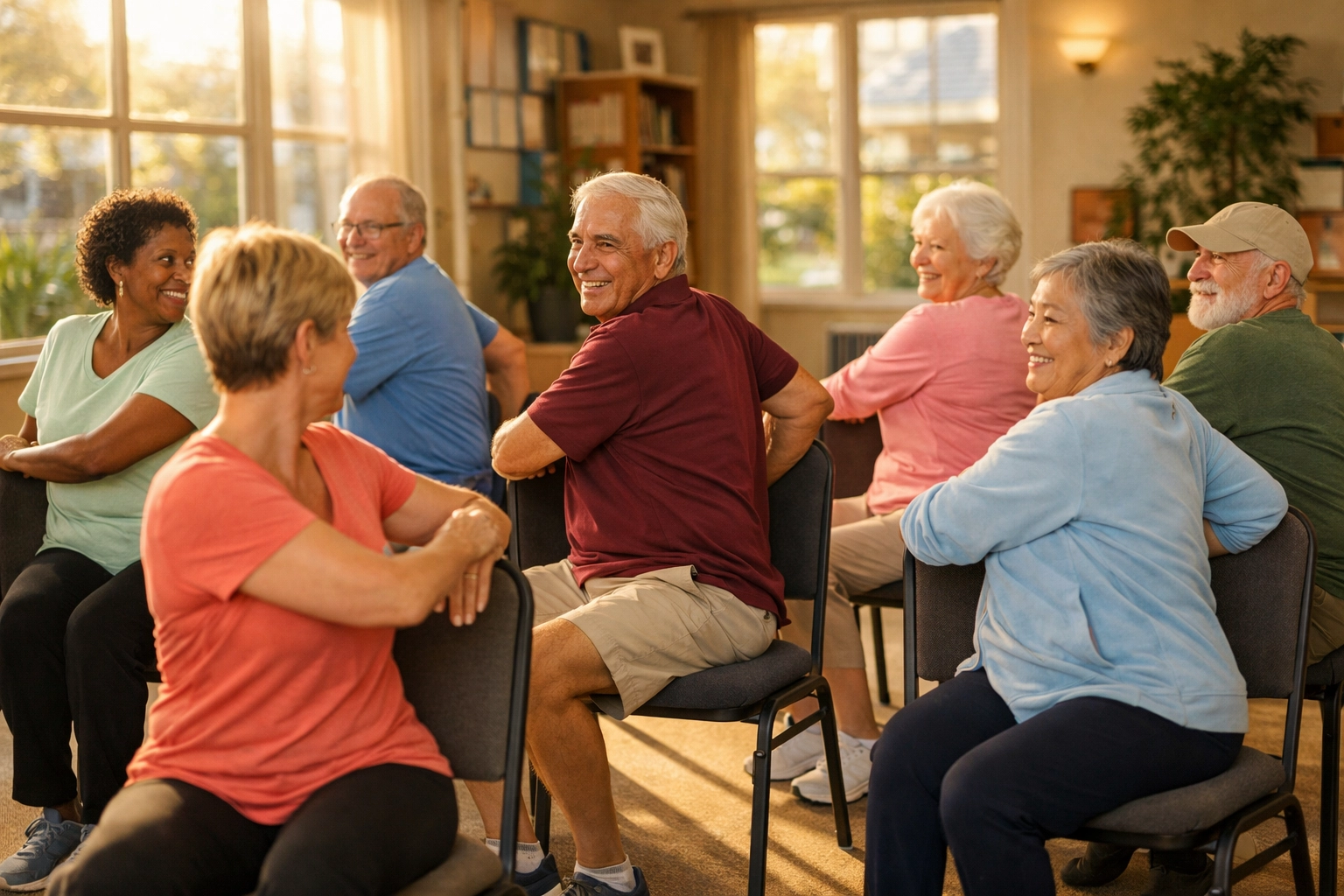
Focus on functional movements: Exercises that mimic daily activities are particularly helpful. Practicing sit-to-stand transitions, gentle twists while seated, or controlled reaching movements all build practical core strength.
Incorporate balance exercises: Activities like standing on one foot (holding onto a counter for safety) or walking heel-to-toe engage your core while also improving balance.
Make it consistent: Regular, gentle exercise is more effective than occasional intense workouts. Even 10-15 minutes several times a week can build strength over time.
Consider guided programs: Many community centers, senior centers, and physical therapy clinics offer balance and strength classes specifically designed for older adults. These programs provide professional guidance and social support.
Always prioritize safety: Hold onto sturdy furniture or counters when trying new exercises. Work with a physical therapist if you have concerns about your balance or strength.
Some gentle core-strengthening activities that many seniors find accessible include:
- Seated marching (lifting knees while sitting)
- Gentle torso twists while seated
- Pelvic tilts while lying on your back
- Modified planks against a wall or counter
- Tai chi or gentle yoga classes designed for seniors
- Standing exercises while holding onto a stable support
The key is to start slowly and gradually build strength over time. Even small improvements in core strength can make a meaningful difference in your balance and confidence.
The Broader Picture of Core Strength and Aging
While fall prevention is a critical reason to maintain core strength, it's not the only benefit. Strong core muscles contribute to overall quality of life in several important ways.
Better posture: As we've discussed, strong core muscles help you maintain upright posture, which affects how you look, how you feel, and how your body functions.
Reduced back pain: Many cases of chronic back pain in older adults are related to weak core muscles that can't adequately support the spine.
Improved breathing: Since the diaphragm is part of your core, core strength can actually affect your breathing efficiency.
Greater independence: When your core is strong, everyday activities like getting dressed, doing household chores, and running errands feel easier and require less assistance.
Enhanced bone density: Weight-bearing core exercises can help maintain bone density, which is particularly important for preventing fractures if a fall does occur.
Better overall mobility: Core strength supports all types of movement, helping you stay active and engaged in the activities you enjoy.
Understanding the connection between core strength and fall prevention empowers you to take meaningful action. While you can't always control external risk factors like weather or uneven sidewalks, you can work on building and maintaining your core strength. Combined with other fall prevention strategies: like home safety modifications, appropriate footwear, vision care, and medication management: core strengthening becomes part of a comprehensive approach to staying safe, stable, and independent as you age.
The journey to building core strength doesn't happen overnight, but every small step forward makes a difference. Whether you're just starting to think about fall prevention or you're looking to add to your existing safety strategies, focusing on your core strength is an investment in your long-term independence and well-being.

