
Hi there, I’m Brian Kerr, the founder here at Fall Guys Products. If you’ve been feeling a little less steady on your feet lately, or if you’re looking out for a loved one who is, I want to start by saying: you aren’t alone, and this is something we can absolutely work on together.
The fear of falling can sometimes feel like it’s shrinking your world. It might make you hesitate to walk to the mailbox or second-guess a trip to the kitchen at night. But here’s the good news: balance and strength aren’t fixed traits. They are skills we can sharpen, and muscles we can rebuild, no matter our age.
In this guide, I want to walk you through the basics of fall prevention. We aren't going to talk about high-intensity gym workouts. Instead, we’re focusing on simple, effective, and safe movements you can do right in your living room. We’ll also look at how to make your home a partner in your safety rather than a source of worry.
Understanding the Balance Equation
Balance is actually a pretty complex "conversation" happening between your brain, your inner ear, your eyes, and your muscles. As we get older, that conversation can sometimes get a little garbled. Your muscles might react a fraction of a second slower, or your inner ear might send slightly different signals.
The goal of balance and strength training is to "clear up the signal." By performing specific movements, you’re teaching your body how to respond when it encounters an uneven rug or a slippery patch of floor. Strength training, particularly in your legs and core, gives you the "power" to correct yourself if you do start to wobble.
Research consistently shows that even light physical activity can reduce the risk of falling by anywhere from 13% to 40%. That is a huge margin of safety that you can build for yourself starting today.
Creating Your Safe Space: The Pre-Exercise Checklist
Before we jump into the movements, we need to make sure your "training ground" is safe. You wouldn’t practice driving in a crowded parking lot, and you shouldn’t practice balance in a cluttered room.
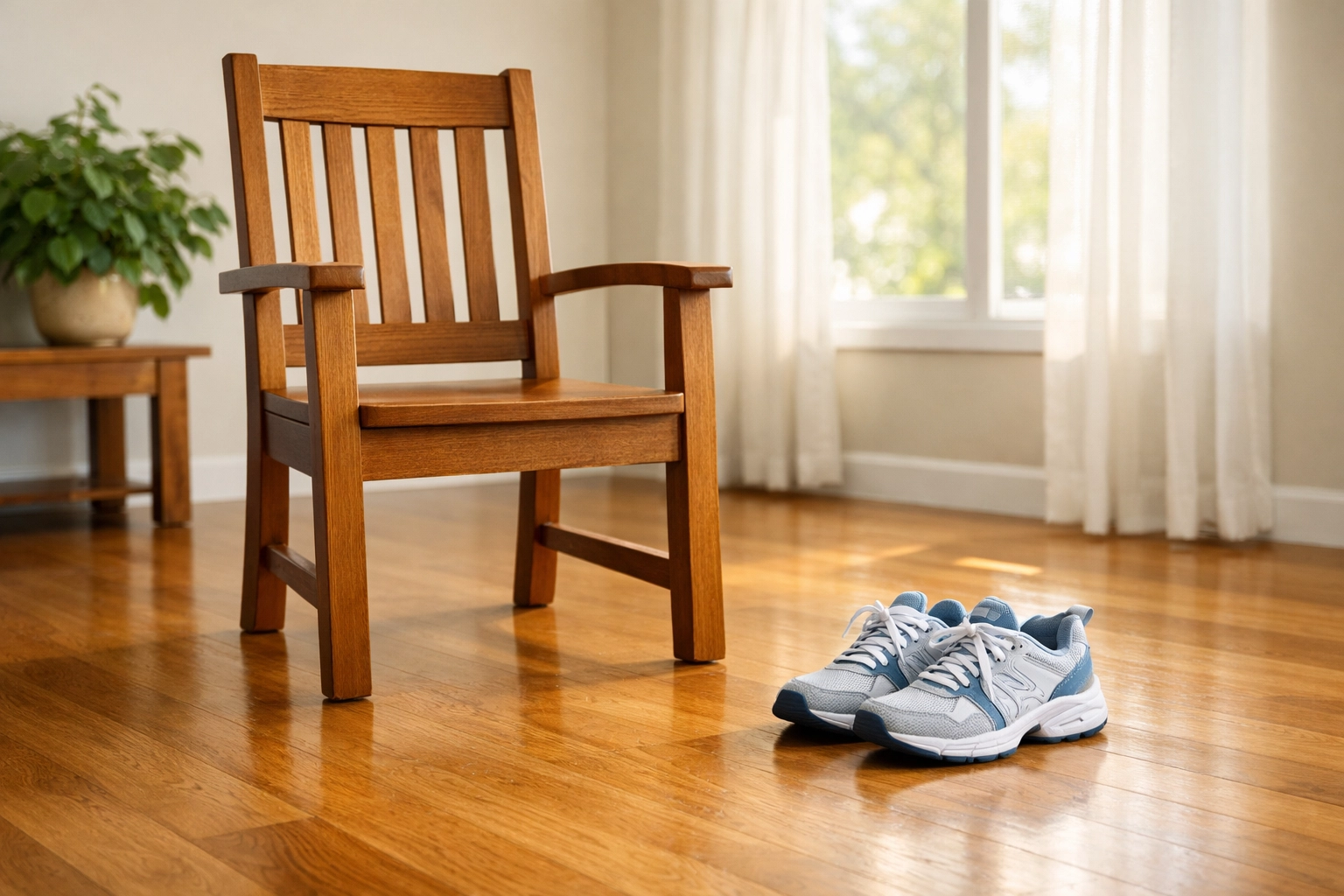
- The Sturdy Anchor: Find a heavy kitchen chair (without wheels!), a solid countertop, or a clear section of wall. You need something you can hold onto that won't move if you put your weight on it.
- Clear the Floor: Remove any throw rugs or loose cords in the area where you’ll be moving.
- Footwear Matters: Wear a pair of supportive, closed-toe shoes with good grip. Avoid doing these exercises in socks or loose slippers, as they can cause you to slide.
- Lighting: Make sure the room is well-lit. If you can’t see your feet clearly, your brain has to work twice as hard to keep you balanced.
- Listen to Your Body: If you feel sharp pain, dizziness, or shortness of breath, stop immediately. It’s okay to take it slow.
The Beginner’s Exercise Suite
These five exercises are designed to be "exercise snacks": short movements you can do throughout the day. You don't need a 60-minute block; you can do a few repetitions while the coffee is brewing or during a commercial break.
1. The Sit-to-Stand (The Foundation)
This is perhaps the most important movement for daily life. We do it when we get out of bed, off the toilet, or out of a car.
- How to do it: Sit in a sturdy chair with your feet flat on the floor, about hip-width apart. Lean your chest forward slightly over your toes. Using your leg muscles, slowly push yourself up to a standing position. Then, slowly lower yourself back down.
- The Goal: Try for 5 to 10 repetitions.
- The Progression: If you need to use your hands on the armrests at first, that’s perfectly fine. As you get stronger, try crossing your arms over your chest and using only your legs.
2. Single-Leg Stance (The Stabilizer)
This exercise improves your "proprioception": your body's ability to know where it is in space.
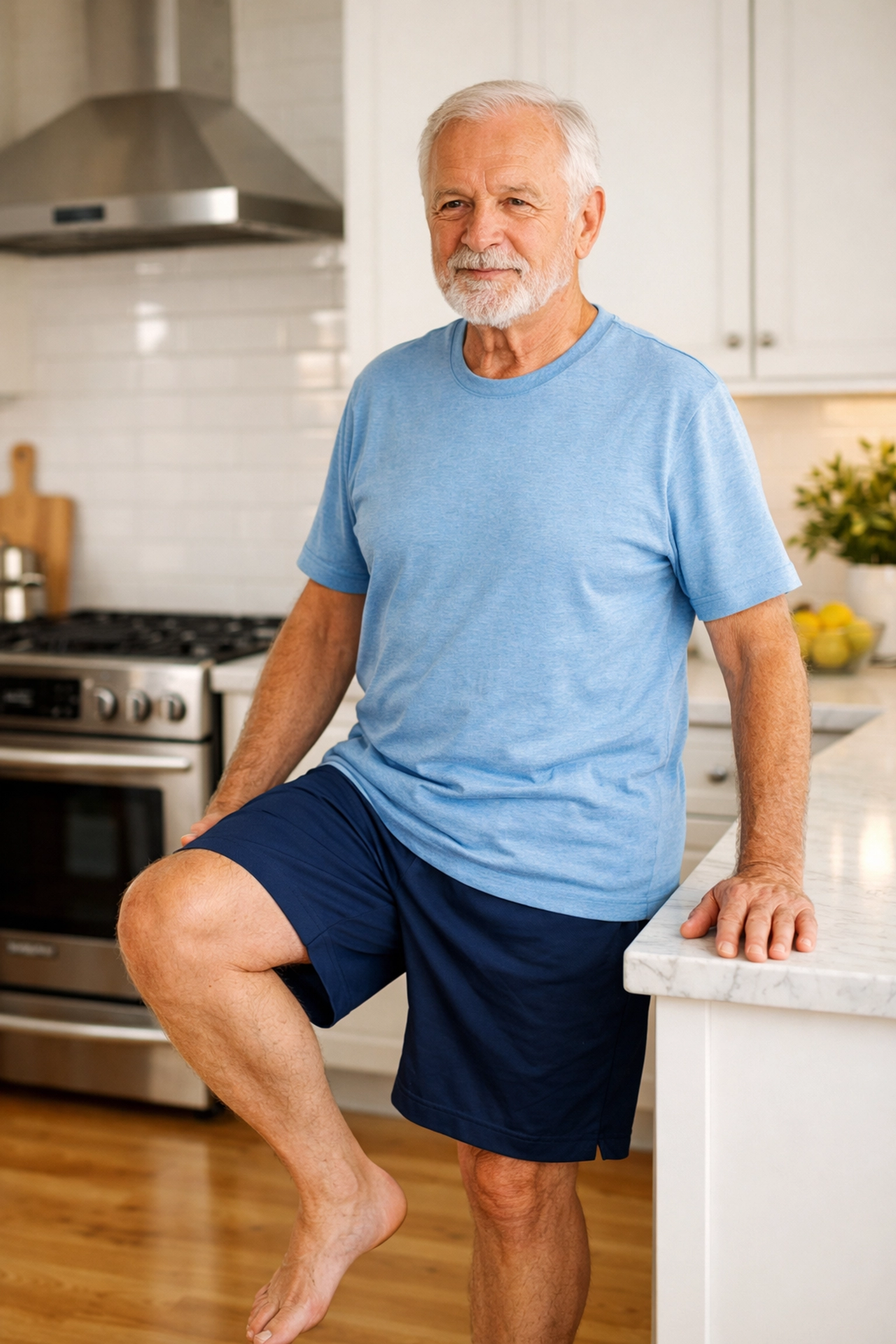
- How to do it: Stand next to your sturdy chair or counter. Hold onto the support with one or both hands. Lift one foot slightly off the ground and try to balance on the other leg.
- The Goal: Hold for 10 seconds per leg. Repeat 3 times on each side.
- The Progression: As you feel more confident, try touching the support with only one finger, and eventually, try letting go for a few seconds at a time.
3. Heel-to-Toe Walk (The Tightrope)
This helps with coordination and moving through narrow spaces safely.
- How to do it: Stand next to a long counter or a wall for safety. Place the heel of one foot directly in front of the toes of the other foot, so they are touching (or as close as you can get). Take a step forward, putting your next heel directly in front of your toes.
- The Goal: Take 10 to 20 steps.
- The Progression: Once you can do this easily while holding onto a counter, try doing it with your hands at your sides, keeping your eyes looking straight ahead rather than at your feet.
4. Heel Raises (The Lower Body Engine)
Strong calves are essential for a steady gait and for climbing stairs.
- How to do it: Stand behind your chair or at the counter. Slowly rise up onto the balls of your feet (like you're reaching for something on a high shelf). Hold for two seconds, then slowly lower your heels back to the floor.
- The Goal: 10 repetitions, twice a day.
- The Progression: Try lowering yourself even more slowly. The "down" phase of the movement is where a lot of strength is built.
5. Side Leg Raises (The Side-to-Side Support)
Falls often happen when we have to step sideways or change directions quickly. This exercise strengthens the hip abductors, which keep your pelvis level when you walk.
- How to do it: Stand behind your chair. Keep your back straight and your toes pointing forward. Slowly lift one leg out to the side, then bring it back in. Avoid leaning your torso to the opposite side: try to stay upright.
- The Goal: 8 to 10 repetitions on each side.
- The Progression: Hold the leg at the top of the movement for 3 to 5 seconds before lowering it.
Making Your Home a Safe Haven
While exercise builds your internal strength, your environment plays a massive role in fall prevention. I like to think of home safety as "removing the obstacles to your success."
Lighting is Your Best Friend
As we age, our eyes need more light to see clearly and judge distances. Ensure that pathways, especially between the bedroom and the bathroom, are well-lit at night. Motion-sensor nightlights are a fantastic, low-cost way to ensure you never have to fuddle for a switch in the dark.
The Kitchen and Living Room
Look at your floors. Are there "islands" of furniture that force you to take awkward paths? Try to create wide, clear "runways" through your rooms. If you have a favorite rug that tends to slip, consider using double-sided rug tape or, better yet, removing it altogether.
The Bathroom: A High-Priority Zone
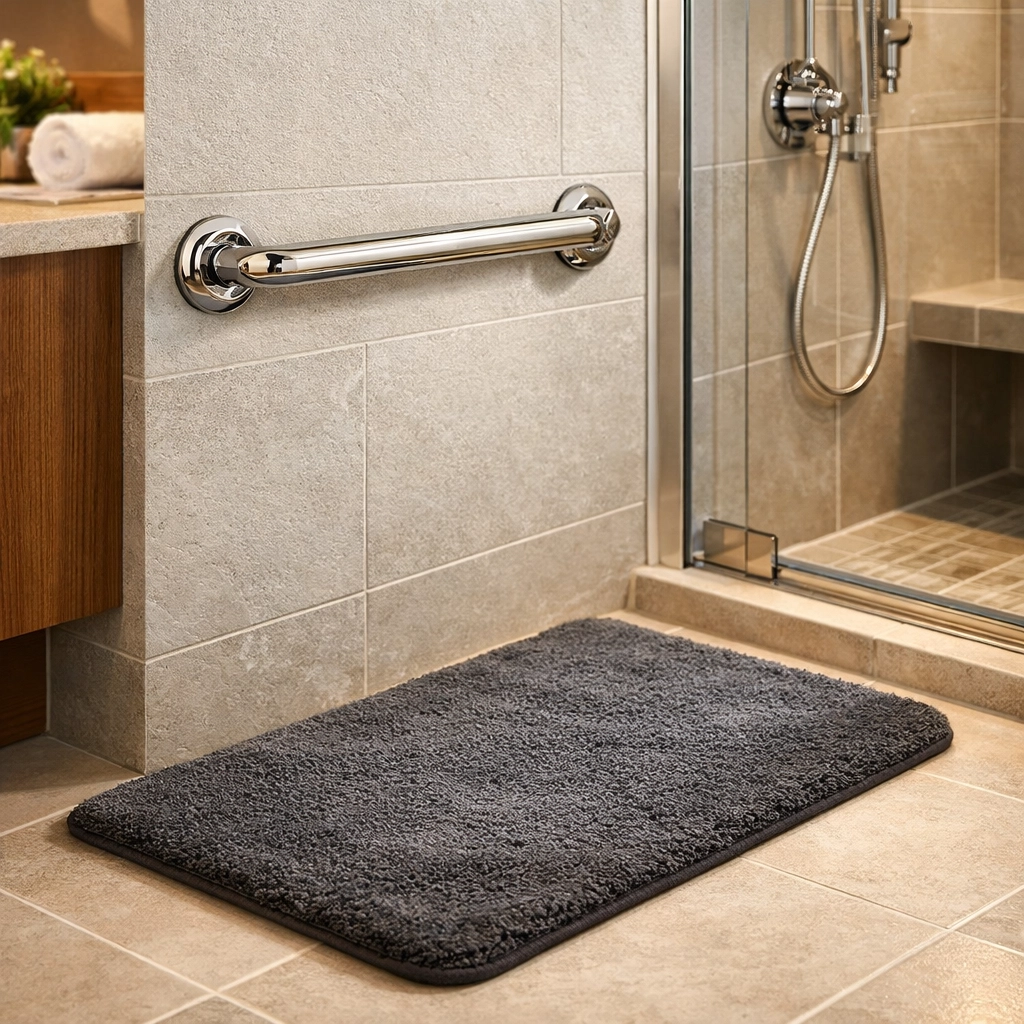
The bathroom is often the most hazardous room in the house due to hard, wet surfaces. Installing grab bars: real, bolted-in grab bars, not suction cup versions: near the toilet and in the shower can provide a massive boost in confidence and safety. A non-slip mat inside and outside the tub is also a must.
The Role of Mobility Aids
Sometimes, despite our best efforts with exercise, we need a little extra support. I want to be very clear about this: Using a cane, a walker, or a rollator isn't a sign of "giving up." In fact, it's the opposite. It’s a tool that allows you to keep going.
A mobility aid acts like a third leg, widening your base of support. If you find yourself "furniture walking" (touching tables and walls as you move through the house), it might be time to talk to a physical therapist about a dedicated aid. They can ensure it is fitted to the correct height, which is vital for preventing back pain and ensuring the aid actually helps your balance instead of hindering it.
Tips for Caregivers: Helping Without Hovering
If you are reading this because you’re worried about a parent or a spouse, your role is incredibly important. However, it can be a delicate balance to provide help without making your loved one feel like they’ve lost their independence.
- Be a Partner, Not a Coach: Instead of saying, "You need to do your exercises," try saying, "I’m going to do some balance stretches, want to join me?"
- Focus on the Goal: Frame fall prevention in terms of what it allows them to do: like going to a grandchild's graduation or gardening: rather than what they can't do.
- Audit Together: Walk through the house together and look for hazards. Ask, "Does this rug ever trip you up?" rather than "I'm throwing this rug away."
- Encourage Professional Input: Sometimes, a recommendation from a doctor or a physical therapist carries more weight than advice from a family member. Offer to drive them to an assessment.

Building a Sustainable Routine
The secret to fall prevention isn't doing a 2-hour workout once a week; it’s doing 5 minutes of movement every single day. Consistency is what builds the neural pathways that keep you steady.
Start small. Maybe pick just two of the exercises above and commit to doing them every morning after breakfast. Once that feels like a habit, add a third.
The goal isn't perfection. Some days you’ll feel steadier than others. The goal is to keep moving. By combining these simple strength and balance exercises with a few smart changes to your home environment, you are taking active control of your safety.
At Fall Guys Products, we believe that staying mobile and independent is one of the most important things you can do for your quality of life. You have the tools, and now you have the plan. Take that first step, literally: and let’s keep you moving forward safely.

