
Stairs are often the most functional part of a home, connecting our private sanctuaries upstairs to the living spaces below. Yet, as we age or face mobility changes, these architectural features can start to feel like a challenge rather than a convenience. If you’ve ever felt a slight hesitation at the top of a flight of stairs, you aren’t alone.
Navigating stairs safely is a skill that can be mastered with the right environment and habits. It’s not about avoiding the stairs altogether; it’s about making sure the stairs work for you. In this guide, we’re going to break down everything from the structural integrity of your steps to the way you plant your feet. Our goal is to replace that hesitation with confidence, ensuring your home remains a place of comfort and independence.
The Foundation: Structural Integrity
Before we talk about how you move, we need to talk about what you’re moving on. A safe staircase starts with a solid foundation. Even the most careful person can be tripped up by a loose board or an uneven step.
Consistency is Key
One of the most common causes of stumbles on stairs is inconsistency in the "rise" and "run." The rise is the vertical height of each step, and the run is the horizontal depth where your foot lands. Our brains are incredibly efficient; after the first two steps, your body "memorizes" the rhythm of the staircase. If the third or fourth step is even a quarter-inch higher or lower than the others, your foot may not clear the edge, or it may land sooner than expected.
If you notice that one step feels "off," it’s worth having a professional check the measurements. Maintaining a uniform height for every single riser is a fundamental rule of home safety.
Stability of the Treads
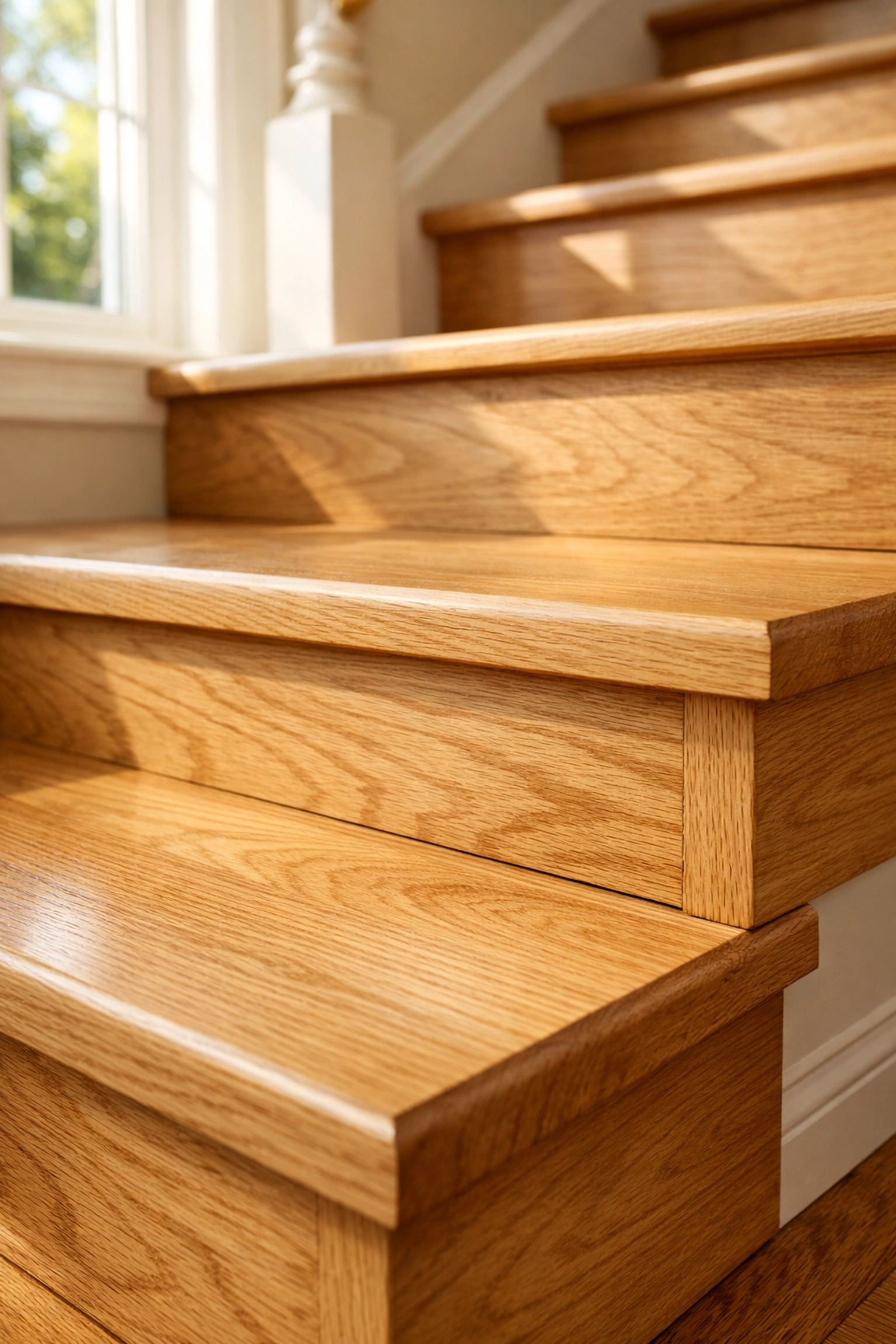
Treads: the flat part of the step: must be securely anchored. Over time, wood can warp, or screws can loosen. If you hear a squeak or feel a slight "give" when you step down, that’s a sign that the tread needs attention. A loose tread can shift under your weight, causing a momentary loss of balance. Ensuring every step is level and rock-solid is the first step in creating a fall-safe environment.
The Power of the Handrail
A handrail is more than just a place to rest your hand; it is your primary safety net. To be truly effective, a handrail needs to meet specific criteria regarding its shape, height, and length.
The "Power Grip"
Not all handrails are created equal. You might have seen wide, flat decorative rails or thick, rectangular ones. While these may look nice, they aren't the safest choice. The ideal handrail is "circular" or "mushrooms-shaped," allowing you to wrap your fingers and thumb completely around it. This is called a "power grip." If you slip, a power grip allows you to use your forearm strength to stabilize yourself. If a rail is too wide to grasp fully, your hand can easily slide off when you need it most.
Continuous Support
A handrail should never end before the stairs do. Many older homes have rails that stop one step short of the bottom or top landing. This is a critical error. You need support exactly when you are transitioning from the stairs to a flat floor. A safe handrail should extend slightly past the top and bottom steps, providing a steady "lead-in" and "lead-out."
Dual Rails
If your staircase only has a rail on one side, consider installing a second one on the opposite wall. Having "double" support allows you to use both arms for balance, which significantly reduces the load on your joints and provides a much higher level of stability. This is especially helpful if one side of your body is stronger than the other.
Shedding Light on the Subject
Visual perception plays a massive role in how we navigate elevation. If you can’t see exactly where a step begins and ends, your brain has to guess: and that’s when accidents happen.
Eliminating Shadows
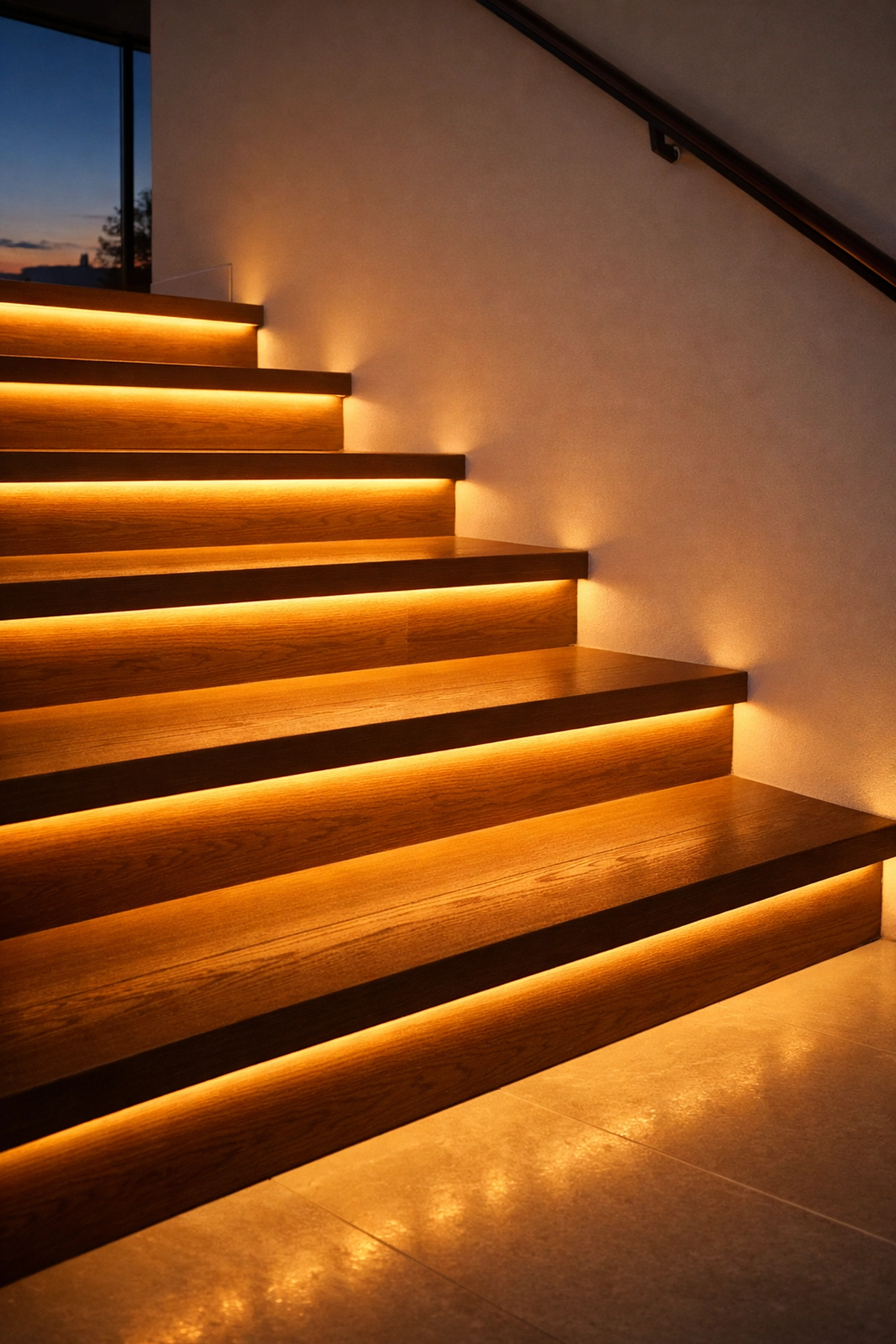
Standard overhead lighting often casts shadows across the stairs, making it difficult to judge the depth of the treads. The most dangerous areas are the very top and very bottom steps. Lighting should be bright and even. Many homeowners find success by installing LED strip lighting under the lip of each step or using recessed wall lights that shine directly onto the treads.
High-Contrast Edges
As we age, our depth perception can change, making it hard to distinguish between steps of the same color. A simple but effective solution is to add a high-contrast strip to the edge (the nosing) of each step. For example, if you have dark wood stairs, a light-colored non-slip strip on the edge clearly marks where the step ends. This visual cue tells your brain exactly where to place your foot.
The Magic of Motion Sensors
We’ve all had those moments where we navigate the house in the dark because we don't want to fumble for a switch. Motion-sensor lights eliminate this risk. Installing sensors at the top and bottom of the stairs ensures that as soon as you approach, the path is illuminated. It’s a hands-free way to stay safe, especially during those late-night trips to the kitchen or bathroom.
Traction and Surface Materials
The surface of your stairs dictates how much "grip" your feet have. While polished hardwood is beautiful, it can be as slippery as ice, especially if you’re wearing socks.
Dealing with Slick Surfaces
If your stairs are bare wood or tile, you have a few options to improve traction without hiding the beauty of the materials. Non-slip adhesive treads are clear or textured strips that provide friction. Another option is a carpet runner. However, if you choose a runner, it must be "low-pile." Thick, shaggy carpet can actually hide the edge of the step and make your footing feel unstable.
The Danger of Loose Rugs
While we're on the subject of surfaces, let's talk about the areas immediately surrounding the stairs. Area rugs or mats at the top or bottom of a staircase are major tripping hazards. They can bunch up or slide out from under you just as you are transitioning your weight. It’s best to keep the landings completely clear of any loose floor coverings.
Safe Navigation Habits
Even the safest staircase in the world requires safe habits. How you move is just as important as what you’re moving on.
The One-Step-at-a-Time Method
We often get in a hurry, trying to walk up or down stairs with the same rhythm we use on flat ground. Instead, try the "step-to" method. This involves placing one foot on a step and then bringing the other foot to meet it on the same step before moving to the next. This ensures that you always have a stable base and are never balancing on one leg for longer than necessary.
Footwear Matters
What you wear on your feet can make or break your stair safety.
- The No-Socks Rule: Walking on stairs in just socks is one of the leading causes of household slips.
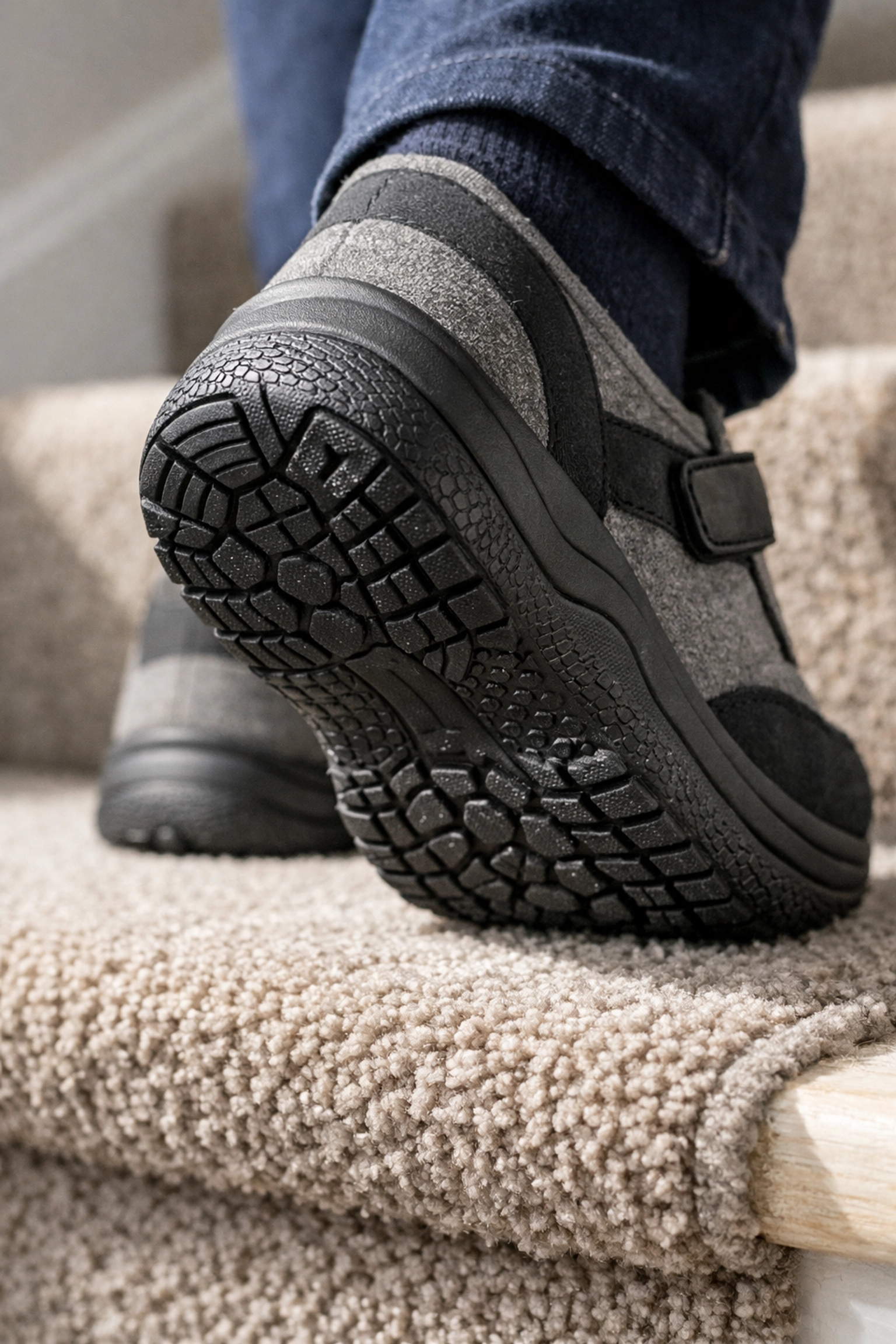
- Proper Soles: Look for shoes or slippers with rubber, non-skid soles.
- Heel Support: Avoid "backless" slippers or flip-flops that can easily trip you up or slide off your foot mid-step.
Carrying Loads
One of the most dangerous things you can do on a staircase is carry a heavy or bulky load, like a laundry basket, that blocks your view of your feet. If you can’t see the steps, you are navigating by touch and memory, which significantly increases risk. If you must move items between floors, try to use a "stair basket" that you can move one step at a time, or ask for help. Always keep at least one hand free to hold the handrail.
Keeping the Path Clear
It sounds simple, but the "staircase clutter" habit is a tough one to break. Many of us use the bottom steps as a staging area for things that need to go upstairs later: shoes, books, or mail.
Zero Tolerance for Clutter
A staircase should never be a storage area. Even a small object like a stray shoe can lead to a fall. Make it a house rule that the stairs and the landings are always 100% clear. If you find it difficult to carry items up and down frequently, consider having "upstairs" and "downstairs" versions of common items (like reading glasses or cleaning supplies) to minimize the need to carry things while climbing.
Environmental Considerations
Sometimes the danger isn't the stairs themselves, but the environment around them.
Distractions
In the age of smartphones, it’s easy to look down at a screen while walking. On stairs, this is a recipe for disaster. Always finish your text or phone call before you start your ascent or descent. Give the stairs your full, undivided attention.
Physical State
Be mindful of how you feel before you tackle the stairs. If you’ve just woken up and feel a bit groggy, or if you’ve taken medication that makes you feel lightheaded, wait a few minutes. Sit on the edge of the bed or a chair until you feel fully alert and balanced.
When to Seek a Professional Assessment
Sometimes, despite our best efforts, we need an expert eye. If you find that you are avoiding your stairs out of fear, it may be time for a professional home safety assessment. Occupational therapists or physical therapists specialize in evaluating how a person interacts with their environment. They can provide personalized recommendations, such as specific exercises to strengthen your "stair-climbing muscles" or suggestions for home modifications you might not have considered.
Mastery Through Mindful Movement
Mastering home navigation isn't about a single "fix." It’s a combination of maintaining a safe environment and practicing safe habits every single day. By ensuring your stairs are structurally sound, well-lit, and equipped with sturdy handrails, you create a space that supports your mobility. By choosing the right footwear and staying focused, you take control of your own safety.
Remember, the stairs are a part of your home: a home you should feel comfortable and safe in. Take it one step at a time, and don't be afraid to make the changes necessary to keep your environment working for you. Safety isn't about limitation; it's about empowerment. With these foundations in place, you can move through your home with the peace of mind you deserve.

