
Hi there, I’m Brian Kerr. Most of us don’t give the stairs in our homes a second thought until they start to feel like a mountain. Whether you’re noticing a slight hesitation as you look down that flight of steps or you’re helping a loved one navigate their home more confidently, understanding the fundamentals of stair safety is one of the most empowering things you can do.
Stairs are a unique challenge because they require a combination of balance, strength, and visual processing. At Fall Guys Products, we believe that your home should be a place of comfort, not a source of anxiety. This guide is designed to break down the science and the "common sense" of stair safety into actionable steps. We’re going to look at everything from the physics of a well-built step to the way your choice of socks can change your stability.
The Anatomy of a Safe Staircase
Before we look at how we move, we have to look at what we are moving on. Not all staircases are created equal. In many older homes, stairs were built before modern building codes were established, leading to narrow treads or uneven heights.
Treads and Risers
The "tread" is the horizontal part of the step where you place your foot. The "riser" is the vertical part between the steps. For maximum safety, every riser in a flight of stairs should be the exact same height. Our brains are incredibly good at establishing a rhythm when we climb. If one step is even a quarter-inch taller than the others, it can cause a trip because your foot doesn't lift quite high enough to clear the next edge.
If you suspect your stairs are uneven, it’s worth having a professional check them. Even a small shim or a bit of carpentry can level out a "problem step" that has been bothering you for years.
The Importance of Nosing
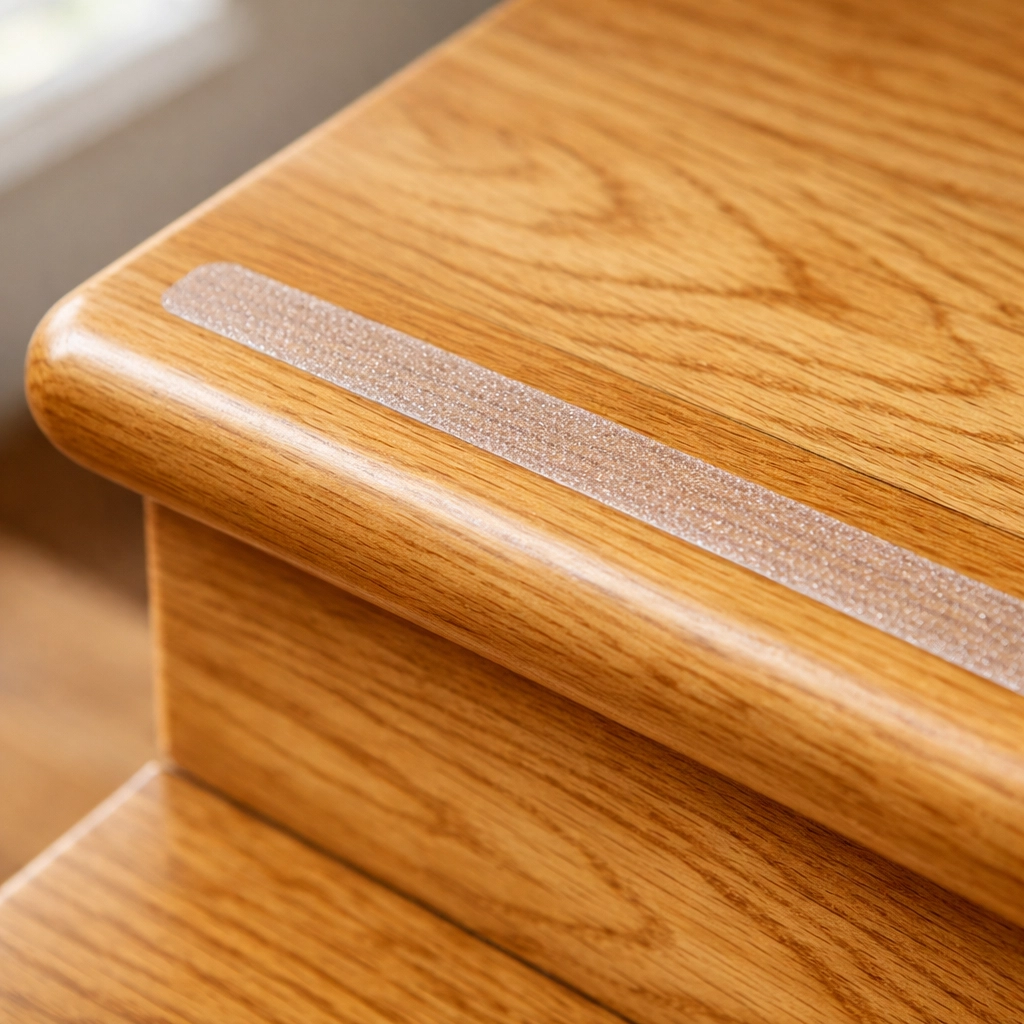
The nosing is the edge of the step that often overhangs the riser. While it provides a bit of extra room for your foot, a nosing that sticks out too far can actually catch the heel of your shoe as you descend. Ideally, the nosing should be rounded and have a non-slip surface to prevent your foot from sliding off the edge.
Lighting: The Invisible Safety Guard
You can have the most perfectly built stairs in the world, but if you can’t see where one ends and the next begins, you’re at risk. Lighting is often the most overlooked aspect of home mobility.
Eliminate Shadows
Shadows are the enemy of depth perception. If a light source is positioned poorly, it can cast a shadow over the edge of a step, making it look like the tread is deeper or shallower than it actually is.
We recommend having light switches at both the top and the bottom of the stairs: this is often called a "three-way switch." You should never have to navigate a single step in the dark just to reach a light switch. If your home isn't wired this way, there are many battery-operated, motion-sensing LED lights that can be adhered to the wall or the underside of the handrail to provide an automatic glow whenever you approach.
Brightness and Glare
While we want things bright, we don’t want glare. Highly polished wood stairs can reflect overhead lights in a way that obscures the actual edge of the step. Aim for "warm" light (around 2700K to 3000K) which provides high contrast without the harsh, blinding effect of cool blue lights.
Handrails: Your Primary Support System
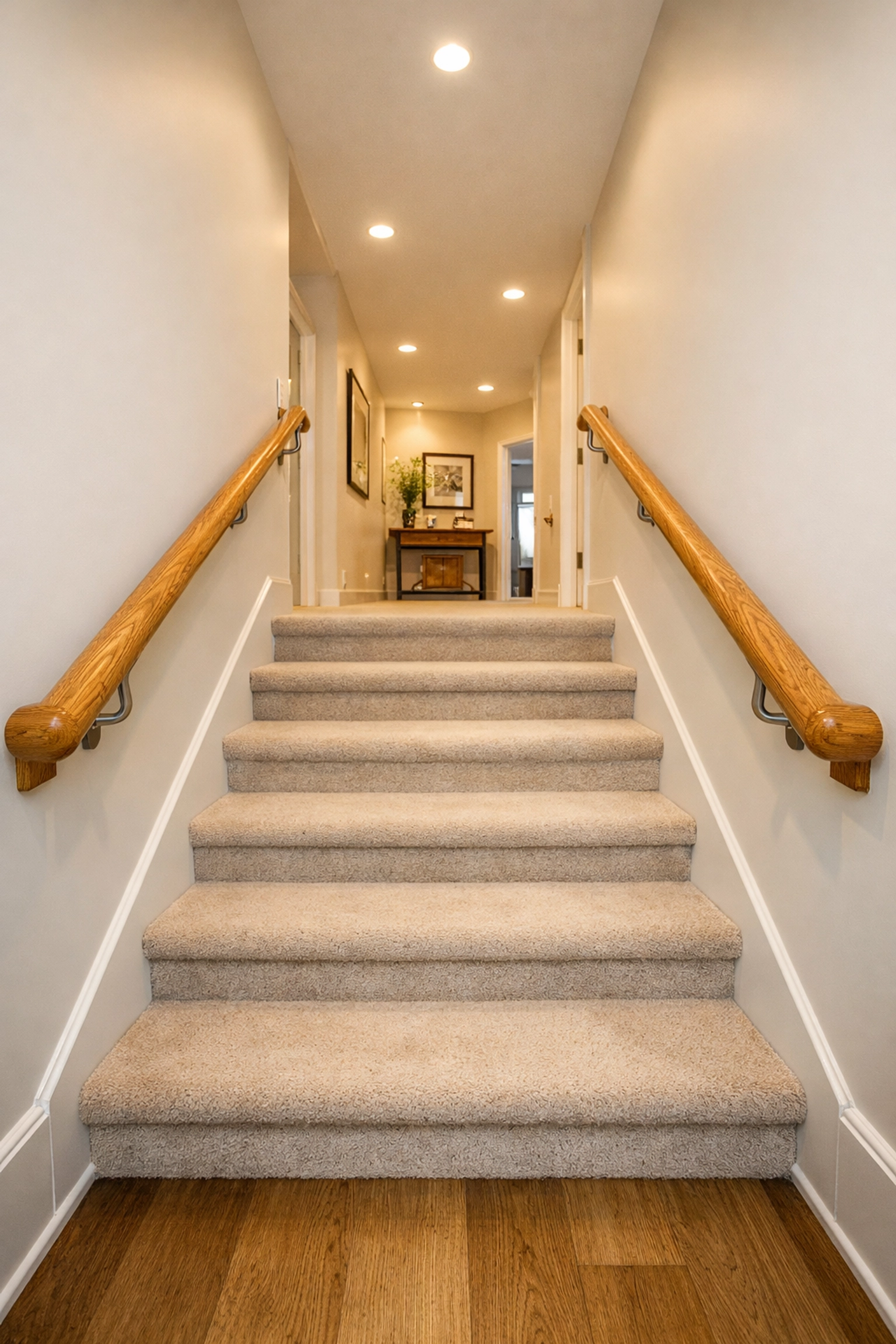
A handrail isn't just a suggestion; it’s a vital piece of safety equipment. Every staircase should have a handrail, and ideally, there should be one on both sides.
Bilateral Support
Most homes only have a handrail on one side. However, having two rails allows you to use both arms to stabilize your core. This is particularly important for individuals who might have weakness on one side of their body due to an old injury or a neurological condition. With two rails, you are always "centered" between your supports.
Grip and Diameter
A handrail is only useful if you can actually grip it. Many decorative handrails are too wide for a hand to wrap around securely. A safe handrail should be "graspable," meaning your fingers and thumb can meet on the underside. The standard diameter is usually between 1.25 and 2 inches. If your rail is a large, flat piece of wood, you might consider adding a secondary, smaller rail onto the wall that is easier to hold.
Extensions
Does your handrail end right at the last step? This can be a hazard. A safe handrail should extend about 12 inches beyond the top and bottom steps. This allows you to maintain a firm grip until your feet are safely on level ground.
Surfaces and Traction
The material under your feet dictates how much "grip" you have. Bare wood, tile, and marble are beautiful, but they are notoriously slippery, especially if you are wearing socks or smooth-soled slippers.
The Problem with Carpet Runners
While carpet can provide padding, loose or thick carpet runners can actually increase trip risks. If the carpet is "plush," it can hide the edge of the step, making it hard for your foot to find a firm landing. If you prefer carpet, choose a low-pile, industrial-style carpet that is tightly tacked down.
Non-Slip Treads and Strips
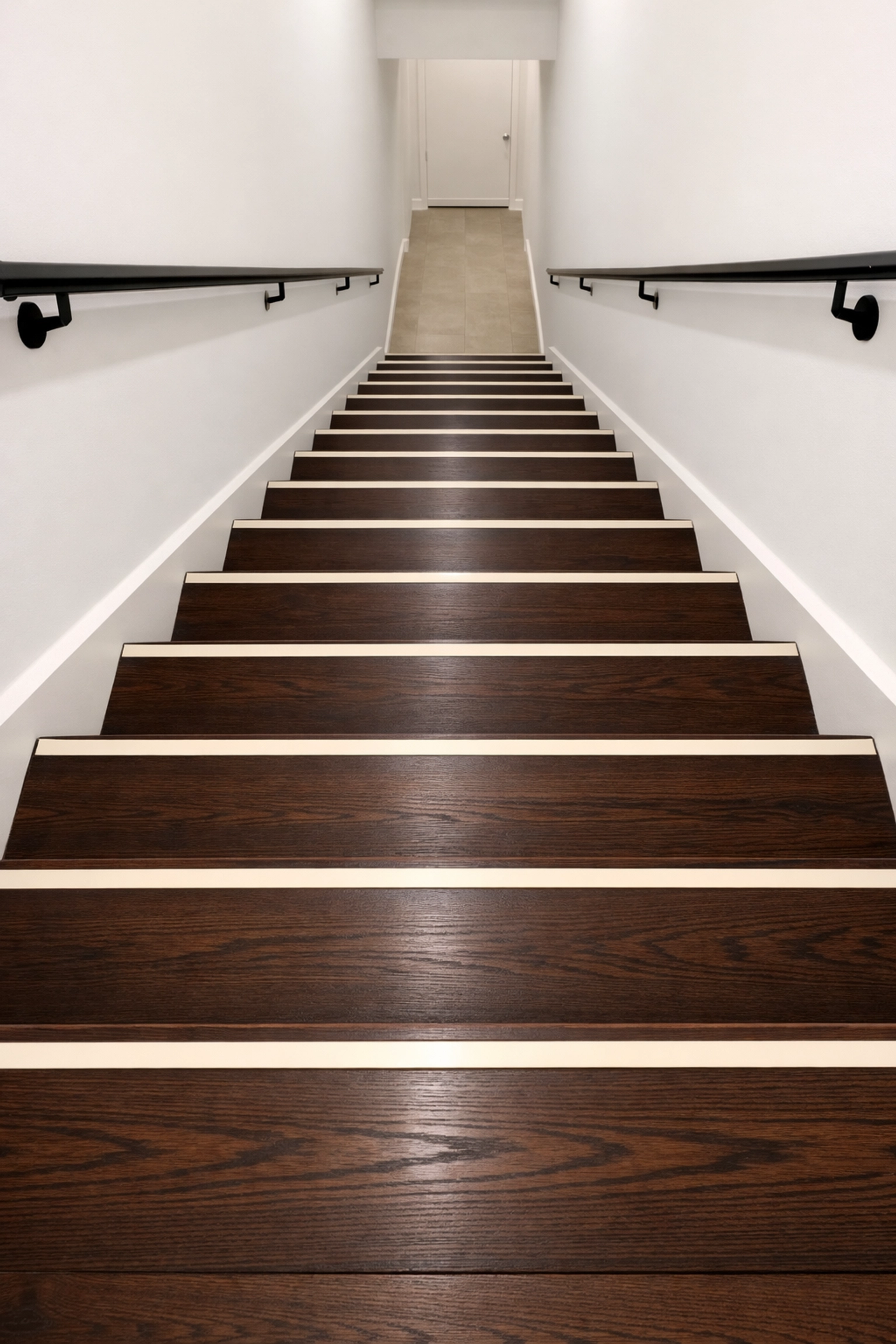
For hard surfaces, consider adding non-slip adhesive strips. These are often clear or color-matched to your stairs so they don't ruin the aesthetic. They provide a gritty texture that ensures your foot doesn't slide forward as you shift your weight.
Visual Contrast
As we age, our ability to distinguish between similar colors fades. If your stairs are all the same dark wood, they can blend into one "slope" in your vision. Applying a strip of contrasting color (like a white strip on dark wood) to the edge of each step can provide a massive boost to your confidence and safety.
Safe Movement Techniques
How we use our bodies on the stairs is just as important as the stairs themselves. It’s about building safe habits until they become second nature.
The Three Points of Contact
Whenever possible, try to maintain three points of contact: two feet and one hand, or two hands and one foot. This ensures that even if one point slips, you have two others to stabilize your weight.
One Step at a Time
There is no prize for speed when it comes to home mobility. Many people fall because they try to "run" up the stairs or take steps two at a time. Plant both feet firmly on a step before moving to the next one. This "step-to" pattern might feel slower, but it significantly reduces the amount of time you spend balancing on one leg.
Eyes on the Path
It’s tempting to look across the room or at your phone while walking, but stairs require your full attention. Look two to three steps ahead of where you are. This allows your brain to pre-plan the movement.
Footwear: The Foundation of Balance
What you wear on your feet can be the difference between a safe trip and a slip.
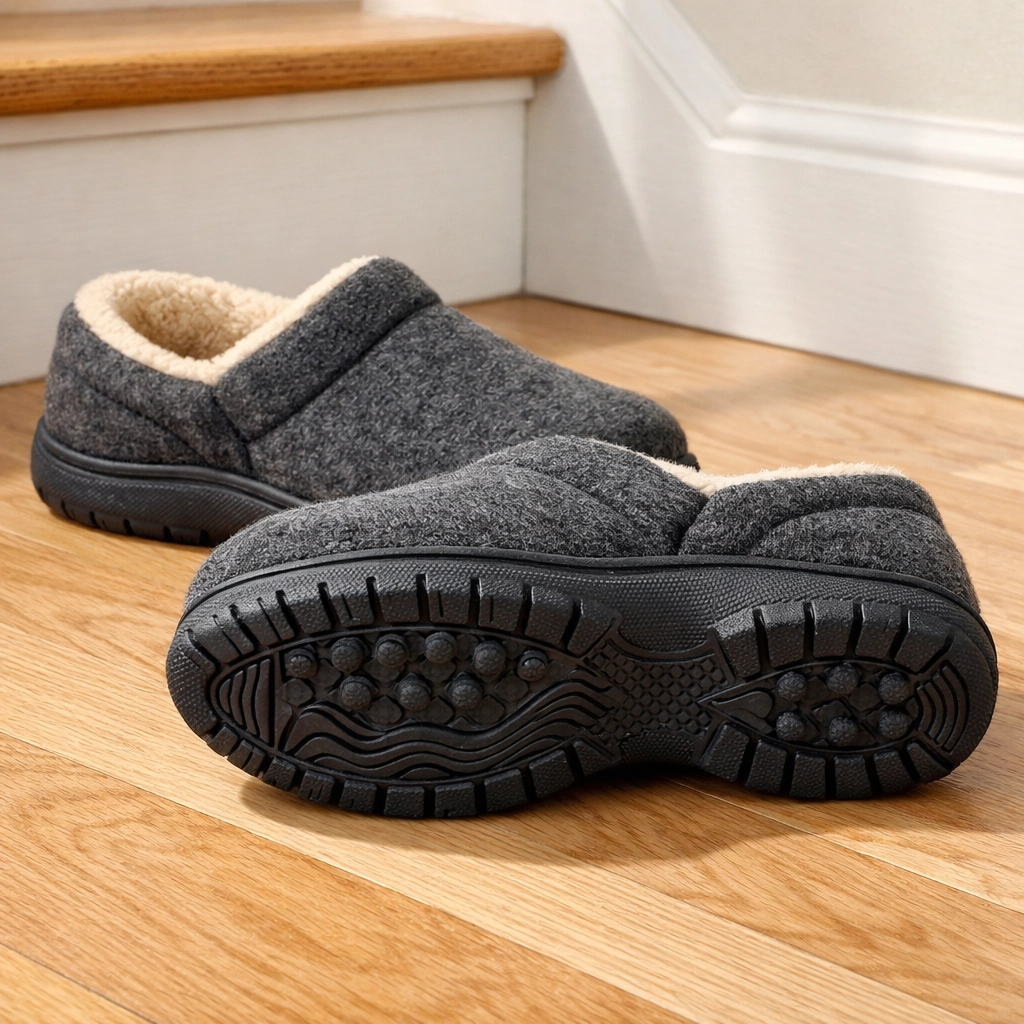
- Avoid Loose Slippers: Scuffs and backless slippers can easily slide off your foot mid-step, causing a trip.
- The Danger of Socks: Walking on hardwood or tile stairs in just socks is one of the most common causes of indoor falls.
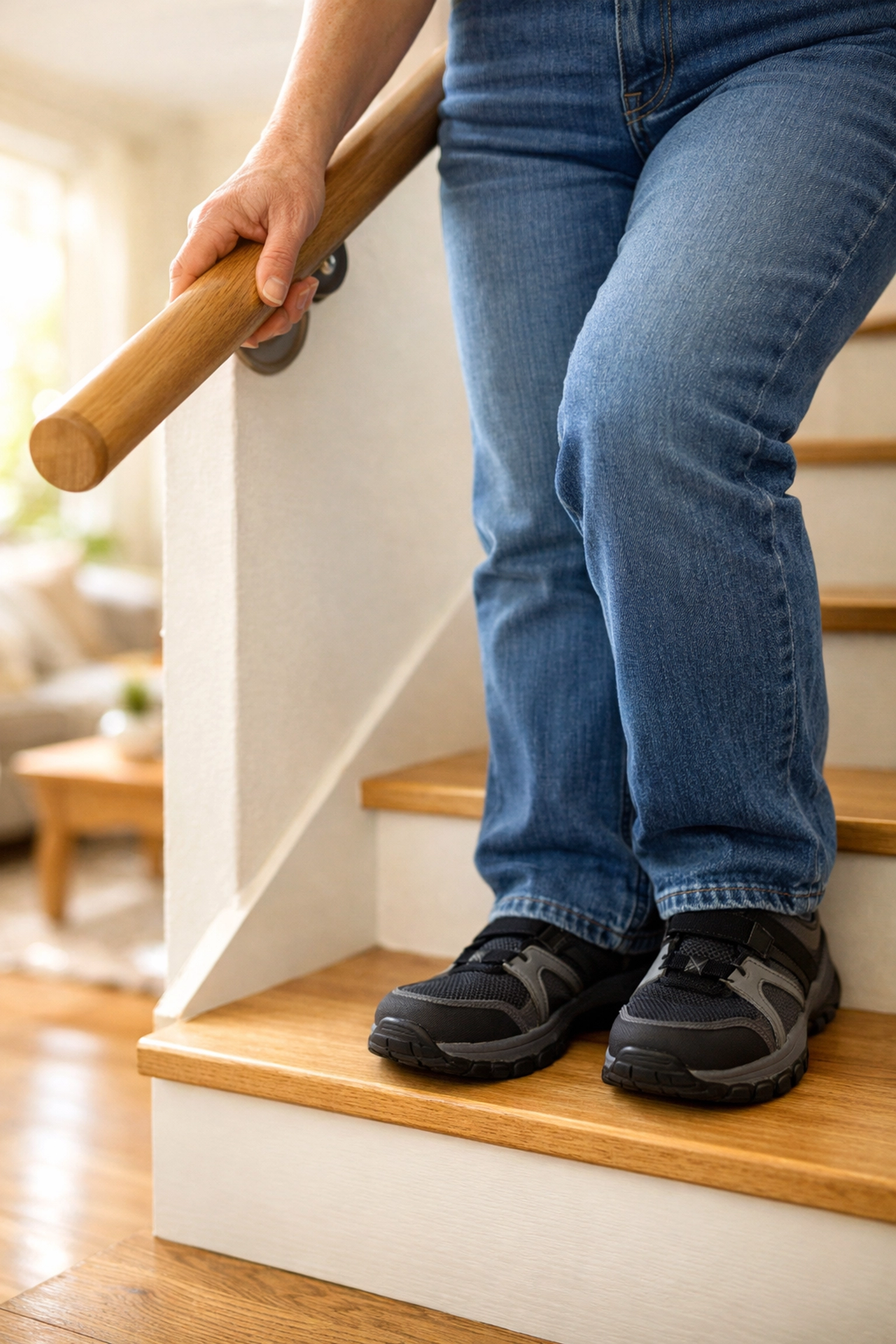
- Proper Soles: Look for shoes with rubberized, non-slip soles. Even inside the house, a supportive "house shoe" with a back and a good grip is a much safer choice than going barefoot or wearing thin socks.
Environmental Hazards: Keeping the Path Clear
The stairs should never be used as a temporary storage shelf. We’ve all done it: placing a stack of books or a basket of laundry on the bottom steps to take up "later."
The "Later" Trap
Anything on the stairs is a major tripping hazard. Even if you think you’ll remember it’s there, a moment of distraction or a trip to the kitchen in the middle of the night can lead to a disaster. Keep the entire width of the staircase clear at all times.
Landings and Rugs
The areas at the top and bottom of the stairs should also be clear. Avoid placing small "throw rugs" at the base of the stairs. These rugs can slide out from under you just as you are transitioning from the stairs to the floor. If you must have a rug, ensure it has a non-slip backing and is taped down to the floor.
Vision and Perception
Sometimes the problem isn't the stairs; it's how we see them.
Multi-focal Lenses (Bifocals)
If you wear bifocals or trifocals, be extra cautious. The bottom portion of your lens is designed for reading close-up. When you look down at your feet through that part of the lens, the stairs may appear blurry or distorted, making it difficult to judge distance. Some people find it helpful to have a dedicated pair of "single vision" glasses for moving around the house.
Regular Vision Checks
Conditions like cataracts or glaucoma can sneak up on us, slowly reducing our depth perception and peripheral vision. Regular eye exams are a core part of a fall-prevention strategy.
Creating a Maintenance Checklist
Safety isn't a "one and done" task. It’s a habit. Every few months, take a walk through your home and check your stairs for the following:
- Is the handrail wobbly? Tighten the brackets if needed.
- Are any treads loose? Listen for squeaks or feel for "give" when you step.
- Are the lights bright enough? Replace any bulbs that are flickering or dim.
- Are the non-slip strips still sticky? If the edges are peeling, replace them immediately.
A Reassuring Final Thought
Navigating your home should feel like a victory, not a chore. By taking these small, intentional steps to secure your environment, you aren't just preventing falls; you are preserving your independence.
Stair safety is a journey, and it’s okay to take it one step at a time. If you start with just one thing: maybe adding a better light or clearing off that stack of books: you’re already making your home a safer place. We're here to help you feel confident in your space, every day. Stay safe, stay mobile, and keep moving forward.

