
Stairs are often the most intimidating part of a home as we get older. Whether it’s the steep flight leading to the second floor or those three tricky concrete steps at the front door, they represent a unique challenge to our mobility and our confidence. However, a staircase shouldn't feel like a mountain to climb. With a combination of the right home modifications, consistent maintenance, and mindful movement habits, you can navigate your home’s levels safely and independently.
This guide is designed to take the mystery and the fear out of stair safety. We’re going to look at the three pillars of a safe staircase: the physical structure, the surrounding environment, and the way you actually use them.
The Physical Foundation: Infrastructure and Design
The safest staircase is one that is built to support you, not just to look good. Often, in older homes or even modern builds focused on aesthetics, safety features are the first things to be overlooked.
Double Up on Handrails
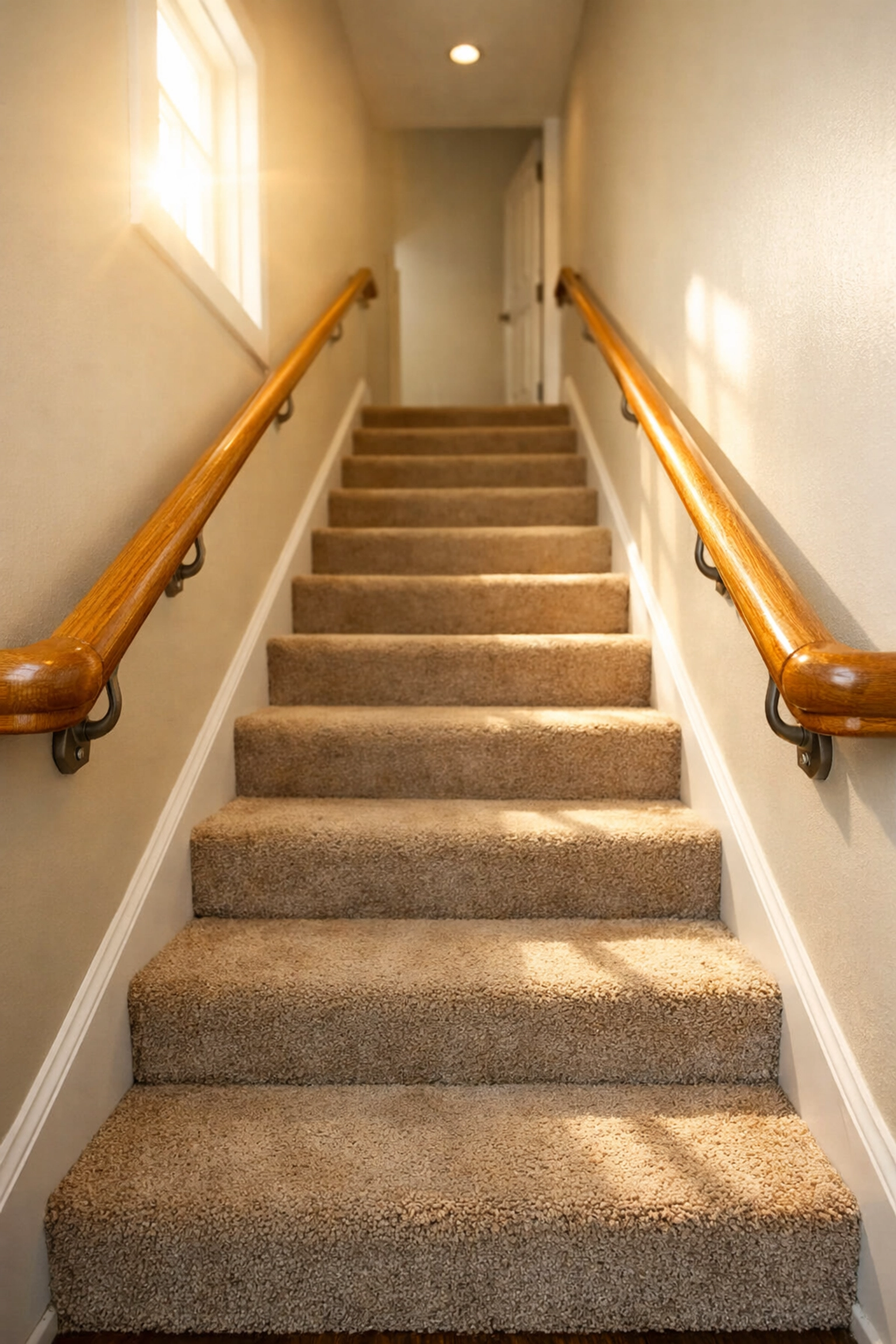
The single most important upgrade you can make to any staircase is the installation of dual handrails. Most homes come with a single railing on one side. While this is better than nothing, it forces you to rely on one side of your body. If you have a weaker side due to an old injury or a recent surgery, you might find yourself struggling either going up or coming down.
Ideally, railings should be installed on both sides of the stairs. This allows you to use both arms for leverage and stability, effectively halving the strain on your legs. When installing or checking your handrails, keep these specs in mind:
- Height: The standard height for a handrail is between 34 and 38 inches from the stair tread. This allows for a natural arm position for most adults.
- Grip: The rail should be "coda-round" or circular, with a diameter between 1.25 and 2 inches. You should be able to wrap your hand entirely around the rail. If the rail is too wide or decorative (like a flat piece of 2×4 wood), your grip won't be secure enough to catch you if you slip.
- Length: The handrail should extend slightly beyond the top and bottom steps. This gives you something to hold onto while you are transitioning from the flat floor to the first step.
Uniformity and Tread Surface
Our brains are remarkably good at "mapping" stairs. Once we take the first step, our bodies expect every subsequent step to be the exact same height and width. This is why "stumble steps": steps that are even a fraction of an inch taller or shallower than the others: are so dangerous.
If you live in an older home, it is worth measuring your steps. If you find significant variations, you may need a contractor to level them out.
Furthermore, consider the surface of the step itself. Polished wood or smooth tile looks beautiful, but it offers almost no traction, especially if you’re wearing socks. Adding non-slip stair treads or adhesive transparent grip strips can provide the necessary friction without ruining the look of your stairs. For those with low vision, placing a strip of high-contrast tape (like bright yellow or white) on the edge of each step can help you distinguish where one step ends and the next begins.
Lighting: The Invisible Safety Net
You can have the sturdiest handrails in the world, but if you can’t see where you’re putting your feet, you’re still at risk. Lighting is often the most neglected aspect of stair safety.
Eliminate Shadows
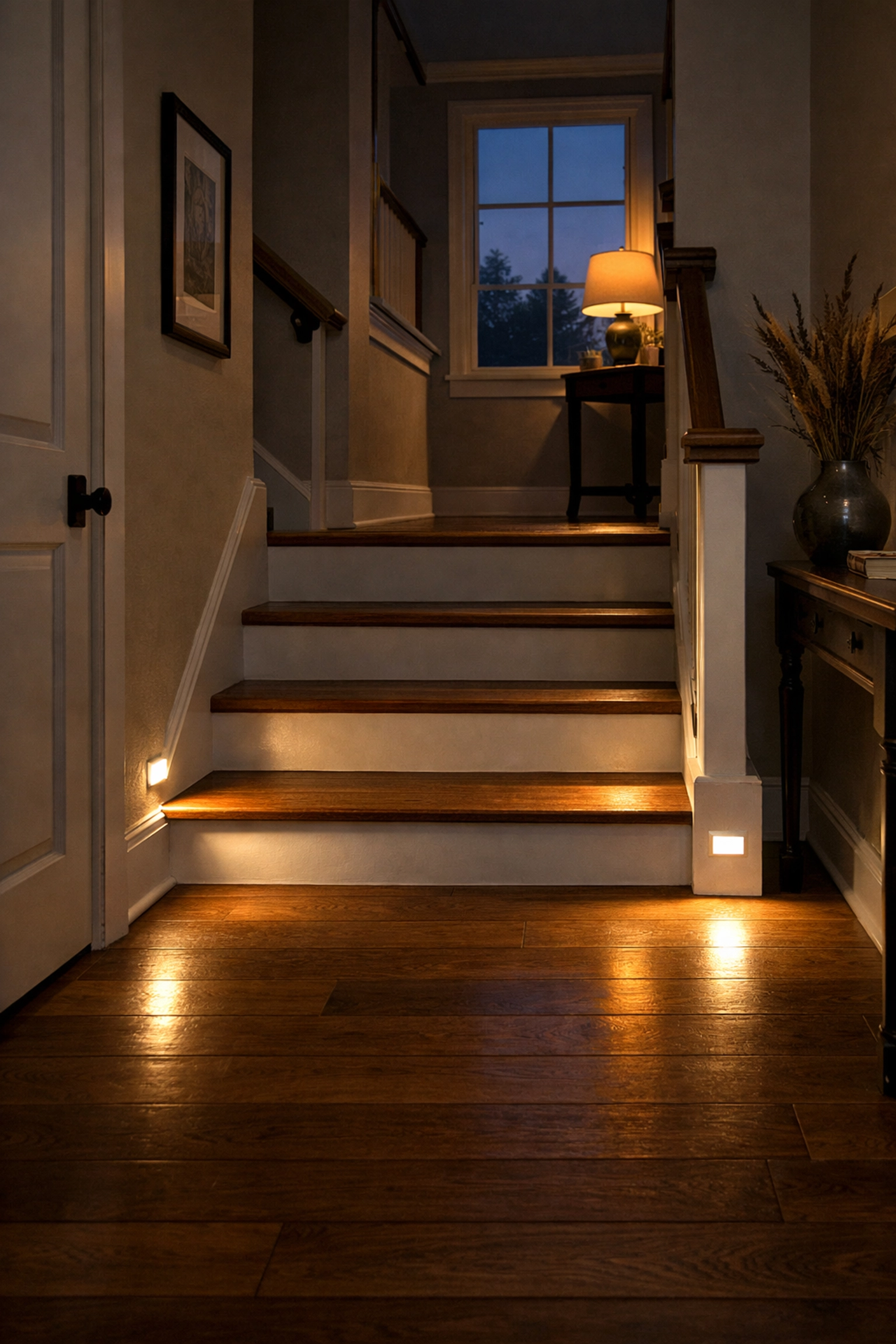
A single overhead light in the middle of a stairwell often creates harsh shadows, making it difficult to judge the depth of the steps. Ideally, you want a "wash" of light that illuminates the entire flight.
The most critical areas are the top and bottom transitions. These are the zones where most falls occur because the body is transitioning from a horizontal gait to a vertical one. Ensure there is a dedicated light source at both the landing and the base.
Modern Solutions for Better Visibility
If your home doesn’t have adequate wiring for extra lights, there are several easy fixes:
- Motion-Sensor LEDs: These are battery-operated and can be stuck to the wall or the underside of the handrail. They trigger as soon as they detect movement, providing a clear path without you having to fumbling for a switch in the dark.
- Plug-in Nightlights: Place these in outlets near the stairs to keep the area softly lit throughout the night.
- Illuminated Switches: Replace your standard light switches with ones that glow in the dark, so you never have to reach blindly into a dark hallway.
Entryways and Thresholds: The Transition Zones
Stair safety isn't just about the long flights inside the house; it's also about the one or two steps at your front or back door. Entryways present their own set of challenges, often involving weather, uneven ground, and heavy doors.
Managing the Threshold
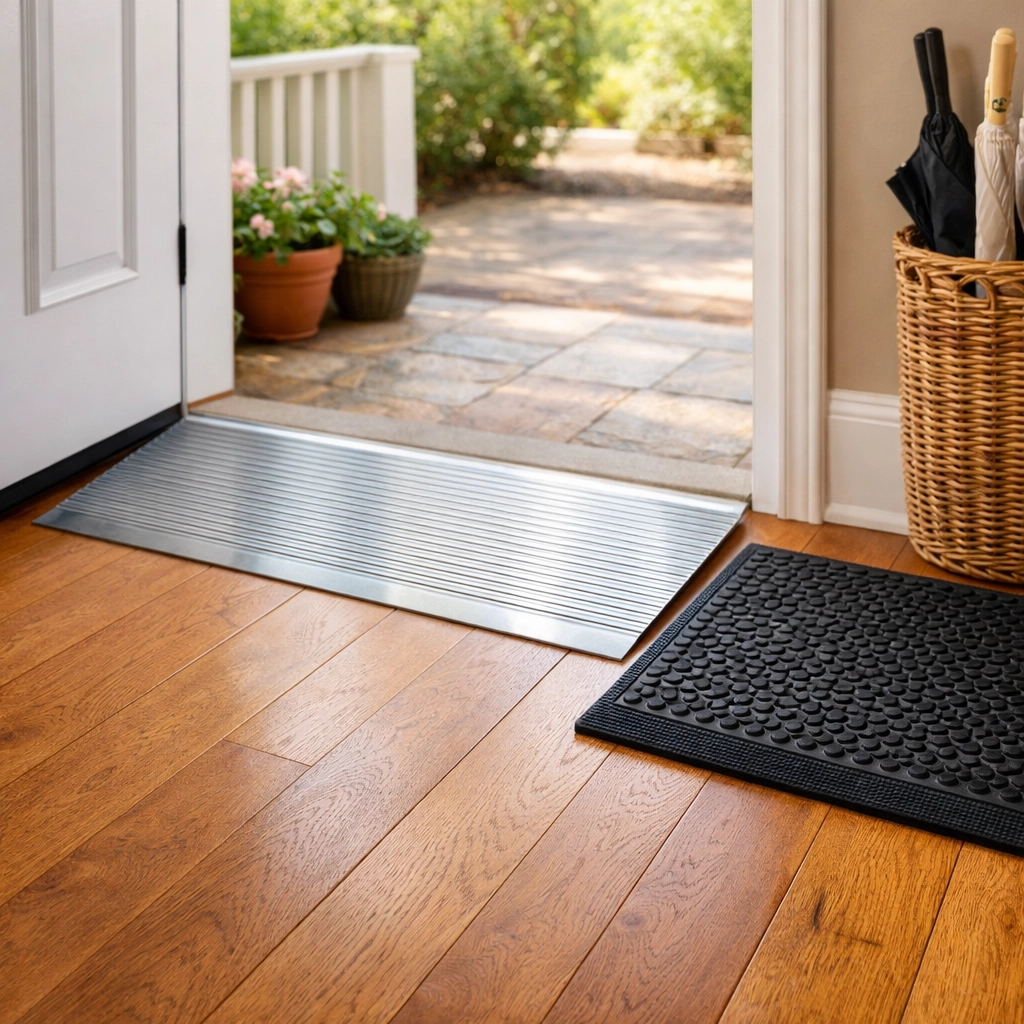
The "threshold" is the metal or wooden strip at the bottom of a door frame. In many homes, these can be an inch or two high, creating a significant tripping hazard for anyone who doesn't lift their feet high enough.
If your threshold is high, you can install a small rubber or metal "threshold ramp." These provide a gentle slope rather than a sharp vertical edge, making it much easier to walk over or to navigate with a walker or cane.
Weather Considerations
Entryway steps are exposed to the elements. Rain, ice, and even wet leaves can turn a safe concrete step into a skating rink.
- Awnings: Installing a small roof or awning over your entryway can keep the steps dry during rain.
- Textured Paint: For outdoor concrete steps, you can use specialized paint mixed with fine sand to create a permanently non-slip surface.
- Mat Placement: Be careful with welcome mats. A loose mat can slide out from under you. Ensure any outdoor mats have a heavy rubber backing that grips the ground, or consider removing them entirely if they tend to bunch up.
Environmental Maintenance: Keeping the Path Clear
Sometimes, the danger isn't the stairs themselves, but what we put on them. It’s a common habit to leave items on the bottom step to "take up later." This is one of the leading causes of household trips.
The "No-Stow" Rule
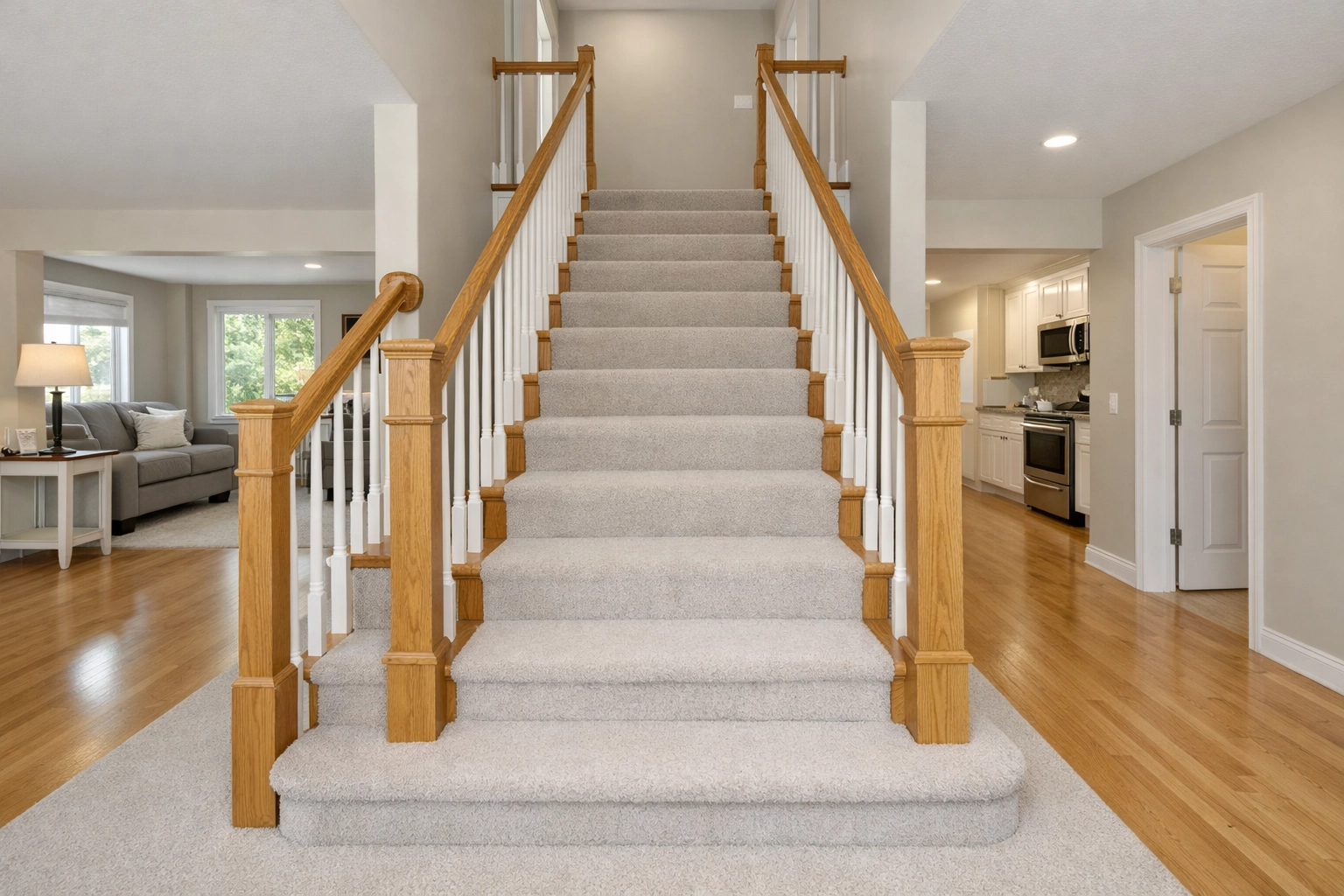
Establish a strict rule: nothing ever sits on the stairs. Not a pair of shoes, not a book, not a basket of laundry. If an item needs to go upstairs, it goes all the way up immediately, or it stays on a side table near the stairs until someone is ready to carry it.
Regular Inspections
Steps and railings undergo a lot of stress. Over time, wood can rot, nails can loosen, and carpet can become un-tacked.
- Check the Carpet: If your stairs are carpeted, check for any "bubbles" or loose edges. A loose piece of carpet can catch a toe and cause a forward fall.
- Shake the Railing: Give your handrails a firm shake once a month. If there is any "give" or wobbling, the mounting brackets need to be tightened or replaced.
- Clear the Debris: For outdoor steps, ensure they are swept regularly. Acorns, pebbles, and twigs act like ball bearings under a shoe.
Safe Walking Practices: The Human Element
How you move is just as important as the environment you move in. Even a perfectly designed staircase can be dangerous if you’re rushing or distracted.
The Three-Point Contact Rule
Whenever possible, aim for "three points of contact." This means having two feet and one hand, or two hands and one foot, in contact with the stairs and railing at all times.
- Use the Railing Every Time: Even if you feel strong and steady, use the handrail. It’s not just for balance; it’s your emergency brake.
- Take Your Time: Rushing is a major contributor to falls. Make the staircase a "no-phone zone." Stop any conversations, look at your feet, and focus on each individual step.
Footwear Matters
What you wear on your feet inside the house significantly impacts your safety on the stairs.
- Avoid Loose Slippers: Scuffs or slippers without backs are prone to falling off or catching on the edge of a step.
- No "Sock-Walking": Walking in socks on wooden or tiled stairs is incredibly risky.
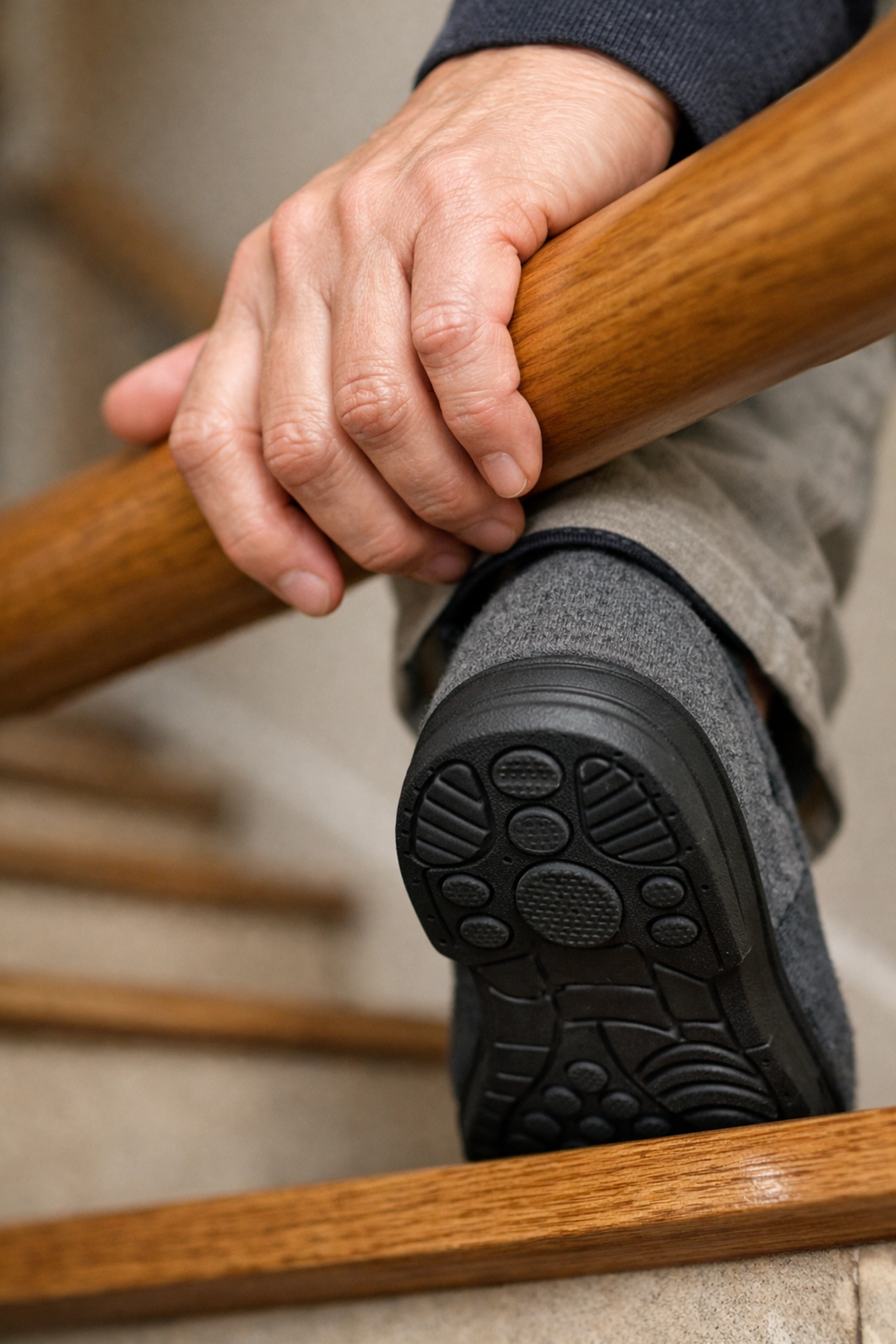
- Proper Support: Choose a sturdy shoe or a slipper with a rubberized, non-slip sole and a closed back. This ensures your foot doesn't slide inside the shoe and the shoe doesn't slide on the step.
Carrying Loads Safely
If you need to move items between floors, try to keep one hand free for the railing.
- The One-Handed Carry: Hold the item in one arm, tucked against your side, while the other hand stays on the rail.
- The Backpack Method: For smaller items, consider wearing a small backpack. This keeps both of your hands free to use the dual railings we discussed earlier.
- Ask for Help: If an item is heavy or bulky enough that it obscures your vision of your feet, wait for a family member or friend to help you move it.
When Modifications Aren't Enough
Sometimes, despite our best efforts, a staircase remains a high-risk area. This might be due to a progressive health condition, significant balance issues, or a staircase that is simply too steep to be safely modified.
In these cases, it’s okay to look at alternatives. This might mean moving your primary living space: bedroom, bathroom, and laundry: to the first floor. This "main-level living" approach eliminates the need to use the stairs daily. Alternatively, technology like stairlifts can provide a safe way to transition between floors without the physical strain of climbing.
Conclusion
Stair safety is about building layers of protection. No single change: like adding a light or a rug: is a magic fix. Instead, it’s the combination of a well-lit path, sturdy railings, a clear environment, and mindful habits that creates a safe home.
By taking the time to assess your stairs and entryways today, you are investing in your future independence. Start with the small things: clear the clutter, check your lightbulbs, and make it a habit to always reach for that handrail. These simple steps go a long way in ensuring that every level of your home remains accessible and safe for years to come.

