
Falls at home are one of the leading causes of injury among older adults, but most are preventable with the right modifications. The key is taking a systematic approach: walking through your home room by room and identifying potential hazards before they cause harm.
This checklist will guide you through every area of your home, from the bathroom to the front porch, with practical steps you can take today to create a safer living environment.
The Bathroom: Where Most Falls Happen
The bathroom presents unique challenges. Wet surfaces, tight spaces, and frequent transfers (from standing to sitting) create the perfect storm for falls.
Grab Bars and Support
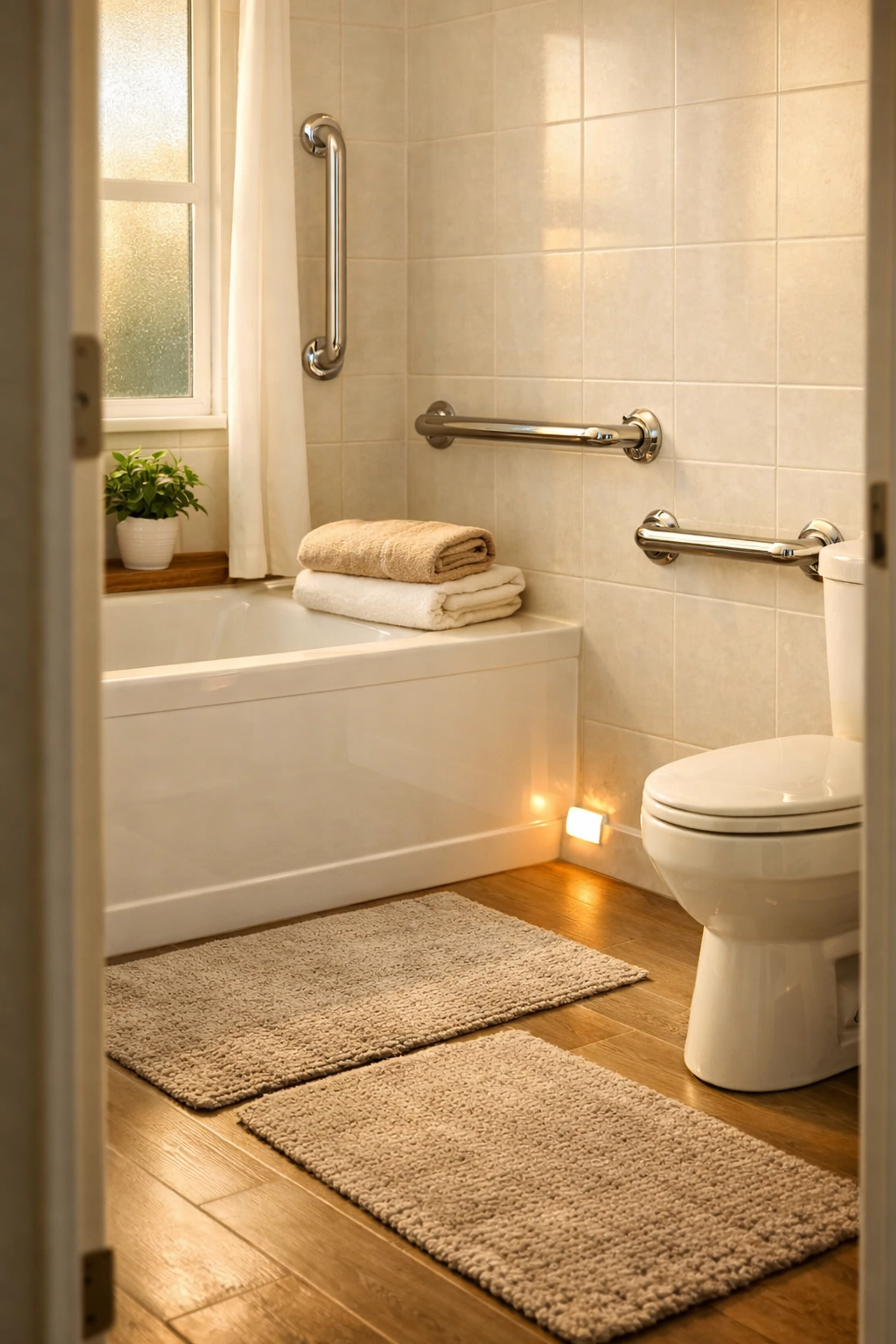
Install grab bars near the toilet and inside the shower or tub. These aren't just for people with mobility issues: they provide stability for everyone during slippery moments. Place them where you naturally reach for support, typically on the wall beside the toilet and along the inside wall of the shower.
Slip-Resistant Surfaces
Add non-slip mats or adhesive strips to the floor of your tub and shower. These inexpensive additions dramatically reduce the risk of slipping on wet surfaces. Consider a bath mat with suction cups that stays firmly in place.
Lighting Matters
Bathrooms need excellent lighting, especially for nighttime visits. Install a nightlight that stays on continuously or uses a motion sensor. Keep light switches near the door so you never have to walk into a dark bathroom.
Keep Hazards Away
Store electrical appliances like hairdryers and electric razors away from sinks and tubs. Water and electricity are a dangerous combination, and reaching for items near water sources increases fall risk.
The Bedroom: Safe Sleep and Easy Navigation
Your bedroom should be a sanctuary, not an obstacle course. Since many falls happen during nighttime bathroom trips, bedroom safety is critical.
Lighting for Night Navigation
Place a lamp or light switch within arm's reach of your bed. Better yet, install motion-activated nightlights along the path from your bed to the bathroom. Keep a flashlight on your nightstand in case of power outages.
Clear Pathways
Create a wide, unobstructed path from your bed to the bedroom door and bathroom. Remove clothes, shoes, books, and any other items from the floor. In the middle of the night, even small objects become major tripping hazards.
Bed Height and Positioning
Your bed should allow both feet to touch the floor comfortably when you're seated on the edge. If your bed is too low, consider bed risers. If it's too high, removing the bed frame might help. This simple adjustment makes getting in and out of bed safer and easier.
Bedding and Furniture
Tuck sheets and blankets in so they don't drape onto the floor where they could catch your feet. Avoid furniture covers that slide off easily when you use them for support.
The Kitchen: Preventing Falls While Cooking
The kitchen is a high-activity area where spills, reaching, and multitasking increase fall risk.
Smart Storage Solutions
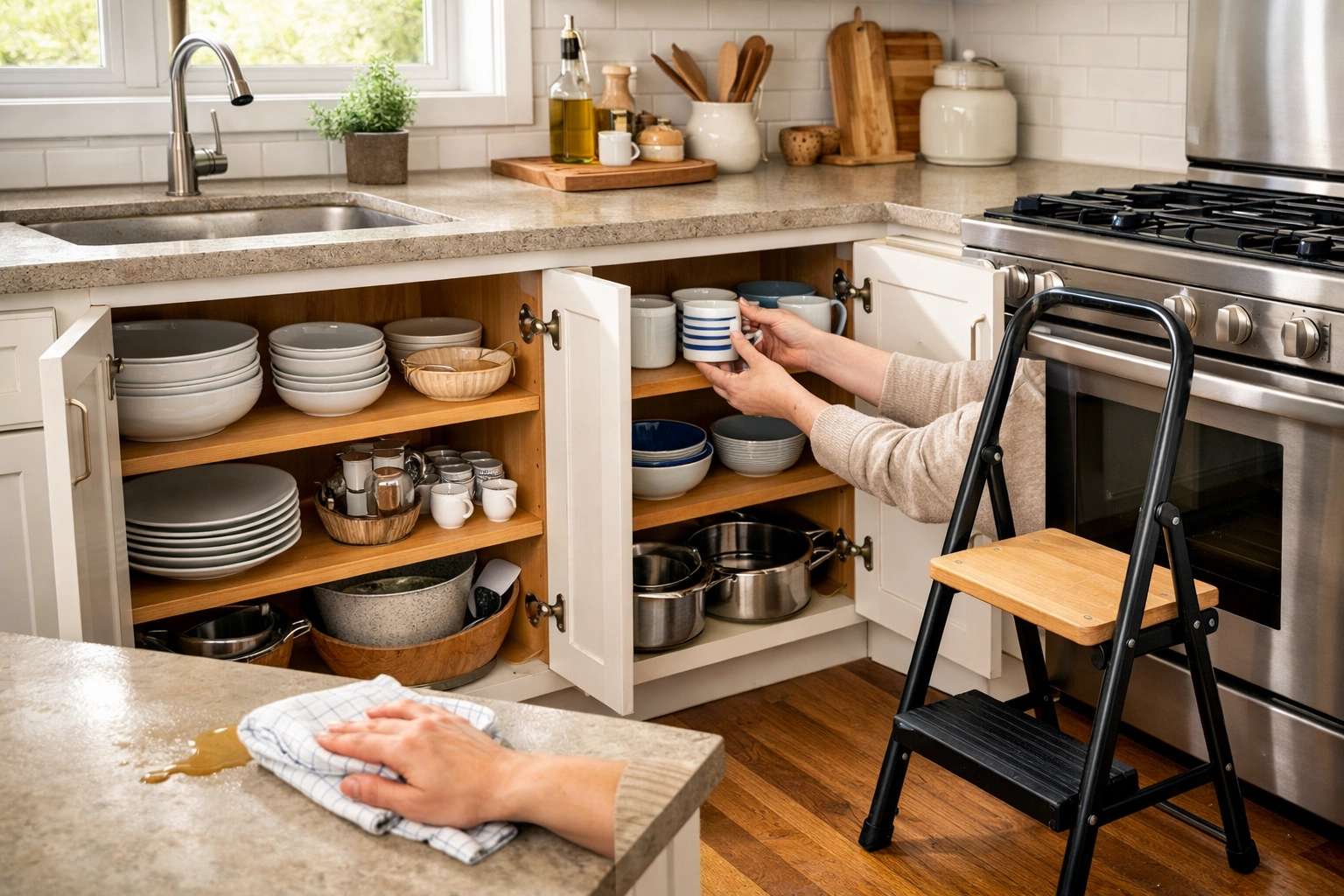
Store frequently used items between waist and shoulder height. Avoid placing heavy or commonly used items on high shelves that require reaching or climbing. Reserve upper cabinets for rarely used items.
Immediate Spill Cleanup
Clean up spills the moment they happen. Wet floors, grease, and even small amounts of water create slippery surfaces. Keep cleaning supplies accessible so you can address messes immediately.
Work While Seated
When preparing meals that take time, consider sitting on a sturdy chair or stool. This reduces fatigue and the balance challenges that come with standing for extended periods.
Safe Reaching
If you must reach high items, use a proper step stool with a handrail: never a chair. Chairs tip easily and aren't designed for climbing. Even better, reorganize your kitchen so you rarely need to reach above shoulder height.
Stairs and Hallways: High-Risk Transition Zones
Stairs are where many serious falls occur. Even a single step can be dangerous without proper precautions.
Handrails on Both Sides
Install sturdy handrails on both sides of every staircase. Test them regularly to ensure they're securely fastened to the wall. Handrails should extend beyond the top and bottom steps for extra support during transitions.
Lighting and Visibility
Place light switches at both the top and bottom of stairs so you never have to navigate them in darkness. Consider motion-activated lights that turn on automatically as you approach.
Mark the edge of each step with contrasting tape or paint. This visual cue helps you judge depth and distance, especially important as vision changes with age.
Keep Stairs Clear
Never leave items on stairs, even temporarily. Books, laundry, shoes, and other objects create serious tripping hazards. Make it a household rule that stairs stay clear at all times.
Secure Flooring
Ensure carpet is firmly attached with no loose edges. On bare stairs, consider non-slip treads. Check that handrails extend the full length of the stairway.
Living Room and Common Areas: Creating Safe Social Spaces
Living areas should feel comfortable and inviting, not hazardous. Small changes can make a big difference.
Cord Management
Electrical cords are among the most common tripping hazards in living spaces. Run cords along walls and secure them with cord covers or tape. Avoid running cords across walkways. Consider relocating furniture or lamps to eliminate cords from walking paths entirely.
Furniture Arrangement
Arrange furniture to create clear walking paths at least 36 inches wide. Remove or relocate low coffee tables that sit in natural walking routes. Ensure chairs and sofas are sturdy with armrests that make sitting and standing easier.
Rug Safety
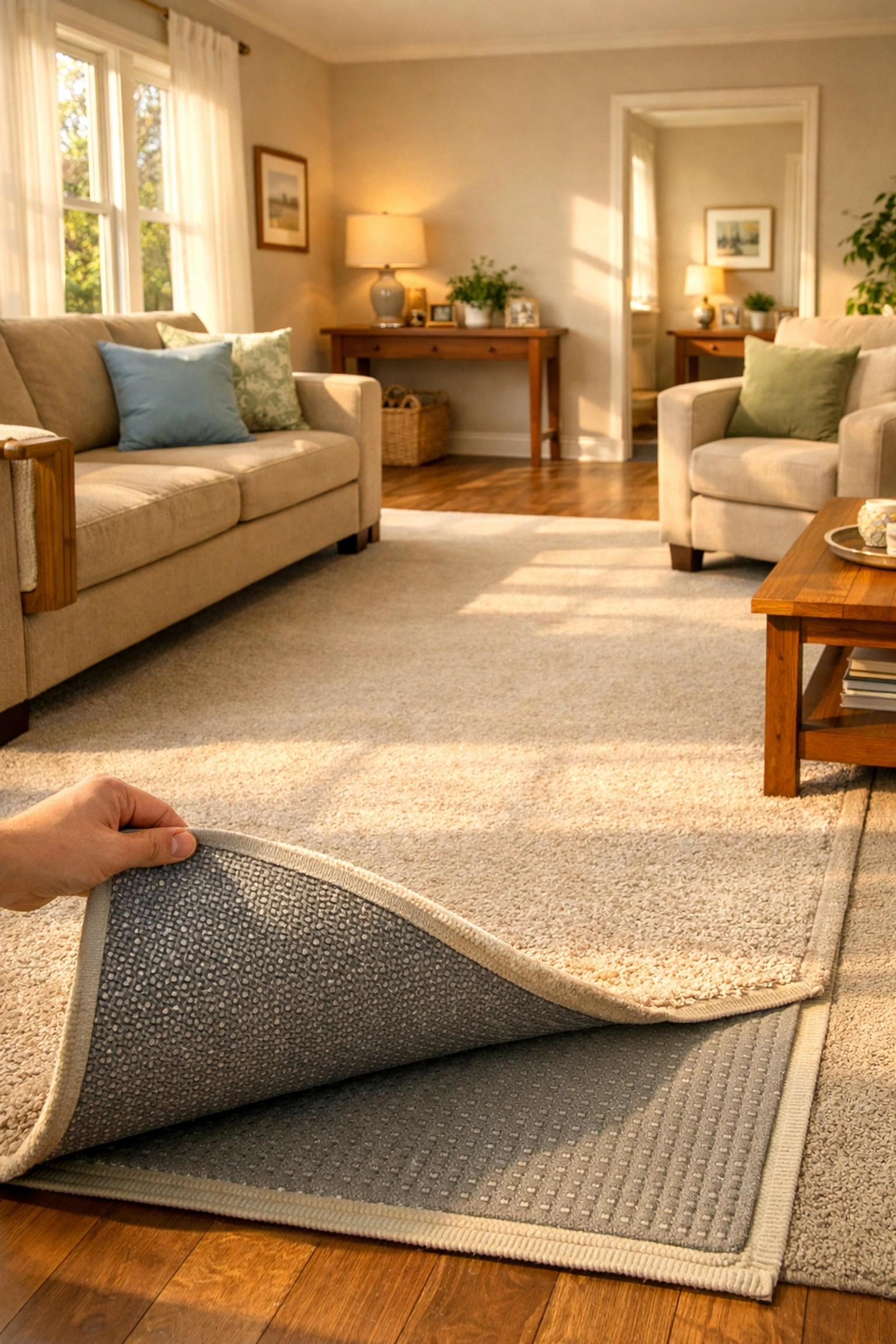
Throw rugs are attractive but dangerous. They bunch up, slide, and catch feet. If you use area rugs, choose low-pile versions with non-slip backing, or better yet, remove them entirely. Never place small rugs at the top of stairs or in high-traffic areas.
Easy Access Items
Keep remote controls, phones, and reading glasses within easy reach so you don't have to get up repeatedly or reach awkwardly while seated.
Outdoor Spaces: Extending Safety Beyond Your Front Door
Falls don't stop at your threshold. Outdoor areas need attention too.
Entry Steps and Walkways
Inspect steps leading to your home for cracks, unevenness, or crumbling concrete. Repair damage promptly. Apply non-slip tape or paint to outdoor stairs, especially if they get wet or icy.
Lighting and Visibility
Install motion-sensor lights near entryways so you always arrive home to a well-lit path. Turn porch lights on before sunset, not after dark.
Seasonal Maintenance
Keep walkways clear of leaves, snow, and ice. In winter, apply ice melt products or sand to prevent slipping. Remove fallen branches, garden tools, and other debris from paths.
Support Where You Need It
Consider installing a grab bar near your front door or along outdoor railings if you need extra stability when entering or leaving your home.
Whole-Home Considerations
Some safety measures apply throughout your entire home.
Comprehensive Lighting
Good lighting reduces fall risk in every room. Replace dim bulbs with brighter ones. Add lamps to dark corners. Consider smart bulbs you can control without getting up.
Footwear Choices
Wear supportive, well-fitting shoes with non-slip soles: even indoors. Avoid walking in socks, slippers, or loose footwear that can slide or catch on flooring.
Regular Reassessment
Your home's safety needs change over time. Walk through each room seasonally to identify new hazards or areas where your needs have evolved.
Getting Professional Input
While this checklist covers common hazards, everyone's home and mobility needs are different. A physical therapist or occupational therapist can provide personalized recommendations based on your specific situation. They can identify risks you might overlook and prioritize modifications that will have the greatest impact on your safety.
Taking Action Today
You don't need to tackle every room at once. Start with the areas you use most frequently: typically the bedroom, bathroom, and kitchen. Even small improvements reduce your fall risk significantly.
Focus first on the changes that cost little or nothing: removing clutter, improving lighting, and reorganizing storage. Then move on to modifications that require purchases or installation, like grab bars and handrails.
The goal isn't perfection: it's progress. Each modification you make creates a safer home environment and supports your ability to live independently with confidence.

