
When we think about our homes, we usually think about comfort, memories, and safety. However, as we or our loved ones age, the environment that once felt completely secure can slowly begin to present challenges. You might notice a slight hesitation when rising from a favorite chair or a hand reaching out to steady oneself against a hallway wall. These are small signs, but they are important ones.
A mobility assessment is essentially a "wellness check" for how a person moves within their living space. It isn't a medical exam that you pass or fail; rather, it’s a proactive way to understand physical capabilities and identify environmental hazards before they lead to an accident. Every year, millions of older adults experience falls, yet many of these incidents are preventable with the right observations and simple adjustments.
In this guide, we will walk through how to conduct a basic mobility assessment at home. We’ll cover physical tests you can do yourself, what to look for during daily routines, and how to audit each room for potential risks.
Why Mobility Assessments Matter
The goal of an assessment is to bridge the gap between "feeling fine" and "being safe." Many people overestimate their balance because they are used to their environment. This is often called "environmental habituation": we get so used to stepping over a specific loose floorboard or navigating a dark hallway that we stop seeing them as risks.
A formal (even if DIY) assessment forces us to look at the home and our movement with fresh eyes. By identifying weaknesses in leg strength or spotting a tripping hazard in the guest room, we can make informed decisions about exercise, home modifications, and daily habits.
Three Simple At-Home Physical Tests
The first part of a mobility assessment focuses on the person. These three tests are widely used by physical therapists and healthcare providers to gauge strength, balance, and gait. You don't need special equipment: just a chair, a stopwatch (most smartphones have one), and a bit of space.
1. The 30-Second Sit-to-Stand Test
This test measures lower-body strength. Leg strength is the foundation of mobility; if the muscles in the thighs and glutes are weak, it becomes much harder to recover from a slip or a trip.
How to do it:
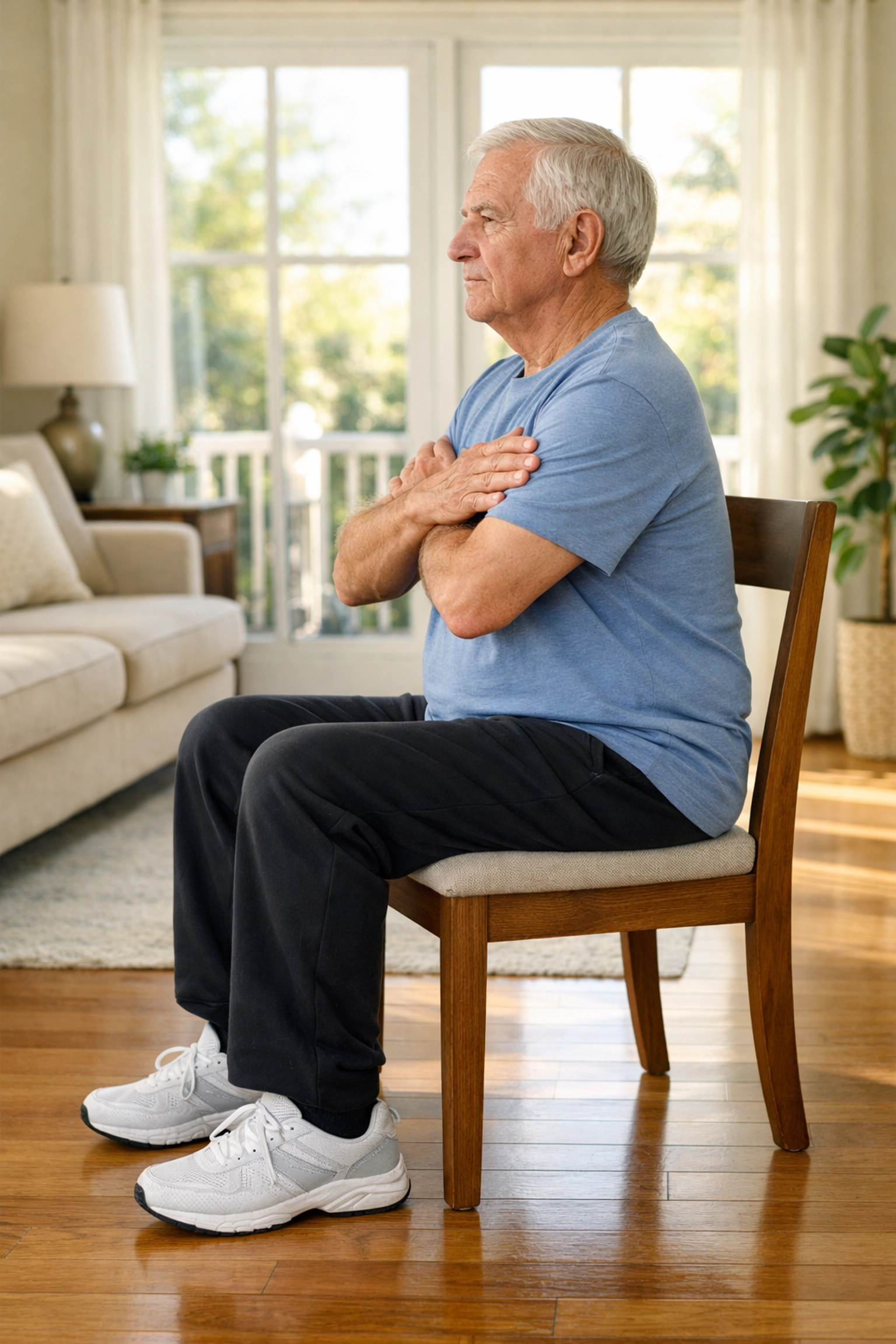
- Use a sturdy chair with a flat seat and a straight back (avoid sofas or soft armchairs).
- Sit in the middle of the chair with feet flat on the floor.
- Cross your arms over your chest so you aren't using your hands to push off.
- On the word "Go," stand up completely and then sit back down. Repeat this for 30 seconds.
- Count how many full stands you can complete.
What the results mean:
For adults over the age of 60, completing fewer than 10 to 12 stands in 30 seconds may indicate a higher risk of falls due to lower-body weakness. If you find you absolutely must use your arms to get up, it’s a sign that focusing on leg-strengthening exercises could be beneficial.
2. The Timed Up and Go (TUG) Test
The TUG test is excellent for measuring "functional mobility": how well someone moves in real-world scenarios, like walking to the door or navigating around furniture.
How to do it:
- Place a chair against a wall.
- Mark a spot on the floor exactly 10 feet away from the chair.
- Start by sitting in the chair. On "Go," stand up, walk to the 10-foot mark at a normal pace, turn around, walk back to the chair, and sit down.
- Time the entire process.
What the results mean:
An average healthy adult can usually complete this in under 12 seconds. If it takes 12 seconds or longer, it suggests that balance or gait might be compromised. This doesn't mean a fall is imminent, but it does mean extra caution should be taken, especially on uneven surfaces or in crowded areas.
3. The Single-Leg Stand
This test checks static balance: your ability to stay upright when you aren't moving.
How to do it:
- Stand near a sturdy counter or table so you have something to grab if you lose your balance.
- Lift one foot off the ground and try to hold the position for as long as possible without touching the other leg or the counter.
- Repeat with the other leg.
What the results mean:
A goal for most seniors is to hold this for at least 10 seconds. If you find yourself wobbling or needing to put your foot down within 2 or 3 seconds, it indicates that your "proprioception": your brain's ability to sense your body's position: might need some work.
Observing Daily Movement Patterns
While the tests above provide "data," observing daily life provides "context." Sometimes a person can perform well on a test because they are concentrating, but their natural habits tell a different story.
When conducting an assessment for a loved one, watch for these specific behaviors:
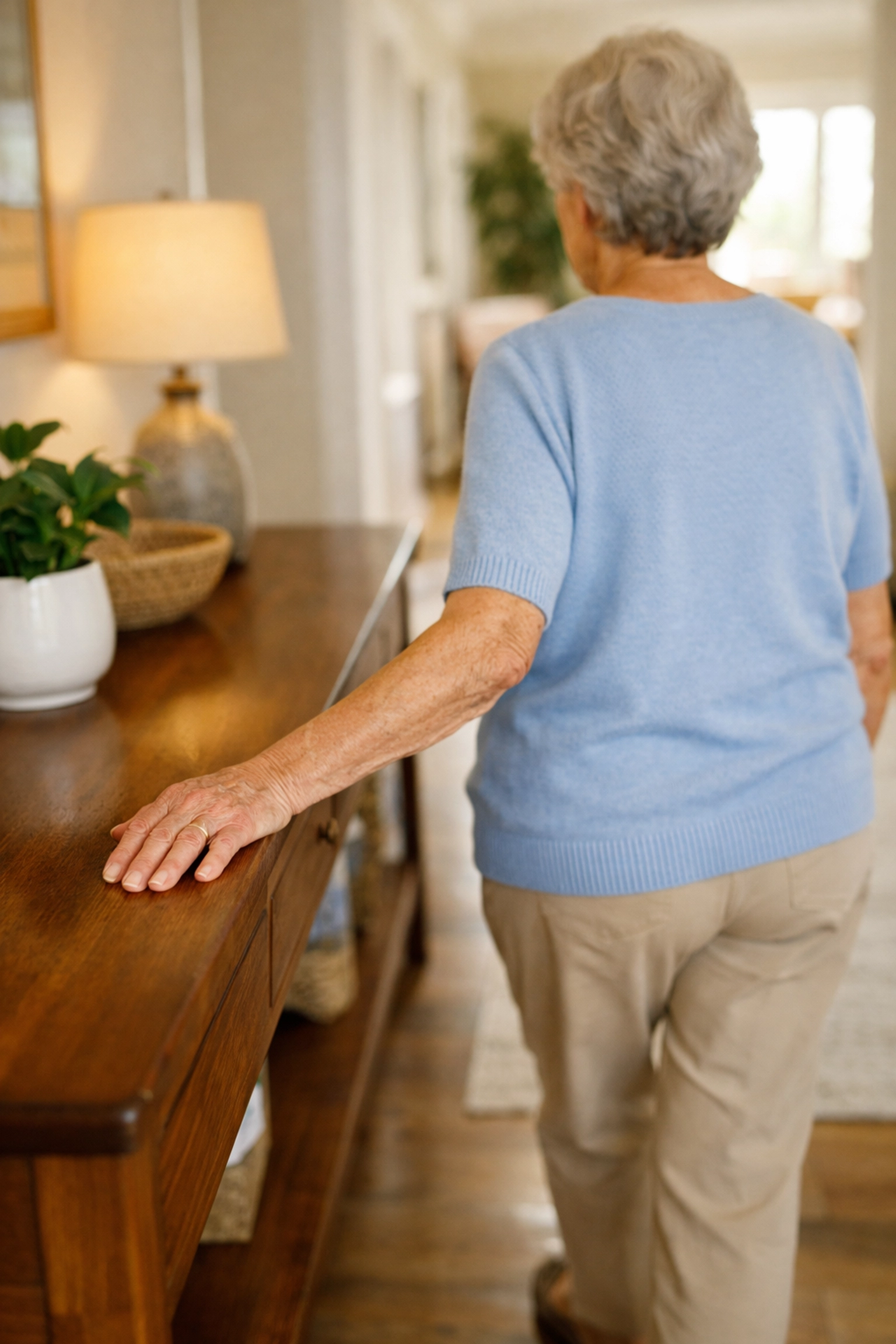
- Furniture Surfing: Do they touch the backs of chairs, walls, or countertops as they walk through a room? This is a subconscious way of compensated for poor balance.
- The "Heave-Ho": When getting up from a bed or a low chair, do they need multiple attempts or a large rocking motion to gain momentum?
- Gait Changes: Watch for "shuffling." If the feet aren't clearing the floor completely, the risk of catching a toe on a rug or a threshold increases dramatically.
- Fatigue: Does the person seem significantly more unsteady in the evening? "Sundowning" or simple physical fatigue can turn a safe environment into a hazardous one at the end of the day.
The Room-by-Room Environmental Audit
Once you’ve assessed physical mobility, it’s time to look at the "obstacle course": the home itself. Walk through each room and look for the following:
The Living Room and Hallways
These are high-traffic areas where clutter often accumulates.
- Throw Rugs: These are the leading cause of trips at home. Even if they have a non-slip backing, the edges can curl and catch a foot.
- Cords: Ensure no electrical or phone cords cross the walking path.
- Lighting: Are the hallways dim? Use nightlights that stay on or have motion sensors.
- Clear Paths: There should be a "superhighway" through every room that is at least 32 to 36 inches wide, free of low coffee tables or decorative plants.
The Kitchen
The kitchen is a "wet zone" and a place of frequent reaching.
- Spills: Are there mats near the sink that soak up water?
- Reachability: Are frequently used items (plates, spices, heavy pots) kept between hip and shoulder height? Reaching too high or bending too low can cause dizziness or loss of balance.
- Step Stools: If a step stool is used, does it have a high handrail? (Ideally, avoid using stools altogether).
The Bathroom
Statistically, the bathroom is the most dangerous room in the house due to hard, slick surfaces.
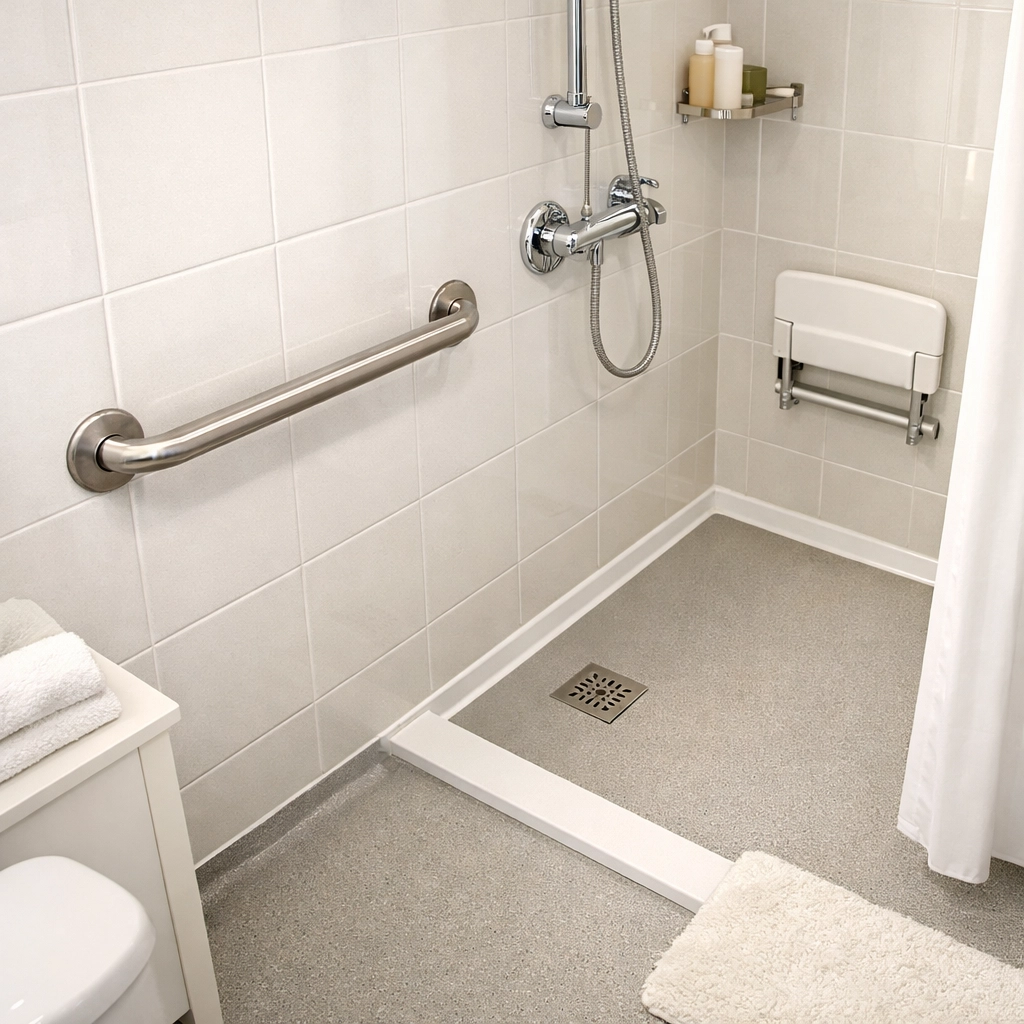
- The "Grab Bar Test": If you were to slip right now, what would you grab? If the answer is a towel rack or a toilet paper holder, you are in danger. These items are not designed to hold human weight.
- Floor Texture: Are the tiles slippery when wet? Non-slip treatments or mats are essential.
- Entry/Exit: Look at the height of the tub or the shower lip. Is it easy to clear that distance with one foot while balancing on the other?
The Bedroom
Many falls happen in the middle of the night when we are groggy.
- Bed Height: When sitting on the edge of the bed, are the feet flat on the floor? If the bed is too high, the person has to "slide" off; if it's too low, it's hard to stand up.
- Path to the Bathroom: Is the path clear? Is there a light switch within reach of the bed?
- Footwear: Are slippers nearby? Loose-fitting, backless slippers are a major hazard. Sturdy house shoes with rubber soles are much safer.
Understanding the "Fear of Falling" Cycle
An overlooked part of a mobility assessment is the psychological aspect. Ask yourself or your loved one: "Are you afraid of falling?"
The "Fear of Falling" (FOF) is a clinical term. When someone is afraid, they tend to move less. When they move less, their muscles weaken. When their muscles weaken, their balance gets worse, which actually increases the risk of a fall. It’s a self-fulfilling prophecy.
A mobility assessment should be presented as a tool for independence. Identifying a risk isn't about taking away freedom; it's about making changes so that the person can continue to live at home safely for as long as possible.
When to Seek Professional Help
At-home assessments are a wonderful starting point, but they don't replace a professional. If you or a loved one scores poorly on the physical tests (TUG, Sit-to-Stand), or if a fall has already occurred, it is time to consult a professional.
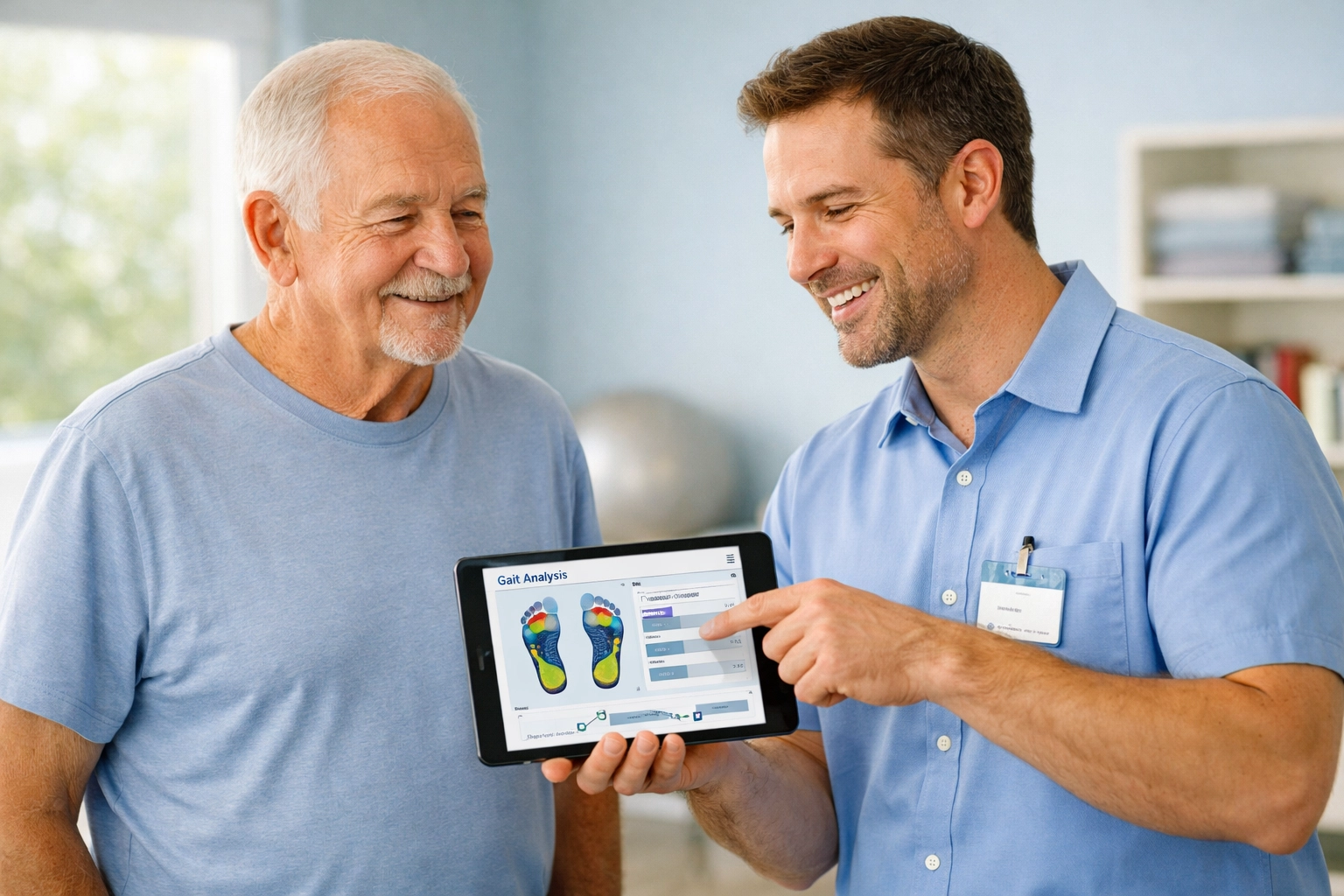
- Physical Therapists (PTs): They are the experts in movement. They can provide a much more detailed gait analysis and prescribe specific exercises to fix balance issues.
- Occupational Therapists (OTs): They specialize in "doing." They can come into your home and provide a professional environmental assessment, suggesting specific modifications that fit your daily habits.
- Primary Care Physician: Some mobility issues are caused by medication side effects or underlying conditions like inner ear problems or vision changes.
Making the Assessment a Habit
Mobility isn't static. It changes with age, health, and even the seasons. It’s a good idea to perform a "mini-assessment" every three to six months.
Keep a small notebook. Record the times for the TUG and Sit-to-Stand tests. If you notice the times are getting slower, it’s a cue to check in with a doctor or step up your activity level. Likewise, every time you buy a new piece of furniture or change your home layout, do a quick "walkthrough" to ensure you haven't created a new hazard.
Final Thoughts
The home should be a place where you feel most at ease. By taking an hour or two to perform a mobility assessment, you are investing in your future autonomy. You are shifting from a reactive mindset: waiting for something to happen: to a proactive one.
Start small. Fix one rug, add one nightlight, or spend five minutes a day practicing your balance near the kitchen counter. These small steps, informed by a clear-eyed assessment, make a world of difference in staying safe, upright, and independent.

