
You've probably walked through your home in the dark dozens of times without a second thought. Maybe you know every corner, every step, every piece of furniture by heart. But here's the thing, adequate lighting isn't just about convenience. It's one of the most powerful and overlooked tools for preventing falls, especially as we age.
Poor lighting creates shadows that hide hazards, makes depth perception tricky, and forces our eyes to work overtime. The good news? A few strategic lighting changes can transform your home into a safer, more comfortable space without a major renovation.
Why Lighting Is Critical for Fall Prevention
As we get older, our eyes don't adapt to changing light conditions as quickly as they used to. Moving from a bright room to a dim hallway can leave us temporarily "blind" while our eyes adjust. That's when trips and stumbles happen.
Age-related vision changes make this even more challenging. Reduced visual acuity means we need more light to see clearly. Decreased contrast sensitivity makes it harder to distinguish where a step ends and a floor begins. And increased glare sensitivity means that a single bare bulb can actually obscure hazards rather than reveal them.
The right lighting setup does three critical things:
- Enhances visibility so you can clearly see obstacles, uneven surfaces, and potential hazards
- Improves depth perception by creating contrast between floors, walls, and furniture
- Supports safe navigation during nighttime bathroom trips or early morning routines
Think of lighting as your home's safety net, literally illuminating the path to independence.
The Foundation: Key Lighting Design Principles
Before we dive into room-specific strategies, let's cover the fundamentals that make any lighting plan effective.
Uniform Illumination Throughout Your Home
Avoid dramatic differences in light levels from room to room. When you walk from a brightly lit kitchen into a dark hallway, your eyes need time to adjust, time when you're vulnerable to tripping. Aim for consistent, comfortable brightness throughout your living spaces.
This doesn't mean every room needs to be blazingly bright. It means the transition from one space to another should be gradual and natural.
Choose Low-Glare Fixtures
Glare is sneaky. A shiny floor reflecting overhead lights, a bare bulb hanging in a hallway, or glossy surfaces bouncing light back at you can all create blind spots. Your eyes try to adjust to the bright spots, which makes shadowy areas even harder to see.
Look for:
- Fixtures with diffused or frosted glass covers
- Shielded light sources that direct light downward or to the sides
- Matte or non-reflective surfaces near light fixtures
- Bulbs with a warm color temperature (2700K-3000K) rather than harsh cool white
Enhance Contrast
When everything blends together visually, it's hard to tell where one surface ends and another begins. Good lighting creates clear visual boundaries between floors, walls, steps, and furniture.
This is especially important for:
- The edge of stairs
- Door thresholds
- Area rugs that might create a tripping hazard
- Furniture legs and corners
Strategic placement of lights can cast gentle shadows that actually help define these boundaries without creating harsh glare.
Room-by-Room Lighting Strategy
Now let's get practical. Each room in your home has unique lighting needs based on how you use the space and what hazards might be lurking.
Entryways and Front Doors
Your entryway sets the tone for safe navigation throughout your home. This high-traffic area needs bright, welcoming light that eliminates all shadows.
Install motion-activated porch lights so you never fumble with keys in the dark. Inside, use bright warm white bulbs with a high color rendering index (CRI of 90 or above): these show colors accurately, making it easier to distinguish objects.
Combine overhead fixtures with wall sconces to eliminate shadows behind you. And don't forget exterior lighting that covers your entire path, including handrails, steps, and the door lock.
Living Rooms and Common Areas
Living rooms need layered lighting: a combination of ambient light (general room illumination) and task lighting for specific activities.
Overhead fixtures provide your baseline brightness, but add floor and table lamps near reading chairs, sofas, and hobby areas. Choose lamps with heavy, stable bases that won't tip over if bumped.
Avoid low-hanging pendant lights or chandeliers that could pose a head injury risk, especially if you use a walker or cane. If you love the look of pendant lights, make sure there's plenty of clearance: at least seven feet from floor to fixture.
Bedrooms: Your Nighttime Navigation Hub
Bedrooms require special attention because this is where most nighttime falls occur. Getting up for a bathroom trip in the middle of the night shouldn't feel like navigating an obstacle course.
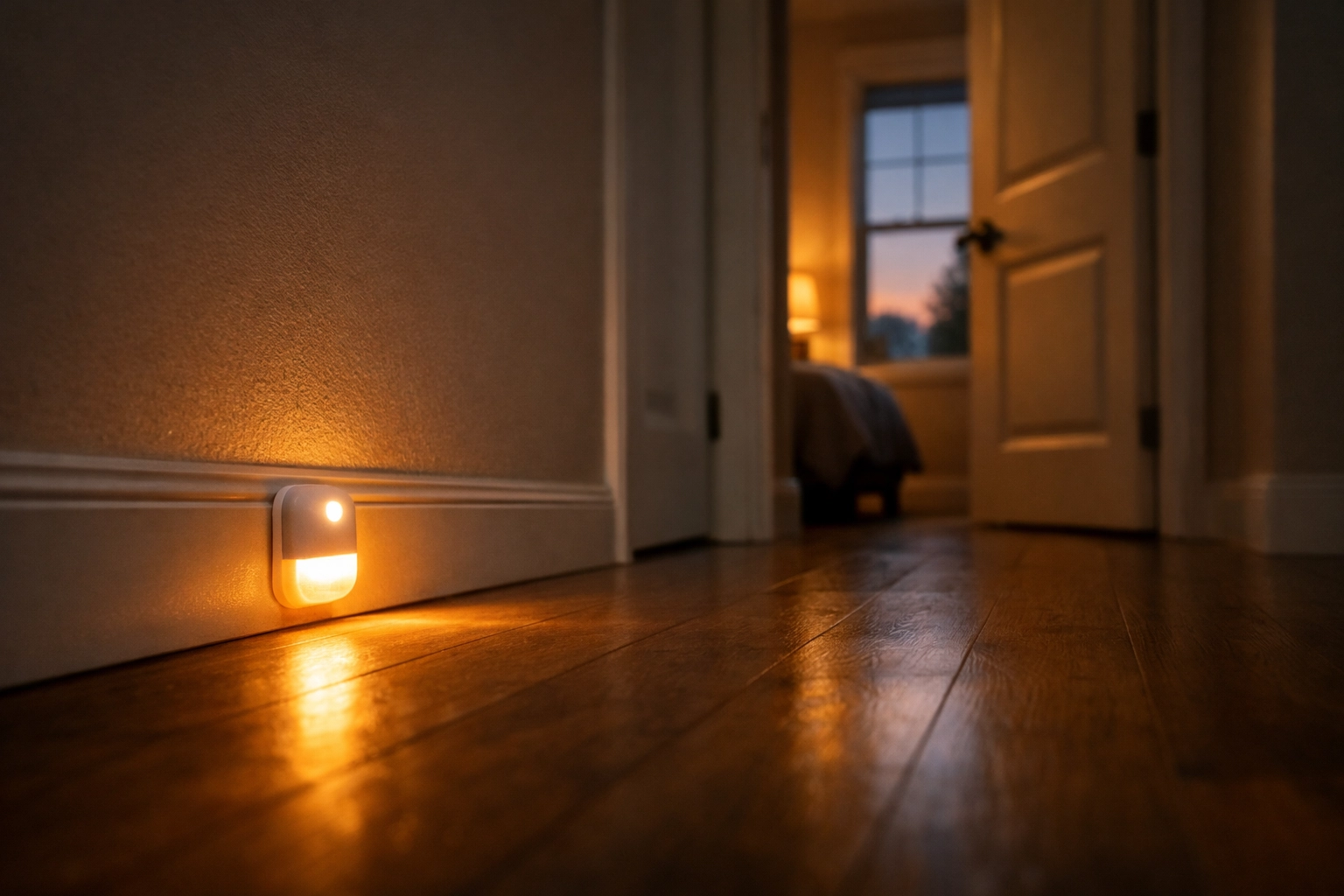
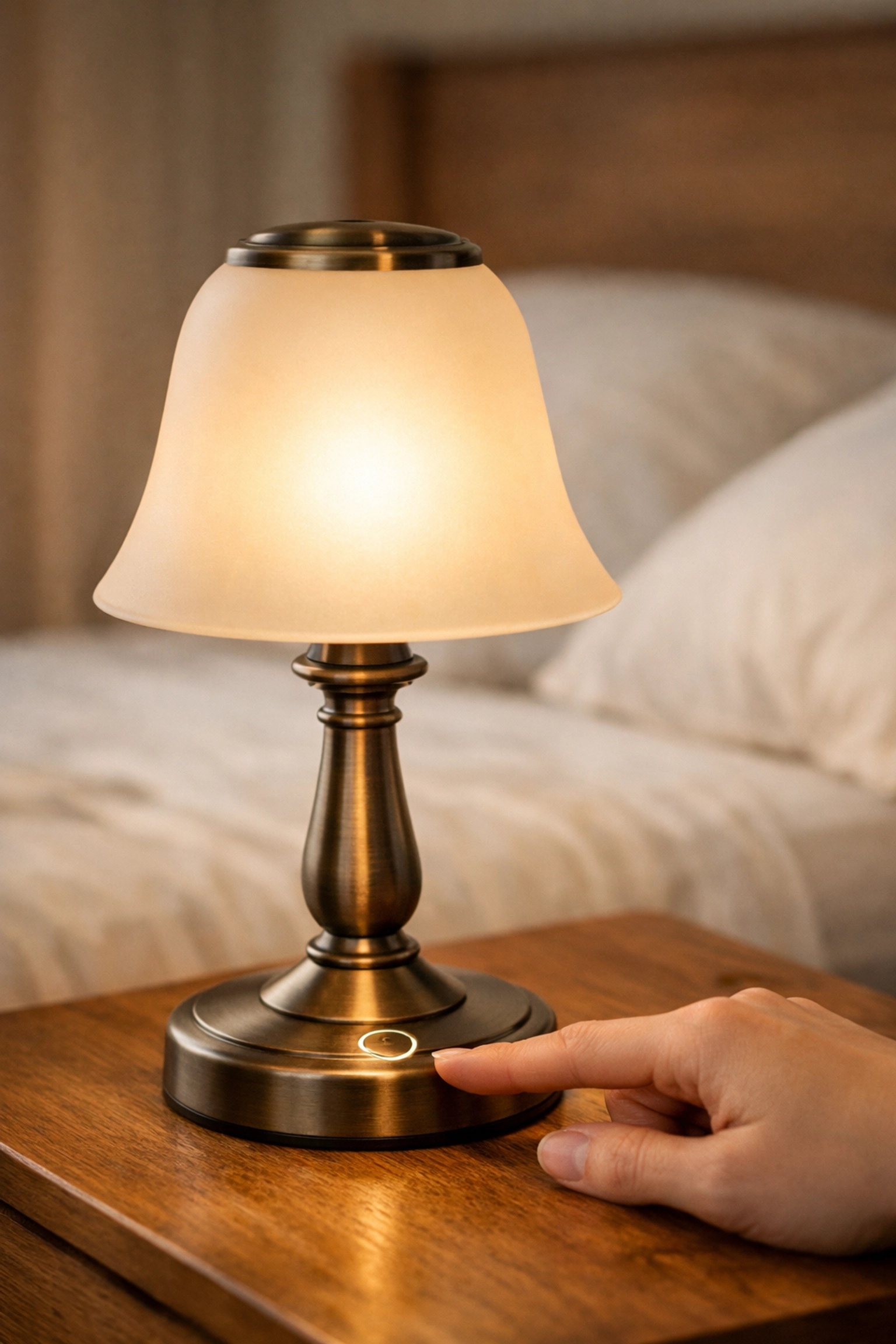
Place touch lamps or smart bulbs on bedside tables for easy access without fumbling for switches. Use plug-in nightlights with automatic sensors that turn on when the room gets dark.
Here's a game-changer: light the pathway from your bed to the door with floor-level LED strips or wall-mounted guide lights. These provide just enough illumination to see where you're going without being so bright they disrupt sleep or wake a partner.
Bathrooms: High-Risk Zones
Bathrooms combine slippery surfaces with awkward movements (getting in and out of the tub, sitting on the toilet, reaching for items), making them fall-risk hotspots.
Install bright overhead lighting: this isn't the place to create "mood lighting." Add task lighting around mirrors for grooming activities, and consider under-cabinet lighting if you have vanity storage.
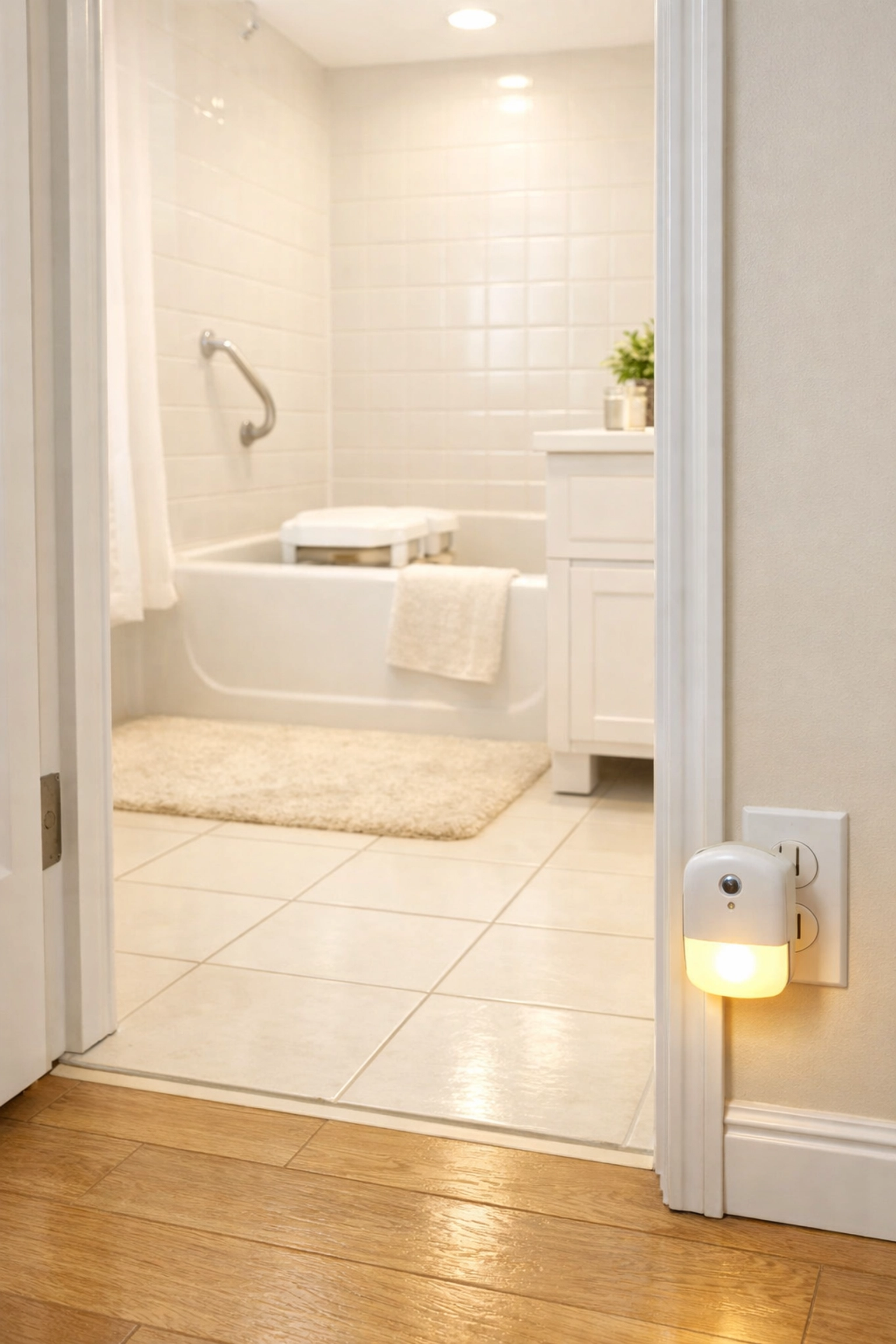
Motion-activated nightlights are essential here. They provide instant illumination when you enter during nighttime bathroom trips, eliminating the dangerous period of stumbling around in the dark looking for a switch.
Hallways and Stairways
These transitional spaces are deceptively dangerous. They're often narrow, contain steps or level changes, and get used when you're distracted or in a hurry.
For hallways, install wall sconces spaced evenly to eliminate dark patches. Motion sensors are incredibly helpful here: lights turn on automatically when you enter, and turn off after you've passed through.
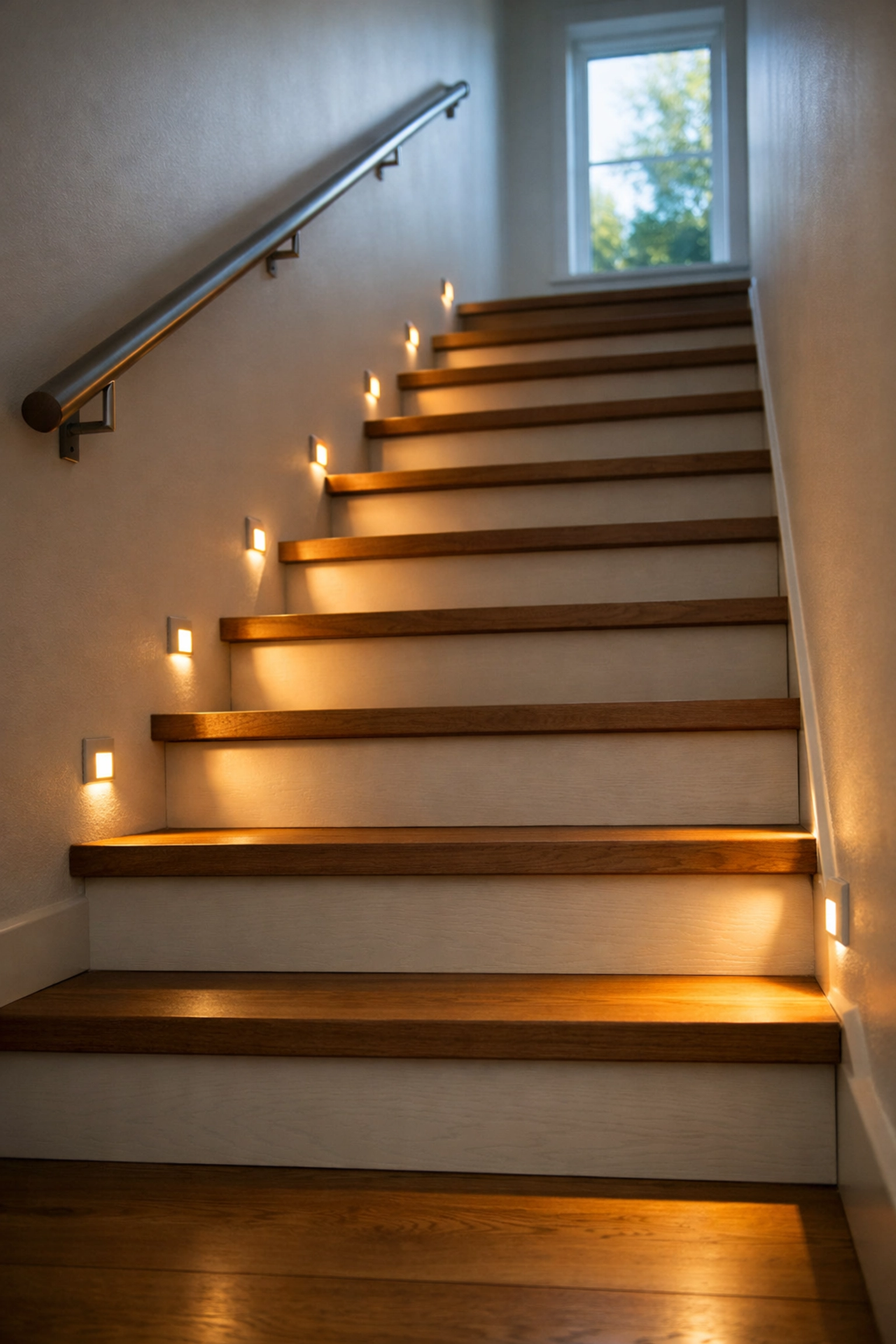
Stairways demand special attention. Every single step should be clearly visible from top to bottom. Install light switches at both ends of the staircase so you never have to walk up or down in darkness. Consider step lighting: small fixtures mounted at floor level that illuminate each individual step.
Utility Spaces: Basements, Garages, and Laundry Rooms
Don't neglect these areas just because you don't spend as much time there. Basements and garages often have uneven floors, stored items creating obstacles, and poor natural light.
Use bright overhead LED panels or shop lights for maximum visibility. Add task lighting over workbenches or laundry folding areas. Motion sensors are especially useful in utility spaces: you can enter with your hands full and still have immediate illumination.
Smart Lighting Controls: Safety Meets Convenience
Modern lighting technology offers incredible solutions for fall prevention that didn't exist even a decade ago. These aren't just gadgets: they're safety tools that eliminate the need to navigate in darkness.
Motion Sensors
Motion-activated lights are probably the single most effective fall-prevention lighting upgrade. They automatically turn on when you enter a room and turn off after a set period of inactivity.
This means:
- No fumbling for light switches in the dark
- Lights are always on when and where you need them
- Energy savings because lights don't stay on unnecessarily
- Hands-free operation if you're carrying something or using a mobility aid
Voice Activation Systems
Voice-controlled lighting (through Alexa, Google Assistant, or Apple HomeKit) allows you to turn lights on and off without moving. Simply say "turn on bedroom lights" from bed before getting up.
This is particularly helpful for people with arthritis, limited mobility, or balance issues who might be unsteady reaching for switches.
Smartphone Apps and Remotes
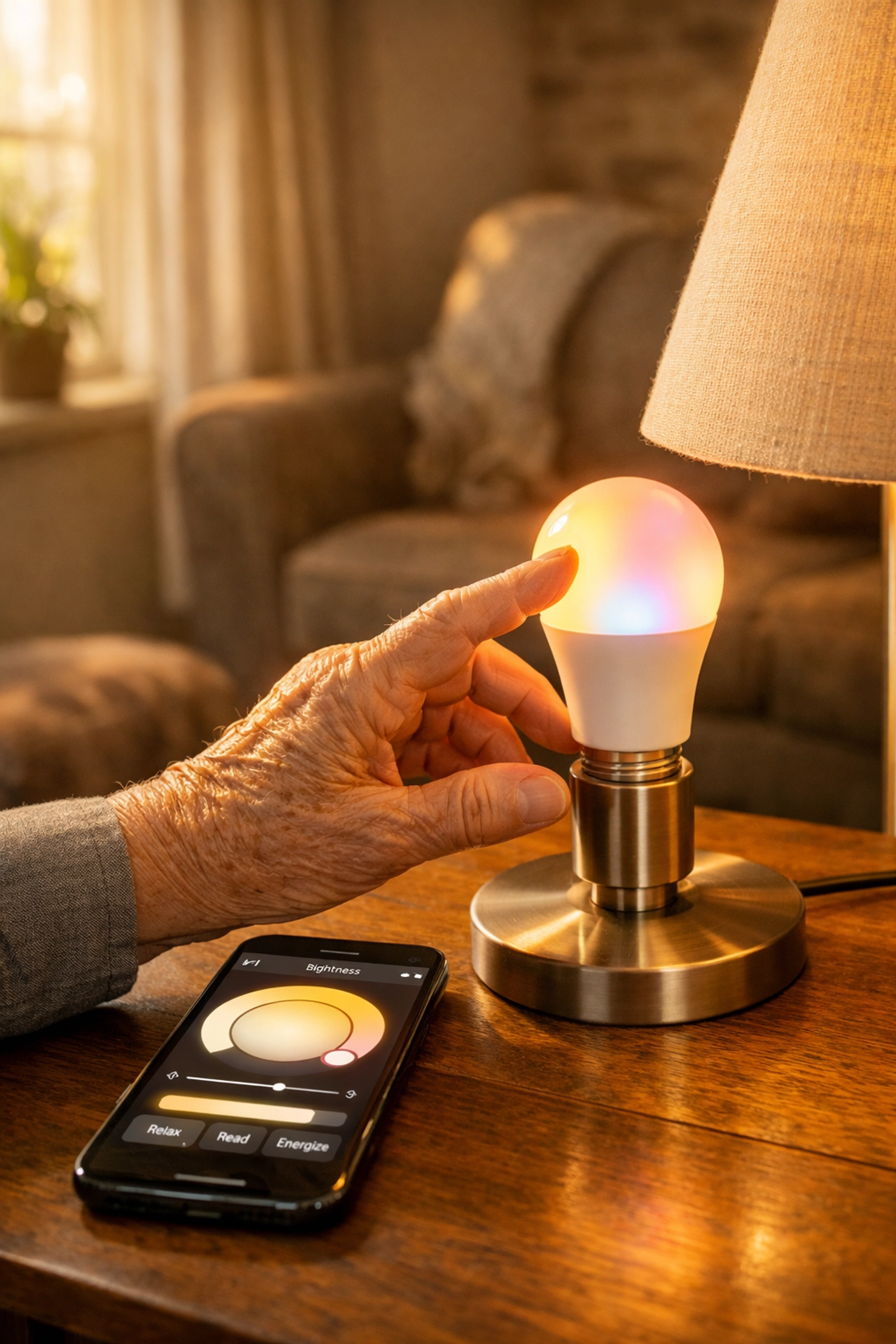
Dedicated lighting control apps and handheld remotes let you operate lights from anywhere in the room. You can turn on lights before entering a dark space, adjust brightness levels, or ensure all lights are off at bedtime without walking through the house.
Simple Touch and Sound-Activated Options
Not everyone wants to set up smart home systems. Simpler alternatives include:
- Touch lamps that turn on with a tap anywhere on the base
- Clapper switches activated by hand claps
- Pull-chain extensions that hang lower for easier reach
- Large rocker switches that replace small toggle switches
Cost-Effective Lighting Upgrades
You don't need a major renovation or huge budget to dramatically improve your home's lighting safety. Here are practical, affordable upgrades that make a real difference:
Replace outdated bulbs with energy-efficient LEDs. They're brighter, last longer, and use less electricity. The upfront cost pays for itself quickly.
Add plug-in motion nightlights in bedrooms, hallways, and bathrooms. These cost less than $15 each and require no installation.
Use stick-on, battery-operated lights in closets, under cabinets, and in dark corners. They're inexpensive and install in seconds.
Install timers that automatically turn lights on in the evening and off in the morning. This ensures you never come home to a dark house.
Retrofit existing lamps with smart bulbs instead of replacing entire fixtures. Smart bulbs work in standard lamp sockets and add voice control, scheduling, and dimming capabilities.
Putting It All Together
Improving your home's lighting doesn't have to happen overnight. Start with the highest-risk areas: stairs, bathrooms, and the path from your bedroom to the bathroom. Then gradually work through other rooms.
As you make changes, pay attention to how the new lighting feels. Can you clearly see potential hazards? Are there any new sources of glare? Does the lighting make navigation easier and more confident?
Remember, good lighting isn't just about preventing falls: it's about maintaining independence, confidence, and quality of life in your own home. Every well-placed light fixture, every motion sensor, and every thoughtfully chosen bulb is an investment in your safety and peace of mind.
The goal isn't to live in a house that's lit up like a stadium. It's to create comfortable, adequate illumination that lets you move through your space safely and confidently, day or night. And that's something worth shedding some light on.

