
Falls happen. Even with all the prevention strategies in the world, sometimes we find ourselves on the floor. But here's what many people don't realize: how you get up after a fall is just as important as preventing the fall in the first place. Getting up incorrectly can lead to additional injuries, exhaustion, or panic, none of which help the situation.
If you or someone you care for has experienced a fall, knowing the proper technique to safely return to standing can make all the difference. This guide walks you through exactly what to do, step by step.
Why This Technique Matters
When someone falls, the instinct is often to scramble up as quickly as possible. Maybe you're embarrassed. Maybe you're worried someone will see you. Maybe you just want everything to go back to normal.
But rushing the process can cause more harm than good. You might strain muscles, worsen an existing injury, or become dizzy and fall again. The proper method for getting up after a fall is designed to protect your body, conserve your energy, and give you the best chance of standing successfully without further incident.
According to research, many older adults who fall and can't get up remain on the floor for extended periods, which increases the risk of complications like dehydration, pressure sores, and hypothermia. Knowing how to self-recover safely is a critical life skill.

Step One: Don't Move, Assess the Situation First
The very first thing to do after a fall is to stay still. Yes, you read that right. Don't immediately try to get up.
Take several deep breaths. This helps calm your nervous system after the shock of falling. Give yourself at least a minute or two to collect your thoughts and let your heart rate settle.
During this time, mentally scan your body from head to toe:
- Do you feel pain anywhere specific?
- Can you move your arms and legs?
- Do you notice any bleeding or swelling?
- Are you dizzy or disoriented?
- Did you hit your head?
If you experience severe pain, can't move a limb, feel sharp pain in your hip or back, have significant bleeding, or hit your head hard, do not attempt to get up on your own. Instead, reach for your phone or medical alert device and call for help immediately.
If you feel generally okay: maybe sore or shaken, but without serious injury: you can proceed to the next steps.
Step Two: Roll Onto Your Side
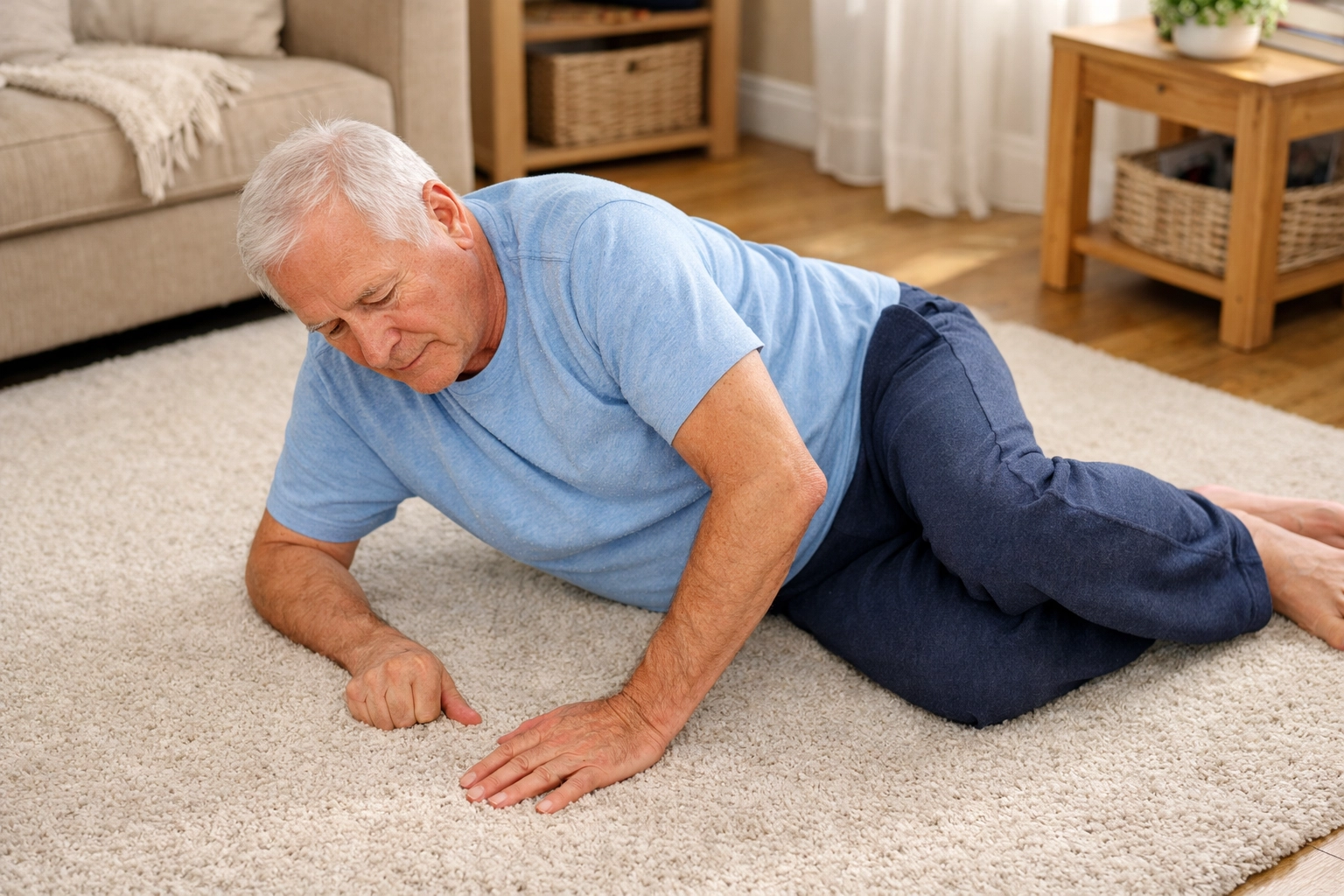
Once you've determined it's safe to move, the next step is to roll onto your side. Choose whichever side feels more comfortable and stable.
Bend your knee on the side you plan to roll toward. This creates leverage. Use your arms to help push yourself over. Move slowly and deliberately: there's no rush.
Once you're on your side, rest for a moment. Catch your breath. Make sure you're not experiencing any new pain from the movement. This position is much more stable than lying flat on your back and sets you up for the next phase.
Step Three: Get Onto Your Hands and Knees
From your side position, you'll need to push yourself up into a crawling position. Here's how:
Place your hands flat on the floor in front of you, roughly shoulder-width apart. Push down with your hands while bringing your knees underneath you. You should end up on all fours, like you're about to crawl.
This might feel awkward, especially if you haven't been in this position in years. That's completely normal. Take your time. If you need to rest in this position before continuing, do so.
The hands-and-knees position is one of the most stable positions your body can be in. It distributes your weight evenly and gives you a strong base to work from.
Step Four: Crawl to Something Sturdy
Now that you're on your hands and knees, look around for the nearest sturdy piece of furniture. You're looking for something that:
- Won't move or tip over when you put weight on it
- Is roughly knee-to-waist height
- Is close enough that you can crawl to it without exhausting yourself
Good options include:
- A heavy chair with armrests
- A coffee table
- A couch or sofa
- A bed frame
- A sturdy wall or counter
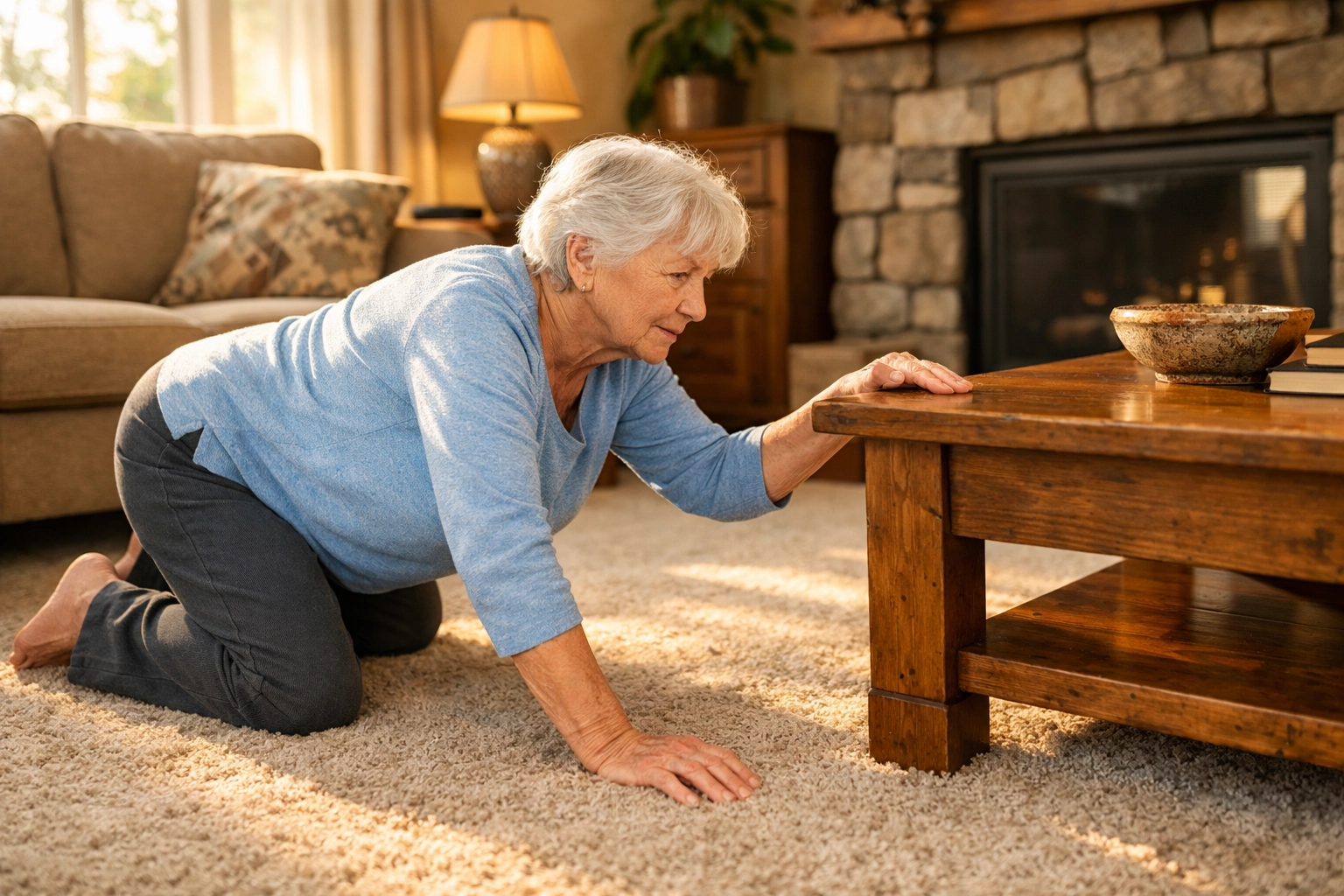
Slowly crawl toward your chosen piece of furniture. Move one hand forward, then the opposite knee. Take it slow. There's no prize for speed here.
If you feel tired during the crawl, stop and rest. You can sit back on your heels in a kneeling position to catch your breath before continuing.
Step Five: Position Yourself at the Furniture
Once you reach your sturdy furniture, position yourself so you're directly beside or in front of it. Your hands should be able to comfortably reach the top or arms of the furniture.
Place both hands firmly on the furniture. Test it to make sure it's stable and won't slide away from you. If you're using a chair, make sure it's pushed against a wall or heavy enough that it won't tip.
This is another good moment to pause and assess how you're feeling. Are you breathing hard? Are you feeling pain anywhere? Give yourself permission to rest before the most challenging part: actually standing up.
Step Six: Bring One Leg Forward
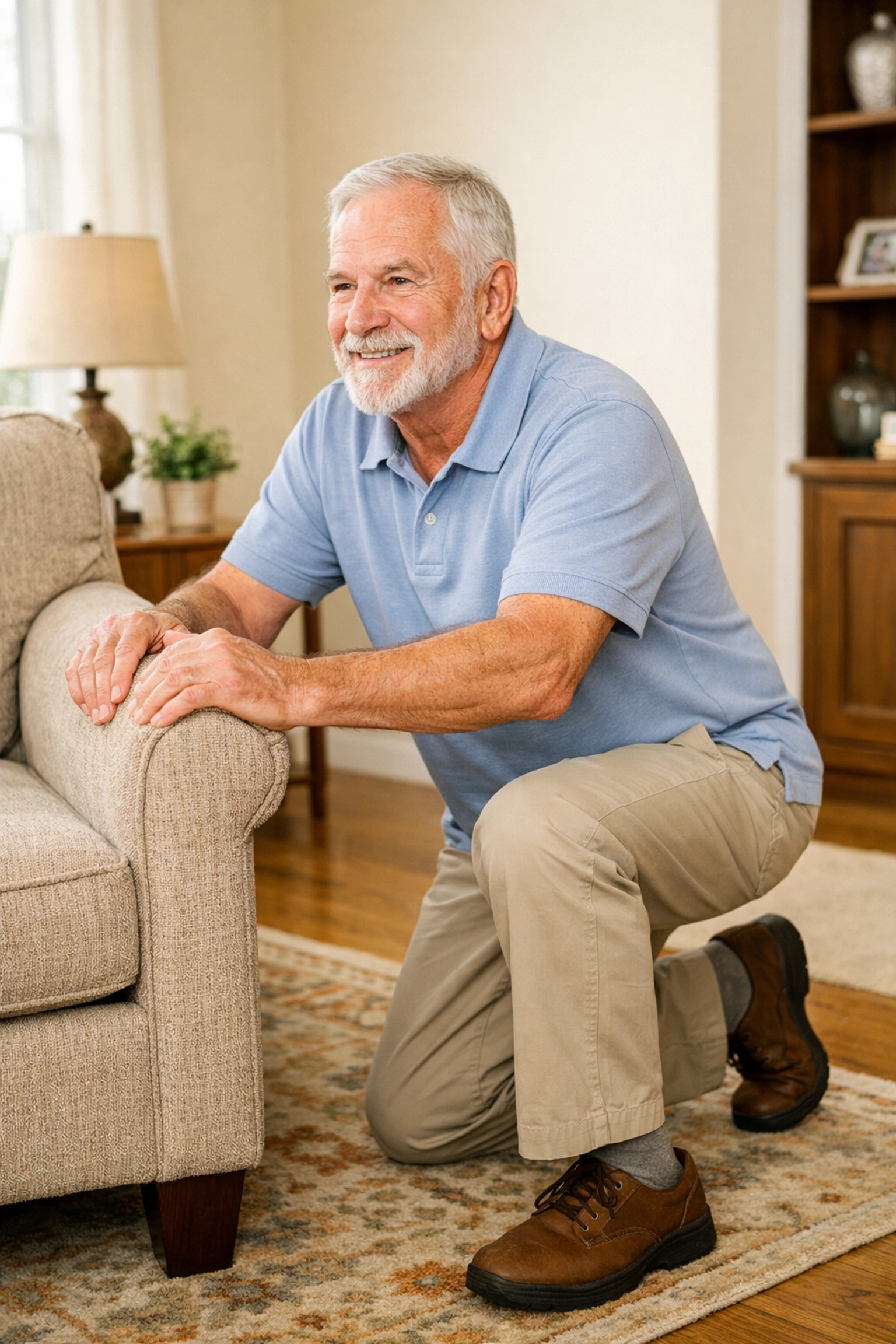
This is where you transition from being on your knees to preparing to stand. You'll need to identify which leg is your stronger leg. For most people, this is their dominant side.
Bring your stronger leg forward and place that foot flat on the floor. Your knee should be bent, roughly at a 90-degree angle. You'll be in what looks like a half-kneeling or proposal position: one foot on the ground, one knee still on the floor.
Keep your hands on the furniture for support. This position might feel unstable at first, but the furniture is there to help you balance.
Make sure your forward foot is positioned far enough forward that your knee doesn't extend past your toes. This protects your knee joint and gives you better leverage for standing.
Step Seven: Push Up to Standing
Now comes the final push. Using your hands on the furniture for support and the strength in your forward leg, push yourself up to standing.
The technique here matters:
- Push down through your forward foot
- Use your arms to help stabilize and lift
- Engage your core muscles if you can
- Drive through your heel rather than your toes
- Move smoothly: no jerking or rushing
As you rise, bring your back leg forward to meet your front leg. Don't try to stand on just one leg: use the furniture to help you balance as you bring both feet together.
Once you're fully upright, keep holding onto the furniture. Don't let go yet.
Step Eight: Rest and Stabilize
You made it! But you're not done yet.
Stand still for several minutes while continuing to hold onto your support. This gives your body time to adjust to being upright again. Your blood pressure needs to stabilize, and you need to make sure you're not dizzy or lightheaded.
During this time:
- Take slow, deep breaths
- Notice how your body feels
- Wait for your heart rate to return to normal
- Make sure you feel steady on your feet
Don't rush off to continue your day. Give yourself at least three to five minutes in this standing position before you take any steps.
What If You Can't Get Up?
Sometimes, despite your best efforts, you may not be able to get up on your own. This could happen because:
- You're too exhausted
- You're experiencing pain that worsens with movement
- You don't have the strength to complete the steps
- You feel dizzy or confused
- There's no sturdy furniture within reach
If this happens to you, it's not a failure. It's important information about your current situation.
Here's what to do:
If you have a medical alert device: Press the button and wait for help to arrive. Explain that you've fallen and can't get up.
If you have a cell phone within reach: Call 911 or ask a family member to come help you. Don't be embarrassed: this is exactly what these services are for.
If you don't have immediate access to help: Try to make yourself as comfortable as possible while you wait. If you can reach a pillow, cushion, or blanket, use it. Try to move to a carpeted area if you're on hard flooring. If possible, slide yourself toward a wall where you can at least sit up and lean against something.
The reality is that remaining on the floor for extended periods can be dangerous. Don't wait hours hoping you'll suddenly have the strength to get up. Reach out for help as soon as you realize you need it.
After You're Up: Important Next Steps
Once you're safely standing and have rested sufficiently, there are a few important things to do:
Sit down properly: Move to a comfortable chair or couch and sit down. Don't try to walk around right away.
Check yourself thoroughly: Now that you're calm and seated, do a more thorough check for injuries. Look for bruising, swelling, or tender areas. Move each joint gently to make sure everything works properly.
Contact your doctor: Even if you feel fine, it's wise to inform your healthcare provider about the fall. They may want to see you to check for injuries that aren't immediately obvious, like small fractures or internal injuries. They can also help identify what caused the fall so you can prevent future incidents.
Report the fall: If you live in a care facility or have a caregiver, make sure they're informed about the incident. Documentation helps identify patterns and risk factors.
Reflect on what happened: Once you've recovered, think about why you fell. Was the floor wet? Were you dizzy? Did you trip over something? Understanding the cause helps prevent the next fall.
Building Confidence After a Fall
Falling can shake your confidence. Many people become fearful of moving around their home after experiencing a fall, which ironically can lead to more falls because they become deconditioned and lose strength.
It's normal to feel nervous, but try not to let fear limit your activity. Instead:
- Practice the getting-up technique when you're feeling well, so it becomes familiar
- Consider working with a physical therapist to rebuild strength and balance
- Make modifications to your home to reduce fall risks
- Stay active within your abilities: movement helps maintain the strength you need to stay safe
The Bottom Line
Knowing how to get up safely after a fall is an essential skill that every older adult should have. Practice these steps when you're feeling well so they become second nature. Consider doing a "dry run" with a family member nearby for safety, just to familiarize yourself with the process.
Remember: pause, assess, roll to your side, get on your hands and knees, crawl to furniture, bring your strong leg forward, push up to standing, and rest. Take each step slowly and never rush the process.
Your safety is worth the extra few minutes it takes to do this properly. Falls happen, but with the right knowledge, you can handle them with confidence and minimize the risks that come with getting back on your feet.

