
Falling is scary. But knowing how to get back up safely can make all the difference between a minor incident and a serious injury. Every year, millions of older adults experience falls, and many of them stay on the ground for extended periods: not because they're seriously hurt, but because they don't know the safest way to get up.
Here's the truth: getting up after a fall is a skill you can learn and practice. The sequential method breaks down the process into five manageable steps that help you rise from the floor gradually and safely, minimizing the risk of re-injury or strain.
Before You Try to Get Up: Take a Moment
When you fall, your first instinct might be to jump right back up. Resist that urge. Take a few deep breaths and assess your situation first.
Ask yourself these questions:
- Are you hurt? Check for pain, particularly in your head, neck, back, or hips
- Can you move all your limbs without sharp pain?
- Do you feel dizzy or confused?
- Is anything broken or severely injured?
If you suspect a serious injury: especially to your head, neck, spine, or hip: don't try to get up on your own. Call for help or use a medical alert device if you have one. It's better to wait for assistance than to risk making an injury worse.
If you feel okay and nothing seems broken, rest for a minute or two before attempting to rise. This gives your body time to recover from the shock and allows you to calm your breathing.

The 5-Step Sequential Method
The sequential method is a proven technique that physical therapists teach to help seniors get up from the floor safely. It works by moving your body through progressive positions, from lying down to standing, in a way that minimizes strain and uses your strongest muscle groups.
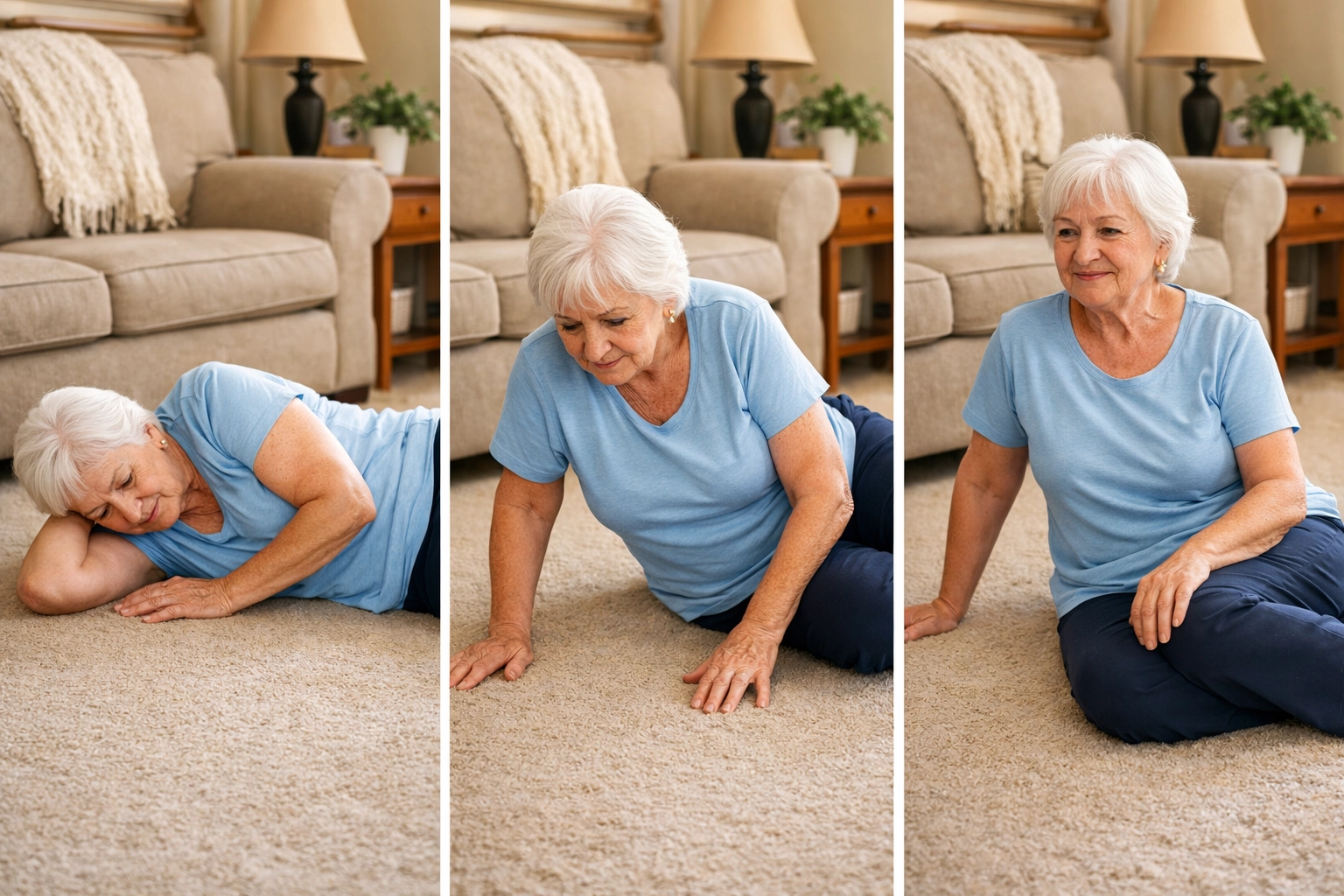
Step 1: Roll to Your Side
Starting position: lying on your back (face-up).
Roll onto your side: whichever side feels most comfortable. Use your arms to help guide the movement. Once you're on your side, extend your bottom arm out in front of you for stability. This arm will help support your upper body as you move to the next position.
Take your time with this step. If you feel dizzy or unstable, pause and breathe. There's no rush.
Step 2: Push Up to Side-Sitting
From your side-lying position, you're going to move into a sitting position.
Place your top hand on the floor in front of your chest. Use this arm to push your upper body up while you swing your legs toward the ground. You'll end up sitting with both legs pointing to the same side, knees bent.
Your bottom arm should still be helping support you from behind. If this feels challenging, rest in this position for a moment before moving on.
Step 3: Get to Hands and Knees
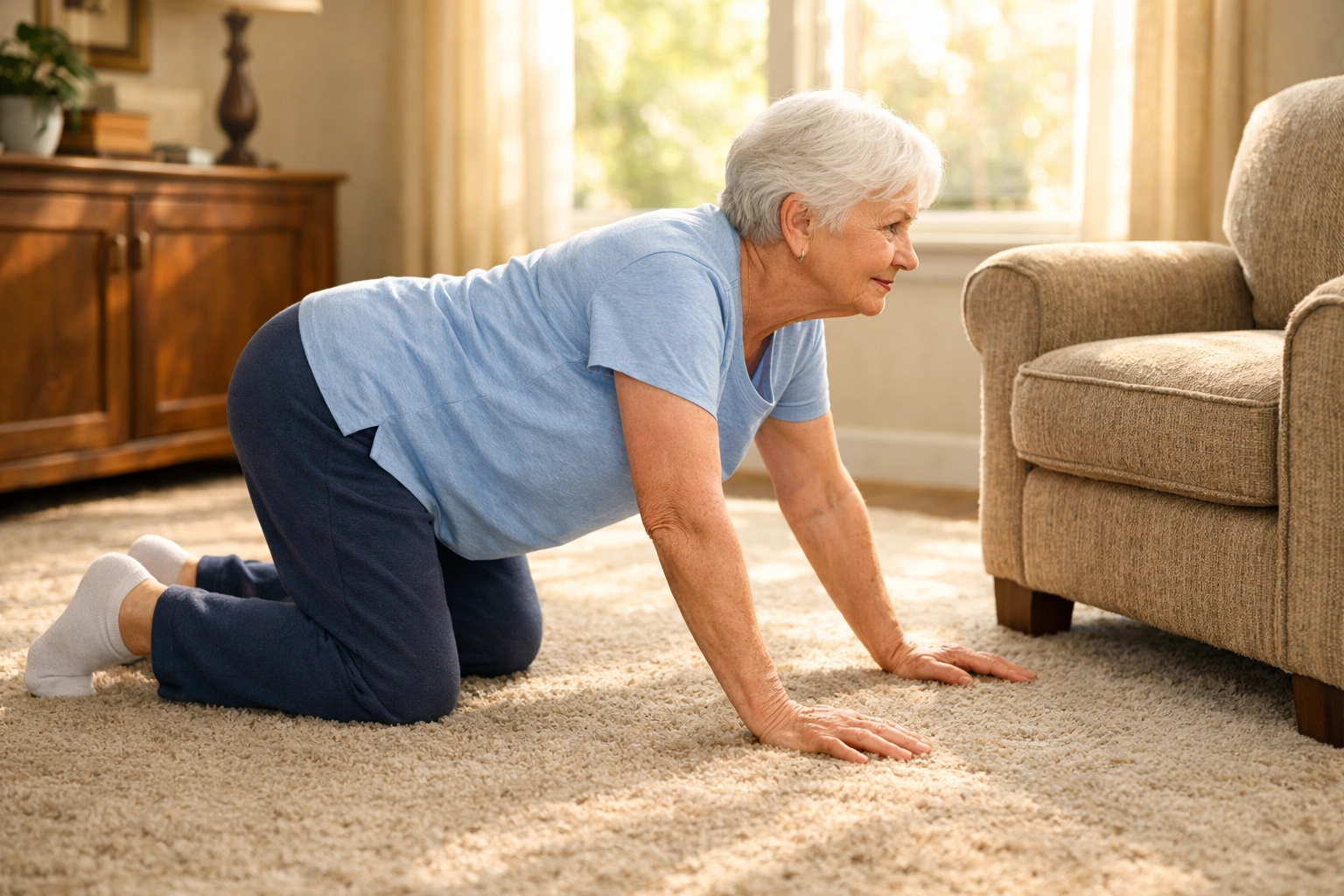
This is where you'll transition to a crawling position.
From side-sitting, lean forward and place both hands on the floor. Shift your weight onto your hands and carefully move into a hands-and-knees position (also called prone kneeling). Your weight should be evenly distributed between your hands and knees.
This position gives you a stable base to work from. If you need to rest, this is a good place to do it. Take a few breaths and prepare for the next step.
Step 4: Crawl to Support and Rise to High Kneeling
Look around and identify the sturdiest piece of furniture nearby: a chair with arms, a sofa, a bed frame, or a sturdy coffee table. Avoid anything with wheels or anything that might tip over.
Crawl to this piece of furniture. When you reach it, place both hands on the surface. Slowly push yourself up so that you're kneeling upright on both knees (high kneel). Your hands should remain on the furniture for balance and support.
This position allows you to check your balance before attempting to stand. If you feel wobbly, stay here and breathe until you feel steady.
Important: Keep your knees bent and use your leg muscles to lift yourself. Don't bend at the waist or rely too heavily on pulling with your arms, as this can strain your back.
Step 5: Move to Half-Kneeling and Stand
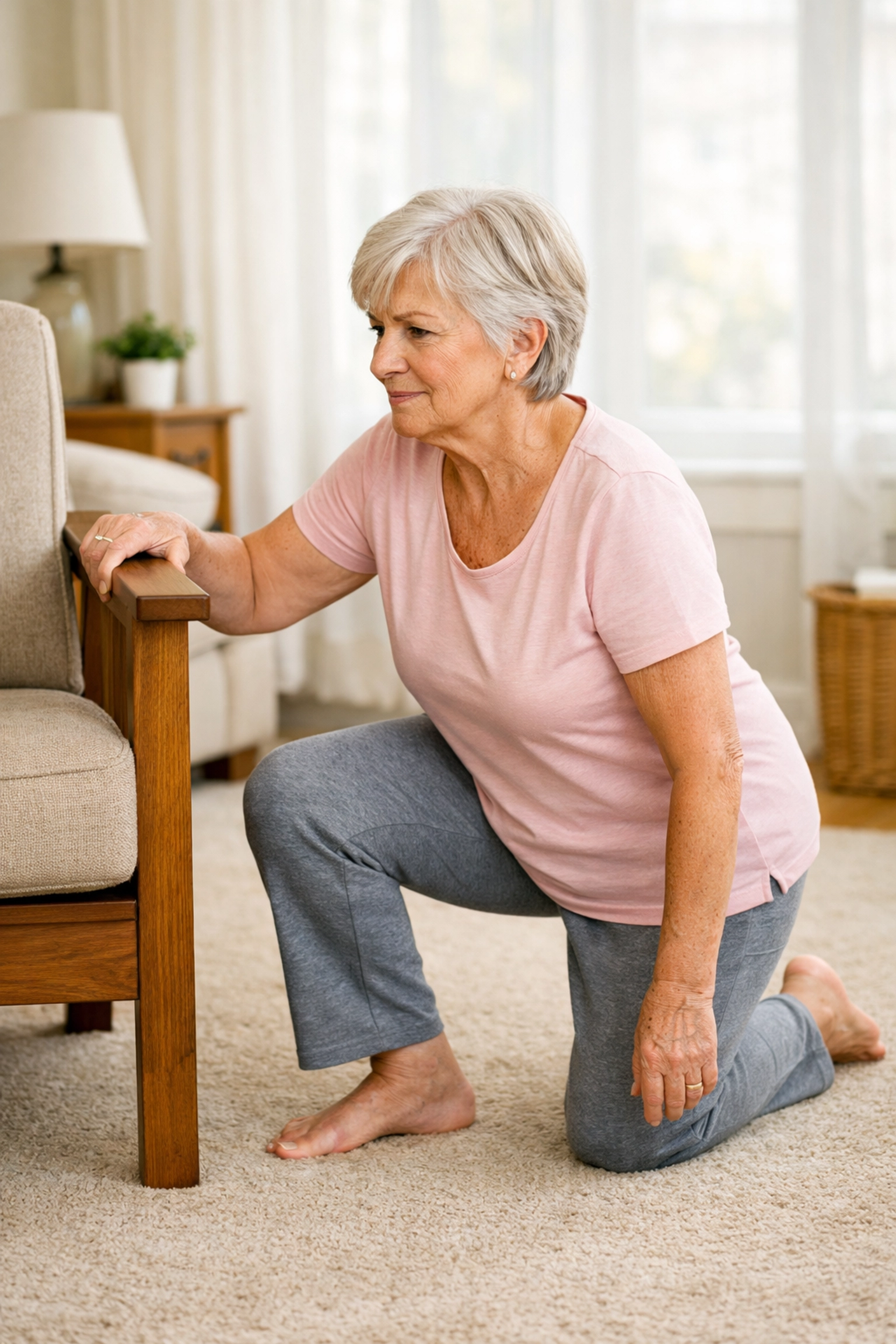
Almost there. From high kneeling, bring one foot forward so it's flat on the floor. You're now in a half-kneeling position: one knee on the ground, one foot planted firmly on the floor in front of you.
Keep both hands on the sturdy surface for support. Take a breath, then push through your front foot to rise to standing. Let your leg muscles do the work. As you stand, keep holding onto the furniture until you feel completely stable.
Once you're standing, don't rush off. Stand still for a moment, holding the furniture, and make sure you feel steady. Then slowly make your way to a chair where you can sit and fully recover.
What If You Can't Get Up?
Sometimes, despite your best efforts, you might not be able to get up on your own. This doesn't mean you've failed: it means you need help, and that's perfectly okay.
If you can't complete the steps:
- Stay calm and conserve your energy
- Try to reach a phone if one is nearby
- Call 911 or shout for help if someone might hear you
- Use your medical alert device if you have one
- Try to stay warm by pulling blankets, cushions, or clothing toward you if possible
Never feel embarrassed about calling for help. Emergency responders and neighbors would much rather help you get up safely than have you injure yourself trying to rise alone.
Stretching and Breathing Throughout the Process
As you move through each step, gentle stretching can help prepare your muscles and joints for the next movement. Pay special attention to your neck, spine, and hips: these areas often tighten up after a fall.
Between each step, take a few slow, deep breaths. Breathing helps calm your nervous system and ensures your muscles get the oxygen they need. If any movement causes sharp pain, stop immediately and assess whether you should continue or call for help.
Practice Makes Prepared
Here's something most people don't think about: you can practice this technique before you ever need it. In fact, you should.
Practicing the sequential method when you're feeling well helps your body learn the movements. This muscle memory can be invaluable during an actual fall when you might be stressed or disoriented.
How to practice safely:
- Choose a time when someone else is home or nearby
- Start on a soft surface like a carpeted floor or exercise mat
- Have sturdy furniture within reach
- Work through each step slowly and deliberately
- Practice once every few weeks to keep the movements fresh
Some physical therapists offer specific fall recovery training. If you're working with a PT or occupational therapist, ask them to guide you through these steps and ensure you're using proper form.
Preventing Falls in the First Place
While knowing how to get up is crucial, preventing falls remains your best strategy. The same strength, balance, and awareness that help you rise safely also help you avoid falling.
Key prevention strategies include:
- Removing tripping hazards like loose rugs, clutter, and electrical cords
- Installing grab bars and handrails in key areas
- Ensuring adequate lighting throughout your home, especially at night
- Wearing supportive, non-slip footwear
- Reviewing medications with your doctor for side effects that affect balance
- Exercising regularly to maintain strength and flexibility
- Having your vision checked annually
- Using assistive devices when needed and using them correctly
Building Confidence After a Fall
Falling can shake your confidence. Many seniors become afraid of falling again and start limiting their activities, which unfortunately can lead to muscle weakness and an even higher fall risk.
If you've experienced a fall, consider talking with your healthcare provider about:
- A formal fall risk assessment
- Physical therapy to rebuild strength and balance
- Occupational therapy to make your home safer
- Assistive devices that might help you move more confidently
Remember that one fall doesn't define your future. With the right knowledge, preparation, and support, you can continue living actively and independently.
The Bottom Line
Knowing how to get up after a fall is an empowering skill that every senior should have in their safety toolkit. The five-step sequential method: rolling to your side, sitting up, moving to hands and knees, rising to high kneeling, and finally standing: provides a safe, systematic way to recover from a fall.
Practice these steps when you're feeling well so the movements become second nature. Always assess yourself for injury before attempting to rise, and never hesitate to call for help if you need it. There's no shame in asking for assistance; it's the smart, safe choice.
Falls happen. But with preparation and knowledge, you can handle them confidently and minimize their impact on your independence and well-being.

