
Falls happen. Even with the best prevention strategies in place, there may come a time when you or a loved one ends up on the floor. While it's natural to feel shaken or embarrassed, knowing the right way to get back up can make a significant difference in preventing further injury and maintaining your confidence.
This guide walks you through a safe, methodical approach to getting up after a fall, and just as importantly, helps you recognize when it's better to stay down and call for help.
Why Knowing How to Get Up Matters
Many seniors who fall and aren't seriously injured still end up lying on the floor for extended periods simply because they don't know the safest way to get back up. This extended time on the floor can lead to dehydration, pressure sores, hypothermia, and increased anxiety about future falls.
Learning a structured method for getting up gives you a practical tool to handle a fall situation calmly. It's about empowerment, reducing the panic that can make a bad situation worse and giving you a clear action plan when you need it most.
That said, this technique is only appropriate when you're uninjured and feel capable of moving. It's not a one-size-fits-all solution, and we'll cover when you should absolutely stay put.

Before You Attempt to Get Up
The first few moments after a fall are critical. Resist the urge to immediately jump up, even if you feel fine. Take a minute to collect yourself and run through this mental checklist:
Assess your condition:
- Do you have any sharp or severe pain anywhere in your body?
- Can you move your arms and legs without significant discomfort?
- Are you dizzy, disoriented, or experiencing chest pain?
- Do you see any obvious bleeding or deformity?
Check your surroundings:
- What caused the fall, is the hazard still present?
- Is there a sturdy piece of furniture nearby that can support your weight?
- Are you in a safe position, or are you near stairs or other dangers?
Take several deep breaths. This isn't just about staying calm, it gives your body a moment to respond to the fall and helps you think more clearly about your next move.
If anything feels seriously wrong during this assessment, don't attempt to get up. Keep warm if possible, use a medical alert device if you have one, and call for help using your phone or by calling out to family members or neighbors.
The Step-by-Step Method to Get Up Safely
If you've assessed yourself and feel confident that you can safely move, follow this sequence carefully. The goal is to use your body's natural mechanics and leverage stable furniture to gradually work your way from the floor to standing.
Step 1: Assess and Pause
We mentioned this above, but it bears repeating: spend at least 30 seconds assessing how you feel before you start moving. Lying still and taking deep breaths isn't wasting time, it's gathering important information about your condition.
Step 2: Roll to Your Side
Once you're ready to move, gently roll onto your side. Choose whichever side feels most comfortable and has the clearest path to a stable piece of furniture.
Use your arms to guide the rolling motion. Position your hands flat on the floor in front of your chest. This not only helps you roll but also begins to prepare you for the pushing motion you'll need in subsequent steps.
Take your time with this movement. There's no prize for speed here. If rolling onto your side causes significant pain, stop and reassess whether you should be moving at all.
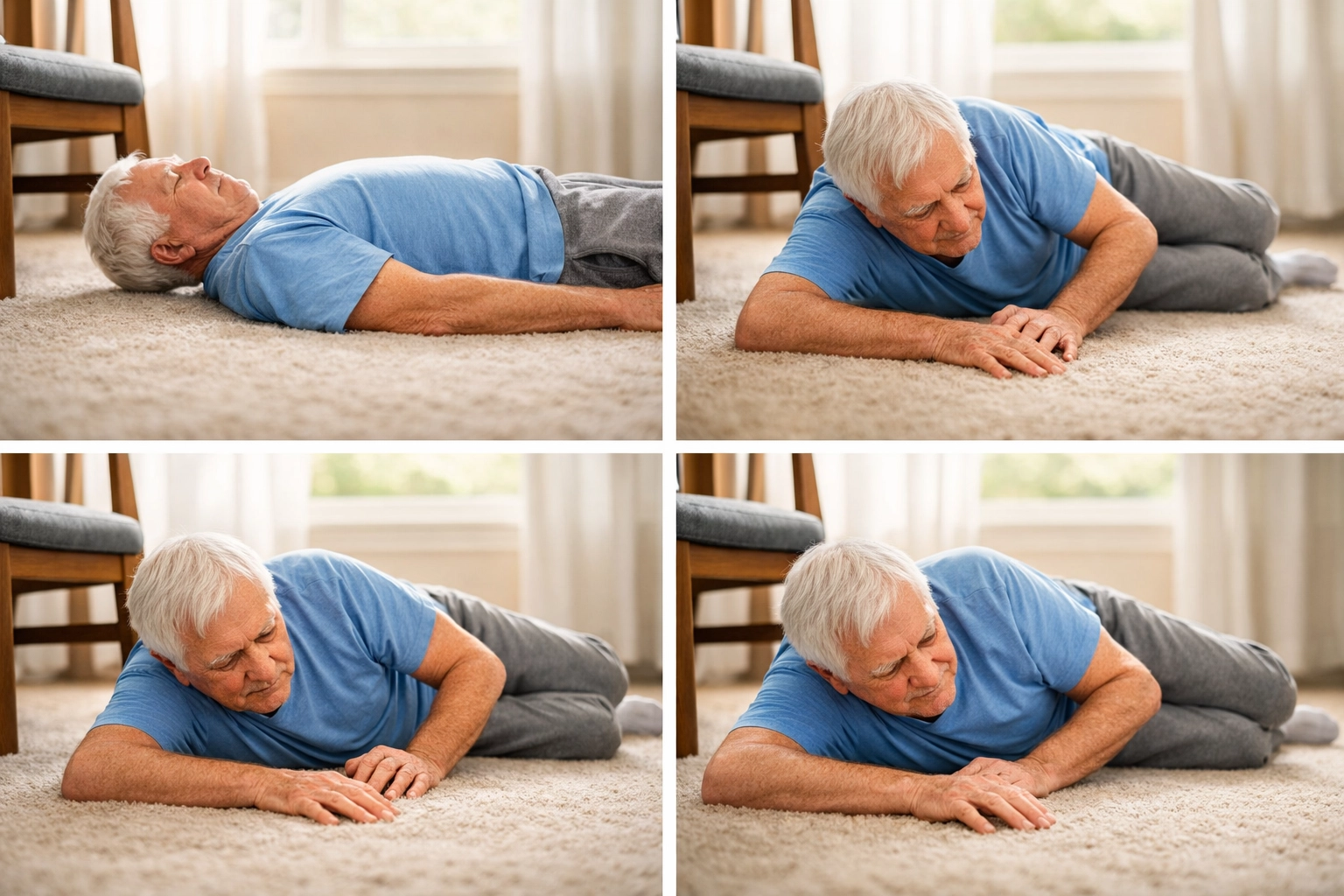
Step 3: Crawl to Something Sturdy
From your side, push yourself up onto your hands and knees. This is essentially a crawling position, and yes, you'll be crawling toward a stable support.
Identify the nearest sturdy piece of furniture. Good options include:
- A heavy couch or sofa
- A solid chair (not one with wheels)
- A coffee table or low dresser
- Bed frame
- Stair railing if you're near stairs
Avoid items that might tip or slide, such as lightweight chairs, small side tables, or furniture on wheels.
Slowly crawl or scoot toward your chosen support. Use your arms and legs to move, keeping your movements controlled and deliberate. If your knees are uncomfortable against a hard floor, you can pause to place a throw pillow or cushion under them, though this step is optional.
Step 4: Get Into a Kneeling Position
Once you've reached your sturdy furniture, position yourself so you're kneeling beside it with the furniture directly in front of you. Place both hands firmly on the furniture for support.
You can keep both knees on the ground, or bring one knee up so one foot is flat on the floor. This modified kneeling position (sometimes called a half-kneel) can make the next step easier for some people.
Make sure your hands have a solid grip on the furniture. If the surface is smooth or slippery, adjust your hand position to ensure you won't slip when you begin to push upward.
Take a breath here. You're doing great, and you're almost standing.
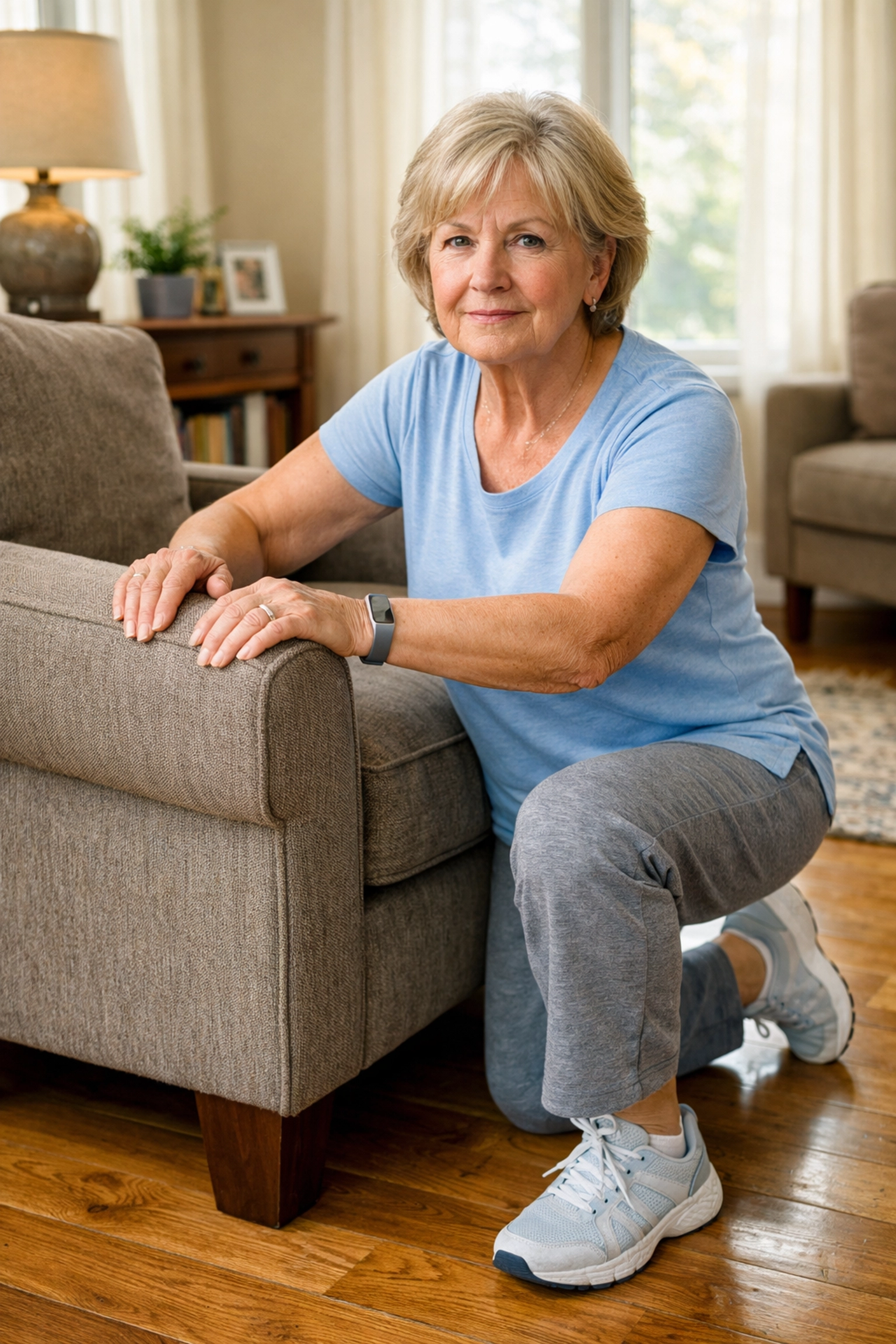
Step 5: Rise to Standing
With both hands firmly pressing down on the furniture, slowly push yourself upward. Use your leg muscles: particularly your front leg if you're in a half-kneeling position: to help lift your body.
Push through your hands and rise gradually. Don't rush this part. A slow, controlled movement is much safer than trying to spring up quickly.
As you near standing, keep your hands on the furniture for support. Your legs might feel a bit shaky, especially if you've been on the floor for more than a few minutes.
After You're Standing
Congratulations: you're back on your feet. But don't rush off just yet.
Stand still for at least 30 seconds. This waiting period serves several purposes:
- It allows your blood pressure to stabilize (standing up quickly after lying down can cause dizziness)
- It gives you a chance to make sure you truly have your balance
- It lets you do a quick mental scan of how your body feels
Once you feel steady, carefully make your way to a chair and sit down. Even if you feel fine, give yourself at least 10-15 minutes of rest before resuming normal activities.
Check yourself for injuries:
- Look for any cuts, scrapes, or bruising
- Gently move your joints to check for pain or stiffness
- Monitor yourself over the next few hours for delayed soreness or symptoms
Consider calling your doctor, especially if this is your first fall or if you've had multiple falls recently. Even if you weren't injured, a fall can be an important health signal that deserves professional attention.
When You Should NOT Try to Get Up
This technique is only appropriate when you're certain you can safely move. Do not attempt to get up if:
- You have severe pain anywhere, especially in your hip, back, or head
- You cannot move a limb or it appears deformed
- You're bleeding significantly
- You feel dizzy, confused, or disoriented
- You lost consciousness at any point
- You're experiencing chest pain or difficulty breathing
- You suspect you may have broken a bone
- You hit your head during the fall
In these situations, the safest choice is to stay where you are, keep warm if possible, and call for help immediately. Use a medical alert device, cell phone, or call out to others. If you're unable to reach help and have been on the floor for an extended period, try to move to a carpeted area or pull a blanket over yourself to maintain body temperature while you wait.
There's no shame in calling for assistance. Emergency responders would much rather help you up safely than respond to a more serious injury caused by attempting to rise when you shouldn't.
Practicing the Technique
Here's a valuable suggestion: practice this getting-up technique when you haven't fallen. It might feel a bit silly, but deliberately getting down on the floor and practicing the sequence when you're calm and uninjured has several benefits.
First, it helps you build muscle memory. If you do fall, your body will have some familiarity with the movements, making them easier to execute when you're stressed or shaken.
Second, it shows you which furniture pieces in your home are truly stable enough to use as supports. You might discover that your favorite chair isn't as sturdy as you thought, or that your coffee table is the perfect height for this technique.
Third, it builds confidence. Many seniors develop a fear of falling that actually increases their fall risk. Knowing you have a plan: and having practiced it: can ease that anxiety.
Practice safely:
- Have someone with you the first few times
- Practice on a carpeted surface when possible
- Wear comfortable clothing that allows for movement
- Don't practice if you have any health conditions that make floor exercises risky
Run through the sequence once every few months to keep the movements fresh in your mind.
Long-Term Recovery Considerations
Getting up after a fall is just the immediate challenge. The days and weeks following a fall are equally important for your long-term safety and confidence.
Schedule an appointment with your healthcare provider to discuss the fall. Even if you weren't injured, your doctor can help identify any underlying factors that contributed to the fall: medication side effects, vision problems, balance issues, or other health concerns.
Physical therapy can be incredibly valuable after a fall. A physical therapist can assess your strength, balance, and mobility, then create a personalized exercise program to address any weaknesses. They can also review your technique for using mobility aids if you have them.
Consider a home safety evaluation. Sometimes an occupational therapist or other professional can spot hazards in your home that you've become so accustomed to that you no longer notice them.
Don't avoid activity out of fear. It's understandable to feel nervous after a fall, but staying active is one of the best ways to prevent future falls. Regular exercise that focuses on strength and balance is proven to reduce fall risk.
Building Confidence After a Fall
A fall can shake your confidence, and that's completely normal. Some seniors become so fearful of falling again that they severely limit their activities, which ironically increases their fall risk by leading to deconditioning and social isolation.
If you find yourself restricting activities out of fear, talk to your doctor about strategies to rebuild confidence. This might include working with a physical therapist, attending a fall prevention class, or joining a tai chi or gentle exercise group designed for seniors.
Remember that having a plan: like the getting-up technique outlined in this guide: is empowering. You're not helpless. You have knowledge and skills that can help you handle challenging situations.
Keep in mind that most falls don't result in serious injury, and many seniors who fall go on to maintain active, independent lives. A fall is a setback and a learning opportunity, not a life sentence.
Having the knowledge and confidence to safely get up after a fall is an important part of maintaining your independence. Practice the technique, stay active, address risk factors with your healthcare team, and remember that being prepared doesn't mean living in fear( it means living with confidence.)

