
Falling is scary. But knowing how to get back up safely can make all the difference between a minor incident and a serious injury. If you're a senior living independently, or if you're caring for an aging loved one, understanding the proper technique for getting up after a fall is essential knowledge that could one day prevent injury or save a life.
Many seniors who fall remain on the floor for hours: not because they're seriously injured, but because they don't know the safest way to get back up. The longer someone stays down, the greater the risk of complications like dehydration, pressure sores, hypothermia, or pneumonia. That's why having a clear, practiced plan matters.
This guide walks you through the safest methods to get up after a fall, what to do if you can't get up on your own, and how to build strength to reduce your risk of falling again.
First Things First: Don't Rush
When you fall, your first instinct might be to jump up quickly out of embarrassment or fear. Resist that urge. Rushing increases your chance of falling again or worsening an injury you didn't notice right away.
Take a moment to breathe. Close your eyes if it helps you calm down. Count to ten slowly. This pause gives your body a chance to settle and your mind a chance to assess the situation clearly.
Assess Yourself for Injuries
Before you try to move, do a quick body scan:
- Can you move your arms and legs without sharp pain?
- Do you feel any numbness or tingling?
- Is there visible bleeding or swelling?
- Did you hit your head?
- Are you feeling dizzy or disoriented?
If you experience severe pain, can't move a limb, suspect a fracture, or hit your head hard, don't try to get up. Call for help immediately or use a medical alert device if you have one.
If you feel generally okay and don't suspect serious injury, you can proceed with getting up: but do it slowly and methodically.

The Standard Method: Getting Up Step-by-Step
This is the safest, most widely recommended technique for getting up after a fall. Practice this method when you're feeling well so your body knows what to do if you ever need it.
Step 1: Roll Onto Your Side
From your back, bend both knees so your feet are flat on the floor. Decide which side feels more comfortable to roll toward. Reach your top hand across your body and place it on the floor on the opposite side. Use that hand for leverage as you roll onto your side, bringing your other elbow underneath you for support.
Take your time. There's no rush.
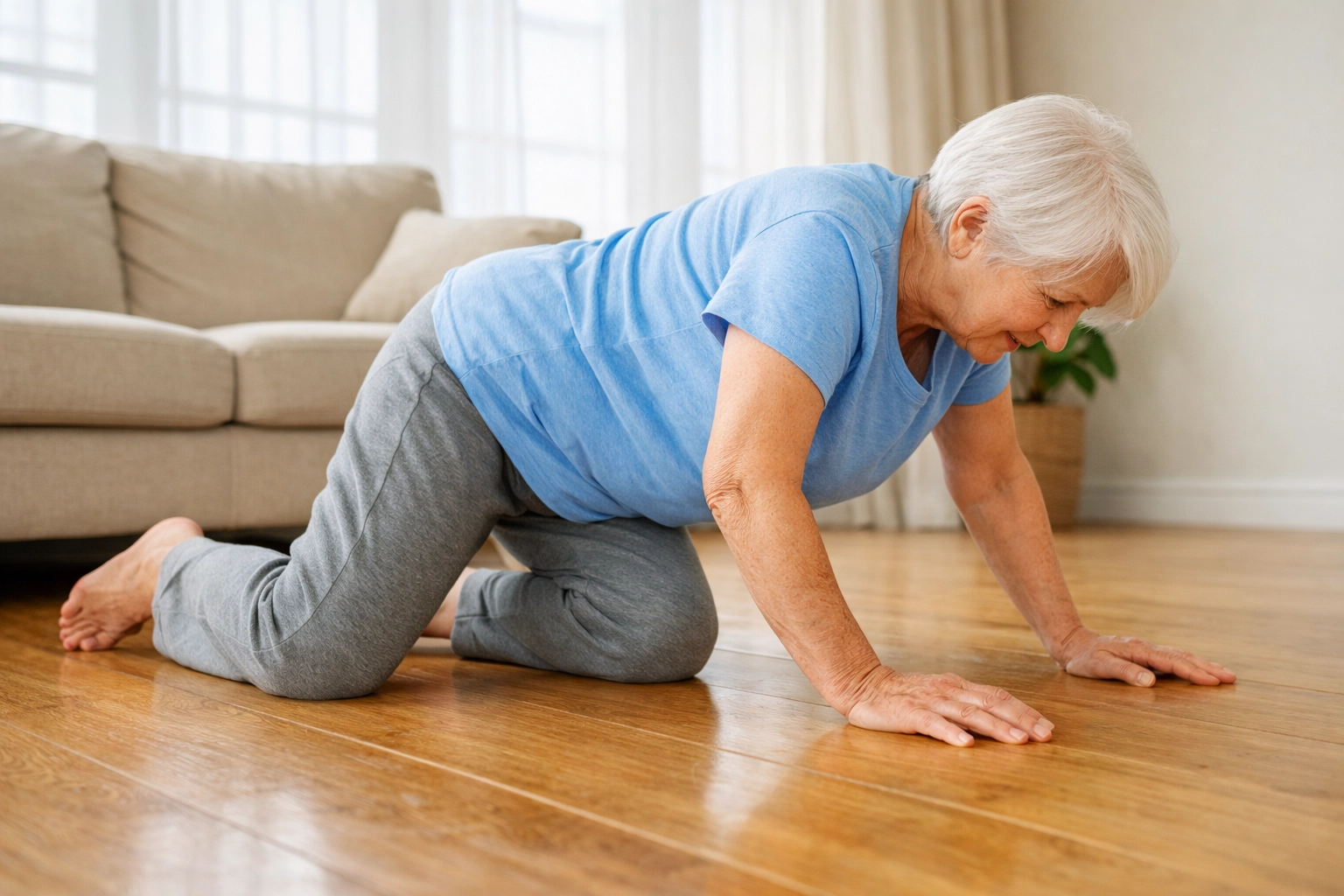
Step 2: Push Up to Hands and Knees
Once you're on your side, use both arms to push yourself up into a crawling position: on your hands and knees. This is a stable position that distributes your weight evenly.
If your knees are sensitive, you can place a cushion, towel, or piece of clothing under them for padding.
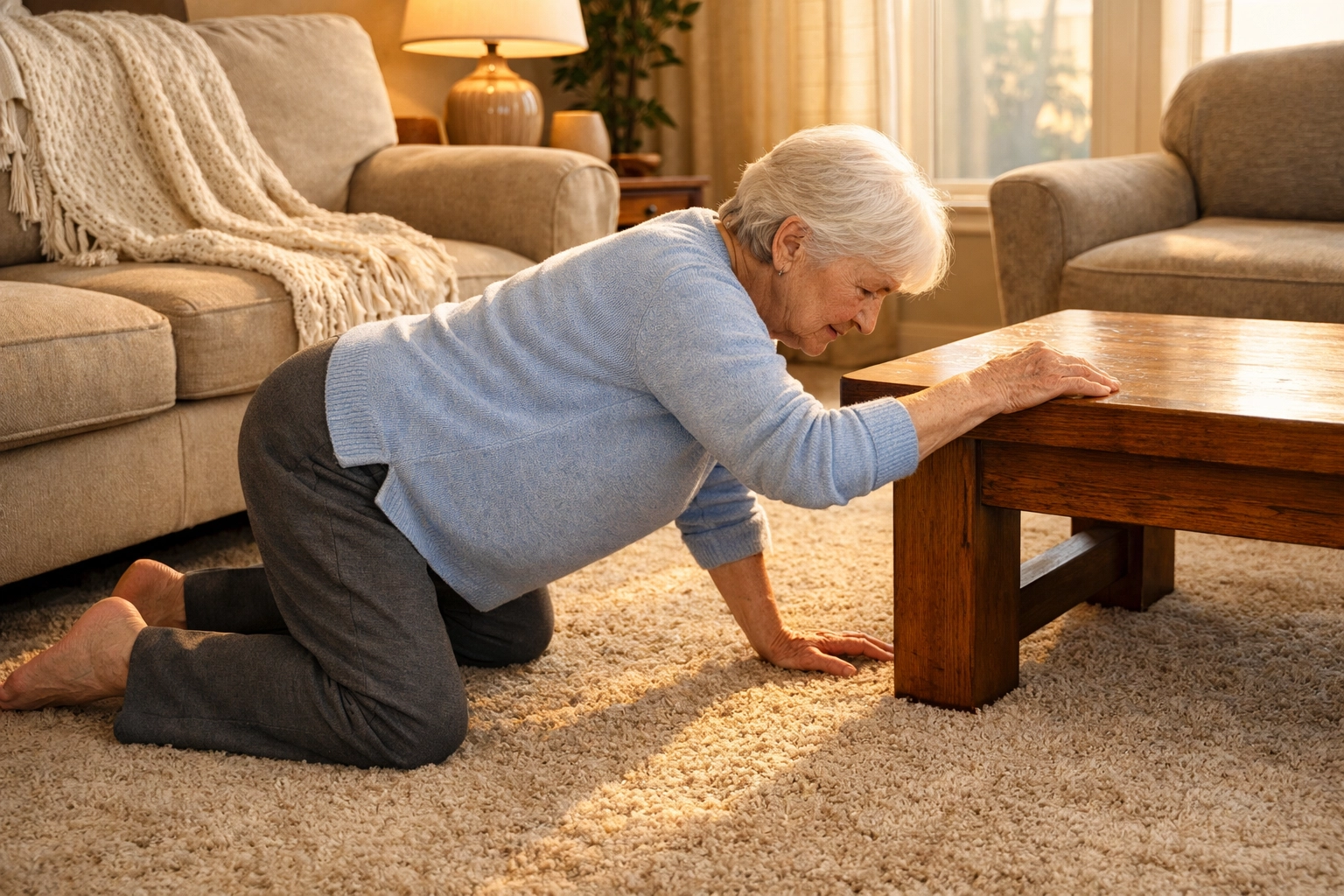
Step 3: Crawl to Sturdy Furniture
Look around for the nearest piece of stable furniture: a chair, couch, coffee table, bed, or even a sturdy ottoman. It needs to be something that won't slide or tip when you put weight on it.
Crawl slowly toward that furniture. If crawling feels too difficult, you can scoot on your bottom instead, moving a little at a time.
Step 4: Position Yourself and Place Your Hands
Once you reach the furniture, position yourself directly in front of it. Place both hands firmly on the seat of the chair or the surface of the table. Make sure your grip is secure.
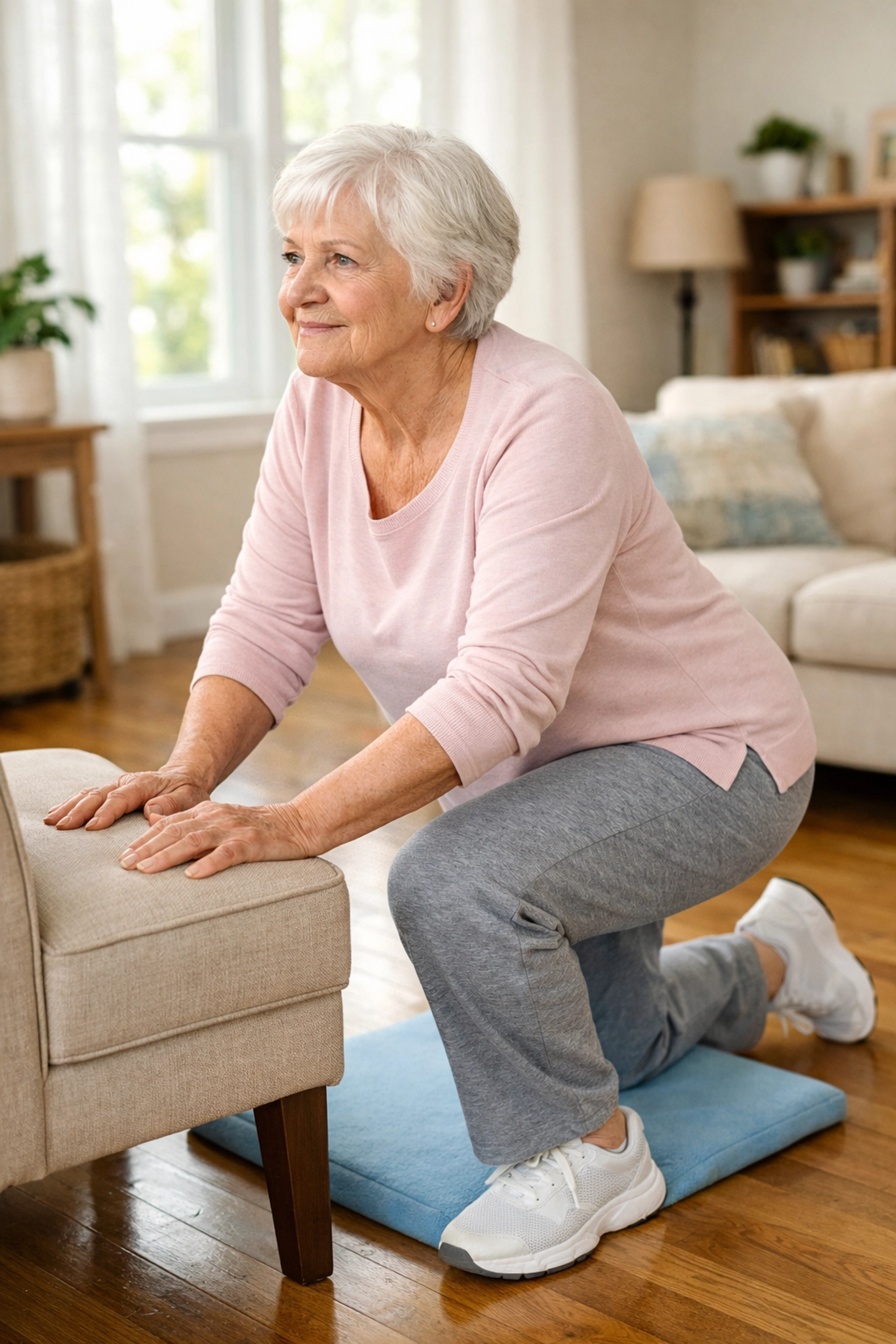
Step 5: Bring Your Stronger Leg Forward
Identify your stronger leg: the one you usually lead with when climbing stairs. Bring that foot forward and plant it flat on the floor, knee bent at about 90 degrees. Your other knee should remain on the ground. You're now in what's called a half-lunge position.
Step 6: Push Up to Standing
Using your arms and your front leg, push yourself up to a standing position. Your hands on the furniture provide stability, while your leg does most of the lifting work.
Once you're standing, don't let go of the furniture right away. Take a few deep breaths. Make sure you feel steady and balanced before you try to walk.
Alternative Method: Using a Couch or Bed
If you happen to fall near a couch or bed, there's another technique that might feel easier:
- While lying on the floor, scoot yourself so your feet are near the couch
- Lift your feet up onto the couch cushions
- Rest for a moment in this position with your legs elevated
- Roll onto your side and let your legs drop over the edge of the couch
- Use your arms to push yourself up to a sitting position
- Sit on the edge for a minute or two before standing
This method works well if you're near low furniture and can comfortably maneuver your legs.
When You Can't Get Up: What to Do
Sometimes, despite your best efforts, you might not be able to get up on your own. Maybe you're too weak, too injured, or just too tired. That's okay. Here's what to do:
If you can reach a phone: Call for help. This could be 911, a family member, a neighbor, or a friend. Don't feel embarrassed: this is exactly what emergency services are for.
If you can't reach a phone but can reach a door: Try to move yourself toward the door by scooting. Move your feet first, then your hips, then your shoulders: inch by inch. Once you reach the door, you can bang on it or call out for help.
If you can't move at all: Try to stay calm and conserve your energy. Pull any nearby blankets, coats, cushions, or rugs over yourself to stay warm. If you have a medical alert button or pendant, press it. Otherwise, call out periodically for help.
This is exactly why many seniors and their families invest in medical alert systems. These devices allow you to call for help with the push of a button, even if you can't reach a phone.
After You're Up: Important Next Steps
Once you're safely back on your feet, don't just carry on with your day. Take these important steps:
Sit down and rest. Give your body time to recover. Drink some water. Assess how you're feeling now that the adrenaline is wearing off.
Look for delayed symptoms. Sometimes injuries don't show themselves right away. Watch for increasing pain, swelling, bruising, or stiffness over the next few hours.
Tell someone. Even if you feel fine, let a family member, friend, or your doctor know you fell. They can help you evaluate whether you need medical attention.
Figure out why you fell. Did you trip over something? Feel dizzy? Lose your balance? Understanding the cause helps you prevent future falls.
See your doctor. Schedule an appointment to discuss the fall. Your doctor can assess whether medications, vision problems, blood pressure issues, or other health factors contributed to the fall.
Building Strength to Get Up More Easily
The stronger you are, the easier it will be to get up after a fall: and the less likely you are to fall in the first place. Here are some exercises that can help. Always check with your doctor before starting any new exercise routine.
Leg Strengthening
Sit in a sturdy chair. Straighten one knee, lifting your foot off the floor. Hold for five seconds, then lower slowly. Repeat ten times on each leg. This builds the quadriceps muscles you need for standing up.
Ankle and Calf Work
Stand holding onto a counter or the back of a chair for balance. Rise up on your toes, hold for a second, then lower. Next, rock back on your heels with your toes pointing up. Repeat ten times. This improves ankle stability and calf strength.
Getting Up Practice
When you're feeling well, practice the getting-up technique described earlier. Do it slowly, with someone nearby the first few times. The more familiar your body becomes with these movements, the more automatically you'll be able to perform them if you ever need to.
Working with a Physical Therapist
Consider asking your doctor for a referral to a physical therapist. A PT can assess your specific strength, balance, and mobility challenges and create a customized exercise program. They can also help you practice getting up from the floor in a supervised, safe environment.
Creating Your Personal Fall Recovery Plan
Take some time this week to create a plan for what you'll do if you fall:
- Practice the getting-up technique at least once
- Make sure your phone is always accessible: consider carrying a cordless phone or keeping your cell phone in your pocket
- Keep a small emergency kit on each floor of your home with a blanket, water bottle, whistle, and flashlight
- Tell neighbors or family members about your medical alert system (if you have one) and how it works
- Write down emergency numbers and post them near your phone
- Consider getting a medical alert device if you don't already have one
You're More Prepared Than You Think
Falling is frightening, but knowing what to do afterward puts you back in control. By learning and practicing these techniques now: before you need them: you're taking an important step toward maintaining your independence and safety.
Remember, the goal isn't just to get up after a fall. It's to get up safely, without causing additional injury, and with the confidence that comes from preparation. Share this guide with the seniors in your life, and consider practicing together. Knowledge and preparation make all the difference.

