
Falls happen. Even to the most careful people. And while preventing falls is important, knowing how to get up safely afterward is just as critical. The truth is, lying on the floor after a fall can lead to serious complications, including hypothermia, dehydration, and pressure sores. But rushing to stand up without a plan can cause additional injuries.
This guide walks you through the exact method that physical therapists teach their patients. It breaks down the process into manageable steps that protect your body while helping you regain your footing with confidence.
Before You Attempt to Get Up: Assess Yourself First
The first few moments after a fall are crucial. Before you make any move to get up, take a breath and check yourself for injuries.
Ask yourself these questions:
- Do I feel sharp or severe pain anywhere?
- Can I move all my limbs?
- Am I dizzy or lightheaded?
- Did I hit my head?
- Is anything bleeding or visibly injured?
If you answer yes to any of these, do not try to get up on your own. Call for help using your cell phone, medical alert device, or by calling out to someone nearby. It's far better to wait for assistance than to risk making an injury worse.
If you feel okay and nothing seems seriously wrong, you can proceed with the step-by-step method below. But take your time. There's no rush.

The Physical Therapist's Method: Getting Up Safely
This technique is used by rehabilitation specialists because it minimizes strain on your joints and muscles while giving you multiple points of stability. Think of it as a gradual climb rather than one big push.
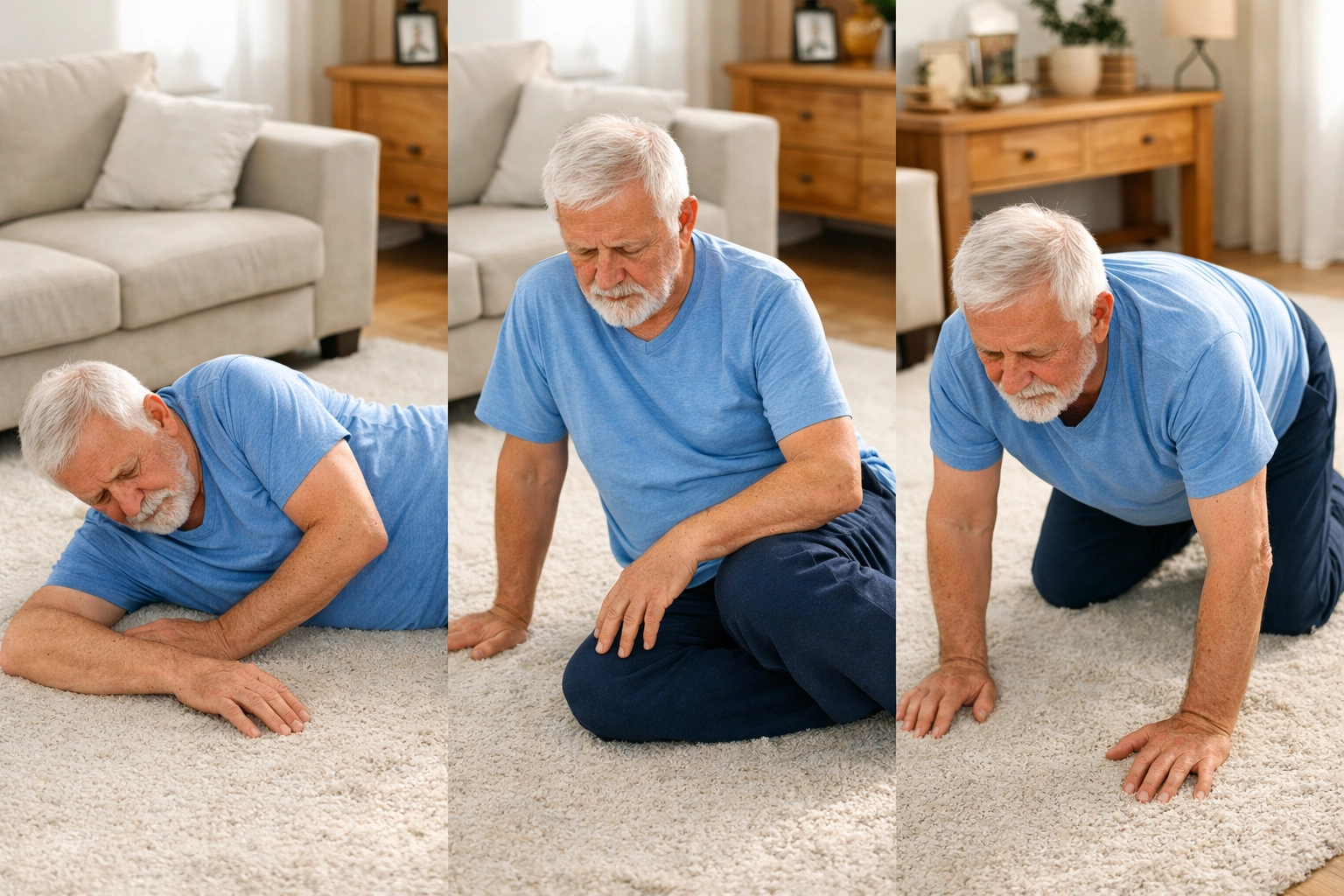
Step 1: Roll to Your Side
Start by lying on your back. Bend your knees if possible, and roll onto your side. Use your arm to help push yourself over. Choose whichever side feels most comfortable and strongest.
This position is your foundation. It gets you off your back and prepares your body for the next movements.
Step 2: Push Up to a Side-Sitting Position
From your side, use your arms to push your upper body up while swinging your legs around. You should end up sitting on the floor with both legs pointing to the same side and your knees bent.
This is called side-sitting. It's a stable position where you can pause and catch your breath if needed.
Step 3: Get on All Fours
Shift your weight forward and bring yourself onto your hands and knees. This is the crawling position, and it's more stable than you might think.
If you're not already near a sturdy piece of furniture, now is the time to crawl toward one. Look for a heavy chair, a couch, a bed frame, or a solid coffee table. You'll need something that won't slide or tip when you lean on it.
Step 4: Position Yourself at Your Support
Once you've reached your sturdy furniture, position yourself so you're kneeling directly in front of it. Place both hands on the furniture for support.
Make sure the furniture is stable. Give it a little test push before putting your full weight on it. Never use a rolling chair, a folding table, or anything on wheels.
Step 5: Come Up to Kneeling
Push yourself up so you're kneeling upright on both knees, with your hands still on the furniture for balance. This position is called high kneeling.
Your body should be vertical now, which helps your cardiovascular system adjust. Take a moment here. Breathe. There's no prize for speed.
Step 6: Move to Half-Kneeling
Bring one foot forward and plant it flat on the floor. The other knee stays on the ground. This is half-kneeling, similar to a lunge position.
Choose your stronger leg to bring forward first. Keep both hands on the furniture for support.
Step 7: Stand Up
Using the strength in your front leg and the support from your arms, push yourself up to standing. Keep your hands on the furniture until you feel steady.
Once standing, stay put for a minute or two. Your body just went through a lot of positional changes, and your blood pressure needs time to adjust.

Step 8: Rest and Reassess
Before you go anywhere, sit down in a proper chair and rest for at least five minutes. Check yourself again for any injuries you might have missed initially.
Look for:
- Bruising or swelling
- Cuts or scrapes
- Pain that didn't appear right after the fall
- Changes in how you feel (dizziness, nausea, confusion)
If anything concerns you, call your doctor or seek medical attention.
What If You Can't Get Up?
Sometimes, despite your best efforts, you simply can't manage the steps above. Maybe you're too weak, too injured, or the fall has left you too shaken.
This is not a failure. This is your body telling you it needs help.
If you've been on the floor for more than a few minutes and can't get up:
- Call 911 or your local emergency number
- Use your medical alert system if you have one
- Call out for neighbors if you're at home
- Try to stay warm by pulling a blanket, towel, or clothing over yourself
- Keep moving your arms and legs slightly to maintain circulation
Many people worry about "bothering" emergency services, but this is exactly what they're there for. A professional assessment after a fall can catch injuries that aren't immediately obvious.
Practicing the Technique: Don't Wait Until You Need It
Here's something most people don't think about: the best time to learn this method is before you fall, not after.
Physical therapists recommend practicing these movements when you're feeling good. Start by sitting on your bed or a soft exercise mat rather than the hard floor. Work through each step slowly.
You might find certain transitions difficult. That's valuable information. It tells you where you need to build strength or where you might need additional support equipment in your home.
Practice once a week if you can. Make it routine, like checking smoke detector batteries. The muscle memory you build now could make all the difference later.

Building Strength to Make This Easier
Getting up from the floor requires leg strength, arm strength, and core stability. The good news is that all three can be improved with simple exercises.
For leg strength:
- Sit in a sturdy chair and straighten one knee at a time, holding for a few seconds
- Do 10 repetitions per leg, once or twice daily
- Stand and rise up on your toes (calf raises) while holding a counter for 10-15 repetitions
For arm strength:
- Push yourself up from a seated position using chair armrests
- Practice pushing against a wall from a standing position
- Use light hand weights for simple lifting exercises
For core stability:
- Practice standing from a seated position without using your hands (only if you feel safe doing so)
- Do gentle seated twists while holding a chair for balance
- Work on your balance by standing on one foot (near a counter) for 10-30 seconds at a time
The CDC recommends strength and balance exercises at least three times per week to reduce fall risk and improve recovery capabilities.
When to Seek Professional Guidance
If you've fallen recently, or if you're struggling with the practice techniques described here, consider asking your doctor about physical therapy.
A physical therapist can:
- Assess your specific strength and balance challenges
- Create a customized exercise program
- Teach you modified techniques based on your abilities
- Identify equipment that might help you
- Address underlying issues that increase fall risk
There's no shame in needing extra help. In fact, seeking professional guidance is one of the smartest things you can do for your long-term independence.
Final Thoughts
Knowing how to get up after a fall gives you confidence. It reduces the fear that keeps many seniors from living fully. While we all hope to never need this skill, having it in your back pocket provides peace of mind.
Remember: assess before you move, take it step by step, use sturdy support, and don't hesitate to call for help when you need it. Your safety is always more important than your pride.
Practice the technique when you're feeling good. Build your strength with regular exercise. And most importantly, trust yourself to know when something doesn't feel right.
Falls are common, but they don't have to define your story. With the right knowledge and preparation, you can handle whatever comes your way.

