
Falls happen. Even with the best prevention strategies in place, there may come a time when you or someone you care for ends up on the floor. What happens next matters just as much as the fall itself.
Many seniors who fall remain on the floor for extended periods, not because of serious injury, but because they don't know how to get back up safely. This can lead to dehydration, pressure sores, hypothermia, and a fear of falling that limits independence. Learning a proper technique for getting up after a fall can make the difference between a minor incident and a trip to the emergency room.
Physical therapists have developed tested methods that break down the recovery process into manageable steps. These techniques work with your body's natural mechanics rather than against them, reducing strain and helping you regain your footing with confidence.
Before You Try to Get Up: Assess the Situation
The moments immediately after a fall are critical. Your first instinct might be to get up quickly, but rushing can make things worse.
Take a few deep breaths and run through this mental checklist:
- Are you in pain anywhere specific? Sharp pain could indicate a fracture or serious injury.
- Can you move your arms and legs? Test each limb gently before attempting to rise.
- Do you feel dizzy or disoriented? Vertigo or confusion might signal a need for medical attention.
- Is there any bleeding or visible injury?
If something feels seriously wrong, severe pain, inability to move a limb, or heavy bleeding, stay put and call for help. Use a medical alert system if you have one, call out to family members, or use your phone if it's within reach. There's no shame in asking for assistance when you need it.
If you're relatively comfortable and nothing seems broken, you can proceed with getting up on your own.

The Sequential Method: Your Step-by-Step Guide
This is the most widely taught fall recovery technique. It progresses through increasingly upright positions, giving your body time to adjust and minimizing the risk of another fall or injury during recovery.
Step 1: Roll to Your Side
From your back, turn onto your side. Choose whichever side feels more comfortable or gives you better access to nearby furniture.
Bend your knees slightly and use your arms to help roll your body. One arm should extend out from your body for support, while the other can push against the floor. Don't worry about doing this perfectly, the goal is simply to get onto your side in a controlled way.
Rest here for a moment. Check in with yourself. How are you feeling? Any dizziness or new pain?
Step 2: Push Up to Side-Sitting
From your side-lying position, use your upper arm (the one not supporting you) to push your torso upward while simultaneously swinging your legs downward. You'll end up in a seated position with both legs bent and pointing to the same side.
This position is often called "side-sitting." Your weight should be on your hip and the hand that's supporting you on the floor. Take another brief pause here. This is a stable resting position if you need it.
Step 3: Get on All Fours
Now transition to your hands and knees. Place both hands firmly on the floor in front of you and carefully bring one knee forward, then the other, until you're on all fours.
This is a stable position that many people find reassuring. You have four points of contact with the ground, which provides excellent balance. If you start feeling tired or dizzy at any point, this is a safe place to rest.

Step 4: Crawl to Support and High Kneel
Look around for the sturdiest piece of furniture nearby, a chair with arms, a low dresser, the seat of a couch, or a bed frame. Avoid anything on wheels or that might tip over.
Crawl to this support on your hands and knees. There's nothing undignified about crawling to safety, it's the smartest move you can make.
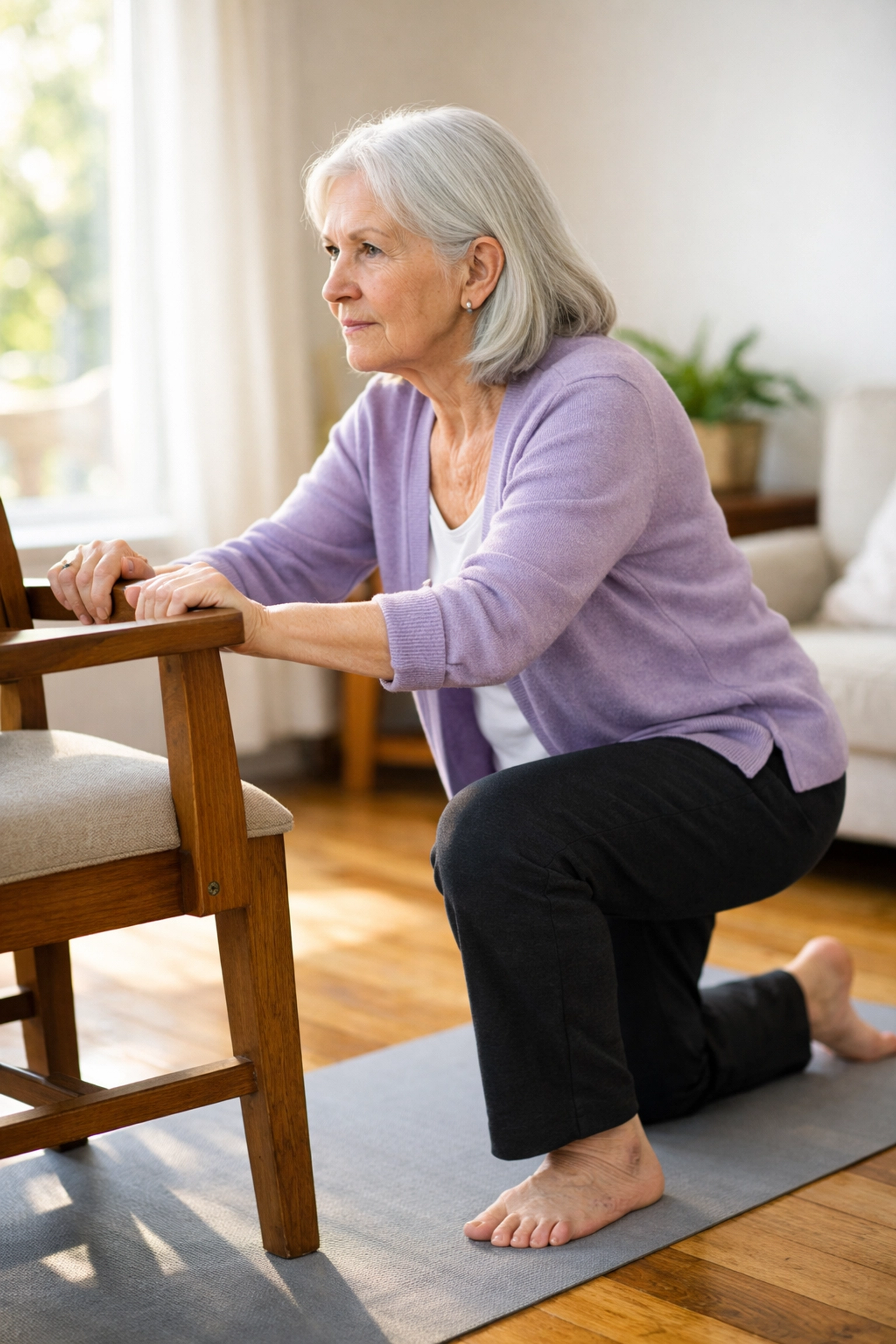
Once you reach your support surface, place both hands on it. Using your arms for support, lift your body so that only your knees are on the ground. You're now in what's called a "high kneel" position. Your hands are on the furniture, and you're kneeling upright.
Step 5: Stand Up Carefully
From high kneeling, bring one foot forward so that it's flat on the ground while the other knee remains down. This is called a "half-kneeling" position, similar to proposing or taking a knee.
Choose your stronger leg to come forward first if you can. Keep both hands firmly on your support surface.
Now push through your front foot while pulling with your arms, and rise to standing. Keep your hands on the support until you feel steady and balanced.
Don't rush this final step. Stand in place for a minute, holding onto your support. Let your blood pressure stabilize and your orientation settle before attempting to walk.
The Backward Chaining Approach: Learning from the Top Down
Some physical therapists recommend learning fall recovery using backward chaining. Instead of practicing from the floor up, you start from a standing position and work your way down.
This method helps you master each position before adding the next, building confidence as you go:
- Start standing with support
- Practice moving to half-kneeling
- Then move to high kneeling
- Progress to all fours
- Finally, practice going all the way down to side-sitting and rolling to your back
By starting from standing, you're never too far from your starting point. If a position feels uncomfortable, you can immediately return to standing. Once you've mastered each stage, you practice reversing the sequence: going from lying on the floor all the way back to standing.
This approach works particularly well for people who feel anxious about being on the floor or who are practicing fall recovery for the first time.
When to Call for Help Instead
Knowing how to get up after a fall is valuable, but it's equally important to know when not to attempt it.
Call for assistance if you experience:
- Severe pain in your hip, back, or any limb
- An inability to move or bear weight on a leg or arm
- Heavy bleeding or a head injury
- Confusion, severe dizziness, or loss of consciousness
- Chest pain or difficulty breathing
- A feeling that something is "very wrong"
It's also perfectly acceptable to call for help even if you're not injured. If you've been on the floor for more than a few minutes and feel exhausted, cold, or simply scared, reaching out for assistance is the right choice. Medical alert systems, family members, neighbors, or emergency services are all there for exactly these situations.
Building the Strength to Get Up
The best time to prepare for a fall is before it happens. The physical demands of getting up from the floor require a baseline level of strength, flexibility, and endurance that many seniors lose over time.
The Centers for Disease Control and Prevention recommends strength and balance exercises at least three times per week. These exercises specifically help with fall recovery:
Lower body strength exercises:
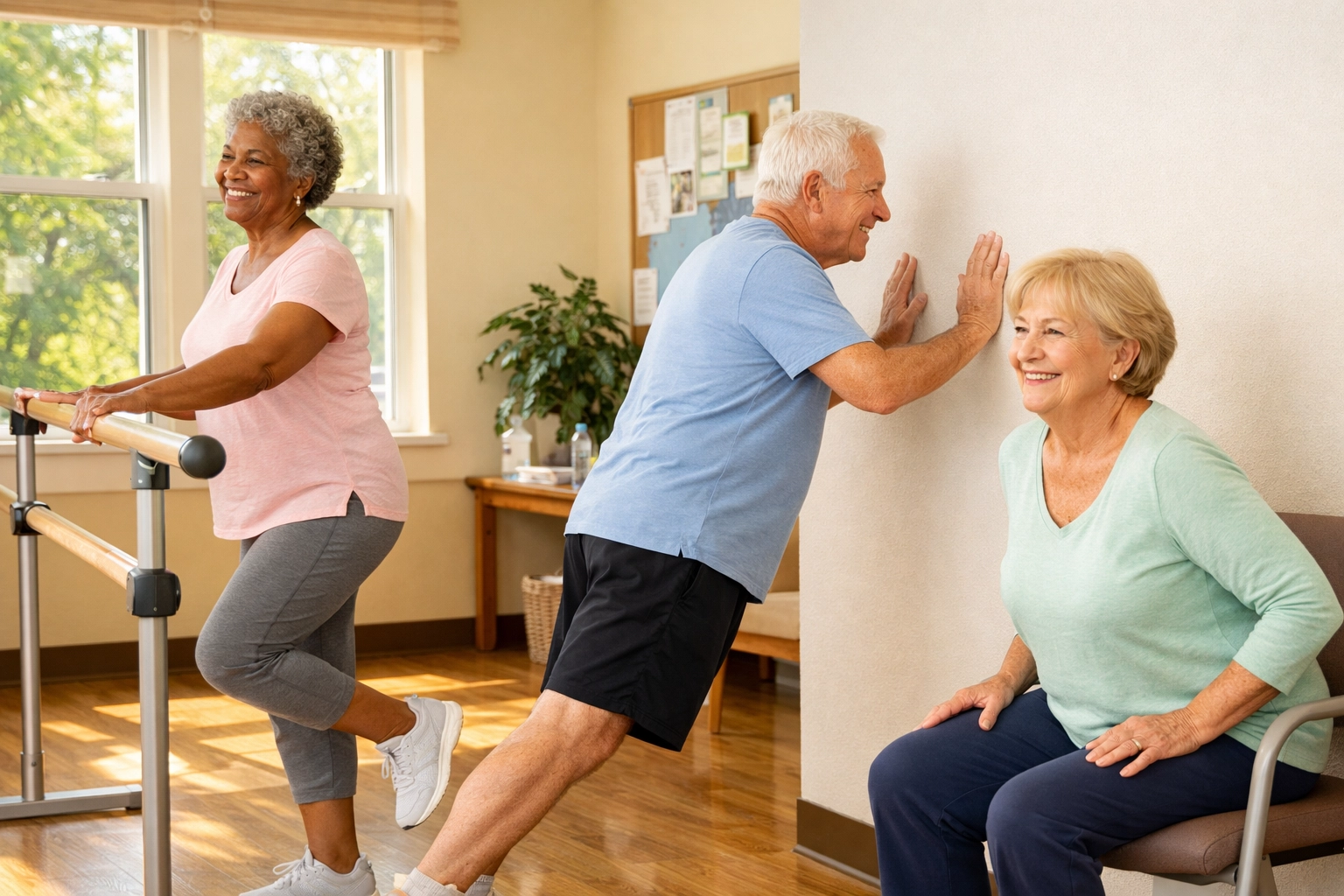
- Sit-to-stand from a chair (practice standing up without using your hands)
- Step-ups on a low step
- Heel raises while holding a counter for balance
Upper body and core:
- Modified push-ups against a wall or counter
- Gentle arm exercises with light weights or resistance bands
- Seated torso rotations
Balance exercises:
- Standing on one foot while holding support
- Heel-to-toe walking
- Tai chi or similar gentle movement practices
Working with a physical therapist can help you develop an exercise program tailored to your current abilities and goals. Many insurance plans cover physical therapy for fall prevention and recovery training.
Practice Makes Prepared
Reading about fall recovery is helpful, but actually practicing the technique is what builds the muscle memory and confidence you need in a real emergency.
Consider practicing the get-up sequence on a carpeted floor or exercise mat once a week. Have someone nearby the first few times, and keep your phone close. Make it a regular part of your routine, like any other exercise.
Many senior centers and physical therapy clinics offer fall recovery workshops where you can learn and practice these techniques under professional supervision. These sessions provide a safe environment to build your skills and ask questions.
The goal isn't to fall more often: it's to remove the fear and helplessness that can follow a fall. When you know exactly what to do, a fall becomes a manageable event rather than a catastrophe.

Creating a Safer Environment
While you're building your fall recovery skills, take time to make getting help easier if you need it:
- Keep a charged phone within reach throughout your home
- Consider a medical alert system if you live alone
- Remove tripping hazards and improve lighting
- Install grab bars and other supports in key areas
- Tell family or neighbors to check in regularly
Falls don't have to mean the end of independence. With preparation, practice, and the right technique, you can handle this common challenge with confidence. The five-step method gives you a clear path from the floor back to your feet, and regular practice ensures you'll remember it when it matters most.
Every senior should know how to get up after a fall. Share this information with family members, practice the technique regularly, and remember that asking for help when you need it is always the wisest choice.

