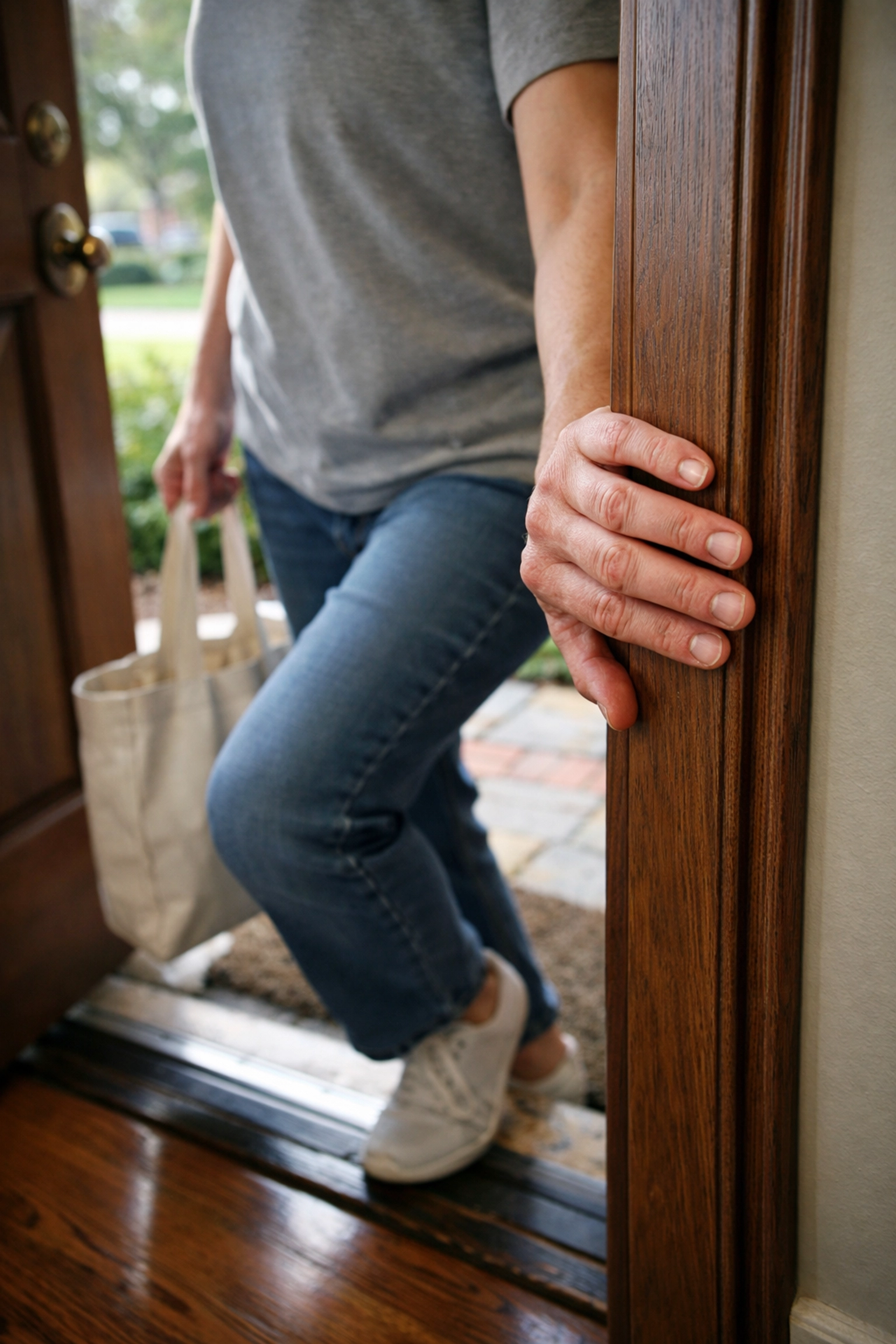
The front entryway of a home is more than just a transition point between the indoors and the outside world. It is the site of many daily "micro-transitions." This is where we juggle grocery bags, fumble for keys, greet the mail carrier, and navigate changes in lighting and surface texture. Because so much happens in this small space, it is also one of the most common areas for accidental trips and stumbles.
When we talk about fall prevention, it often feels like a massive, weekend-long renovation project involving contractors and power tools. While some modifications do require that level of effort, there is a lot you can do in just five minutes to significantly lower the risk of a fall. Creating a fall-safe environment is often about the small, immediate adjustments that remove hidden hazards.
In this guide, we will walk through the quick fixes you can do right now, followed by a deeper look at why these changes matter for long-term safety and independence.
The 5-Minute Safety Sweep
If you have five minutes before a guest arrives or before you head out for the day, these are the high-priority actions that make the biggest difference.
1. Clear the "Landing Zone"
We often treat the front porch or the interior foyer as a staging area. Shoes get kicked off near the door, packages are dropped just inside the threshold, and umbrellas are leaned against the wall. In five minutes, clear every item off the floor within a three-foot radius of the door: both inside and outside. A clear path is the most effective way to prevent a trip.
2. Flip the Switch (and Check the Bulbs)
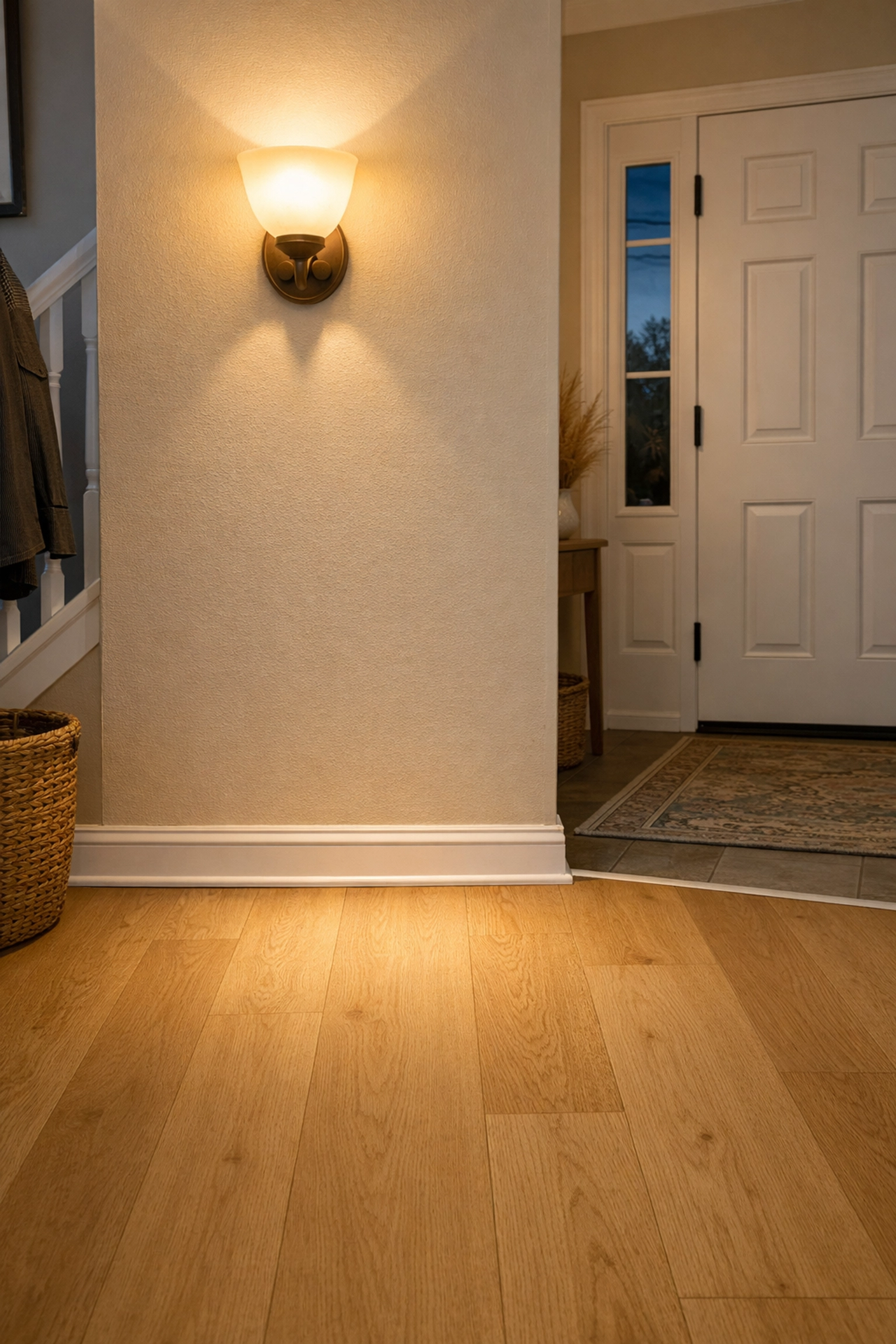
Visibility is your first line of defense. If it’s getting dark, turn on the porch light now. If you notice a flicker or a dim bulb, take a moment to ensure your lighting is functional. Being able to see where the step ends and the walkway begins is essential, especially as our eyes take longer to adjust to light changes as we age.
3. Evict the Throw Rugs
Loose mats and decorative "Welcome" rugs are notorious for curling at the corners. In a quick sweep, check if your entryway rug moves when you nudge it with your toe. If it slides or if the edges are flipped up, pick it up and move it out of the walkway entirely. It is safer to have a bare floor than a rug that doesn't stay put.
4. Scan for Nature’s Hazards
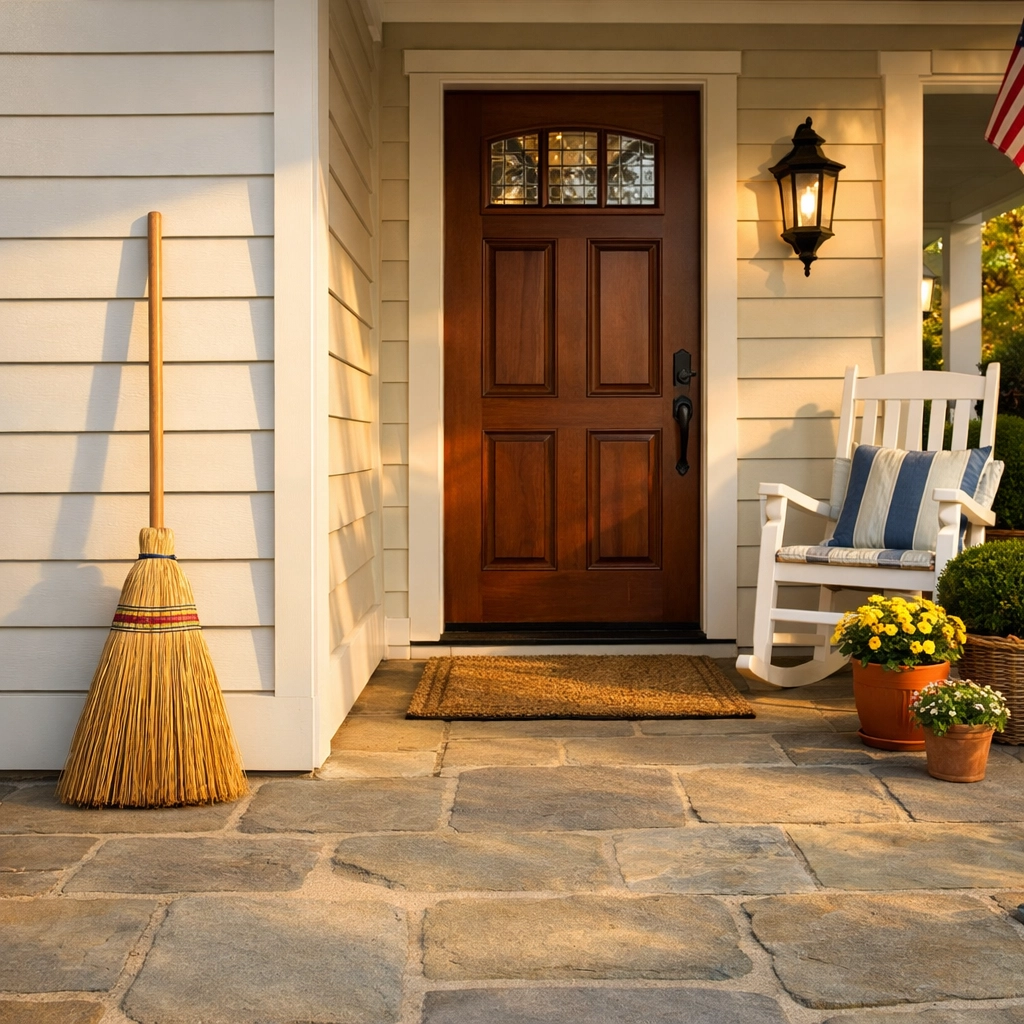
Depending on the season, your entryway might have collected wet leaves, pine needles, or even a light dusting of sand or gravel. Use a broom to quickly sweep the immediate area leading up to the door. These small particles act like ball bearings under a shoe, turning a stable surface into a slippery one.
Understanding the "Transition Zone"
To truly create a safe entryway, it helps to understand why this area is so unique. When we move from the outside to the inside, our bodies are performing several complex tasks simultaneously.
Dark and Light Adaptation
When you walk from a bright, sunny afternoon into a relatively dim hallway, your pupils need time to dilate. During those few seconds of adjustment, your depth perception is significantly compromised. This is why many falls occur right at the threshold: you literally cannot see the slight change in floor height because your eyes haven't caught up to the environment.
The Dynamics of Thresholds
Most front doors have a "threshold": the strip of wood or metal at the bottom of the door frame. While these are designed to keep out drafts and rain, they often sit a half-inch to an inch higher than the floor. This small height difference is a classic "trip trigger." In the five-minute sweep, identify if your threshold is a different color than the floor. If it isn't, it might blend in, making it hard to see.
The Science of Handrails and Support
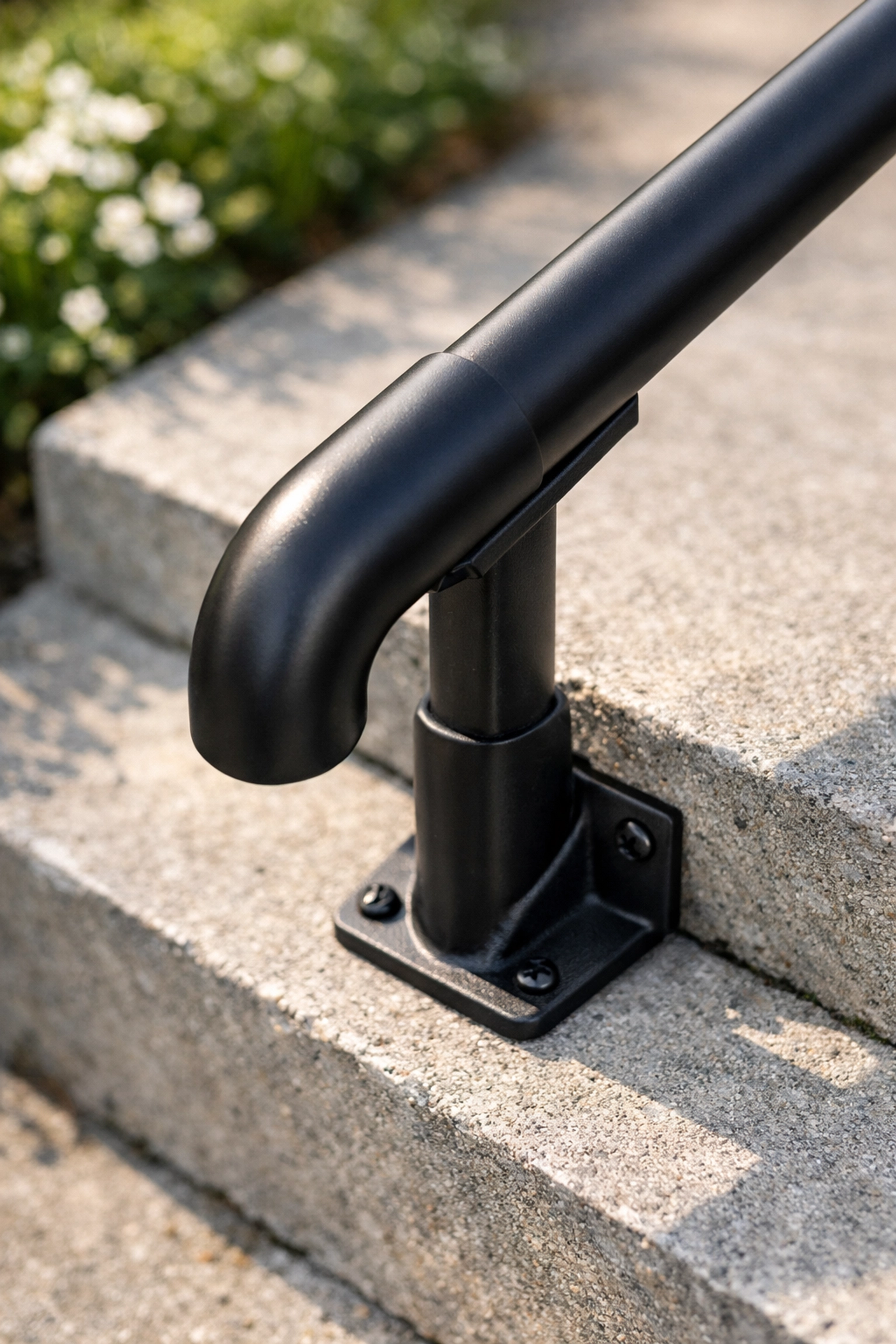
While you might not be able to install a new railing in five minutes, you can certainly assess the ones you have. A handrail is only useful if it is sturdy and reachable.
Stability Check
Give your current railings a firm shake. Do they wiggle? If a railing moves even a fraction of an inch, it may not support your full weight during a stumble. While fixing a loose railing takes more than five minutes, knowing it is loose allows you to be more cautious or prioritize a repair.
Extension and Reach
A common safety gap in entryways is a railing that ends too early. Ideally, a handrail should extend slightly past the top and bottom steps. This allows you to maintain a grip until your feet are firmly on level ground. If your railing stops short, you are forced to let go while you are still technically in a transition phase, which is when many people lose their balance.
Lighting: Beyond the Simple Switch
If you want to move beyond the 5-minute fix into more permanent safety, lighting is the best place to start.
Motion Sensors
We often forget to turn on the lights until we are already in the dark. Motion-activated lighting for the front porch and the interior entryway removes the need to hunt for a switch. These are especially helpful when you are coming home with your hands full.
Contrast and Glare
It isn't just about "more" light; it’s about the "right" light. High-gloss floors in an entryway can create glare from overhead lights, which can be disorienting. Using matte-finish rugs (that are secured down) or non-reflective floor treatments can help. Additionally, using a light source that illuminates the floor rather than shining directly into your eyes helps maintain better spatial awareness.
Managing the "Package Problem"
In the age of home delivery, the front door has become a high-traffic cargo zone. Packages left on the top step are a major fall risk.
Designated Drop Zones
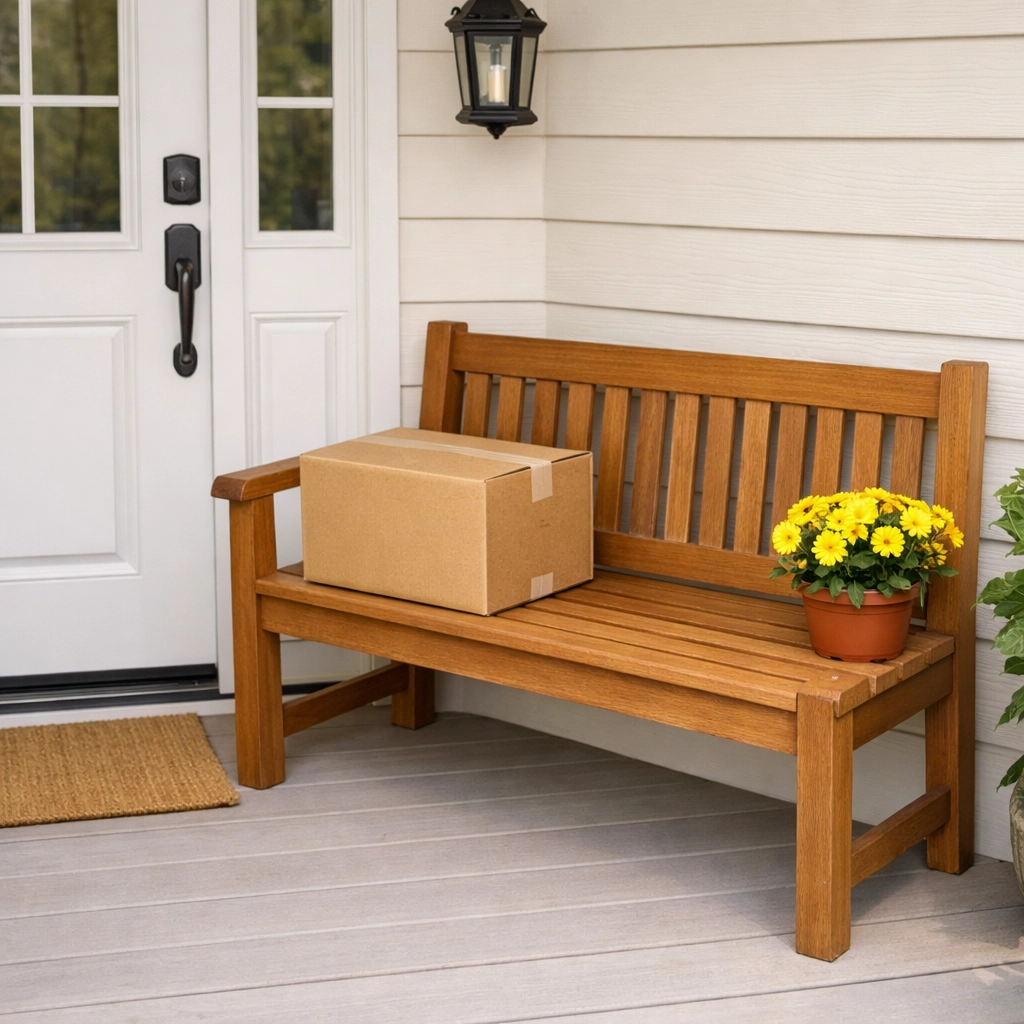
If possible, place a small table or a bench to the side of the door. Use a sign or a note in your delivery instructions asking couriers to place items there rather than on the floor. This keeps the walking path clear and also reduces the need for you to bend all the way down to the ground to pick up a heavy box: a movement that can easily cause a loss of balance.
Handling the Mail
The simple act of leaning out the door to grab the mail can shift your center of gravity. If your mailbox is attached to the house, ensure you have a firm place to hold onto with one hand while reaching with the other.
Seasonal Considerations
A fall-safe entryway in July looks different than one in January.
- Spring and Fall: Wet leaves are incredibly slippery. Keeping a broom near the door for a daily 30-second sweep can prevent a disaster.
- Winter: Ice and snow are obvious risks. Keeping a small container of salt or sand inside the door allows you to treat the area before you even step outside.
- Summer: High heat can lead to dizziness. If you've been outside in the sun, entering a cool house can sometimes cause a brief "head rush." Having a chair or bench just inside the door allows you to sit for a moment as your body regulates its temperature.
The Role of Footwear at the Door
Many people have a "no shoes in the house" rule. While this keeps the floors clean, it can introduce a safety risk if people are walking around in socks on smooth wood or tile entryways.
Consider keeping a pair of supportive "indoor-only" shoes or slippers with rubber soles right by the door. This ensures that the moment you take off your outdoor boots, you are stepping into something that provides traction. Avoid walking in stocking feet, as the transition from a textured outdoor surface to a smooth indoor surface is a prime setup for a slip.
Behavioral Changes for a Safer Entry
Sometimes the best safety "equipment" is a change in habit.
- The "One Hand Free" Rule: Try to never carry so much that you can't keep one hand free to use a railing or a door frame for support. This might mean making two trips from the car, but those extra steps are much safer than one overloaded trip.
- Pause at the Threshold: Make it a habit to stop for three seconds once you cross the doorway. This gives your eyes time to adjust to the light change and gives your brain a moment to "reset" from the task of walking to the task of being home.
- Keep Your Keys Ready: Fumbling in a bag or pocket for keys while standing on a porch increases the time you spend in a vulnerable, distracted state. Have your keys out and ready before you even reach the steps.
A Checklist for Caregivers
If you are looking after a loved one, you can perform a quick audit of their entryway using these questions:
- Is there a clear, 36-inch wide path to the door?
- Can the door be opened easily without the person having to lean backward or lose their balance?
- Are the house numbers clearly visible? (This is vital for emergency services should a fall occur).
- Is there a sturdy surface to set down bags while unlocking the door?
- Is the doorbell or intercom easy to reach without stretching?
Final Thoughts
Making a home safer doesn't always require a major investment or a team of experts. By spending five minutes today to clear clutter, check your lights, and assess your rugs, you are taking a proactive step in maintaining independence.
The entryway is the gateway to the world. It should be a place that feels welcoming and secure, not a gauntlet of obstacles. Start with the small things: the sweep of a broom, the click of a light switch, the removal of a loose mat. These tiny actions are the foundation of a fall-prevention strategy that keeps you moving confidently every time you walk through your front door.