
Choosing a mobility aid is one of the most significant steps a senior or a caregiver can take toward maintaining independence. However, the process can feel overwhelming. Walkers, rollators, canes, and transport chairs all serve different purposes, and picking the wrong one isn't just a matter of inconvenience, it can actually increase the risk of a fall.
The goal isn't just to "get around." The goal is to move with confidence, reduce fatigue, and ensure that your body is supported in a way that matches your specific physical needs. In this guide, we will break down the different types of mobility aids, how they compare, and how to determine which one is the right fit for your lifestyle.
Understanding Your Needs: The Three Pillars of Mobility
Before looking at specific products, it is helpful to assess where the primary challenge lies. Mobility experts generally look at three main pillars:
- Balance: Do you feel steady on your feet, or do you find yourself reaching for furniture as you walk?
- Weight-Bearing Capacity: Does one leg or hip struggle to support your weight due to pain, injury, or surgery?
- Endurance: Can you walk steadily but find yourself needing to sit down frequently due to shortness of breath or fatigue?
Identifying which pillar is your weakest will point you toward the correct category of aid. For example, someone with balance issues might only need a cane, whereas someone with low endurance might require a rollator with a seat.

Canes: For Mild Balance and Support
Canes are the most common mobility aid because they are lightweight, portable, and relatively inexpensive. They are designed to take about 10% to 20% of a person’s weight off their lower body.
Standard Straight Canes
These are the classic canes with a single tip. They are best for individuals who have very slight balance issues or need a little extra confidence while walking on level surfaces. They are not intended for people who need to lean heavily on the device for support.
Offset Canes
An offset cane has a handle shaped like a question mark. This design distributes the user’s weight directly over the shaft of the cane. This is often more comfortable for people with wrist pain or those who need to put slightly more pressure on the cane than a standard straight model allows.
Quad Canes
Quad canes have a rectangular base with four small feet. This provides a much wider base of support and allows the cane to stand up on its own. These are excellent for individuals transitioning from a walker to a cane or for those who have significant balance issues on one side of the body, such as after a stroke.
Walkers: For Maximum Stability
When balance is significantly compromised or when a person cannot put full weight on one or both legs, a walker is usually the safest option. Walkers provide a stable frame that surrounds the user.
Standard Walkers (No Wheels)
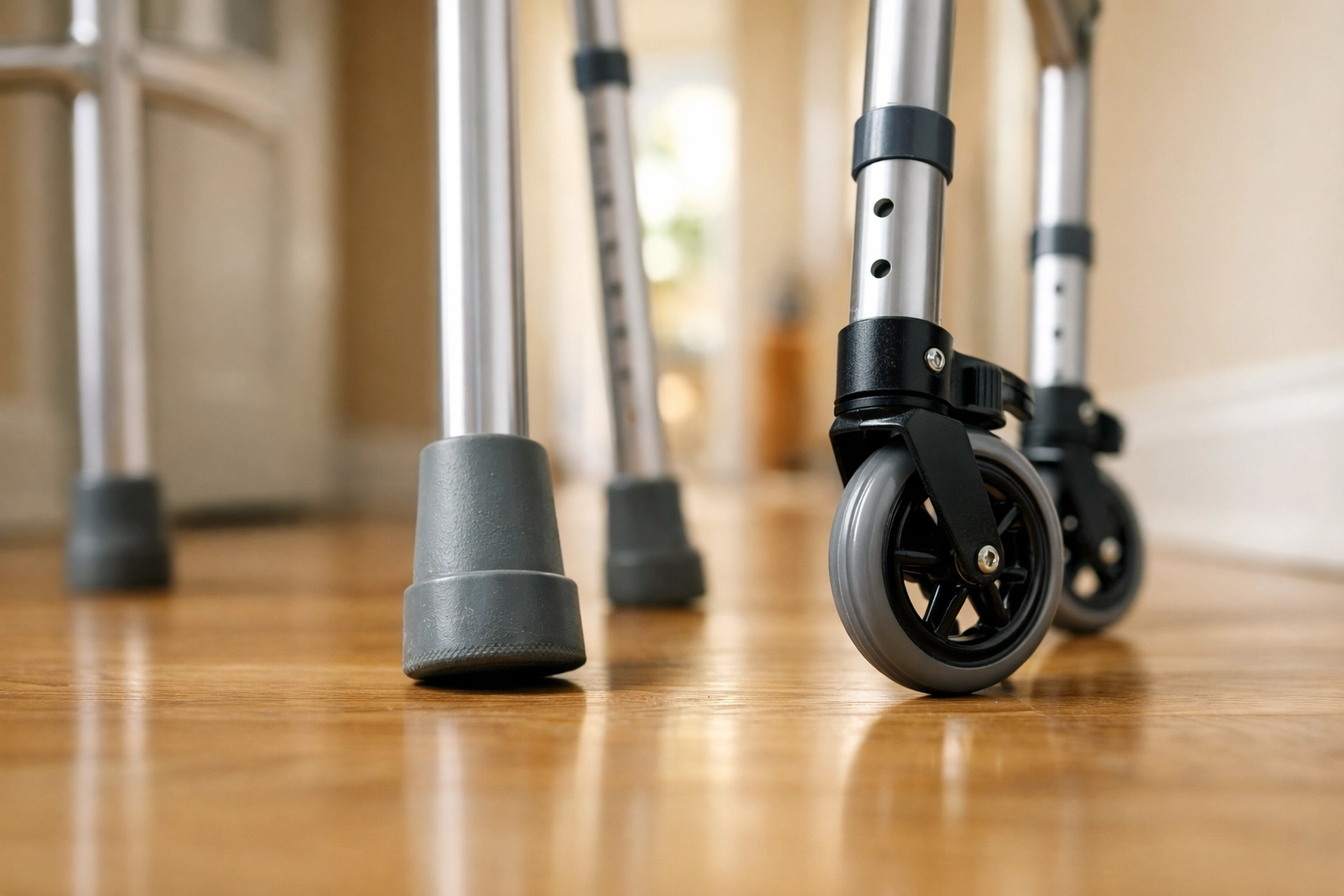
A standard walker has four rubber-tipped legs. To move, the user must lift the walker, place it forward, and then step into it. Because they do not have wheels, they are incredibly stable and will not "roll away" from the user. However, they require a fair amount of upper body strength and can lead to a choppy walking pattern. These are often used in early-stage recovery after hip or knee surgery.
Two-Wheeled Walkers
These have wheels on the two front legs and glides (or tennis balls) on the back legs. They allow for a more natural walking gait because the user can slide the walker forward without lifting it completely. They offer a middle ground between the stability of a standard walker and the maneuverability of a rollator.
Rollators: For Endurance and Outdoor Use
A rollator is essentially a walker with wheels on all four legs. It also typically includes a seat and a basket.
Why Choose a Rollator?
Rollators are ideal for people who can walk but tire easily. Because they have four wheels, they require very little physical effort to move forward. The built-in seat is a game-changer for seniors who want to visit museums, go to the grocery store, or walk through a park, knowing they can stop and rest whenever necessary.
Safety Considerations
Because all four legs have wheels, rollators can move quickly. They are equipped with hand brakes, similar to a bicycle. It is crucial that the user has the hand strength and cognitive awareness to use the brakes effectively, especially when sitting down or standing up. Rollators are generally not recommended for people with severe balance issues who might lean too hard on the device and cause it to roll away.
Specialty Aids: Transfer Poles and Assist Rails
Sometimes, mobility challenges aren't about walking across a room but about the transition from sitting to standing. This is where stationary mobility aids come into play.
Transfer Poles
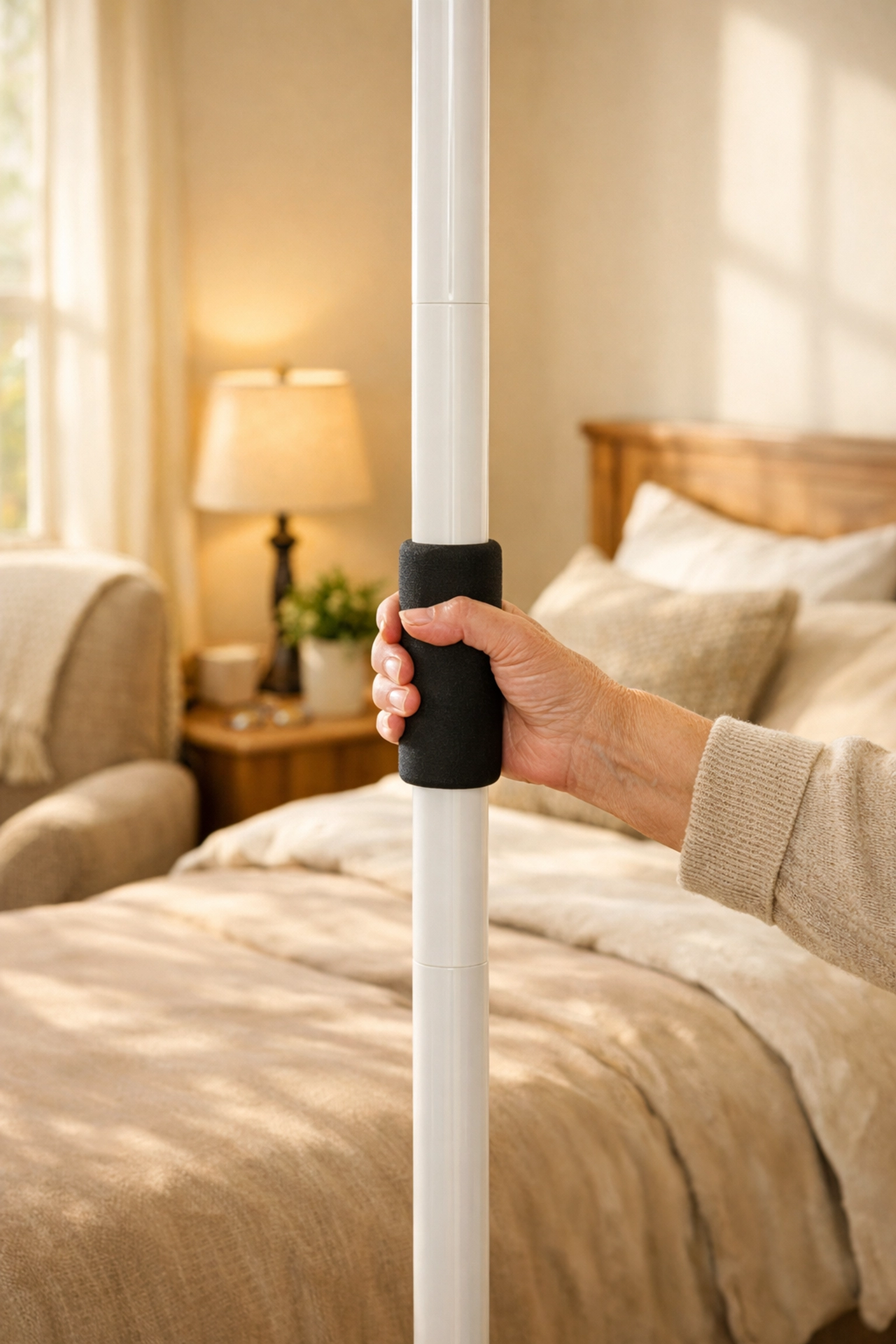
A transfer pole is a floor-to-ceiling tension bar that can be placed anywhere in the home, usually next to a bed, a sofa, or in the bathroom. It provides a vertical handhold that allows a person to use their upper body strength to pull themselves up. These are excellent for small spaces where a walker might be too bulky to maneuver.
Bed and Assist Rails
These rails slide under the mattress or attach to a couch frame. They provide a sturdy handle to help a person roll over, sit up, and eventually stand. For many seniors, having a "fixed" point of support is more reassuring than a mobile aid during the initial move from a seated to a standing position.
How to Choose: A Comparison Table
| Feature | Cane | Standard Walker | Rollator |
|---|---|---|---|
| Primary Goal | Mild Balance | Stability/Weight-Bearing | Endurance/Maneuverability |
| Support Level | Low | High | Medium |
| Maneuverability | Excellent | Fair | Good |
| Portability | High | Medium | Low (Heavier) |
| Best Surface | Indoor/Level | Indoor | Indoor/Outdoor |
| Includes Seat? | No | No | Yes |
The Importance of Proper Fitting
No matter which mobility aid you choose, it will not function correctly: and could even cause pain: if it isn't fitted to your height.
To measure for the correct height:
- Wear your regular walking shoes.
- Stand up straight (if possible) and let your arms hang naturally at your sides.
- The handle or grip of the mobility aid should be at the level of your wrist crease.
If the aid is too high, it will cause your shoulders to hunch, leading to neck and back pain. If it is too low, you will lean forward, which shifts your center of gravity and actually increases your risk of falling forward.

Environmental Considerations
Your home environment plays a huge role in which aid will work best.
- Doorway Width: Standard walkers and rollators can be wide. Measure your narrowest doorways (often the bathroom) before purchasing.
- Flooring: Standard walkers with rubber tips can "catch" on thick carpets or area rugs. Rollators move more smoothly over different textures but can be slippery on hardwood if the brakes aren't used.
- Stairs: If you have a multi-story home and cannot use a lift, you may need a separate mobility aid for each floor, as carrying a walker up and down stairs is dangerous.
When to Consult a Professional
While it is easy to buy a cane or walker at a local drugstore, it is always best to consult a Physical Therapist (PT) or Occupational Therapist (OT) before making a final decision.
A therapist can perform a gait analysis to see exactly how you move. They might notice that you lean to the left or that your stride is uneven, which might mean a specific type of hemi-walker or a weighted rollator would be safer. They can also provide training on how to use the device: such as how to safely navigate curbs or how to sit down without the walker rolling away.
Maintenance and Upkeep
Mobility aids are mechanical tools that require regular check-ups.
- Tips: Check the rubber tips on canes and walkers for wear and tear. If the tread is gone, they can become slippery.
- Brakes: Test rollator brakes weekly. If they feel "mushy," they may need adjustment.
- Tightness: Check for any loose bolts or "wobbling" in the frame, especially on folding models.
Final Thoughts
Choosing a mobility aid is about reclaiming your world. It is a tool that allows you to stay active, engage with your community, and move safely within your home. By matching the device to your specific needs: whether that is the simplicity of a cane, the rock-solid stability of a walker, or the versatility of a rollator: you are taking a proactive step toward a safer, more independent life.
Remember that your needs may change over time. It is common to use a rollator for long outings but a cane for moving around a small kitchen. Listen to your body, consult with professionals, and prioritize your safety above all else. Moving with help is always better than not moving at all.

