
Maintaining independence is one of the most important goals for seniors as they age. Whether it is continuing to garden, walking to the mailbox, or simply moving safely from the bedroom to the kitchen, mobility is the foundation of a high quality of life. However, as balance, strength, or vision changes, staying mobile can become a challenge.
Choosing a mobility aid is a significant decision. It isn't just about picking a piece of equipment; it is about finding a tool that matches your physical needs, your home environment, and your lifestyle. The right aid can provide a renewed sense of confidence, while the wrong one can actually increase the risk of a fall or cause unnecessary strain on the body.
In this guide, we will break down the different types of mobility aids available, how they compare, and how to determine which one might be the best fit for you or your loved one.
The Different Types of Mobility Aids
Mobility aids are generally categorized by the level of support they provide. They range from simple devices that offer a bit of extra balance to sophisticated motorized equipment for those who cannot walk long distances.
1. Canes: For Mild Balance Support
Canes are the most common mobility aid and are typically the first step for seniors who feel a little "unsteady" but still have good overall strength.
- Single-Point Canes: These have a single tip at the bottom. They are best for seniors who need minimal weight-bearing support and primarily require help with balance.
- Quad Canes: These feature a four-point base that stays flat on the floor. They provide more stability than a single-point cane and can stand up on their own, which is helpful for those who may have trouble leaning over to pick up a dropped cane.
- Hemi Walkers: Though technically a hybrid, these function like a very wide quad cane. They are often used by individuals who have significant weakness on one side of the body, such as after a stroke.
When to choose a cane: If you find yourself "wall walking" (touching furniture or walls for balance) or if one leg is slightly weaker than the other, a cane may be appropriate.
2. Walkers: For Stability and Weight-Bearing
Walkers provide a much wider base of support than canes. They are ideal for individuals who have significant balance issues or who cannot put full weight on one or both legs.
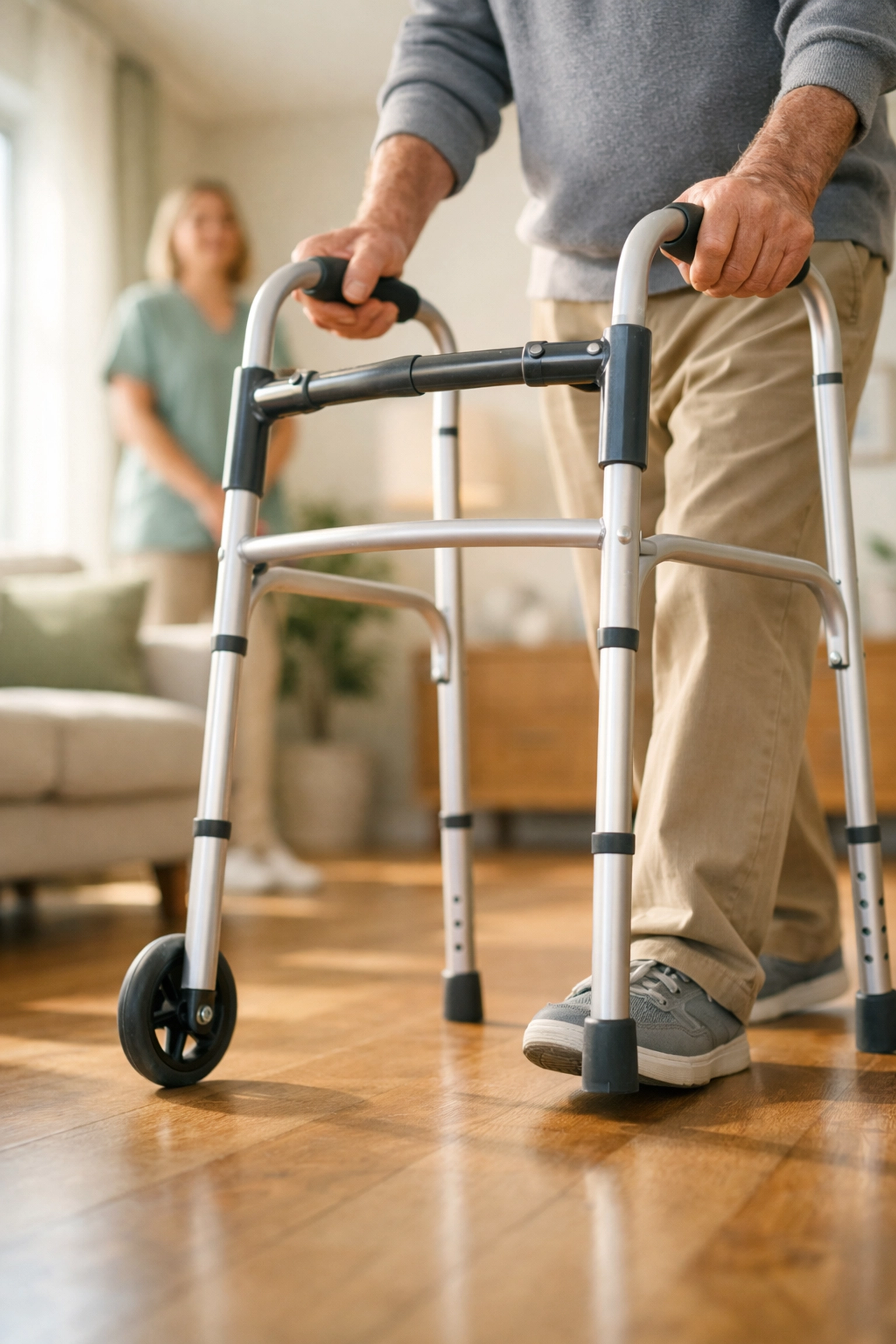
- Standard (Front-Wheeled) Walkers: These usually have two wheels in the front and two rubber tips in the back. You push the walker forward and then step into it. Because the back legs stay on the ground, they offer a high level of stability and prevent the walker from "rolling away" from the user.
- Folding Walkers: Most standard walkers fold flat, making them easy to transport in a car or store in a closet.
When to choose a walker: If you have severe arthritis in the hips or knees, or if you feel like you might collapse if you don't have something sturdy to lean on, a standard walker is often the safest choice.
3. Rollators: For Endurance and Outdoor Use
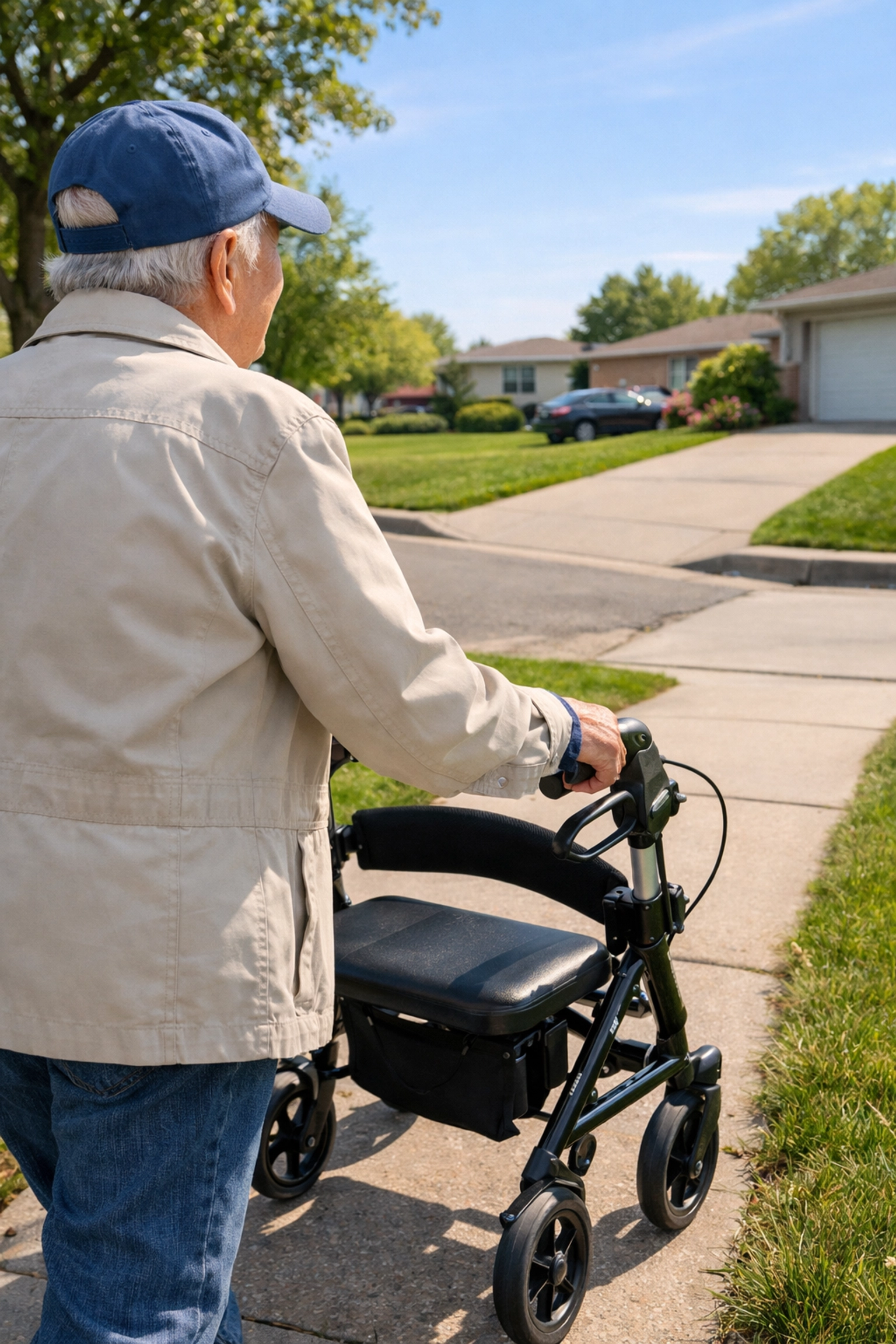
Rollators are often confused with walkers, but they serve a different purpose. A rollator has four wheels, hand brakes, and: most importantly: a built-in seat.
- Four-Wheeled Rollators: These are designed for people who can walk but tire easily. The wheels allow for a more natural, fluid gait because you don't have to lift the device. The seat provides a built-in place to rest during a walk to the park or a trip to the grocery store.
- Three-Wheeled Rollators: These are more maneuverable in tight spaces but do not usually come with a seat. They are less stable than four-wheeled versions and are not recommended for those with significant balance problems.
When to choose a rollator: If your primary issue is fatigue or shortness of breath (common with COPD or heart conditions) rather than a high risk of falling, a rollator offers the perfect balance of mobility and rest.
4. Wheelchairs and Transport Chairs
When walking becomes too difficult or unsafe, wheelchairs provide a way to stay mobile.
- Manual Wheelchairs: These have large rear wheels that allow the user to self-propel. They require significant upper-body strength.
- Transport Chairs: These have four small wheels and are designed to be pushed by a caregiver. They are lightweight and fold easily, making them great for doctor appointments.
- Power Wheelchairs: These are battery-operated and controlled via a joystick. They are ideal for seniors with limited upper-body strength who want to remain independent in their movement.
5. Mobility Scooters
Scooters are generally used for outdoor travel or long distances in large buildings like malls. They offer a more "lifestyle-oriented" feel than a power wheelchair but require more space to turn and maneuver. They are best for those who have the hand strength and dexterity to operate the tiller (steering handle).
Comparing Your Options: A Quick Look
To help visualize which aid might be right, consider this comparison:
| Feature | Cane | Walker | Rollator | Scooter/Power Chair |
|---|---|---|---|---|
| Stability | Low | High | Medium | Very High |
| Maneuverability | High | Medium | Medium | Low |
| Weight-Bearing | Minimal | Significant | Minimal | Full Support |
| Portability | Excellent | Good | Fair | Difficult |
| Primary Use | Balance | Safety | Endurance | Long Distance |
Key Factors to Consider When Choosing
Selecting the right aid isn't just about the device itself; it’s about how that device fits into your daily life.
Physical Strength and Balance
The most critical factor is a physical assessment. Does the user have the grip strength to use hand brakes on a rollator? Do they have the upper-body strength to lift a standard walker?
If balance is the only issue, a cane or rollator might suffice. However, if there is "ataxia" (shaky or uncoordinated movements), a rollator might move too quickly, making a standard walker with rubber tips a safer, more "grounded" option.
Home Environment
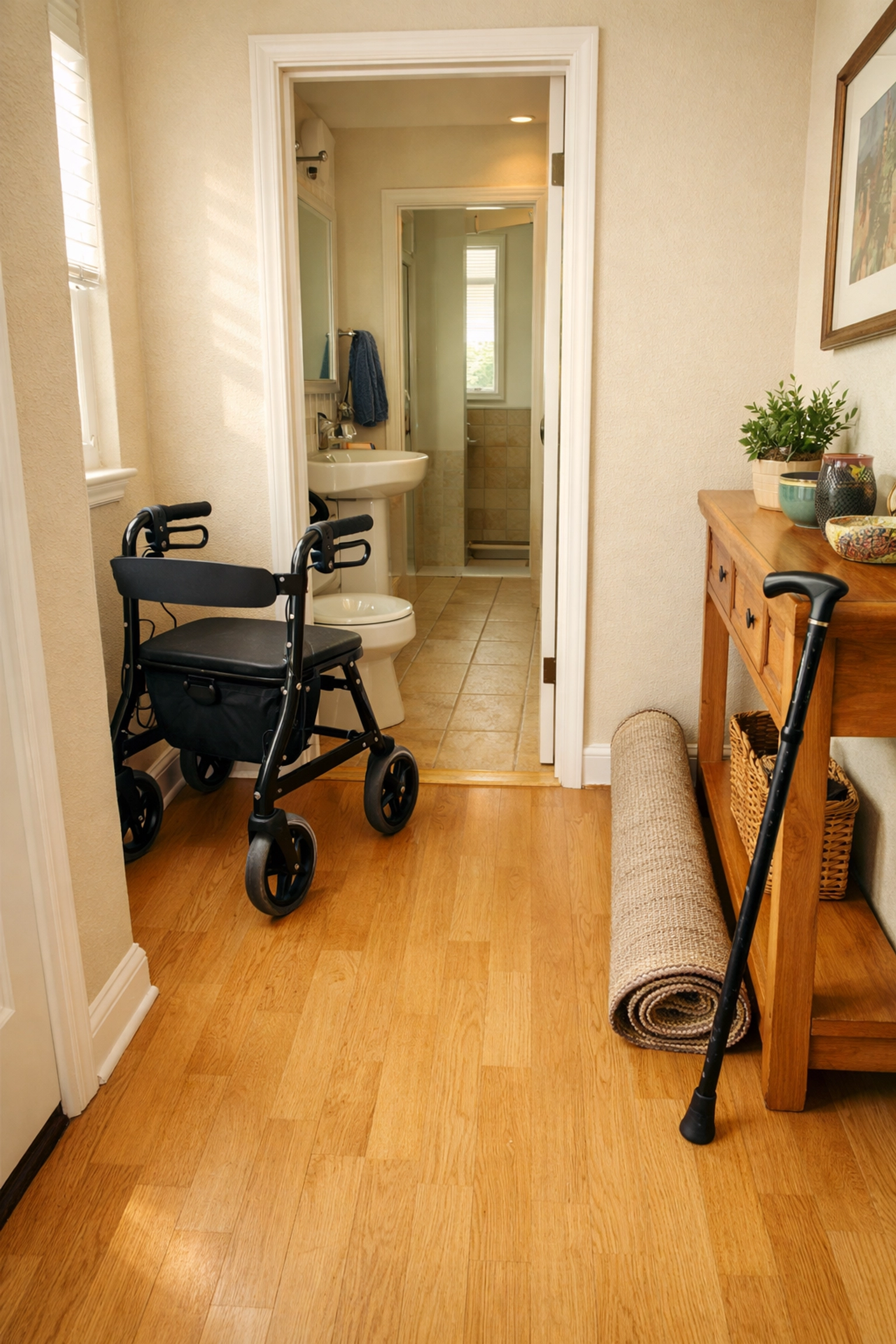
Take a look around your home. Are the hallways narrow? Are there thick carpets or rugs?
- Narrow Spaces: Canes and manual wheelchairs are generally easier to maneuver in tight bathrooms.
- Flooring: Rollators glide easily on hardwood but can be harder to push on thick carpet. Standard walkers with "skis" or "glides" on the back legs are often better for carpeted homes.
- Thresholds: If your home has many small steps or high thresholds between rooms, a heavy power chair might be difficult to navigate without installing ramps.
Cognitive Health
For seniors living with dementia or Alzheimer’s, the "learning curve" of a new mobility aid is a serious consideration. A rollator requires the user to remember to engage the hand brakes before sitting down. If a person has memory challenges, they may forget this step, leading to the rollator rolling away as they try to sit. In these cases, a simpler device like a standard walker is often recommended.
Portability and Travel
If you frequently go to appointments or visit family, how easily the device fits into a vehicle is paramount.
- Can the caregiver lift a 30-pound rollator into the trunk?
- Does the power scooter disassemble easily?
- If you use public transportation, is the device "bus-friendly"?
The Importance of a Proper Fit
Using a mobility aid that is the wrong height can cause a host of secondary problems, including back pain, shoulder strain, and poor posture.
How to Measure for Height
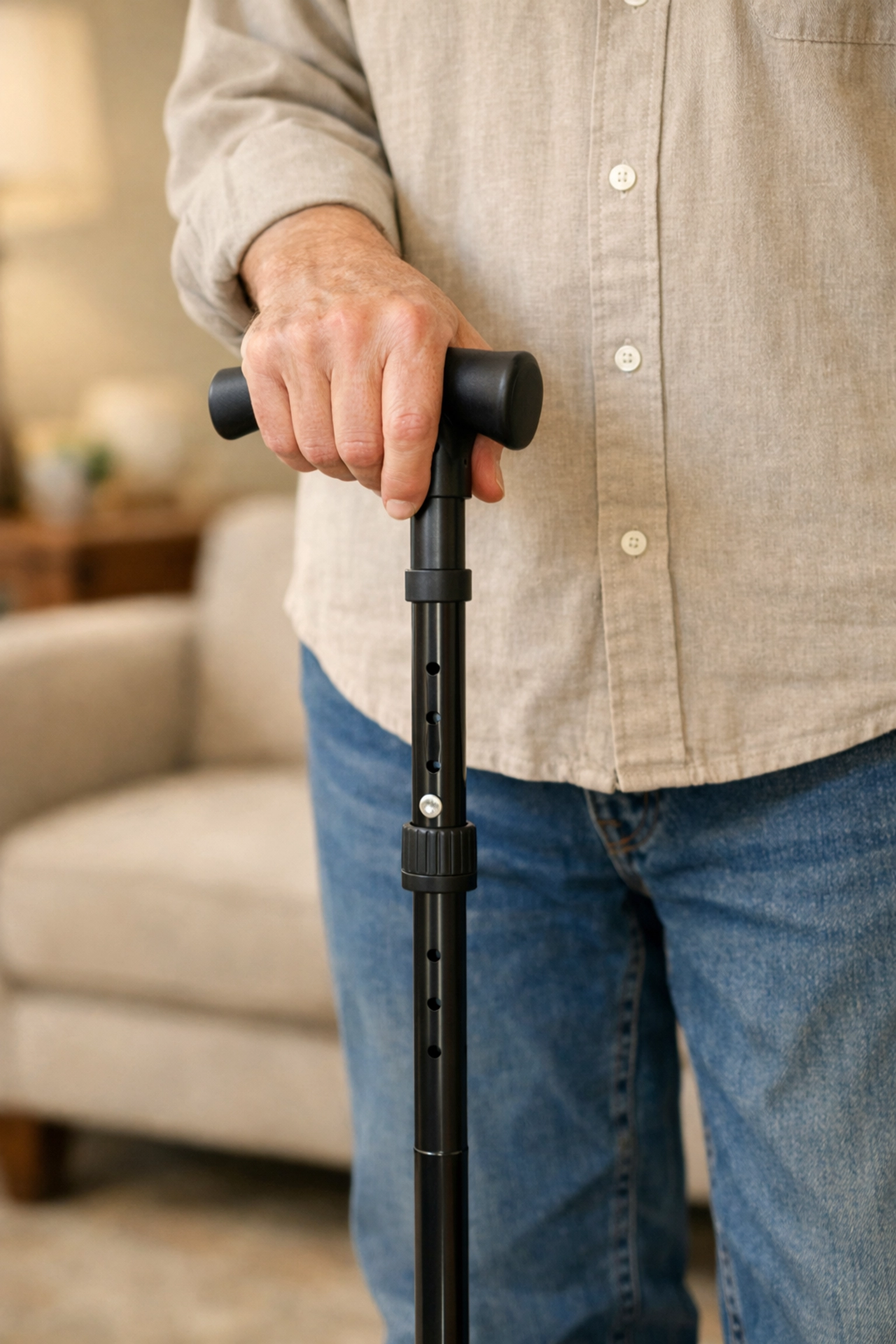
Most canes and walkers are adjustable. To find the correct height:
- Wear your regular walking shoes.
- Stand up as straight as possible.
- Let your arms hang naturally at your sides.
- The handle of the cane or walker should meet the crease of your wrist.
- When you grip the handle, your elbow should have a slight bend (about 20 to 30 degrees).
If the aid is too high, you will shrug your shoulders, leading to neck pain. If it is too low, you will slouch, which throws off your center of gravity and increases fall risk.
Safety Tips for Using Mobility Aids
Once you have chosen the right device, using it correctly is the next step in fall prevention.
- Look Forward, Not Down: It is a natural instinct to look at your feet when using a walker or cane. However, this actually makes you less stable. Keep your head up and look about 10 feet in front of you.
- Clear the Path: Even the best mobility aid can't save you from a trip over a loose rug or a stray electrical cord. Ensure your "walking paths" in the house are at least 32-36 inches wide and free of clutter.
- Check the Tips: The rubber tips on canes and walkers wear out just like tires on a car. Check them once a month. If the tread is gone or the rubber is cracked, replace them immediately to ensure they don't slip on smooth floors.
- Don’t "Over-Reach": Many falls happen when a person tries to reach for a doorknob or a light switch while still holding onto their mobility aid. Always bring your aid as close to your destination as possible before reaching.
When to Seek Professional Advice
While this guide provides a solid foundation, there is no substitute for a professional evaluation. Physical Therapists (PTs) and Occupational Therapists (OTs) are experts in gait and mobility.
A therapist can perform a "Gait Assessment," watching how you move and identifying exactly where your instability lies. They can then recommend a specific device and: most importantly: train you on how to use it. They can teach you how to safely go up and down curbs, how to transition from sitting to standing, and how to navigate around obstacles.
Furthermore, a professional recommendation is often required if you are seeking insurance coverage or Medicare reimbursement for "Durable Medical Equipment" (DME).
Conclusion
Choosing a mobility aid is a proactive step toward maintaining your freedom. It is not a sign of "getting old," but rather a smart strategy for staying active and engaged with the world. By matching the device to your physical needs and your environment, and ensuring it is fitted correctly, you can significantly reduce your risk of falls and move through your day with much greater peace of mind.
Remember, the goal is to keep you moving safely. Whether it’s a simple cane for a walk in the garden or a sturdy walker for navigating the home, the right tool is the one that makes you feel the most confident and secure.

