
Getting in and out of bed might seem like a simple daily activity, but for seniors, it's one of the most common times when falls happen. The height of your bed plays a surprisingly big role in your safety, comfort, and independence as you age.
If your bed is too high, you might struggle to get your feet on the ground or feel unsteady when standing up. Too low, and you'll strain your knees and hips every time you sit down or rise. Finding that sweet spot can make a real difference in how confident you feel moving around your bedroom and how well you sleep at night.
Let's walk through how to figure out the safest bed height for your specific needs.
Why Bed Height Matters for Senior Safety
You probably don't think much about your bed height until it becomes a problem. But here's something worth knowing: about one in four adults over 65 experiences a fall each year, according to the National Council on Aging. Many of these falls happen during routine activities at home, and getting in and out of bed is a particularly vulnerable moment.
When your bed is at the wrong height, several things can go wrong. You might lose your balance as you stand up, especially if you're dealing with stiffness or dizziness in the morning. Your joints take extra stress from awkward movements. You might even avoid getting up during the night when you need to, which creates its own set of problems.

The right bed height does more than prevent falls. It reduces strain on your knees, hips, and back. It makes it easier to maintain your independence without relying on assistance. And it can genuinely improve your sleep quality when you're not dreading the effort of getting up in the morning.
The Standard Recommendation: 20 to 23 Inches
The Americans with Disabilities Act recommends a bed height of 20 to 23 inches, measured from the floor to the top of the mattress. This range works well for many seniors because it strikes a balance between accessibility and comfort.
At this height, most people can sit on the edge of the bed with their feet touching the ground and stand up without excessive strain. It's high enough that you don't have to "drop down" when sitting, which is hard on the knees, and it's low enough that standing doesn't require a big push-up motion.
However, this is a general guideline, not a one-size-fits-all rule. Your ideal height depends on your specific body proportions, mobility level, and physical condition.
How to Calculate Your Personal Ideal Bed Height
Here's a more personalized approach: your optimal bed height is approximately 120% of your lower leg length. To measure this, sit in a chair with your feet flat on the floor and measure from the floor to the middle of your kneecap (mid-patella). Then multiply that number by 1.2.
For example, if your lower leg measures 17 inches, your ideal bed height would be around 20.4 inches (17 × 1.2 = 20.4).
This calculation accounts for your individual proportions rather than assuming an average. Taller people naturally need higher beds, while shorter individuals do better with lower heights. Research shows that for women, the optimal range can be as low as 19.7 inches, while for men it might reach up to 26 inches, depending on height and build.
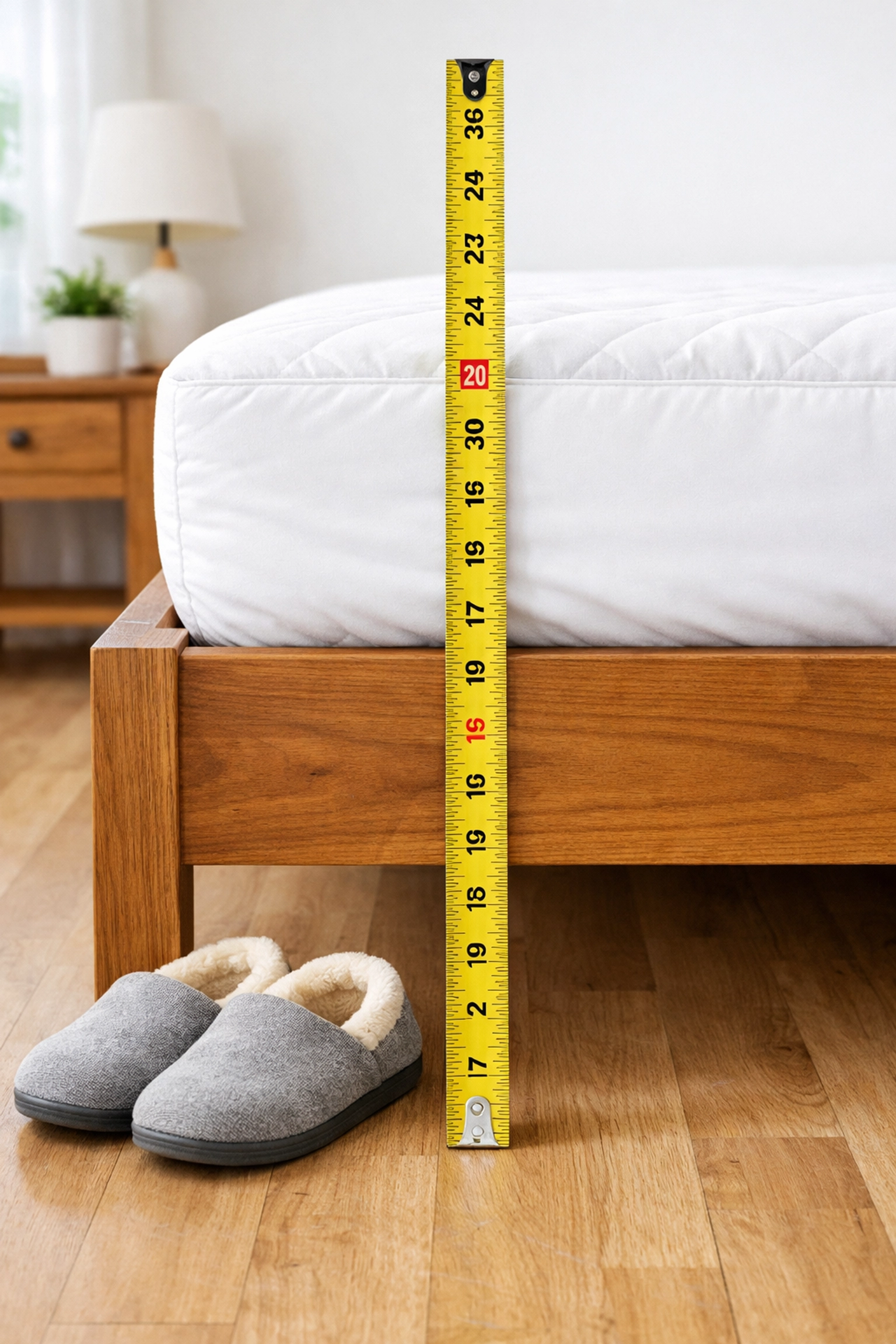
Keep in mind that this measurement includes your mattress. If you're buying a new bed frame, you'll need to account for both the frame height and mattress thickness to hit your target number.
Individual Factors That Affect Your Perfect Bed Height
Beyond leg length, several personal factors should influence your decision:
Your overall height and body proportions. Two people of the same height might have different leg-to-torso ratios, which affects their comfort level at different bed heights.
Your mobility and physical limitations. If you have difficulty standing, limited range of motion, or conditions like arthritis or hip problems, a slightly higher bed (closer to that 23-inch mark) can reduce the range of motion needed to stand up. This makes transitions easier and puts less stress on painful joints.
Your balance and stability. If you feel unsteady on your feet, you want a height where you can easily plant both feet firmly on the ground before attempting to stand. This gives you a stable base and a moment to orient yourself before putting weight on your legs.
Your strength level. Rising from a very low position requires more leg strength. If you're dealing with muscle weakness, a higher bed reduces the physical demand of standing up.
Any assistive devices you use. If you use a walker or cane, you need to factor in how you'll transition from bed to standing with your device. Some people find it easier to sit higher so they can reach their walker more easily.
The Simple Test to Check Your Current Bed Height
You don't need to measure anything to get a sense of whether your current bed height is working for you. Here's a simple test you can do right now:
Sit on the edge of your bed in a normal sitting position. Look at your feet and knees.
Ideal position: Your feet rest flat on the floor without dangling. Your knees are approximately level with your hips, forming close to a 90-degree angle. You feel stable and balanced.
Too high: Your feet don't reach the floor, or only your toes touch. Your legs dangle. You feel like you might tip forward.
Too low: Your knees are significantly higher than your hips. You feel like you're squatting or sitting in a child's chair. Standing up requires a big push.

Try the motion of sitting down and standing up a few times. Does it feel natural and stable? Or do you find yourself struggling, using your hands to push off, or feeling off-balance? Your body will tell you if the height is wrong.
What If Your Bed Is Too High or Too Low?
The good news is that you don't necessarily need to buy a new bed if your current one isn't at the right height.
If your bed is too high: You can lower it by removing casters or wheels from the bed frame, switching to a thinner mattress, using a low-profile box spring or foundation, or placing the mattress directly on a platform bed frame. You can also use a sturdy step stool to help you get in and out safely until you make adjustments.
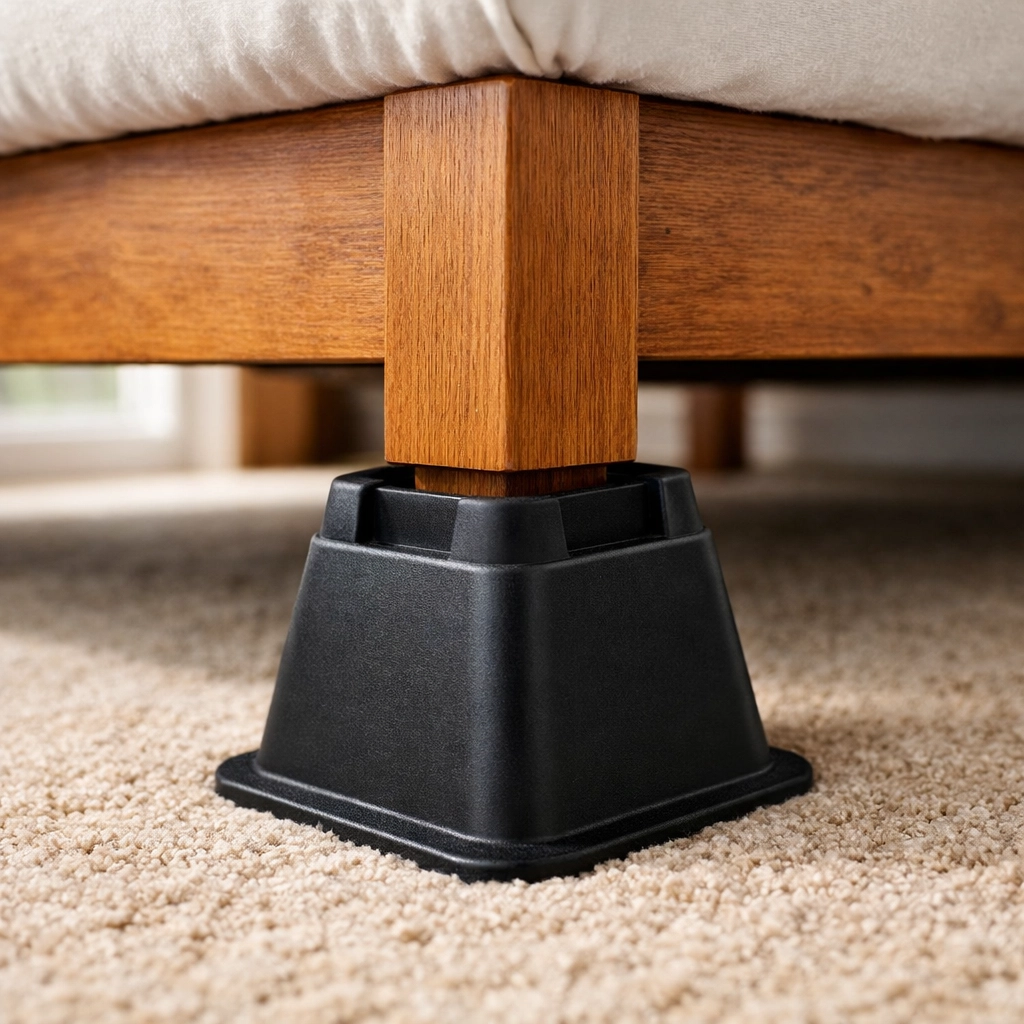
If your bed is too low: You can raise it by adding bed risers under the legs of the frame (make sure they're rated for the weight and are stable), using a thicker mattress, adding a mattress topper to increase height, or replacing your current frame with a taller one. Some bed frames have adjustable legs that let you customize the height.
Another option is an adjustable base, which lets you change the bed height and position electronically. These can be especially helpful if your needs change over time or if you share the bed with a partner who has different height requirements.
Special Considerations for Couples
What happens when you and your partner have significantly different heights or mobility needs? This is a common challenge, and there's no perfect solution that works for everyone.
Some couples find that they need to compromise on a middle-ground height that works reasonably well for both people, even if it's not ideal for either one. Others choose to use different strategies on each side of the bed, like placing a small step stool on one side for the shorter partner.
Adjustable beds offer the most flexibility for couples with different needs. Some models let you adjust each side independently, so each person can find their most comfortable position for sleeping and their safest height for getting in and out.
If one partner has significantly greater mobility challenges, it sometimes makes sense to prioritize that person's needs when choosing bed height, with the other partner adapting as needed.
Making the Change
Once you've determined your ideal bed height, take your time making any adjustments. If you're significantly changing the height of your bed, your body needs time to adapt to the new positioning. You might feel a little awkward at first, even if the new height is technically better for you.
Pay attention to how you feel over the first few weeks. Are you finding it easier to get up in the morning? Do your knees or hips feel better? Are you more confident moving around at night? These are signs that you've made the right choice.
Remember that your needs might change over time. What works perfectly today might need adjustment in a few years if your mobility changes. That's completely normal, and it's worth reassessing your bed height periodically as part of maintaining a safe home environment.
The right bed height is a small detail that makes a big difference in your daily life. When getting in and out of bed feels safe and easy, you maintain your independence, reduce your fall risk, and simply feel more comfortable in your own home. That's worth taking the time to get right.

