
Balance is something most of us take for granted: until it starts to change. For seniors, maintaining good balance isn't just about avoiding falls. It's about staying independent, confident, and active in daily life. The good news? You don't need fancy equipment or a doctor's office to get a basic sense of how your balance is holding up.
Simple home balance tests can help you understand where you stand (literally) and whether it might be time to talk with a healthcare provider. These tests aren't meant to diagnose problems, but they can serve as helpful checkpoints along the way.
Why Balance Matters More as We Age
Balance naturally changes as we get older. Our muscles may not be as strong, our reflexes might slow down a bit, and our inner ear: which helps control balance: can become less sharp. Medications, vision changes, and certain health conditions can also affect how steady we feel on our feet.
Checking your balance regularly helps you stay aware of any changes before they become serious concerns. Think of it like checking your tire pressure or testing your smoke detector. It's a simple step that helps you stay safe.

Before You Begin: Safety First
Before trying any balance test at home, set yourself up for success:
- Choose a safe space. Pick an area with plenty of room and a clear path. Make sure there's nothing you could trip over.
- Have support nearby. Stand near a sturdy counter, table, or wall that you can grab if needed. Better yet, ask a family member or friend to stand nearby.
- Wear proper footwear. Test your balance in the same type of shoes you normally wear around the house: or go barefoot if that's your usual routine.
- Pick a good time. Don't test your balance when you're tired, dizzy, or haven't eaten. You want an accurate picture of your typical balance, not your balance on a rough day.
If you've recently had a fall, surgery, or a new diagnosis that affects your mobility, skip the home tests and talk with your doctor first.
The Timed Up and Go Test
This is one of the most widely used balance tests because it mimics real-life movement. Healthcare providers use it all the time, and you can safely do a version at home.
What you'll need:
- A sturdy chair with armrests
- A clear path of about 10 feet (3 meters)
- A stopwatch or phone timer
- Someone to help time you and stand by for safety
How to do it:
- Sit all the way back in the chair with your back against the backrest.
- When you're ready, start the timer and stand up from the chair.
- Walk at your normal pace to a spot about 10 feet away (you can mark it with a piece of tape).
- Turn around.
- Walk back to the chair at your normal pace.
- Turn around and sit back down.
- Stop the timer once you're fully seated.
What it means:
Most adults can complete this test in under 10 seconds. If it takes you 12 seconds or longer, it might be worth discussing with your doctor. Times over 14 seconds can indicate a higher risk of falling. Remember, this isn't a race: the goal is to move at your comfortable, everyday pace.
The 30-Second Chair Stand Test
This test looks at both your leg strength and your dynamic balance: the kind you use when moving from sitting to standing, which you probably do dozens of times a day.
What you'll need:
- A sturdy chair without armrests (about 17 inches high: a standard dining chair works well)
- A timer
- Someone nearby for safety
How to do it:
- Sit in the middle of the chair with your feet flat on the floor, about shoulder-width apart.
- Cross your arms over your chest.
- Start the timer and stand up fully, then sit back down. That's one repetition.
- Repeat as many times as you can in 30 seconds, moving at a steady, safe pace.
- Count how many full stands you complete.
What it means:
The number of stands you can do varies by age and gender, but here's a general guide:
- Ages 60-64: Men typically complete 14-19 stands; women typically complete 12-17 stands
- Ages 65-69: Men typically complete 12-18 stands; women typically complete 11-16 stands
- Ages 70-74: Men typically complete 12-17 stands; women typically complete 10-15 stands
- Ages 75-79: Men typically complete 11-17 stands; women typically complete 10-15 stands
- Ages 80-84: Men typically complete 10-15 stands; women typically complete 9-14 stands
If you're below these ranges, don't panic. It just means that working on leg strength and balance could be beneficial. Many exercises and activities can help improve these numbers over time.

The Four-Stage Balance Test
This test gradually increases the challenge to your balance system. It's straightforward and safe when done with proper precautions.
What you'll need:
- A sturdy support nearby (counter, table, or wall)
- Someone to spot you
- A timer
The four stages:
Stage 1: Side-by-Side Stance
Stand with your feet together, side by side. Try to hold this position for 10 seconds. This should feel fairly easy for most people.
Stage 2: Semi-Tandem Stance
Place the instep (arch) of one foot so it's touching the big toe of your other foot. Hold for 10 seconds. You can choose whichever foot feels more comfortable in front.
Stage 3: Tandem Stance
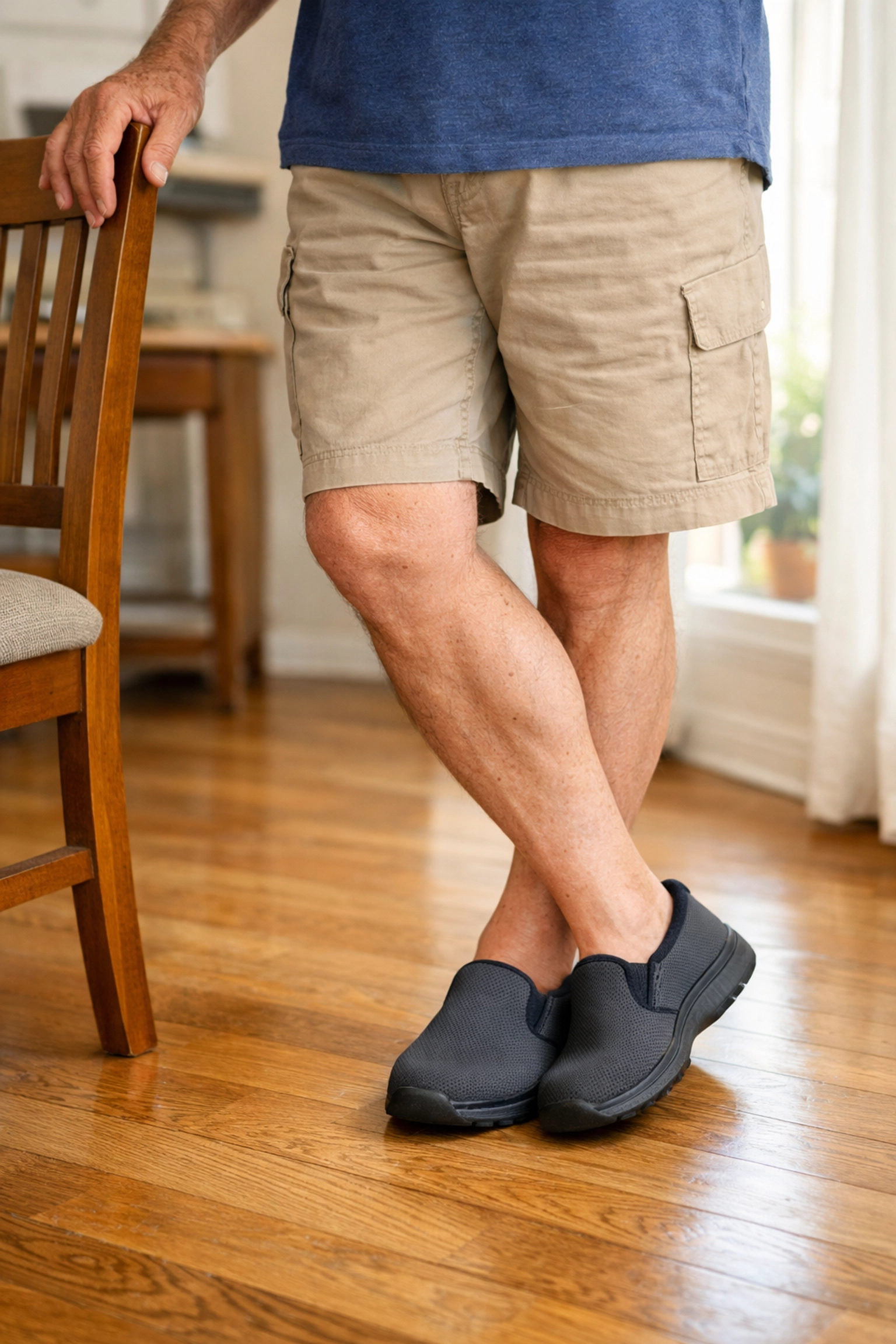
Place one foot directly in front of the other, with the heel of your front foot touching the toes of your back foot, like you're walking on a tightrope. Try to hold this for 10 seconds.
Stage 4: Single-Leg Stance
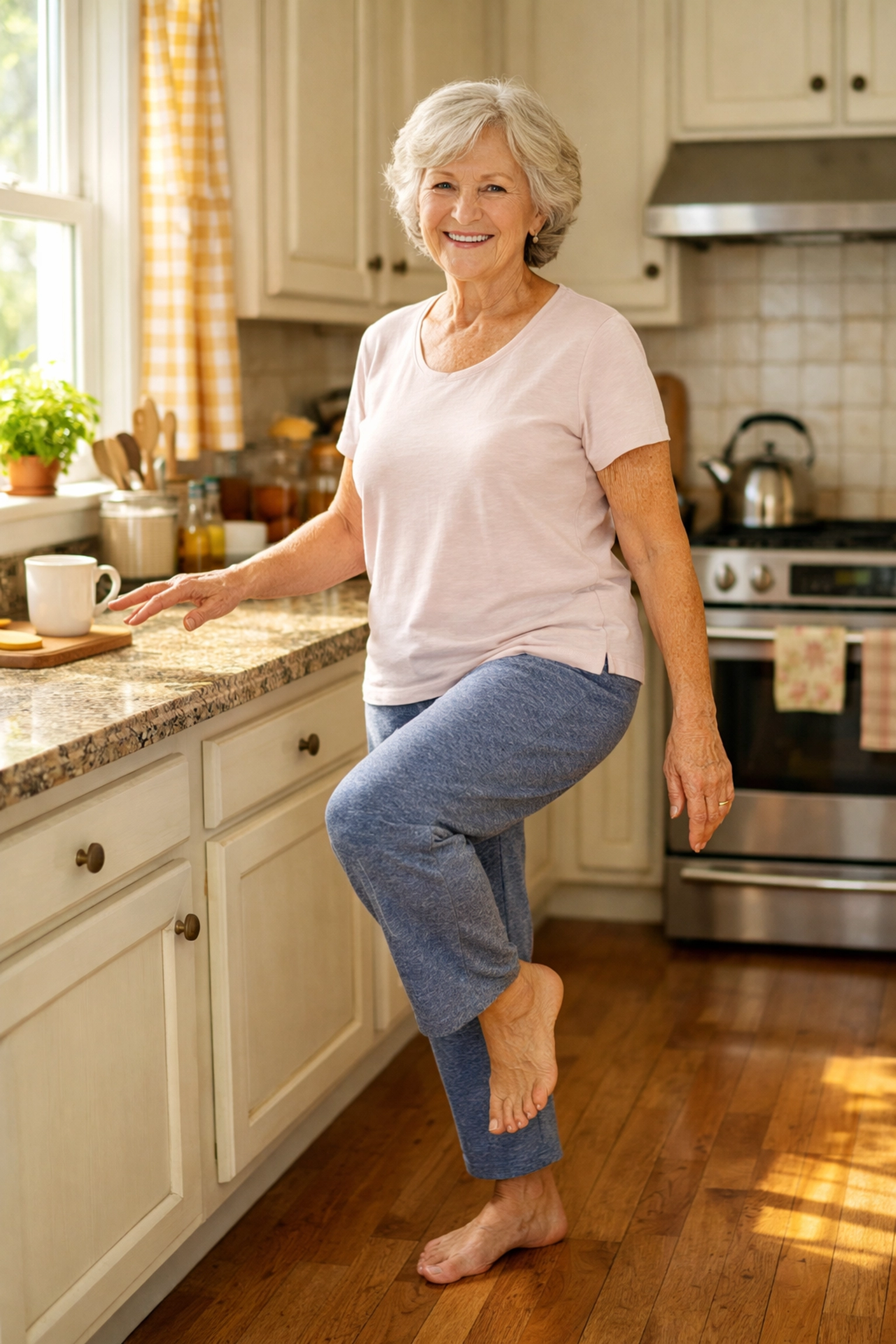
Lift one foot off the ground and balance on the other leg. See how long you can hold this position, up to 10 seconds.
What it means:
If you can hold each position for 10 seconds, your balance is in good shape. If you struggle with the tandem or single-leg stance, it doesn't mean something is wrong: these are challenging positions. But it might mean that balance exercises could help you feel steadier.
Research shows that adults in their 50s typically balance on one leg for about 45 seconds, while those in their 70s average around 26 seconds. Any ability to balance on one leg shows your balance system is working.

Single Leg Stance: A Quick Daily Check
Speaking of standing on one leg, this is one of the simplest balance checks you can do almost anywhere. Many people incorporate it into their daily routine: while brushing their teeth, for example, or waiting for the microwave.
How to do it:
- Stand near a counter or wall for safety.
- Lift one foot a few inches off the ground.
- See how long you can hold the position before you need to put your foot down or grab support.
- Rest, then try the other leg.
What to track:
You don't need to time yourself to the second, but noticing changes over time can be helpful. Can you hold it longer this month than last month? Is one leg significantly stronger than the other? These observations can guide conversations with your healthcare provider.
When to Talk to a Professional
Home balance tests are useful screening tools, but they're not substitutes for professional evaluation. Consider reaching out to your doctor if:
- You've had a fall in the past year
- You feel unsteady or dizzy regularly
- You've noticed your balance getting worse
- You're avoiding activities because you're worried about falling
- You're taking medications that list dizziness as a side effect
- You have numbness in your feet or legs
- You've had a recent hospitalization or new diagnosis
Physical therapists specialize in balance and can provide personalized assessments and exercise programs. Occupational therapists can evaluate your home for safety and suggest modifications. Your primary care doctor can check for underlying medical issues that might be affecting your balance.
Tips for Regular Balance Monitoring
Checking your balance doesn't need to be complicated. Here are some practical ways to keep tabs on how you're doing:
Make it routine. Pick one simple test: like the single-leg stance: and do it regularly. Once a week or even once a month gives you a baseline to compare against.
Write it down. Keep a simple log of your results. You don't need anything fancy: a note on your phone or a mark on the calendar works fine. This helps you notice trends over time.
Stay consistent. Try to test under similar conditions each time. Same time of day, same footwear, same location. This makes your comparisons more meaningful.
Don't test when you're off. If you're sick, extra tired, or just had a medication change, wait for things to stabilize before testing. You want to see your typical balance, not your balance on a bad day.
Celebrate improvements. If you start doing balance exercises and notice you can hold positions longer or complete more chair stands, that's worth acknowledging. Progress is progress, even if it's gradual.
Moving Forward with Confidence
Balance for seniors isn't about achieving perfect scores on tests. It's about understanding where you are, recognizing changes, and taking action when needed. These simple home balance tests give you valuable information without requiring any special equipment or expertise.
Think of balance assessment as part of taking care of yourself: just like monitoring your blood pressure or keeping up with dental checkups. The more aware you are of your balance, the better equipped you are to maintain it.
Whether your balance is rock-solid or could use some work, knowing where you stand is the first step toward staying steady, active, and independent for years to come.

