
For many people, the staircase is more than just a functional part of the home; it represents a connection between the different chapters of daily life. It’s the path to the bedroom, the laundry room, or the basement workshop. However, as we age, those same stairs can start to feel like a significant obstacle.
According to various health and safety assessments, stairs are one of the most common locations for falls in the home. But here is the reassuring part: most stair-related accidents aren't caused by the stairs themselves, but by specific "pitfalls": environmental factors or habits that can be corrected. By identifying these risks and making intentional adjustments, you can maintain your independence and feel confident navigating your home.
This guide explores the most common stair safety pitfalls and provides practical, educational strategies for aging in place safely.
The Myth of the "Safe" Staircase
Many homeowners believe that if they have lived in a house for thirty years without a fall, their stairs are inherently safe. However, our physical needs change over time. Our depth perception may shift, our reaction times might slow, and our grip strength may decrease. A staircase that was perfectly fine in your 40s may require modifications by your 70s.
The goal of a safe staircase is to provide "redundancy." This means that if you lose your balance for a split second, there is a secondary system: like a sturdy handrail or a non-slip surface: ready to catch you.
Pitfall 1: Inadequate Lighting and Glare
The most common reason for a misstep on the stairs is simply not being able to see where one step ends and the next begins. As we age, the pupils of our eyes shrink and the lenses become less transparent. This means we need significantly more light to see clearly than we did in our younger years.
The Problem with Shadows and Glare
Standard overhead lighting often creates harsh shadows or significant glare. If a light fixture is positioned directly over the top of the stairs, it can cast a shadow over the individual steps, making them look like one continuous slope. Conversely, high-gloss finishes on wooden stairs can reflect light in a way that "blinds" the climber.
Solutions for Better Visibility
- Dual-End Switching: Ensure there is a light switch at both the top and the bottom of the stairs. Never attempt to navigate the stairs in the dark because you didn't want to walk across the room to the switch.
- Increased Lumens: Switch to higher-wattage (or higher lumen) LED bulbs that provide a "warm white" light. This type of light offers clarity without the harsh blue glare of "daylight" bulbs.
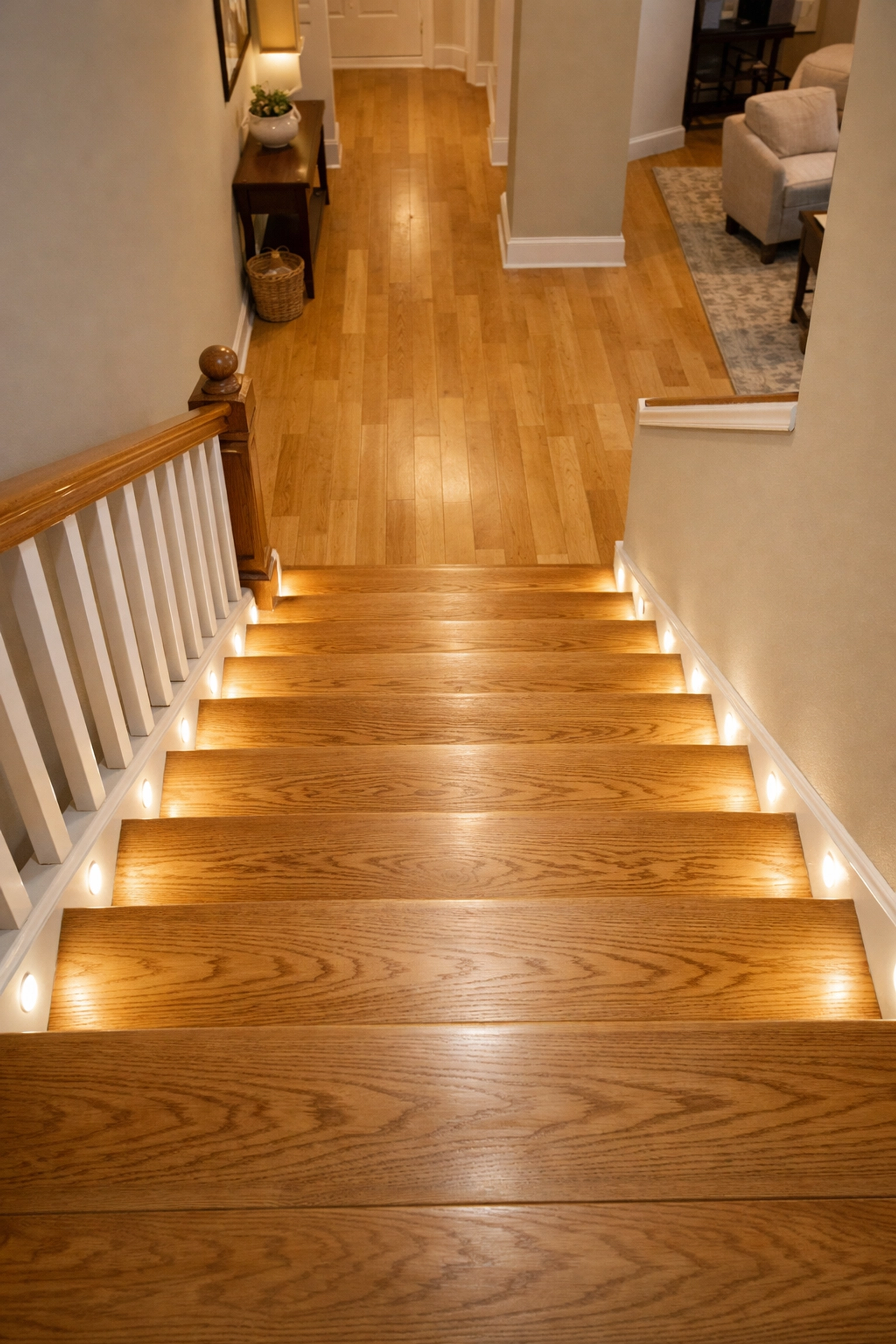
- Motion-Sensing Nightlights: Install battery-operated or plug-in motion-sensing lights along the baseboards of the staircase. These provide a low-level glow that illuminates the actual walking surface without needing to turn on bright overhead lights during a middle-of-the-night trip for water.
Pitfall 2: Slippery Surfaces and Improper Footwear
Most stair injuries are the result of slipping, not just tripping. While polished hardwood stairs are beautiful, they offer very little "coefficient of friction": a fancy way of saying they are very slippery, especially when wearing socks.
The Danger of Loose Carpet
While some think carpet is safer because it’s softer, poorly maintained carpet can be a major hazard. If the carpet is loose, threadbare, or has a thick "shag" pile, it can catch the toe of a shoe or slide underfoot.
Better Traction Strategies
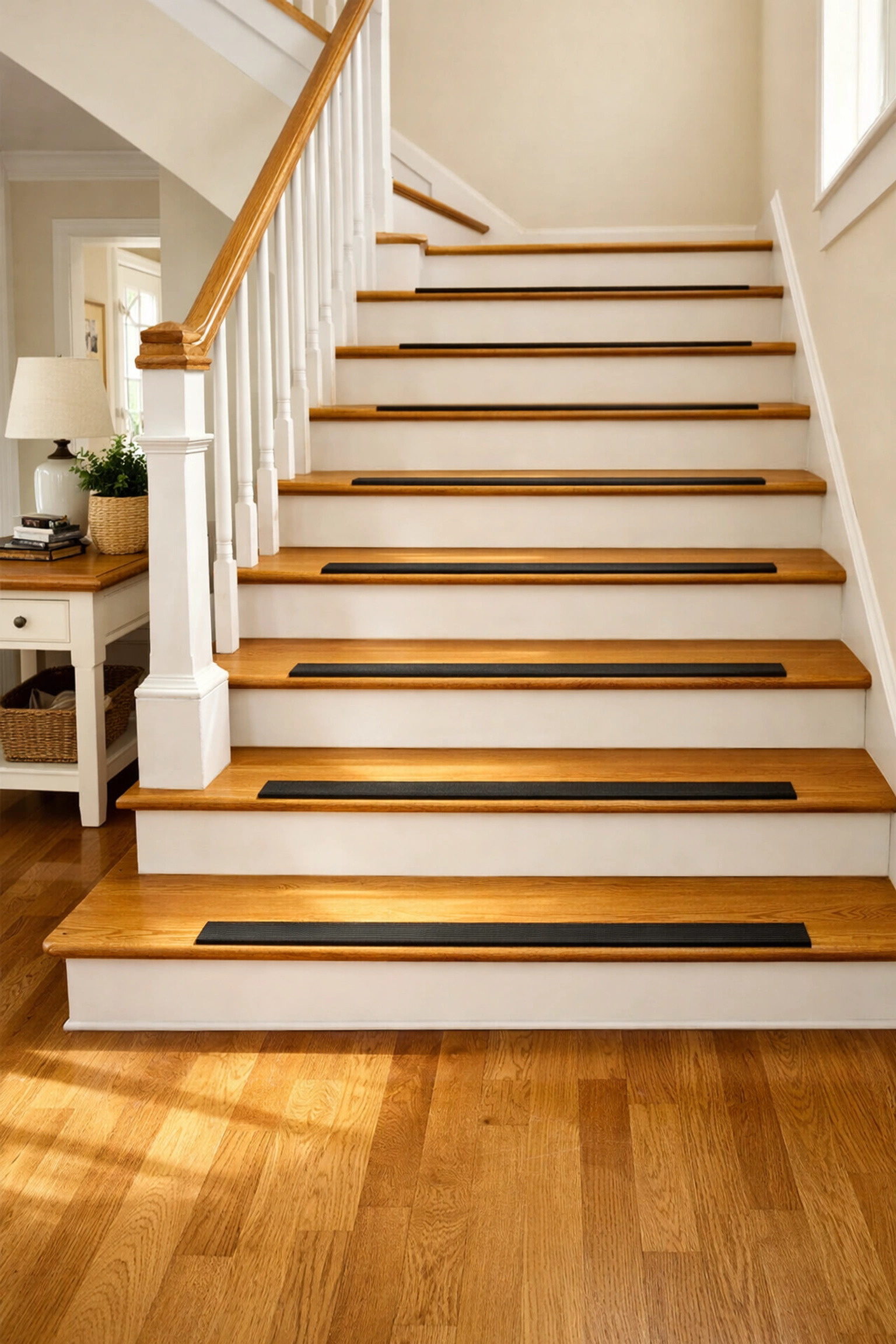
- Non-Slip Treads: For wooden or tile stairs, clear or colored non-slip adhesive strips can be applied to the edge of each step. These provide "grit" that helps the shoe or foot grip the surface.
- Tightly Woven Carpet: If you prefer carpet, choose a low-pile, tightly woven commercial-grade carpet. Ensure it is securely tacked down at every "nose" (the front edge) of the step.
- The "No-Socks" Rule: Encourage a household habit of wearing shoes with rubber soles or "grip socks" with rubberized bottoms. Plain socks on wood stairs are a recipe for a slide.
Pitfall 3: The Single Handrail (Or None At All)
If you find yourself "wall-surfing": leaning your hand against the wall for balance while you climb: it is a sign that your current handrail setup is insufficient. A single handrail is often not enough for someone dealing with balance issues or weakness on one side of the body.
The Importance of Two Rails
Ideally, every staircase should have sturdy handrails on both sides. This allows you to use your strongest side for support whether you are going up or coming down. It also allows you to use both arms to stabilize your core if you feel a momentary dizzy spell.
Proper Handrail Specifications
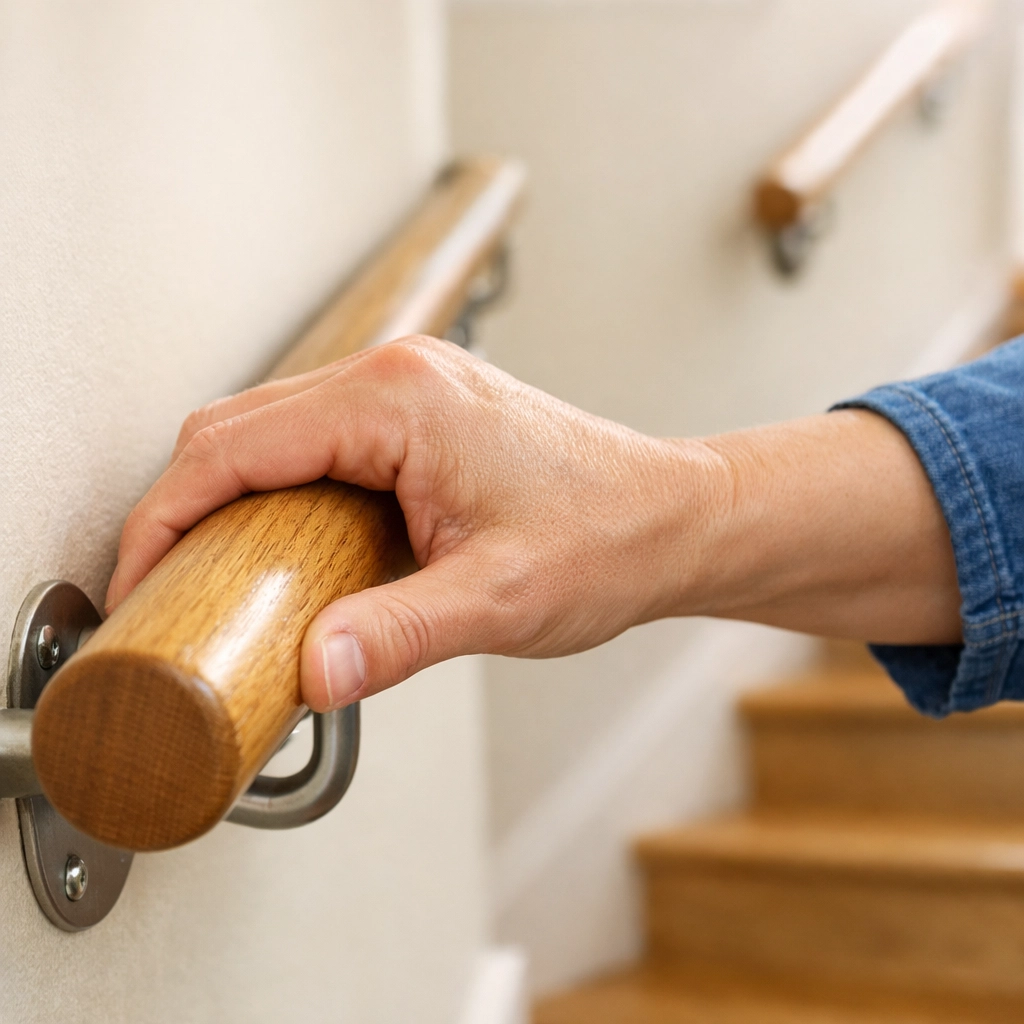
- Grip Shape: A handrail should be "graspable." This means you should be able to wrap your fingers and thumb entirely around it. Flat, wide wooden boards that are often used as decorative handrails are difficult to grip in an emergency.
- Continuous Support: The rail should extend about 12 inches beyond the top and bottom steps. Many people lose their balance on the very last step because the handrail ended too early, leaving them without support during the transition to level ground.
- Weight Capacity: A handrail must be bolted into the wall studs, not just the drywall. It should be able to support at least 250 pounds of sudden force.
Pitfall 4: Visual Confusion and Lack of Contrast
Depth perception issues are common as we age. When looking down a flight of stairs, the steps can sometimes blend together into a single, blurry brown or gray shape. This makes it impossible to judge exactly where to place your foot.
Creating Visual Contrast
One of the simplest and most effective modifications is to add a contrasting color to the "nose" or edge of each step.
- Contrast Strips: If you have dark wood stairs, a light-colored strip of non-slip tape on the edge of each step provides a clear visual cue.
- The Bottom Step Highlight: The most common place for a fall is the very bottom step. People often think they have reached the floor when they are actually one step up. Marking that final step with a distinct color or a different texture can prevent this "phantom step" error.
Pitfall 5: Using Stairs for "Temporary Storage"
We’ve all done it: we place a book, a pair of shoes, or a basket at the bottom of the stairs, intending to take it up on our next trip. This "stairway storage" is one of the most dangerous habits a household can have.
Even if you think you’ll remember it’s there, a moment of distraction: a phone ringing or a dog barking: can lead you to step right on that object.
Behavioral Changes
- The Zero-Tolerance Policy: Commit to never placing anything on the actual steps. If items need to go up, place them on a small table near the stairs, but never on the stairs themselves.
- One Hand Free: Always keep at least one hand on the handrail. This means avoiding carrying large laundry baskets or heavy boxes with both hands, which obscures your view of your feet and prevents you from grabbing the rail if you stumble.
Assessing the Physical Component
Sometimes the pitfall isn't the staircase at all, but a change in physical health. If you find that your legs feel heavy or you are "huffing and puffing" by the time you reach the top, it may be time to consult a professional.
The Role of Physical Therapy
A physical therapist can perform a mobility assessment to check your leg strength and balance. They can teach you the "step-to" pattern (bringing both feet to the same step before moving to the next), which is much more stable than the "step-over-step" pattern we use when we are younger.
Vision Checks
If you haven't had your vision checked in the last year, a "visual pitfall" might be lurking. Bifocals or progressive lenses can sometimes distort the view of the stairs when looking down. Some seniors find it safer to have a dedicated pair of "single vision" glasses specifically for moving around the house or navigating stairs.
When to Consider Alternatives
Sometimes, despite all the modifications in the world, the stairs remain a source of anxiety. It is important to be honest with yourself about your comfort level.
Single-Level Living
If possible, consider moving your primary living setup to the main floor. This might involve converting a den into a bedroom or moving the laundry machines from the basement to the first floor. This doesn't mean you can never use the stairs, but it reduces the frequency of use, which statistically lowers your risk.
Technological Aids
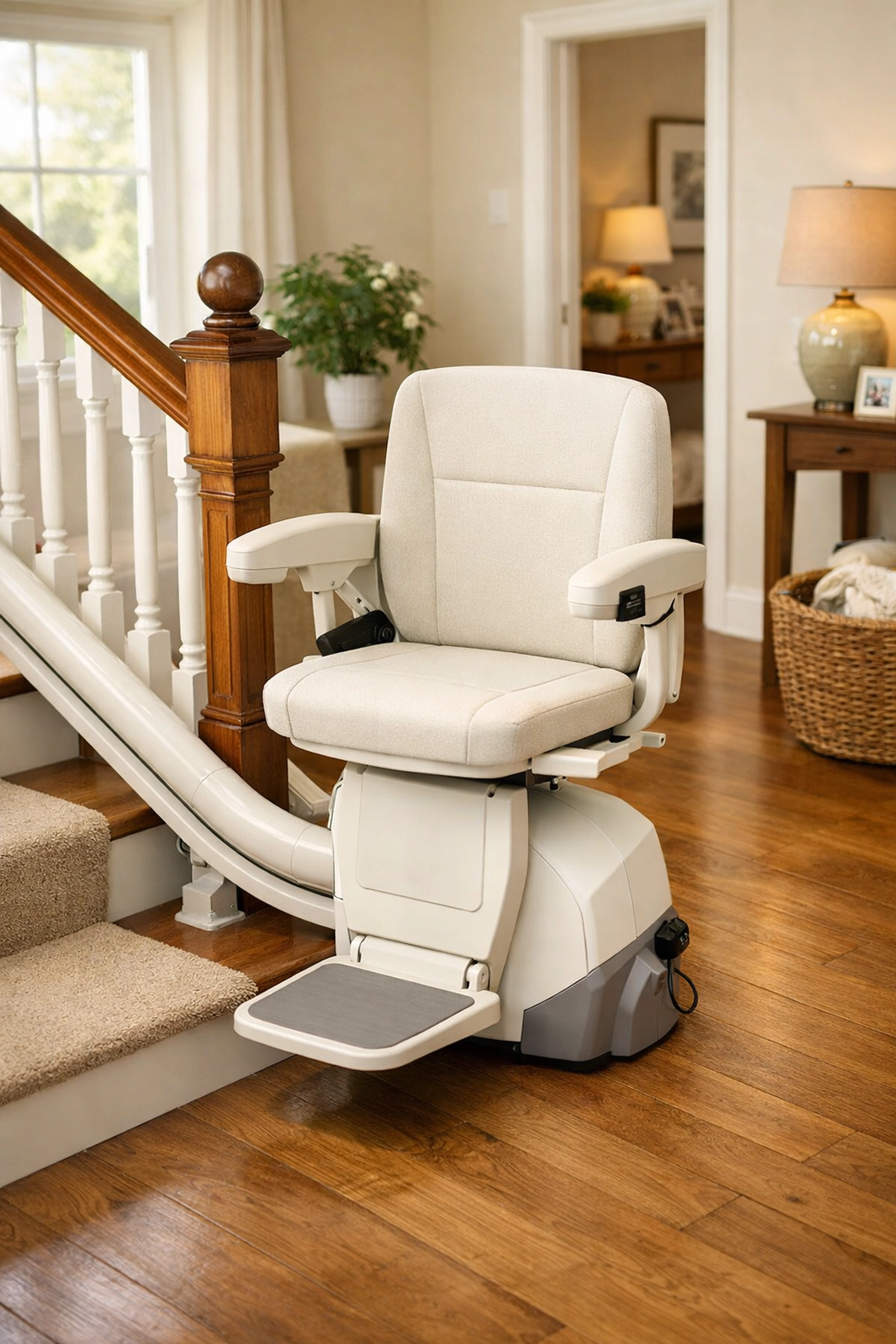
For those who cannot move their living space, a stairlift is a common and reassuring solution. It removes the physical exertion and the balance risk entirely, allowing you to move between floors while seated safely.
A Summary Checklist for Stair Safety
If you are looking to audit your own home today, use this quick checklist to identify potential pitfalls:
- Is there a light switch at both the top and the bottom?
- Can you clearly see the edge of every single step?
- Are there handrails on both sides of the staircase?
- Can you wrap your hand completely around the handrails?
- Is the carpet tightly secured with no "lip" or loose edges?
- Are the stairs completely free of clutter, including decorative items?
- Do you have a "one hand on the rail" policy at all times?
Conclusion
Aging in place is about making your home work for you, rather than you struggling to work around your home. Stairs don't have to be a source of fear. By addressing lighting, traction, and support, you can significantly reduce the risk of a fall.
Take the time to walk through your home today and look at your stairs through fresh eyes. Small changes, like a roll of contrast tape or an extra handrail, can make a world of difference in your safety and peace of mind. Your home is your sanctuary, and with a few thoughtful adjustments, it can remain a safe place for years to come.

