
Getting older brings changes we all notice: maybe you take an extra second to stand up from your favorite chair, or you feel a bit less confident on uneven sidewalks. These subtle shifts often trace back to something fundamental: the strength in your legs.
Your legs do more than just carry you from place to place. They're the foundation of your balance, your stability, and ultimately, your independence. Understanding how leg strength impacts your ability to stay steady on your feet is one of the most important pieces of the aging puzzle.
Why Leg Strength Matters More Than You Think
When most people think about staying active as they age, they focus on walking or general exercise. But leg strength specifically plays a unique role in keeping you safe and independent.
Strong leg muscles support every movement you make throughout the day. They help you:
- Rise from a seated position without using your hands
- Climb stairs with confidence
- Walk on different surfaces without hesitation
- Catch yourself if you start to lose balance
- Maintain proper posture while standing
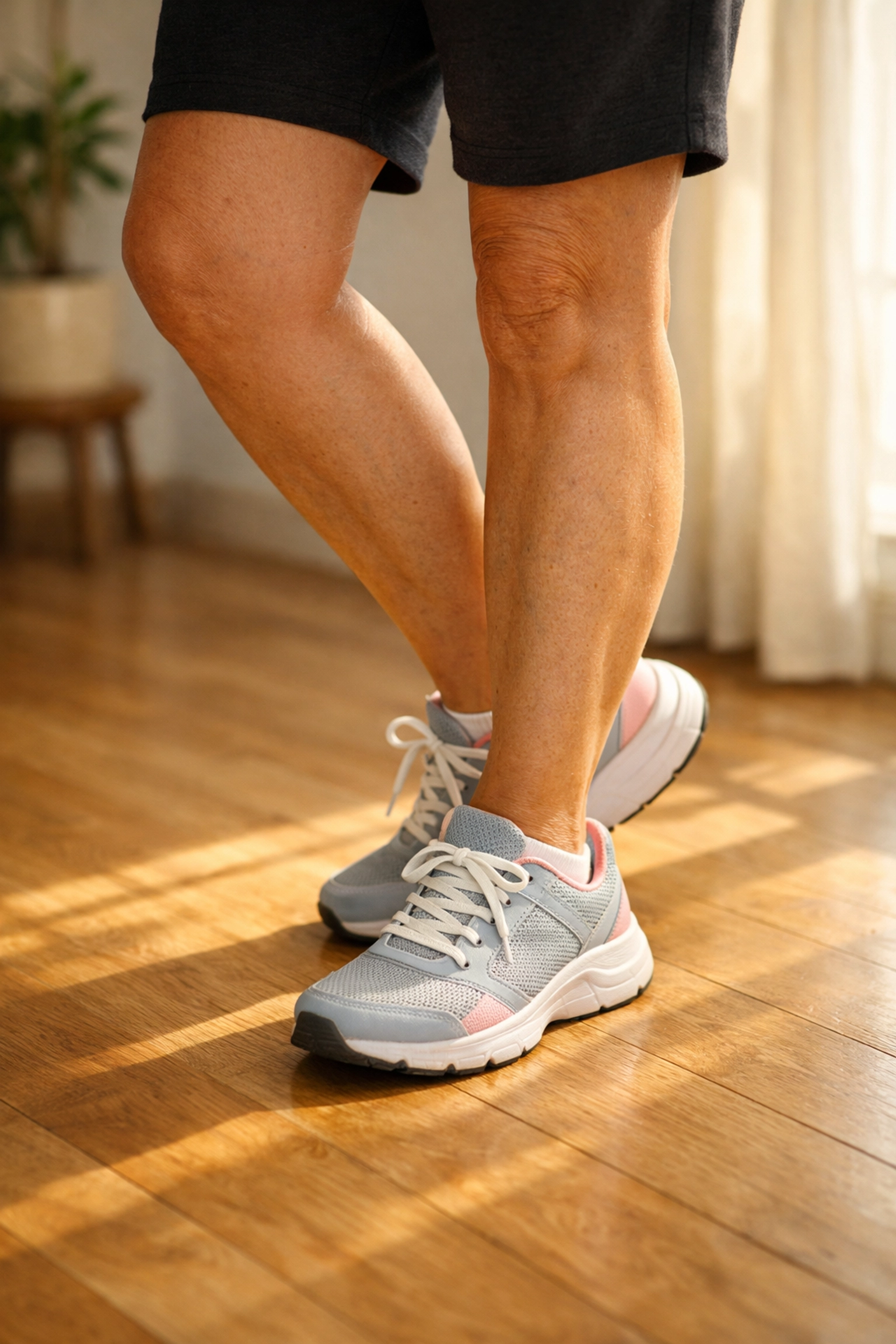
The large muscle groups in your legs: your quadriceps, hamstrings, and gluteal muscles: work together as a coordinated system. When these muscles are strong, they provide the power and control needed for stable movement.
The Connection Between Leg Strength and Balance
Balance isn't just about standing still. It's a complex interaction between your muscles, nerves, and brain working together to keep you upright and stable.
Your leg muscles contribute to this process in several important ways:
Proprioception Enhancement
Proprioception is your body's ability to sense where it is in space. Strong leg muscles improve the signals between your muscles and your brain, giving you better awareness of your body position. This heightened awareness helps you adjust your stance automatically when needed.
Faster Reaction Time
When you start to stumble or lose balance, your leg muscles need to respond quickly. Stronger muscles can contract faster and with more force, allowing you to recover before a fall occurs. This split-second response can make the difference between catching yourself and hitting the ground.
Core and Hip Stability
Your legs don't work in isolation. Strong leg muscles support your core and hip stability, creating a stable base for all your movements. This interconnected strength helps you maintain balance even when your center of gravity shifts.
How Aging Changes the Equation
Here's something important to understand: balance and leg strength both decline as we get older, but they don't decline at the same rate.
Recent research from the Mayo Clinic revealed fascinating insights about this process. The study found that the neuromuscular sensory system: the network connecting your muscles, nerves, and brain: actually declines faster than muscle strength itself.

The numbers tell a clear story:
- The ability to stand on one leg decreases by about 2.2 seconds per decade for your non-dominant leg
- Your dominant leg shows a decline of approximately 1.7 seconds per decade
- The amount of body sway while standing increases by 6.3% per decade with eyes open
- With eyes closed, body sway increases even more dramatically: by 10.4% per decade
What does this mean in practical terms? Your muscles might still be relatively strong, but the coordination and control systems that help you use that strength effectively are declining more rapidly.
The Hidden Weakness Problem
One of the trickiest aspects of declining leg strength is how well your body can hide it: at least initially.
During normal daily activities, you typically use both legs together. If one leg is weaker than the other, your stronger leg compensates without you even realizing it. You might walk, climb stairs, and move around feeling perfectly fine.
But here's where it gets revealing: when you stand on one leg at a time, the weakness becomes obvious. That single weak leg can't hide behind its stronger partner anymore, and the instability that was masked during two-legged activities suddenly becomes apparent.
This is why healthcare professionals often use single-leg balance tests as an assessment tool. They're not just checking your balance: they're uncovering weaknesses that your normal movement patterns might be hiding.
Why This Matters for Your Safety
The statistics around falls and aging are sobering, but they're important to understand.
Falls are the leading cause of injury-related death in adults aged 65 and older. Beyond the immediate injury risk, falls often trigger a cascade of consequences:
- Loss of confidence and increased fear of falling
- Reduced activity levels
- Decreased independence
- Long-term nursing home admission
- Social isolation
The connection is clear: declining leg strength directly increases fall risk. When your legs can't provide the support and quick reactions needed to maintain balance, even minor missteps can turn into serious falls.
Early Warning Signs to Watch For
Leg strength decline often happens gradually, which means you might not notice it until it's significantly progressed. Paying attention to these subtle changes can help you address the issue early:
- Taking longer to stand up from a chair
- Using your hands to push yourself up more often
- Feeling unsteady on stairs
- Hesitating before stepping off curbs
- Avoiding activities you used to do confidently
- Feeling tired after walking shorter distances
- Noticing your legs shake when standing for extended periods
These aren't signs of inevitable decline: they're signals that your leg strength needs attention.
Simple Ways to Check Your Leg Strength
You don't need fancy equipment to get a basic sense of your leg strength. Here are some simple self-assessments you can try (make sure you're near something stable you can grab if needed):
The Chair Stand Test
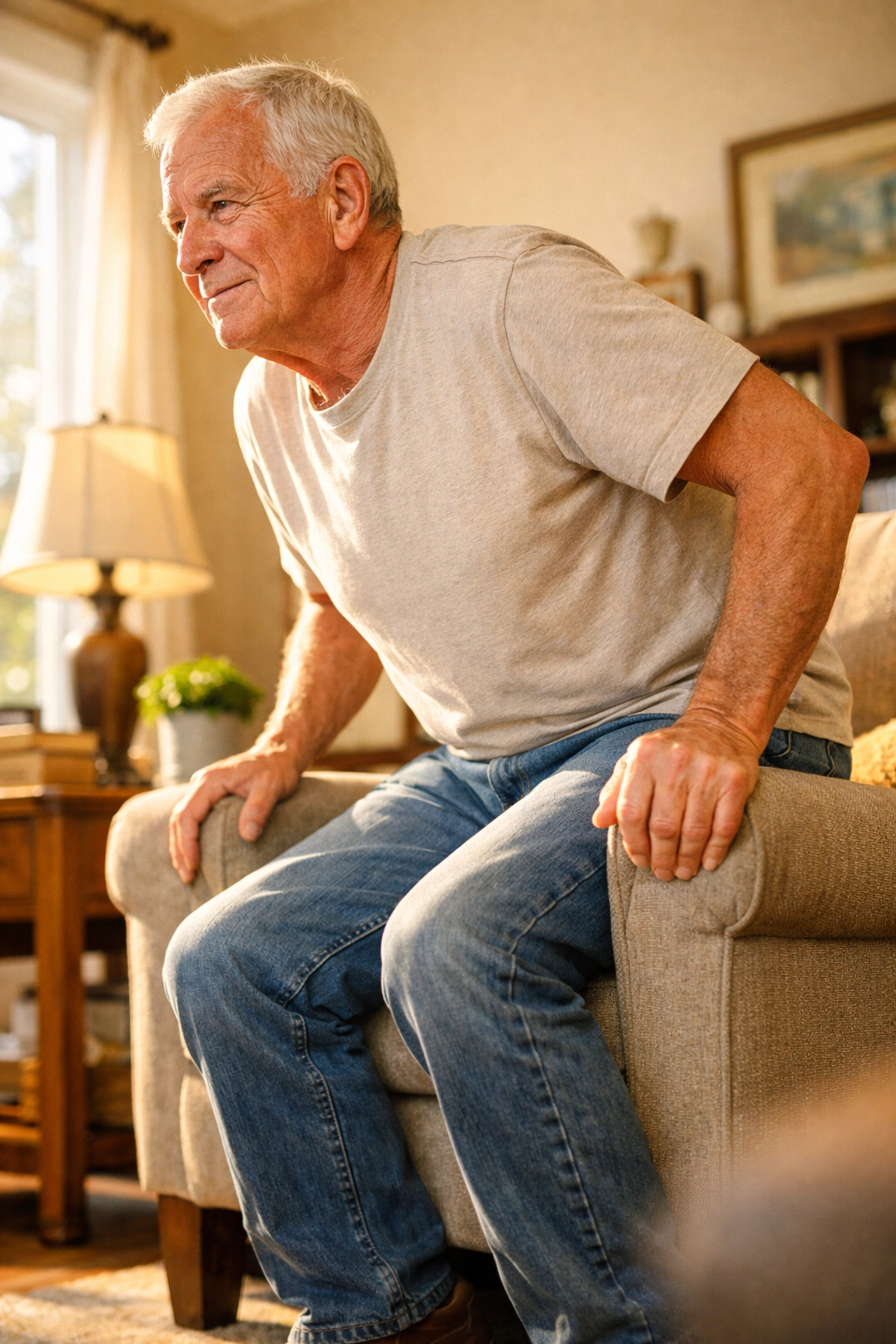
Sit in a sturdy chair with your arms crossed over your chest. Try to stand up without using your hands. If this is difficult or impossible, it indicates reduced leg strength.
Single-Leg Stance
Stand near a wall or counter for safety. Lift one foot slightly off the ground and see how long you can balance on one leg. If you can't maintain balance for at least 10 seconds, it may indicate declining strength and balance.
The Heel Raise Test
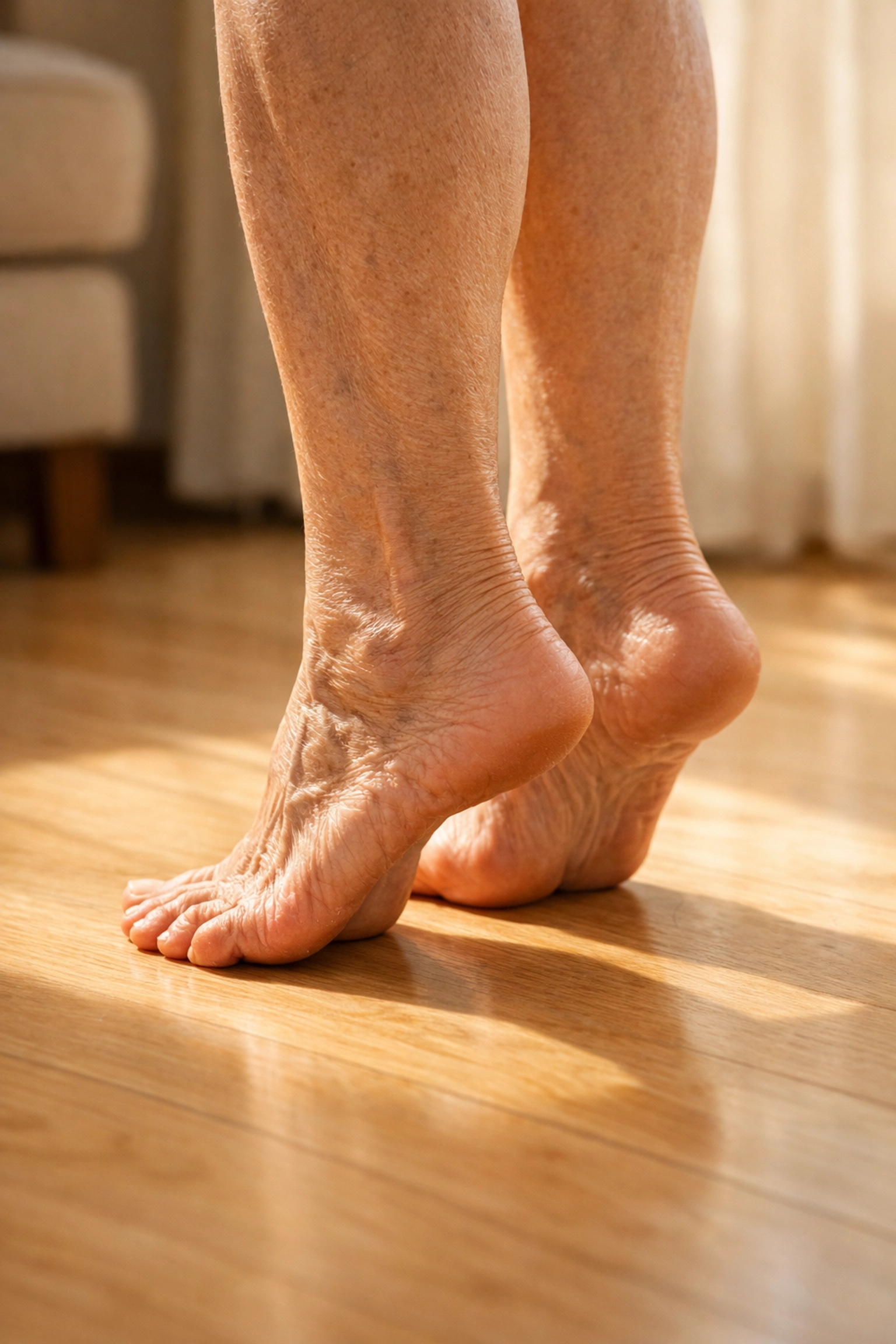
Standing near support, rise up onto your toes and lower back down. Notice if you feel weak or shaky, or if you can't complete several repetitions.
These tests aren't diagnostic tools, but they can help you notice changes over time and have informed conversations with your healthcare provider.
Building and Maintaining Leg Strength
The good news is that leg strength responds well to targeted exercise, even in older adults. You don't need to become a bodybuilder: consistent, moderate strengthening activities can make a significant difference.
Safe Strengthening Activities
Start with exercises that feel manageable and build gradually:
- Chair squats (standing up and sitting down slowly)
- Wall squats (sliding your back down a wall)
- Step-ups on low steps
- Leg lifts while holding onto a counter
- Heel and toe raises
- Walking with intentional effort
Consistency Matters More Than Intensity
Rather than pushing hard occasionally, aim for regular, moderate activity. Short sessions several times per week are more effective and sustainable than exhausting workouts once in a while.
Balance Work Complements Strength
While building leg strength, also practice balance-specific activities. Standing on one foot (near support), walking heel-to-toe, and even simple tai chi movements can enhance the coordination between your muscles and nervous system.
Working with Your Healthcare Team
If you're noticing changes in your leg strength or balance, bringing these concerns to your doctor or physical therapist is important.
A healthcare professional can:
- Assess your specific strength and balance challenges
- Identify any underlying medical issues contributing to weakness
- Create a personalized exercise plan suited to your abilities
- Recommend appropriate assistive devices if needed
- Monitor your progress over time
Physical therapists, in particular, specialize in creating safe, effective programs for older adults to build strength and improve stability.

The Bigger Picture
Understanding the connection between leg strength and stability isn't about dwelling on limitations: it's about taking control of something you can actually influence.
While aging brings inevitable changes, the rate and extent of decline in leg strength and balance aren't entirely predetermined. The choices you make today about staying active, building strength, and addressing weaknesses early can significantly impact your mobility and independence for years to come.
Your legs have carried you through life. Giving them the attention and care they need to keep carrying you safely into the future is one of the most valuable investments you can make in your long-term well-being.
Think of it this way: every time you choose to strengthen your legs, you're not just building muscle: you're building confidence, maintaining independence, and reducing risk. That's worth the effort.

