
Hey there. I’m Brian Kerr, the founder of Fall Guys Products. If you’re reading this, you’re likely looking for ways to make your home: or the home of someone you love: a little safer and more stable. Maybe you’ve noticed a slight stumble lately, or perhaps you’re just being proactive as the years go by. Whatever the reason, I’m glad you’re here.
Falling isn't something people like to talk about. It can feel like a loss of independence or a sign that things are changing faster than we’d like. But here’s the way I see it: fall prevention isn't about "getting old." it’s about mastery. It’s about mastering your environment so you can keep doing exactly what you love to do, without the fear of a trip or a slip holding you back.
This guide is designed to be your roadmap. We’re going to walk through the house together, look at the physical habits that keep us strong, and talk about how to prepare for the unexpected. No scary statistics, no sales pitches: just practical, common-sense advice to help you feel confident in your own four walls.
The Foundation: Changing Your Perspective on Safety
Before we move a single rug or install a single lightbulb, we need to talk about mindset. Many people view "fall-proofing" as making a home look like a hospital. That doesn't have to be the case. Safety is a design choice. It’s about creating a flow in your living space that supports your natural movements.
Think of your home as a high-performance environment. Just like an athlete optimizes their gear, you are optimizing your home to ensure every step you take is a sure one. When we approach fall prevention with a sense of empowerment rather than fear, the process becomes much easier to manage.
Lighting: The Often-Overlooked Hero
If you can’t see a hazard, you can’t avoid it. As we age, our eyes need significantly more light to see clearly and process depth. A hallway that seemed perfectly fine ten years ago might be a shadowy maze today.
Start by looking at your entryways and transitions. Do you have to walk across a dark room to reach a light switch? If so, that’s a "blind spot." Consider installing motion-activated lights. These are wonderful because they don't require you to fumble for a switch in the dark; they simply glow as you approach.
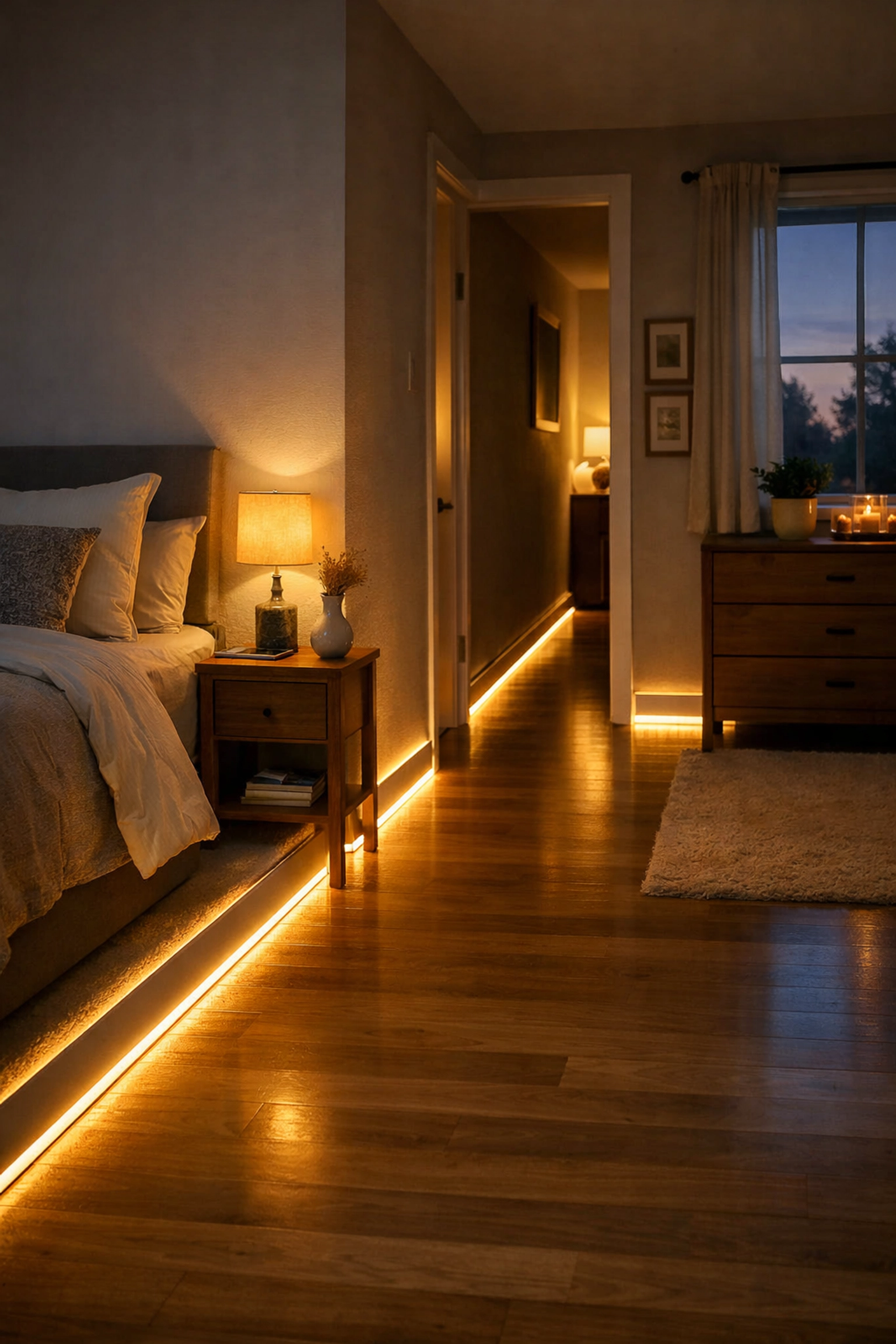
Pay special attention to the path from the bed to the bathroom. This is where many falls happen in the middle of the night. Use plug-in nightlights that have light sensors, so they turn on automatically when the sun goes down. LED strips under the edge of the bed or along the baseboards can also provide a "runway" effect that guides your path without being harsh on your eyes.
Clearing the Path: Flooring and Rugs
We all have that one rug. You know the one: the beautiful heirloom or the cozy throw rug in the kitchen. Unfortunately, rugs are one of the most common culprits for trips and falls. They bunch up, the corners curl, or they slide out from under you when you’re in a hurry.
The gold standard for fall prevention is "no rugs." But if you can't bear to part with them, they must be secured. Use double-sided heavy-duty rug tape or non-slip pads that cover the entire underside of the rug. If a rug is particularly thick, it creates a "lip" that a foot or a walker can easily catch on. In those cases, it’s truly safer to remove it.
Beyond rugs, look for clutter. We all accumulate "stuff": stacks of magazines, shoes by the door, or charging cables for our phones. Make it a rule that the floor is a "no-go zone" for anything other than furniture. Those few inches of clear space along a wall or around a coffee table can make the difference between a clear path and a dangerous stumble.
The Bathroom: Navigating the Wet Zone
The bathroom is statistically the most hazardous room in the house. It’s full of hard surfaces, water, and tight spaces. But a few simple adjustments can turn it from a risk zone into a safe haven.
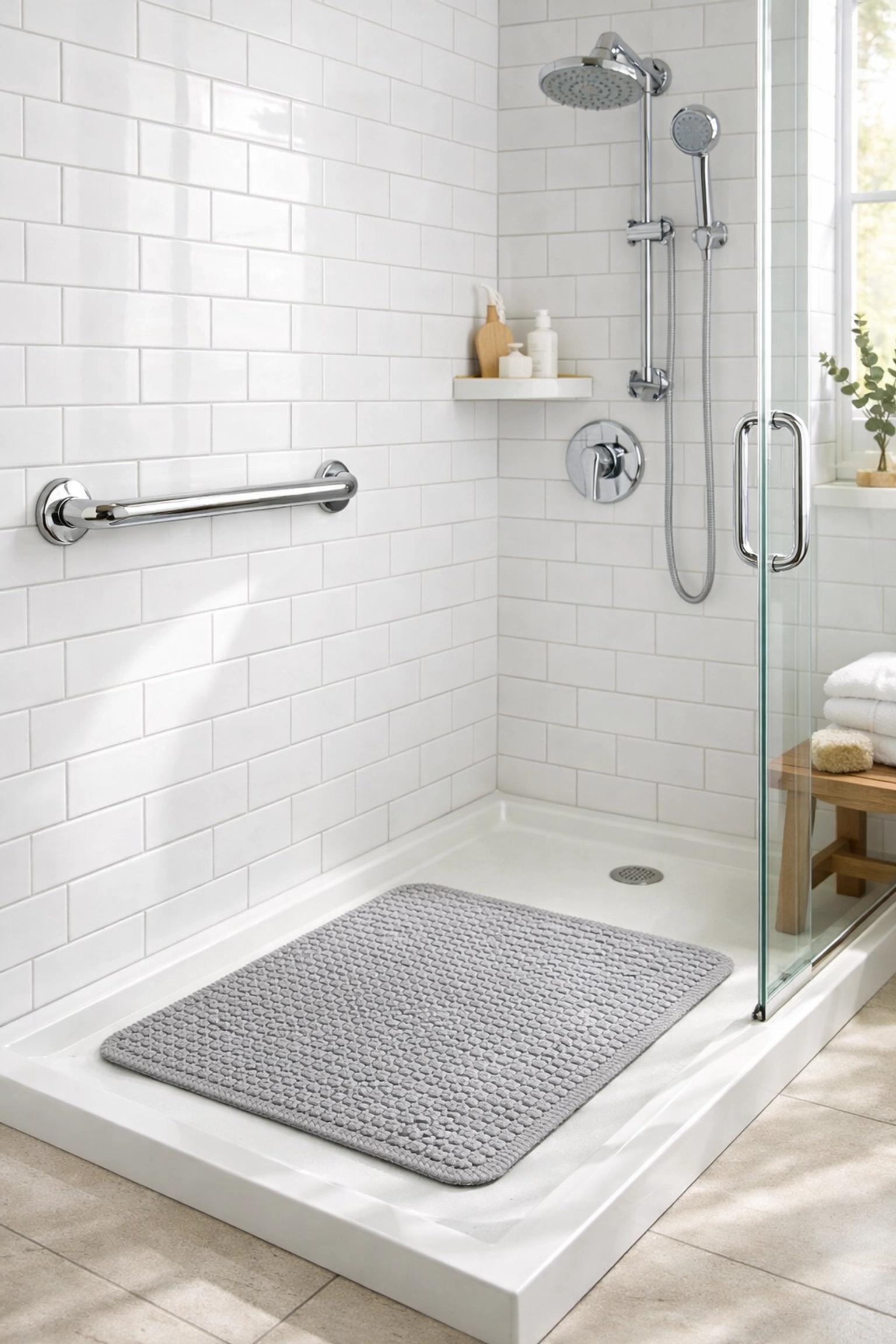
First, let’s talk about the shower. If you’re stepping over a high tub wall, you’re balancing on one leg on a slippery surface. That’s a lot to ask of your body. Non-slip mats inside and outside the tub are non-negotiable. However, ensure the mat outside the tub has a rubberized backing so it doesn't slide when you step onto it.
Grab bars are your best friends here. And I’m not talking about the towel rack. Never, ever use a towel rack for balance: they aren't designed to hold human weight and will pull right out of the wall. Professional-grade grab bars should be installed near the toilet and inside the shower.
The Kitchen: Keeping Things Within Reach
In the kitchen, the goal is to minimize the need for reaching high or bending low. We often store our heavy pots and pans in the bottom cabinets and our everyday dishes on the top shelves. This forces us to shift our center of gravity constantly.
Take an afternoon to reorganize. Move your most-used items: the coffee mug, the favorite skillet, the daily plates: to counter-height shelves. If you have to reach for something high, never use a chair or a wobbly footstool. A sturdy step stool with a high handrail is a much safer option, but better yet, use a "reach stick" or a grabber tool to bring items down to you.
Spills are another major concern. Keep a roll of paper towels or a microfiber cloth in an easy-to-reach spot so you can dry any water or oil droplets immediately. A wet tile floor is essentially an ice rink.
Stairs and Transitions
Stairs require focus and physical effort. To make them safer, ensure you have sturdy handrails on both sides of the staircase. This allows you to use your dominant hand for support whether you are going up or coming down.
If your stairs are wooden or tiled, they can be incredibly slippery. You can apply non-slip adhesive strips to the edge of each step. To help with depth perception, use a strip of a contrasting color (like a bright white or yellow) on the edge of the top and bottom steps. This gives your brain a clear visual cue of where the transition begins and ends.
The Bedroom: A Sanctuary of Stability
Most people think of the bedroom as the safest place in the house, but the transition from lying down to standing up can cause a sudden drop in blood pressure, making you feel dizzy or lightheaded. This is called orthostatic hypotension.
To manage this, sit on the edge of the bed for a full minute before you stand up. Keep your feet flat on the floor and "pump" your ankles a few times to get the blood flowing.
Check your bed height. If your feet don't touch the floor when you're sitting on the edge of the mattress, the bed is too high. If you feel like you’re "squatting" to get out of it, it’s too low. You can adjust this with different bed frames or low-profile box springs. Also, keep a sturdy piece of furniture or a bed rail nearby to give you a solid handhold as you rise.
The Human Element: Strength and Balance
You can make your home perfectly safe, but if your body isn't supported, the risk remains. Fall prevention is a two-way street: the environment and the individual.
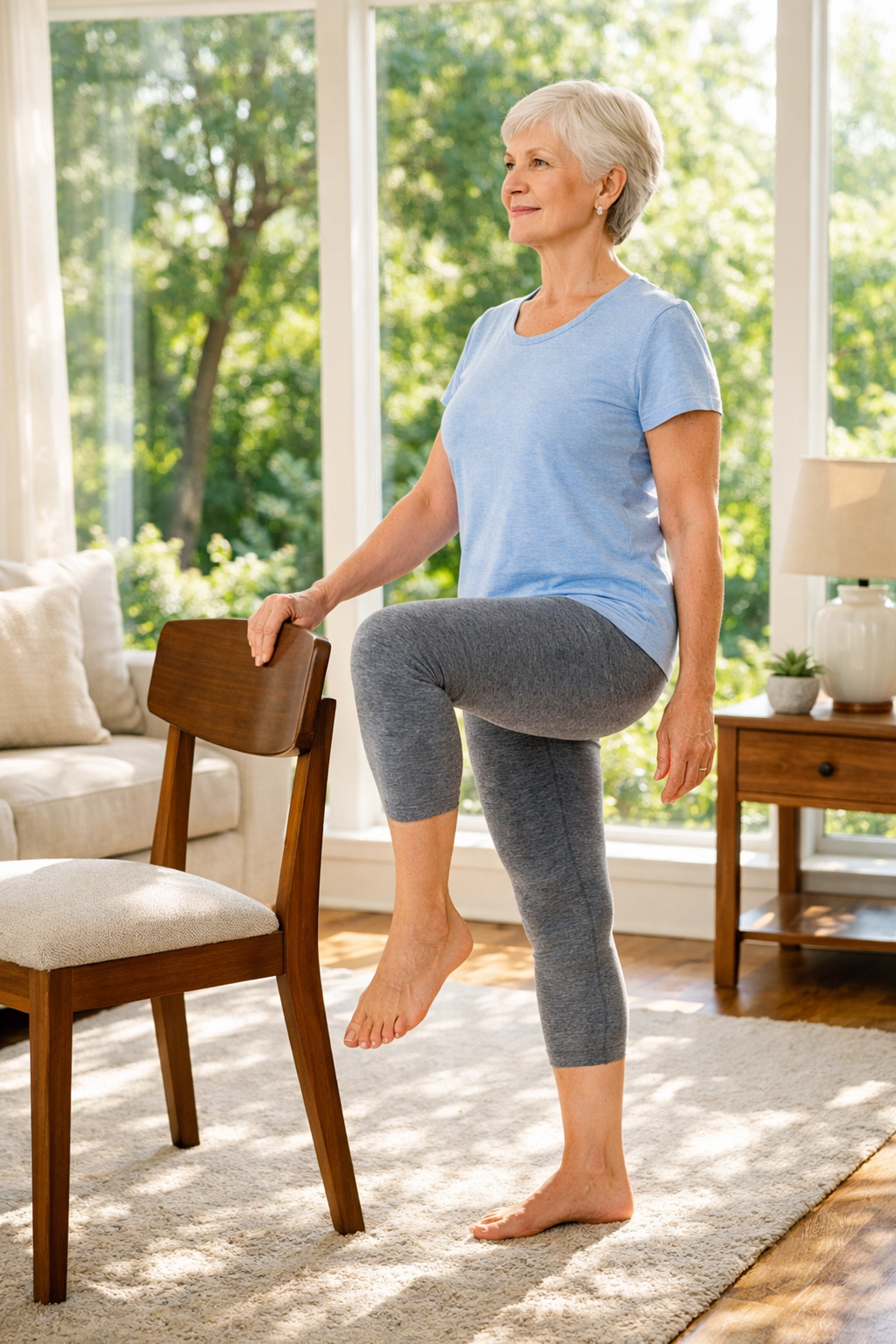
Strength training doesn't mean lifting heavy weights at the gym. It means maintaining the muscles that keep you upright: specifically your core and your legs. Simple exercises like "sit-to-stands" (sitting down in a sturdy chair and standing back up without using your arms) can significantly improve your leg strength over time.
Balance is like a muscle; if you don't use it, you lose it. Many people find great success with Tai Chi or gentle yoga. These practices focus on shifting your weight mindfully and strengthening the tiny stabilizer muscles in your ankles and feet.
Managing Your Health and Medications
Did you know that certain combinations of medications can increase your risk of falling? Some prescriptions can cause drowsiness, while others might affect your balance or vision.
At least once a year, sit down with your doctor or pharmacist for a "medication review." Go through everything you’re taking, including over-the-counter supplements. If a medication is making you feel "fuzzy" or off-balance, don't just put up with it. There might be an alternative that doesn't carry those side effects.
Hydration is also a major factor. Dehydration can lead to confusion and dizziness. Make it a habit to sip water throughout the day, even if you don't feel particularly thirsty.
Footwear: Your Connection to the Earth
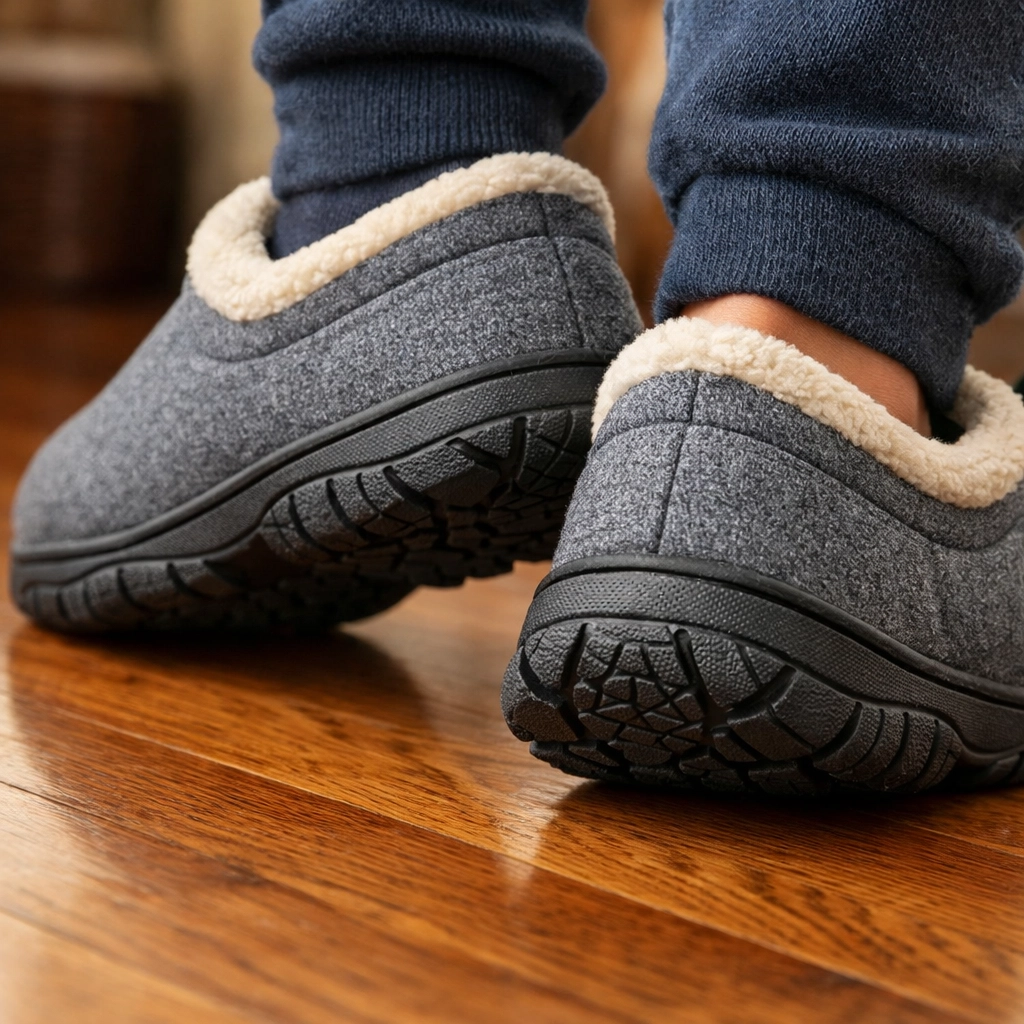
What you wear on your feet matters just as much as what you walk on. Many of us love our slippers, but if they are loose or have smooth soles, they are a hazard.
Inside the house, avoid walking in just socks or stockings on smooth floors. If you prefer not to wear shoes indoors, invest in high-quality slippers that have a closed back (no "mules" or "slides") and a firm, non-skid rubber sole. Properly fitting shoes with laces or Velcro straps provide the most support and keep your foot from sliding around inside the shoe.
Outdoor Safety: The World Beyond the Door
Safety doesn't stop at the threshold. Check your outdoor walkways for cracked pavement, uneven bricks, or overgrown roots. In the winter, keep a container of sand or salt near the door so you can treat icy patches before you step out onto them.
Ensure your porch lighting is bright and that your house numbers are clearly visible from the street. This isn't just for guests; it’s for emergency responders. If you ever do need help, you want them to find your home without delay.
Preparing for the Unexpected
Even with the best preparation, accidents can happen. Being prepared isn't about being pessimistic; it’s about being smart.
Keep a phone within reach at all times. Many people now use smartwatches with fall detection, which can automatically call for help if they sense a hard impact. If you prefer a more traditional route, a cordless phone kept on a bedside table or a personal emergency response pendant can provide immense peace of mind.
If you do fall and can’t get up immediately, the most important thing is to stay calm. Try to crawl to a sturdy piece of furniture (like a sofa or a heavy chair) and use it to slowly pull yourself up. If you can’t get up, try to get to a carpeted area or grab a blanket or pillow to stay warm until help arrives.
A Final Thought from Brian
Taking these steps might feel like a lot of work at first, but I promise you, the peace of mind is worth it. When you know your home is set up to support you, you stop worrying about "what if" and start focusing on "what’s next."
You don't have to do everything today. Start with one room. Change one lightbulb. Move one rug. Every small adjustment is a victory for your independence.
Stay safe, stay strong, and keep moving forward. We’re in this together.

