
When we talk about staying in our own homes as we age, what many of us call "aging in place", we often focus on the fun stuff: gardening, hosting family dinners, or finally having the time to read that stack of books on the nightstand. But there is a quieter, more practical side to staying independent that doesn’t always get the attention it deserves. I’m talking about mobility and, more specifically, understanding the layout of your home and how your body moves within it.
At Fall Guys Products, we see a lot of folks who want to be proactive but aren’t quite sure where to start. They know they want to be safe, but they don't necessarily want their home to feel like a hospital ward. That’s where a Home Mobility Assessment comes in.
Think of a mobility assessment as a "wellness check" for your living space and your physical habits. It’s not about pointing out what you can’t do; it’s about identifying where you might need a little extra support so you can keep doing exactly what you love.
Why a Home Mobility Assessment is Your Best Tool for Independence
The statistics can be a bit sobering. Every year, one in four older adults will experience a fall. It is the leading cause of injury-related hospital visits for seniors. But here’s the part that often gets left out of the conversation: most falls are preventable. They aren't an "inevitable" part of getting older. They are usually the result of a combination of small factors, a dim hallway, a slightly slippery slipper, or a medication that makes you feel a bit dizzy in the morning.
A mobility assessment helps you spot these "red flags" before they turn into a problem. By taking an afternoon to walk through your home and check your own balance and strength, you are essentially building a roadmap for your future safety.
The Three Pillars of Fall Risk
Before we dive into the "how-to," it’s helpful to understand what we are actually looking for. Fall risk generally falls into three categories:
- Physical Factors: These are things happening inside your body, your muscle strength, your balance, and how well you can see or hear your surroundings.
- Environmental Factors: These are the hazards in your home, the loose rug in the hallway, the lack of a handrail on the porch, or the low-seated chair that’s hard to get out of.
- Behavioral Factors: These are the choices we make, wearing socks on hardwood floors, rushing to answer the phone, or not using a mobility aid when we’re feeling tired.
A good assessment looks at all three.

Part 1: Assessing Your Personal Mobility (The Baseline)
The first step doesn't involve a tape measure or a toolkit; it involves your body. These are three simple tests used by physical therapists and doctors to gauge mobility. If you decide to try these, please make sure you have a family member or friend nearby to "spot" you for safety.
1. The Timed Up and Go (TUG) Test
This is the gold standard for assessing mobility.
- How to do it: Sit in a sturdy chair with armrests. Mark a spot on the floor exactly 10 feet away. Start a timer, stand up, walk to the mark at your normal pace, turn around, walk back to the chair, and sit down.
- The Goal: If it takes you longer than 12 seconds, it may indicate a higher risk of falling. It’s a sign that your gait (the way you walk) or your balance might need some attention.
2. The 30-Second Chair Stand Test
This measures your lower body strength. Strong legs are your best defense against falls.
- How to do it: Sit in the middle of a chair with your feet flat on the floor and arms crossed over your chest. See how many times you can stand up fully and sit back down in 30 seconds.
- The Goal: For most adults over 65, doing fewer than 10 to 12 stands can suggest that your leg muscles need some strengthening exercises.
3. The Single-Leg Stand
Balance is like a muscle: if you don’t use it, you lose it.
- How to do it: Stand near a kitchen counter or a sturdy table (for safety). Try to stand on one leg without holding onto anything.
- The Goal: Aim for at least 10 seconds per leg. If you find yourself wobbling immediately, it’s a sign that balance training, like Tai Chi or specific PT exercises, could be very beneficial.
Part 2: The Environmental Walkthrough
Now that you have a sense of how you’re moving, it’s time to look at where you’re moving. Grab a notepad and walk through your home room-by-room. Try to look at your surroundings through "fresh eyes," as if you were a visitor.

The Entryway and Porch
Safety starts before you even get inside.
- Lighting: Is the porch light bright enough to see the keyhole at night? Are the walkways illuminated?
- Thresholds: Is there a big "lip" at the front door? These are classic trip hazards.
- Railings: Are there sturdy railings on both sides of the steps?
The Living Room and Hallways
This is where we spend a lot of our time, and where clutter tends to migrate.
- Pathways: Is there a clear path at least 32 inches wide through every room? You shouldn't have to "zigzag" around furniture.
- Throw Rugs: This is a hard one for many people, but throw rugs are one of the biggest fall risks. If you can’t part with them, make sure they are secured with double-sided tape or non-slip backing.
- Cords: Are lamp cords or oxygen tubing tucked away? Never run a cord across a walkway.
The Kitchen
The kitchen is a high-traffic area with unique risks.
- Reach: Are the things you use every day (the coffee pot, your favorite mug, the heavy cast iron skillet) on the counter or at waist height? Avoid using step stools whenever possible.
- Flooring: Is the floor slippery when wet? A small, non-slip mat in front of the sink can help catch splashes.
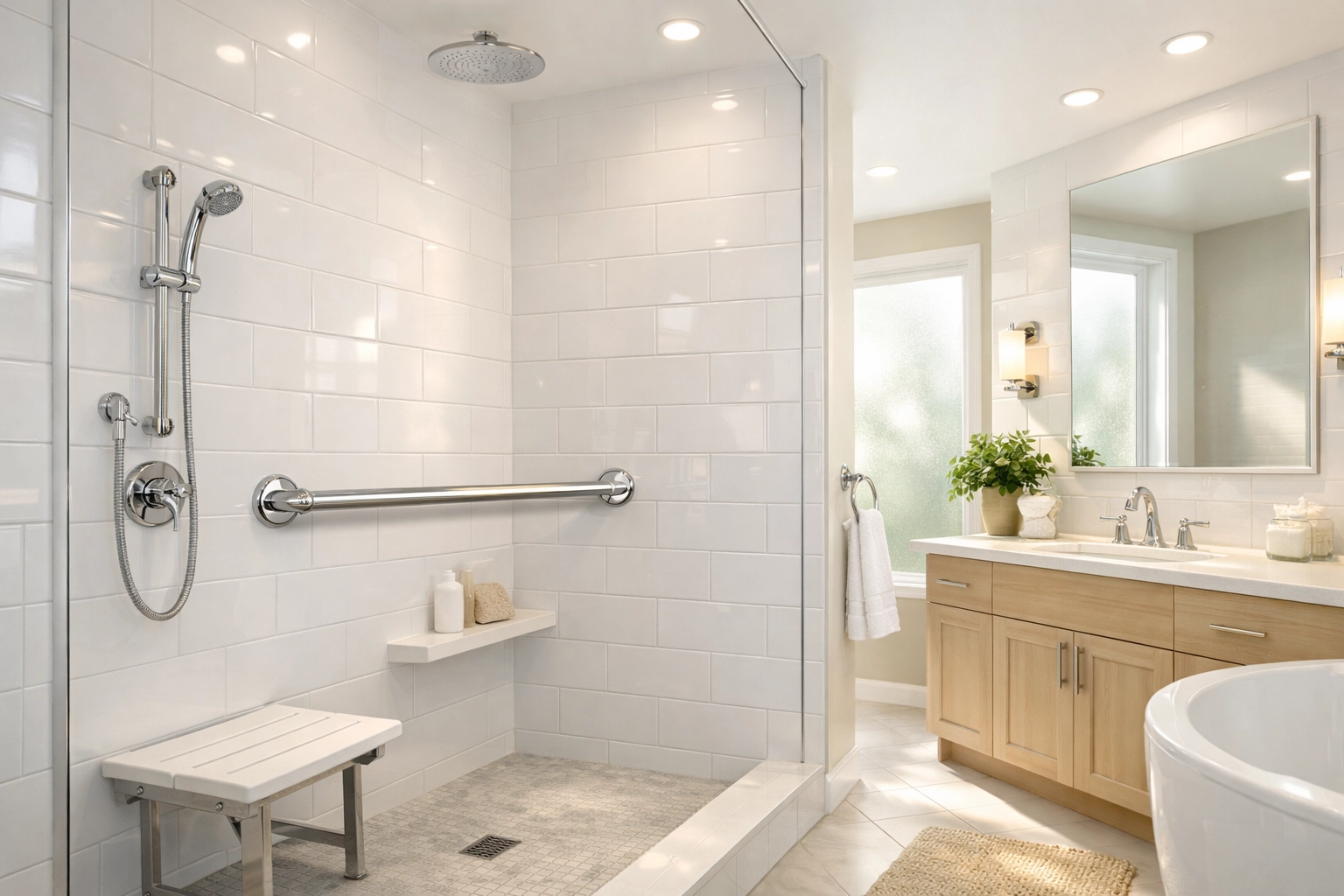
The Bathroom: The Highest Risk Zone
More falls happen in the bathroom than anywhere else in the house. This room requires the most scrutiny.
- The Tub/Shower: Do you have to "step over" a high wall to get in? Are there non-slip strips on the floor of the tub?
- Grab Bars: Are there bars near the toilet and inside the shower? Note: Towel racks are not grab bars: they aren't designed to hold a person's weight.
- The Toilet: Is the seat too low? If you struggle to stand up from the 30-second chair test, a raised toilet seat can make a huge difference in daily safety.
The Bedroom
We often overlook the bedroom because we’re usually asleep there, but nighttime falls are very common.
- Bed Height: When you sit on the edge of the bed, are your feet flat on the floor? If the bed is too high or too low, getting out of it in the middle of the night becomes a chore.
- Light at Night: Do you have a lamp within reach of the bed? Motion-activated nightlights that lead from the bed to the bathroom are a game-changer.
- Phones: Is there a phone (or a cell phone) right by the bed in case of an emergency?
Part 3: Assessing the "Hidden" Risk Factors
Sometimes the things that cause falls aren't things you can see on the floor.
Vision and Hearing
Our eyes and ears tell our brain where we are in space. If your vision is blurry or you have "blind spots," your brain isn't getting the right data to keep you balanced. Similarly, inner ear issues can cause vertigo.
- Assessment Tip: When was your last eye exam? Do you use bifocals? Bifocals can actually increase fall risk when walking down stairs because they distort your depth perception of the steps.
Medication Review
This is one of the most overlooked parts of a mobility assessment. Many common medications for blood pressure, sleep, or anxiety can cause dizziness or "orthostatic hypotension" (that head-rush feeling you get when you stand up too fast).
- Assessment Tip: Take a list of all your medications (including over-the-counter supplements) to your pharmacist or doctor. Ask them, "Do any of these increase my risk of falling?"
Creating Your Action Plan
Once you’ve finished your walkthrough and your self-tests, you’ll likely have a list of things to address. Don't feel like you have to fix everything by tomorrow morning. Start with the "Quick Wins":
- Clear the clutter: Move the boxes out of the hallway today.
- Swap the bulbs: Put brighter LED bulbs in dark hallways.
- Secure the rugs: Use tape or simply remove the most dangerous ones.
After the quick wins, move on to the "Systemic Changes," like scheduling a physical therapy evaluation or installing permanent grab bars in the bathroom.
When to Bring in the Professionals
A DIY assessment is a fantastic start, but it’s not a replacement for professional medical advice. If you find that you "fail" the TUG test, or if you feel unsteady even when you’re just standing still, it’s time to call in the experts.
A Physical Therapist (PT) can provide a much deeper dive into your gait and balance. They can prescribe specific exercises to target the muscles you need for stability.
An Occupational Therapist (OT) is an expert in the "environment" part of the assessment. They can come to your home and suggest specific modifications: like where exactly to place a grab bar or how to rearrange your kitchen: to make your daily life easier and safer.
Final Thoughts
Doing a home mobility assessment isn't about admitting defeat or acknowledging that you're "getting old." It’s actually the opposite. It’s an act of empowerment. It’s saying, "I love my home, I value my independence, and I’m going to take the necessary steps to protect both."
By identifying the risks today, you are ensuring that you can keep enjoying your home for many years to come. It’s about peace of mind: for you and for the people who love you. So, grab a notepad, put on some sturdy shoes, and take that first walk through your home. You’ll be glad you did.

