
Falls happen. Sometimes despite our best prevention efforts, we find ourselves on the floor. What you do in the moments immediately after a fall can make the difference between a minor incident and a serious injury. This guide walks you through exactly what to do, step by step, when you've fallen.
The First Few Moments: Don't Rush
The most important thing you can do after a fall is counter-intuitive: stay where you are. Do not immediately try to get up.
Your body has just experienced a shock. Your blood pressure may have dropped. You might be disoriented, even if you don't realize it yet. Adrenaline is coursing through your system, which can mask pain and injury.
Take at least two to three minutes lying still. Use this time to breathe deeply and let your nervous system settle. This isn't wasted time: it's the foundation of a safe recovery.
Many people feel embarrassed after falling, especially if they're in a public place or if family members witness the fall. That embarrassment can create pressure to get up quickly to prove you're fine. Resist that urge. Anyone who truly cares about your wellbeing would rather you take your time and do this safely.

Assess Before You Move
Once you've taken a few deep breaths and allowed the initial shock to pass, conduct a systematic body check while remaining on the ground.
Start with your extremities. Wiggle your fingers and toes. Do they respond normally? Move your wrists and ankles in small circles. Bend your elbows and knees slightly. None of this should cause sharp or severe pain.
Check your entire body for these warning signs:
- Severe pain anywhere, especially in your hips, back, neck, or head
- Unusual positions of limbs that suggest dislocation or fracture
- Bleeding or large bumps, particularly on your head
- Dizziness or feeling faint
- Confusion about where you are or what happened
- Numbness or tingling in any part of your body
- Difficulty breathing
- Chest pain
Run your hands along your arms, legs, ribs, and hips. Feel for anything abnormal: swelling, deformities, areas of intense tenderness.
Did you hit your head? Even if you didn't lose consciousness, a head impact requires caution. Signs of a potential head injury include headache, nausea, vision changes, or ringing in your ears.
Ask yourself: do I feel fundamentally okay, just shaken up? Or does something feel genuinely wrong?
When You Should NOT Try to Get Up
If you experience any of the following, do not attempt to get up on your own:
Severe pain in your hip or pelvis. Hip fractures are common in falls, particularly for older adults. If you have sharp pain in your hip, groin, or upper thigh, or if you cannot move your leg normally, assume you may have broken something.
Head injury symptoms. If you hit your head and now feel dizzy, confused, nauseous, or have a severe headache, you need medical evaluation before moving.
Neck or back pain. Any significant pain along your spine warrants extreme caution. Spinal injuries can worsen with movement.
Loss of consciousness. If you blacked out, even briefly, stay down and call for help.
Inability to move normally. If you try to move your limbs and something doesn't respond correctly, don't force it.
Feeling faint or very dizzy. These symptoms suggest your body isn't ready to handle the positional change of standing up.
In any of these situations, call 911 or have someone call for you. If you have a medical alert device, use it. If you have your phone, use it. If you're home alone without access to a phone, call out for help. If you're in a public place, don't let embarrassment stop you from asking someone to call for assistance.
Emergency responders are trained to safely move people who've fallen. They have equipment like backboards and gurneys. They can assess you properly. There is no shame in asking for professional help.
The Safe Method to Get Up After a Fall
If you've determined that you feel okay: no severe pain, no dizziness, no head injury: you can proceed with getting up. This process should take several minutes. Each step matters.
Step 1: Roll onto your side
Choose the side that feels stronger or less sore. Roll slowly and deliberately. If you feel dizzy during the roll, stop and wait for it to pass before continuing.
Step 2: Push up onto hands and knees
From your side, use your arms to push yourself up into a crawling position. Take your time. This position is stable and gives you a moment to reassess how you're feeling.
Step 3: Look for sturdy furniture
Scan the room for something solid to use for support. Good options include:
- Heavy chairs that won't tip
- Couches or sofas
- Sturdy coffee tables
- The bed frame
- A stair railing
Avoid rolling chairs, light furniture, or anything that might slide or tip when you put weight on it.
Step 4: Crawl to your support
Crawl toward your chosen piece of furniture. Don't rush. If you feel tired or winded, rest in the crawling position. There's no time limit on this process.
Step 5: Position yourself
Get close to the furniture and position yourself so your stronger leg is ready to come forward.
Step 6: Bring one foot forward
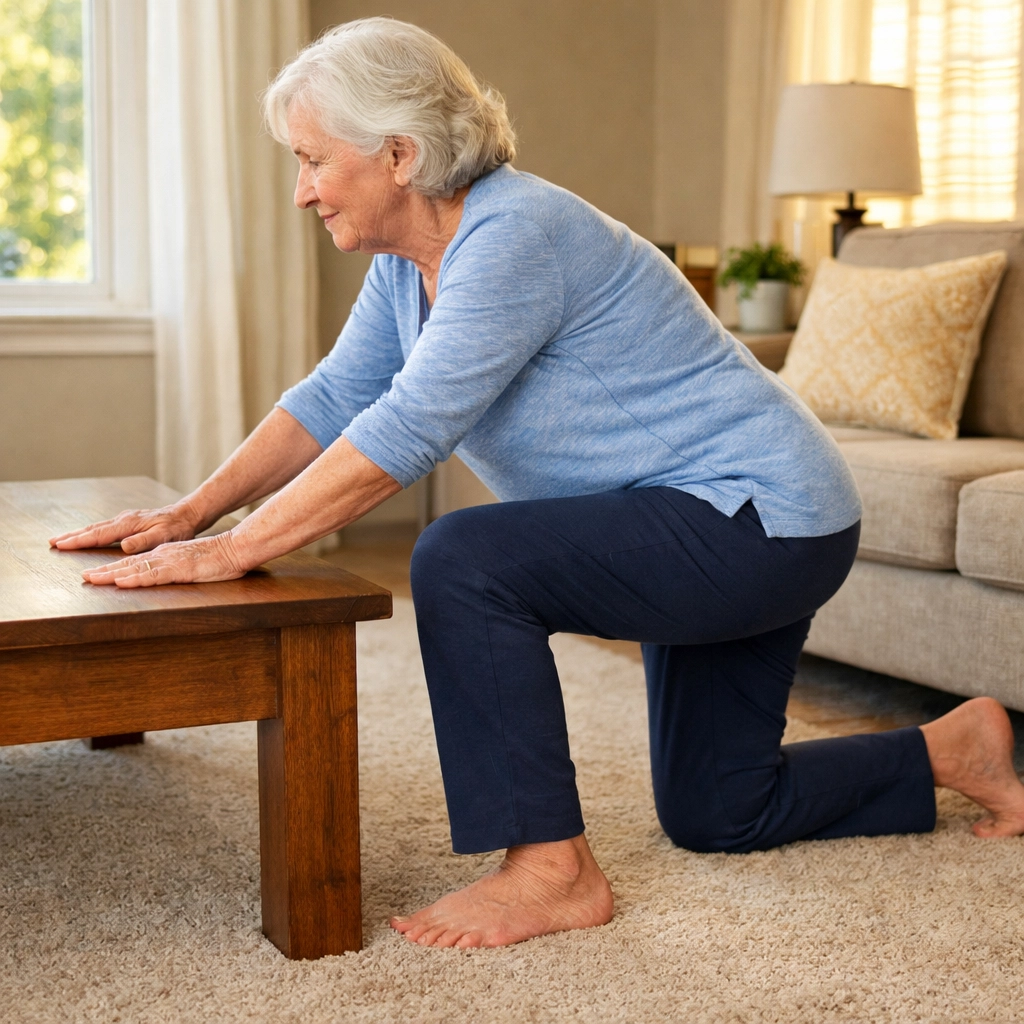
Place your stronger foot flat on the floor, creating a sort of lunge position. Your other knee remains on the ground. Both hands should be firmly on the furniture for support.

Step 7: Push up to standing
Using both your arms and legs, push yourself up to standing. Move slowly and steadily. If you feel lightheaded at any point, lower yourself back down and try again in a minute.
Step 8: Sit down immediately
Even if you feel fine standing, sit down right away. Sit on the chair, couch, or bed you used for support. Stay seated for at least five to ten minutes.
This rest period is crucial. It allows your blood pressure to stabilize and gives you time to notice any delayed pain or dizziness that might not have been apparent right away.
What to Do Once You're Standing
After you've sat down and rested, don't immediately return to your normal activities. Here's what to do instead:
Drink some water. Dehydration can contribute to falls and make recovery more difficult. Sip slowly.
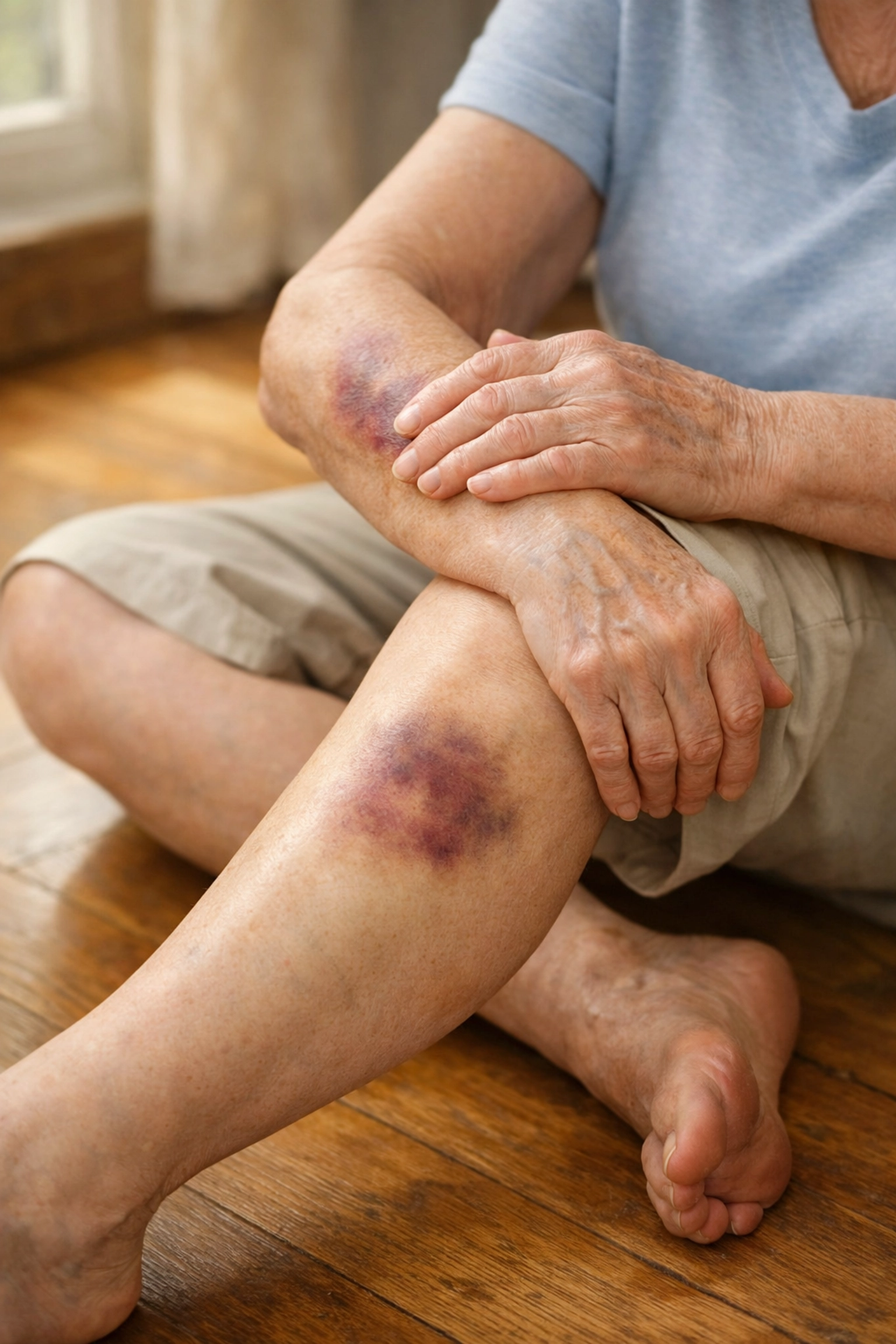
Observe yourself. Pay attention to how you feel over the next several hours. Does anything start to hurt that didn't hurt immediately? Do you feel more tired than usual? Are you developing any bruising or swelling?
Notify someone. Even if you feel fine, tell a family member, neighbor, or friend that you fell. They can check on you later and watch for any changes in your condition.
Review what happened. Once you're feeling settled, think back to what caused the fall. Did you trip over something? Feel dizzy? Lose your balance? Understanding the cause is the first step in prevention.
Document the fall. Write down what happened, the time, what you were doing, and how you felt. This information can be valuable for your doctor, especially if falls become a pattern.
Rest more than usual. Falls are physically traumatic even when they don't cause serious injury. Your body needs extra rest to recover.
If You Can't Get Up: Your Action Plan
Sometimes, despite feeling generally okay, you simply don't have the strength to get yourself up. This doesn't mean you're seriously injured: it might just mean you're tired, the floor is slippery, or you don't have the right furniture nearby.
If you've tried and cannot get up, here's what to do:
Call for help immediately. Use your phone, medical alert button, or voice to call someone. The longer you stay on the floor, the higher your risk of complications like dehydration, pressure sores, or hypothermia.
Stay warm. If you can reach a blanket, towel, or coat, cover yourself. Body temperature can drop quickly when lying on a cold floor.
Move to carpet if possible. If you're on a hard floor and can crawl to a carpeted area, do so. It's more comfortable and warmer.
Keep moving gently. While you wait for help, move your arms and legs periodically to maintain circulation. Don't do anything that causes pain, but gentle movement is better than staying completely still for a long period.
Stay calm. Help is coming. Focus on breathing steadily and staying as comfortable as possible.
Practicing the Technique When You Haven't Fallen
Here's something many people don't consider: you can practice getting up from the floor when you're feeling strong and steady. This practice serves several purposes.
First, it familiarizes you with the process so it's not completely foreign if you ever need to use it. Second, it builds the strength and coordination required for the movements. Third, it helps you identify which side of your body is stronger and which furniture in your home works best for support.
To practice safely:
- Choose a time when you're feeling good and someone else is home
- Clear the area of any obstacles
- Place cushions or pillows on the floor for padding
- Deliberately lower yourself to the floor in a controlled way
- Go through the getting-up process slowly
- Practice from both sides to see which feels easier
- Repeat monthly or quarterly
This isn't appropriate for everyone. If you have severe arthritis, significant balance issues, or other conditions that make getting down to the floor risky, skip this exercise. But for many people, controlled practice can be beneficial.
After the Fall: Important Next Steps
In the days following a fall, several actions can help ensure your recovery and reduce the risk of future incidents:
See your doctor. Schedule an appointment even if you feel fine. Some injuries reveal themselves gradually. Your doctor can also review your medications, as some drugs increase fall risk through side effects like dizziness or drowsiness.
Consider a physical therapy evaluation. Physical therapists can assess your strength, balance, and gait. They can design exercises to address specific weaknesses that might have contributed to your fall.
Review your home safety. Look at where you fell with fresh eyes. What could be modified? Common issues include poor lighting, loose rugs, clutter in walkways, lack of grab bars, and unstable furniture.
Address the underlying cause. Falls happen for reasons. Common contributors include:
- Vision problems
- Medication side effects
- Inner ear issues affecting balance
- Muscle weakness
- Foot problems or inappropriate footwear
- Low blood pressure or blood sugar changes
- Neurological conditions
Working with healthcare providers to address these root causes is essential for long-term safety.
Consider assistive devices. Depending on what caused your fall, you might benefit from a cane, walker, or grab bars in key locations. There's no shame in using tools that keep you safe and independent.
Build strength and balance. Regular exercise focused on leg strength and balance can significantly reduce fall risk. Even simple exercises done daily make a difference.

Moving Forward with Confidence
Experiencing a fall can shake your confidence. Some people become fearful of moving around their homes or participating in activities they previously enjoyed. This fear-driven reduction in activity actually increases fall risk by causing muscle weakness and reduced balance.
The goal is to move forward with both caution and confidence: being appropriately careful while not letting fear control your life. Understanding what to do if you fall again can reduce anxiety. You have a plan. You know the steps. That knowledge itself is protective.
Falls are common, but they don't have to define your life or limit your independence. By knowing how to respond safely and appropriately when one occurs, you're taking control of your safety in a practical, empowering way.
Remember: the key to getting up after a fall is taking your time, listening to your body, and never hesitating to call for help if something doesn't feel right. Your safety is always worth more than your pride or your schedule.

