
Falling is scary. Your heart pounds, your mind races, and you might feel embarrassed or frustrated. But what you do in those first 60 seconds after hitting the ground can make a significant difference in your safety and recovery.
Many people instinctively try to jump right back up after a fall. That's actually one of the worst things you can do. Rushing to stand can lead to additional injuries, dizziness, or another fall. Instead, having a plan for those critical first moments helps you get up safely and minimizes the risk of further harm.
Why the First Minute Matters
The moments immediately following a fall are crucial for several reasons. First, this is when you need to assess whether you've been injured. A broken bone, sprain, or head injury requires different handling than a fall where you're shaken but unharmed.
Second, lying on the ground for extended periods can lead to complications. Research shows that people who remain on the floor for more than an hour after a fall face increased risks of dehydration, pressure sores, pneumonia, and even hypothermia. Getting yourself at least partially off the ground: even just to a seated position on furniture: significantly reduces these risks.
Finally, how you get up matters. Many secondary injuries happen during the process of standing back up, especially when people rush or use unstable objects for support.

Step One: Stop and Breathe
Before you do anything else, pause. Take several deep breaths. This serves multiple purposes.
Falling depletes your energy quickly. Your body floods with adrenaline, your muscles tense, and you've just experienced physical trauma. Those few moments of stillness help you regain some composure and think clearly.
During this time, do a mental check of your body. Can you wiggle your toes? Move your fingers? Turn your head? Start from your head and work down:
- Does your head hurt? Did you hit it?
- Can you move your neck without pain?
- Do your shoulders, arms, and hands respond normally?
- Does your chest or back hurt when you breathe?
- Can you move your hips and legs?
If you experience sharp pain anywhere, especially in your hip, back, or head, stop. Don't try to move that area. This is when you need to call for help or have someone call emergency services for you.
Step Two: Roll to Your Side
If you've determined you can move without severe pain, the next step is rolling onto your side. This is much safer than trying to sit straight up from your back.
Choose the side that feels most comfortable or the side where you have something sturdy nearby to work toward. Extend one arm out to the side in the direction you want to roll. Then, roll your shoulders, hips, and knees all together in that direction, like a log roll.
Take your time with this movement. There's no rush. If you feel dizzy or experience pain during the roll, stop and rest before continuing.

Step Three: Move to Hands and Knees
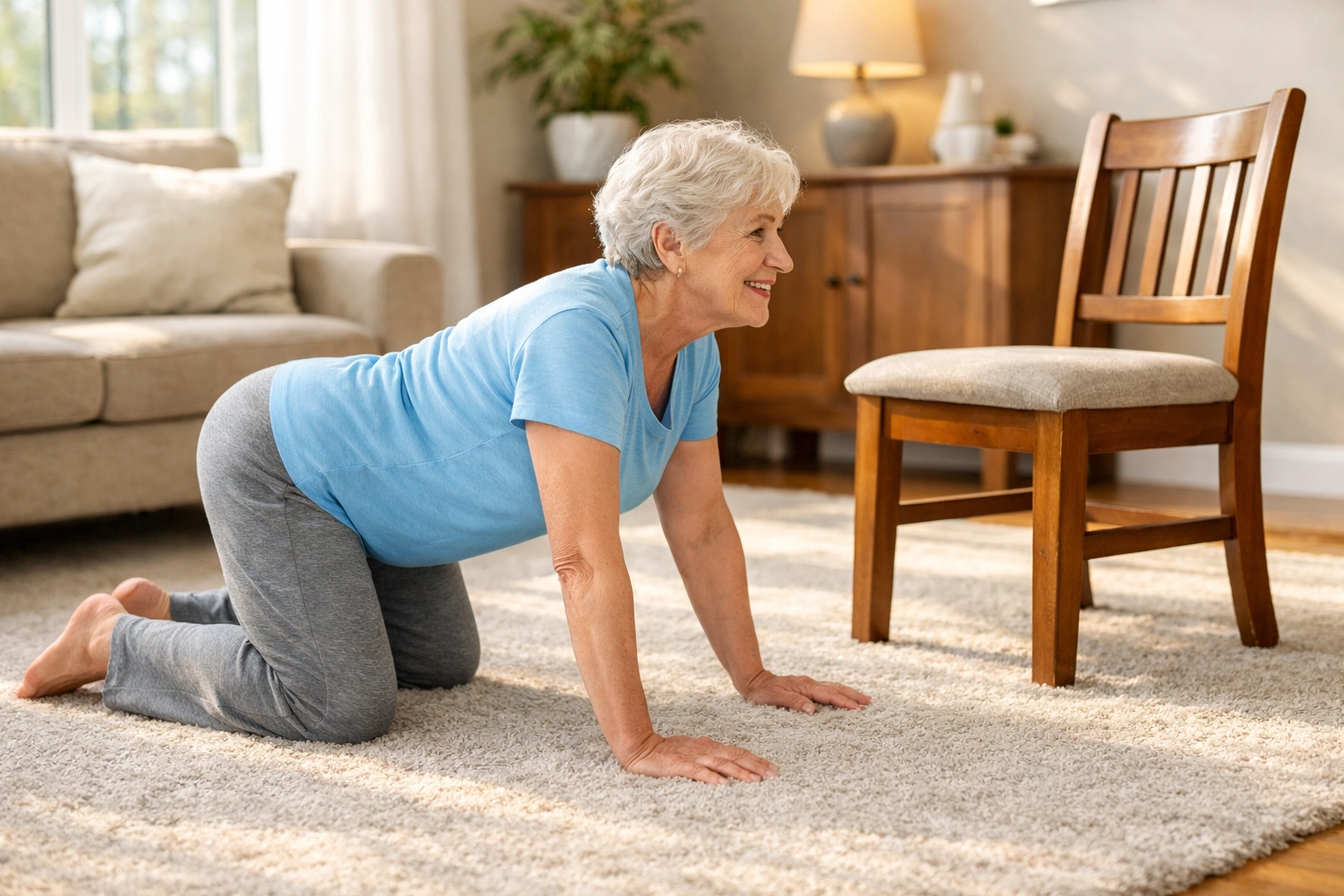
Once you're on your side, the next position is getting onto your hands and knees. This gives you stability and sets you up for the safest way to stand.
Start by bringing your elbows underneath you and pushing with your arms. You're essentially doing a modified push-up to bring your upper body up. Then work your knees underneath you.
If you need to rest in between these movements, that's completely fine. You might end up in a half-propped position on your elbows first before fully getting to hands and knees. Listen to your body.
Being on all fours is actually a stable, safe position. You can stay here as long as you need to catch your breath and prepare for the next step.
Step Four: Find Something Sturdy
Before you go any further, look around from your hands-and-knees position. What's nearby that could support your weight?
Good options include:
- A sturdy chair with arms
- The edge of your bed
- A heavy coffee table
- An ottoman
- The couch
- A stair step
Avoid:
- Wheeled chairs or furniture
- Lightweight decorative tables
- Floor lamps or coat racks
- Anything with a slippery surface
Once you've identified your target, crawl toward it on your hands and knees. Don't worry about how this looks. Crawling is safe and stable, which is what matters right now.
Step Five: Use the Furniture to Sit
Now comes the part where you transition from the floor to a seated position. This should happen in stages, not all at once.
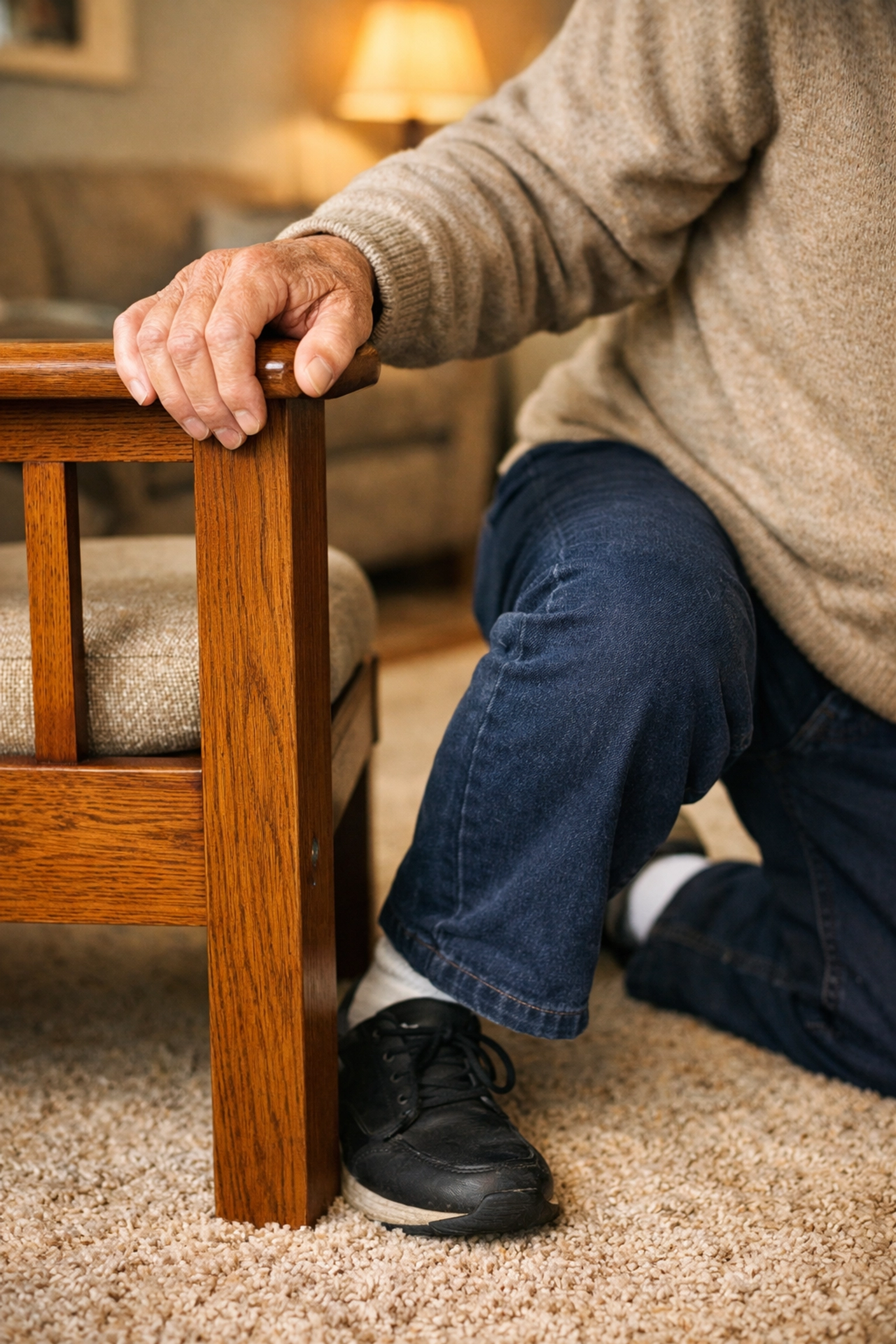
Position yourself next to the sturdy object with your hands on it. The object should be on your stronger side if you have one.
Bring one foot flat on the ground while keeping the other knee down. You're now in what's called a half-kneeling position. Your hands are still on the chair or furniture for support.
From here, push down hard on the furniture with your hands while simultaneously pushing through the foot that's flat on the ground. You're using both your arms and your stronger leg to lift yourself up.
As you rise, pivot your body so your bottom lands on the furniture. You're aiming to sit, not stand.
Rest Before Standing
This is critical: once you're seated on the furniture, stay there. Do not immediately try to stand up.
Sit for at least five to ten minutes. During this time:
- Continue breathing deeply
- Let your heart rate settle
- Notice how you feel
- Check again for any pain or unusual sensations
- Drink some water if possible
Many people feel dizzy when they first sit up after being on the ground, especially if they've been down for more than a few minutes. This dizziness can lead to another fall if you stand too quickly.
What If You Can't Get Up?
Sometimes, despite your best efforts, you might not be able to complete these steps. This could happen if:
- You're injured
- You're too weak
- You've been on the ground too long and your muscles have stiffened
- You don't have anything stable nearby to use
If this happens, don't panic. Here's what to do:
First, try to get to a position that's more comfortable than lying flat. Even propping yourself against a wall or getting partially onto a low step can help.
Second, keep yourself warm. If you can reach a blanket, coat, or towel, pull it over yourself. If you're on a cold floor, try to get part of your body onto a rug or carpet.
Third, call for help. Use your phone if it's within reach. If you have a medical alert device, use it. If you don't have either, try to reach something you can bang on a wall or floor to alert neighbors.
Don't feel embarrassed about calling for help. Emergency responders and medical professionals handle these situations regularly. They're trained to help people up safely and to check for injuries.
When to Seek Medical Attention
Even if you manage to get up on your own, certain situations require medical evaluation:
- You hit your head, even if you feel fine
- You have pain in your hip, back, or wrist
- You feel confused or disoriented
- You have any bleeding
- You were unconscious at any point
- You feel chest pain or difficulty breathing
- You have new bruising or swelling
When in doubt, get checked out. Some injuries, particularly head injuries, can have delayed symptoms.
What NOT to Do
Knowing what to avoid is just as important as knowing the right steps:
Don't try to stand immediately. This is the number one mistake people make. Standing too quickly can cause another fall.
Don't use your head or neck to push yourself up. This can cause neck strain or injury.
Don't grab onto unstable objects. A wobbly table or rolling chair will likely cause you to fall again.
Don't rush. There's no prize for getting up quickly. Take all the time you need.
Don't be too proud to ask for help. If someone is nearby or you can call someone, there's no shame in asking for assistance.
After You're Up and Stable
Once you've been sitting safely for several minutes and feel stable, you can slowly stand. Use the arms of the chair or the furniture to push yourself up. Stand still for a moment before walking.
If you feel steady, walk to a comfortable place to rest for a while longer. Consider:
- Drinking water or having a light snack
- Checking yourself more thoroughly for bruises or soreness
- Thinking about why you fell in the first place
That last point is important. Falls usually happen for a reason: a loose rug, poor lighting, improper footwear, medication side effects, or decreased strength and balance. Identifying the cause can help prevent the next fall.
Practice Makes Prepared
Here's something many people don't consider: you can practice getting up from the floor when you haven't fallen. If you're physically able, practice this technique when you're feeling well, preferably with someone nearby.
Start by sitting on the floor intentionally. Then go through the steps: rolling to your side, getting to hands and knees, crawling to furniture, and using it to sit down. This practice serves several purposes.
First, it builds muscle memory. If you do fall, your body will have a template to follow. Second, it shows you which parts of the process are hardest for you, so you can work on building strength in those areas. Third, it reduces fear. Knowing you can get up makes falling less frightening.
Of course, only practice if you're capable of getting down and up safely. If you have significant mobility issues, practice with a physical therapist or occupational therapist who can modify the technique for your needs.
The Bottom Line
The first 60 seconds after a fall set the tone for your recovery. By staying calm, assessing yourself carefully, and following a methodical approach to getting up, you significantly reduce your risk of additional injury.
Remember the sequence: pause and breathe, roll to your side, move to hands and knees, crawl to something sturdy, sit on it, and rest before standing. Each step matters, and skipping ahead can lead to problems.
If you can't get up or you're injured, calling for help is always the right choice. And if you've had a fall, even if you feel fine afterward, consider discussing it with your doctor. They can help identify risk factors and create a prevention plan.
Falling doesn't mean you're weak or incapable. It's a common occurrence, especially as we age. What matters is how you respond in those crucial first moments and what steps you take afterward to stay safe and healthy.

