
Falls happen. Even with the best precautions, even to the most careful people. If you're a senior or caring for one, knowing how to get up safely after a fall is just as important as knowing how to prevent one in the first place.
The moments after a fall can feel scary and disorienting. Your heart races, your mind spins, and you might feel embarrassed or frustrated. But having a clear plan for getting back up can make all the difference between a minor incident and a serious injury.
This guide walks through the safest method for getting up after a fall, step by step. Whether you're a senior who lives alone or a caregiver who wants to be prepared, understanding this process can help you stay calm and act safely when it matters most.
Why Knowing How to Get Up Matters
More than one in four adults over 65 falls each year. While not every fall results in serious injury, lying on the floor for extended periods creates real risks. Extended time on the ground can lead to dehydration, pressure sores, hypothermia, and increased anxiety about future falls.
Many seniors who fall and can't get up independently report feeling helpless and losing confidence in their mobility. This fear often leads to reduced activity, which ironically increases fall risk over time. Learning the proper technique for getting up restores a sense of control and independence.
The method described here follows a progressive sequence that physical therapists and occupational therapists teach. It's designed to minimize injury risk while gradually building support as you move from lying down to standing.
Before You Try to Get Up: The Critical First Step
Stop and breathe. This might sound simple, but it's the most important step. After a fall, your body floods with adrenaline. Your breathing quickens, your heart pounds, and you might feel an urgent need to get up immediately.
Don't rush. Take five or six slow, deep breaths. This gives your body time to recover from the shock and your mind time to assess the situation clearly.

Check yourself for injuries. Before moving at all, do a mental scan:
- Can you move your arms and legs?
- Do you feel sharp pain anywhere?
- Is anything numb or tingling?
- Do you see any bleeding or notice swelling?
- Did you hit your head?
If you suspect a serious injury: a broken bone, severe pain, dizziness, confusion, or heavy bleeding: do not attempt to get up. Call for help using a phone, medical alert device, or by calling out to family members or neighbors.
If you feel shaken but uninjured, you can proceed with getting up. Take your time with each step and stop immediately if something hurts.
The 5-Step Method for Getting Up Safely
This sequence works because it gradually shifts your weight and builds support at each stage. You're never trying to lift your entire body weight all at once.
Step 1: Roll to Your Side
From lying on your back, choose which side feels more comfortable and roll toward it. Use your arms to help turn your body. You want to end up lying on your side with your knees bent slightly.
If rolling is difficult, try bending one knee and using it to help push your body to the side. Take your time with this. There's no rush.
Step 2: Push Up to Side-Sitting
From your side-lying position, use your upper arm (the one not pressed against the floor) to push yourself up while bringing your legs around. You're aiming for a position where you're sitting with both legs pointing to the same side and your hand supporting you.
This position might feel a bit awkward, but it's an important transition point. It gets your upper body vertical without requiring you to support all your weight yet.
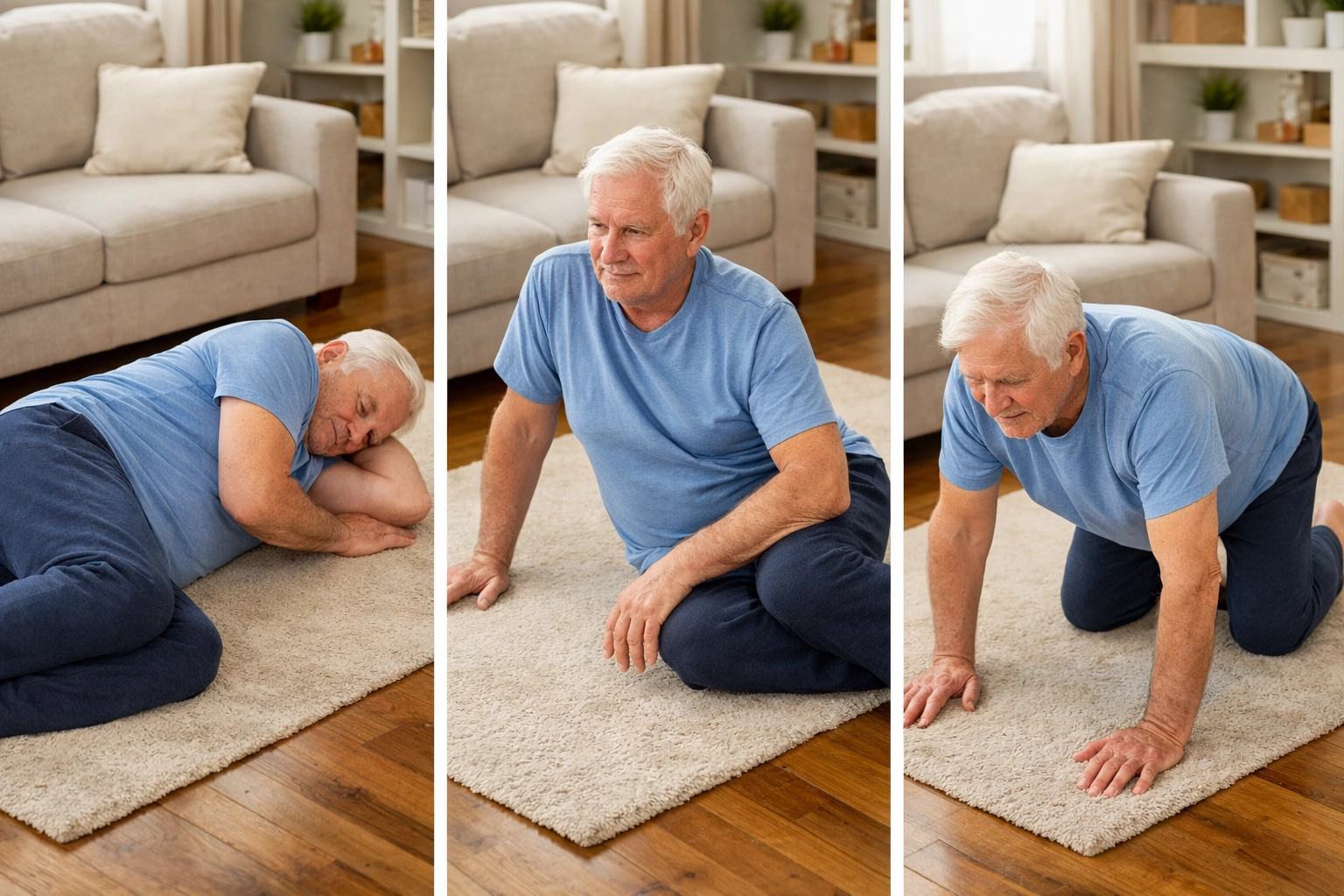
Step 3: Get on Your Hands and Knees
From side-sitting, lean forward and position yourself on all fours. This is called a quadruped position: hands and knees on the ground, like crawling.
If you're not near anything sturdy to grab onto, now is the time to crawl toward something. Look for:
- A sturdy chair (not one with wheels)
- A heavy table or desk
- A bed frame
- A wall with a grab bar
- A low, secure couch
Don't use items that could tip over, like small tables, laundry baskets, or anything on wheels. Take your time crawling. It's perfectly okay if this step takes a few minutes.
Step 4: Rise to a Kneeling Position
Once you're next to your sturdy surface, place your hands on it for support. Slowly push yourself up so you're kneeling upright: both knees on the ground, upper body vertical.
From here, bring one foot forward so that foot is flat on the ground while the other knee stays down. This is called a half-kneeling position. Keep both hands on your sturdy surface for balance.
Choose your stronger leg to bring forward first. This leg will do most of the work in the next step.
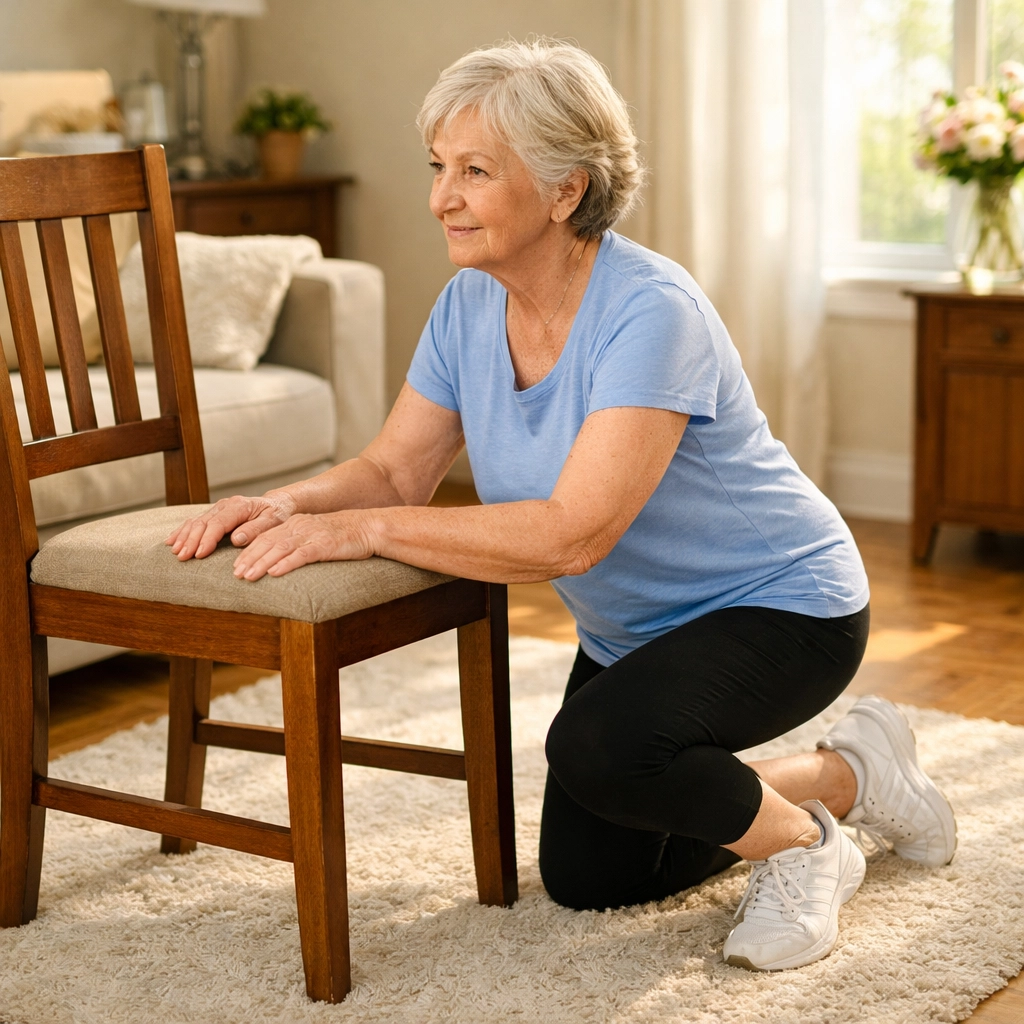
Step 5: Stand Up Carefully
With your hands firmly on the sturdy surface and one foot flat on the ground in half-kneeling, push through that front leg to stand up. Let the surface take some of your weight as you rise.
Some people find it easier to first get both feet under them in a squat position before standing fully. That's fine too. Do whatever feels most stable for your body.
Once you're standing, don't rush off. Stay holding the sturdy surface for at least a minute or two. Let your blood pressure stabilize and make sure you don't feel dizzy or lightheaded.
What If You Can't Get Up?
Sometimes getting up isn't possible or safe. If you've tried the steps above and feel stuck, or if you suspect an injury, it's time to call for help.
Use what you have:
- A cell phone (keep one on you or nearby at home)
- A medical alert system (worn as a pendant or bracelet)
- A landline phone if you can reach it
- Your voice to call out for family, neighbors, or passersby
While waiting for help, try to stay warm. If possible, pull a blanket, towel, or nearby clothing over yourself. Even carpet or a rug can provide some insulation. Continue doing gentle movements with your arms and legs to maintain circulation.
There's absolutely no shame in calling for assistance. Emergency services, family members, and neighbors would all rather help you up safely than have you risk further injury trying to manage alone.
How Caregivers Can Help
If you're caring for someone who has fallen, your first priority is keeping them: and yourself: safe.
Assess before assisting. Ask them where they hurt and watch for signs of injury. Don't try to lift someone up if they're in pain, confused, or if you suspect a broken bone or head injury. Call 911 instead.
If they seem okay to get up and you're going to assist them, follow the same step-by-step process described above. Guide them through each position rather than trying to lift them directly from the ground.
Protect your own back. Many caregiver injuries happen when trying to lift someone from the floor. Use proper body mechanics: bend your knees, keep your back straight, and don't twist. If the person is too heavy for you to assist safely, call for help.
Having a plan in advance makes a huge difference. Talk through the five-step process together when there's no emergency. Some families even practice it together so everyone knows what to expect.
Building Confidence: Practice When You're Not Fallen
The floor can feel like a scary place after a fall. Some seniors develop such anxiety about falling again that they avoid practicing how to get up, but this creates a catch-22: if you don't know you can get up, the fear of falling grows stronger.
Physical therapists often recommend practicing the get-up sequence in a safe, controlled environment. Start on a bed or therapy mat if the floor feels too intimidating. Work through each position slowly:
- Lying on your back
- Rolling to your side
- Side-sitting
- On all fours
- Kneeling
- Standing
Do this with a physical therapist, caregiver, or trusted family member present. Practice builds muscle memory and confidence. You're essentially teaching your body the movements so they come more naturally if you need them in a real situation.
The Bigger Picture: Prevention and Strength
Learning how to get up after a fall is crucial, but reducing fall risk in the first place makes the biggest difference. Regular strength and balance exercises help in two ways: they make falls less likely and they make recovery easier if a fall does happen.
The Centers for Disease Control and Prevention recommends that older adults do strength and balance exercises at least three times per week. These don't need to be intense gym workouts. Simple exercises like standing on one foot, walking heel-to-toe, or doing chair squats build the exact muscles and balance skills you need for both preventing falls and getting up safely.
A physical therapist can design an exercise program tailored to your current fitness level and any health conditions you have. They can also assess your home for fall hazards and suggest modifications.
When to See a Doctor After a Fall
Even if you got up successfully and nothing seems broken, certain situations warrant a medical evaluation:
- You hit your head, even if you don't have immediate symptoms
- You feel dizzy, confused, or more tired than usual in the hours or days after
- You notice increased pain, swelling, or bruising developing later
- This is your first fall, or falls are becoming more frequent
- You're taking blood thinners (these increase internal bleeding risk)
Falls often signal underlying issues: medication side effects, vision problems, balance disorders, or other health changes. A medical evaluation can identify and address these root causes.
Final Thoughts
Falling doesn't mean losing your independence. Having a clear plan for getting up safely, whether you're doing it yourself or helping someone else, transforms a frightening situation into a manageable one.
The five-step method: stop and assess, roll to your side, push to side-sitting, get on hands and knees, kneel then stand: works because it's gradual and builds support at each stage. Practice it when you can, remember it when you need it, and never hesitate to call for help when getting up safely isn't possible alone.
Knowledge reduces fear. By understanding this process, you're taking control of your safety and maintaining the independence that matters so much to quality of life.

