
Falls happen. Even with every precaution in place, they're still one of the most common accidents for older adults. But here's what many people don't realize: knowing how to safely get up after a fall can be just as important as preventing one in the first place.
The moments after a fall are critical. Panic, rushing to stand, or using the wrong technique can turn a minor tumble into a serious injury. Worse, many seniors who fall and can't get up on their own end up lying on the floor for hours, which creates additional health risks like dehydration, hypothermia, or pressure sores.
This guide walks through a proven five-step method that seniors and caregivers should both know: and ideally practice: before an actual fall occurs. Think of it like a fire drill: rehearsing the steps when you're calm and steady makes them second nature when you really need them.
Before You Move: The Critical First Step
The natural instinct after falling is to jump up quickly, often out of embarrassment or frustration. Resist that urge.
Step Zero is always this: Stop. Breathe. Assess.
Take several deep breaths. Let your heart rate settle. Falling triggers an adrenaline response, and that surge can mask pain or injuries. Lying still for 30 to 60 seconds gives your body time to recover from the initial shock and helps you think more clearly.

While you're catching your breath, do a mental scan of your body:
- Can you move your fingers and toes?
- Do you have sharp pain anywhere, especially in your head, neck, back, or hips?
- Are you dizzy or disoriented?
- Is anything visibly swollen or at an odd angle?
If you suspect a serious injury: particularly a head injury, broken bone, or spinal damage: do not attempt to move. Call for help immediately or ask someone nearby to call 911.
If you're a caregiver who witnesses a fall, your first job is to reassure the person and help them stay calm. Don't rush them. Don't try to lift them yourself. Just be a steady, supportive presence while they assess their condition.
The Five-Step Safe Recovery Method
If you've determined there are no serious injuries, you can begin the process of getting up. This method is designed to minimize strain on your joints and reduce the risk of falling again during the recovery process.
Step 1: Roll Onto Your Side
From whatever position you landed in, slowly roll onto your side. Choose the side that feels stronger or less painful.
This isn't just about comfort. Rolling onto your side protects your back and gives you a stable starting position for the next movements. It's also easier on your muscles than trying to sit straight up from lying on your back.
Take your time with this. There's no prize for speed.
Step 2: Push Up to Hands and Knees
Once you're on your side, bring your knees toward your chest slightly, then use your hands to push yourself up onto all fours: into a crawling position.
This might feel undignified, especially if you're in a public place or someone is watching. That's a normal feeling, but remember: this position is biomechanically the safest way to prepare your body to stand. It distributes your weight evenly and gives you maximum stability.
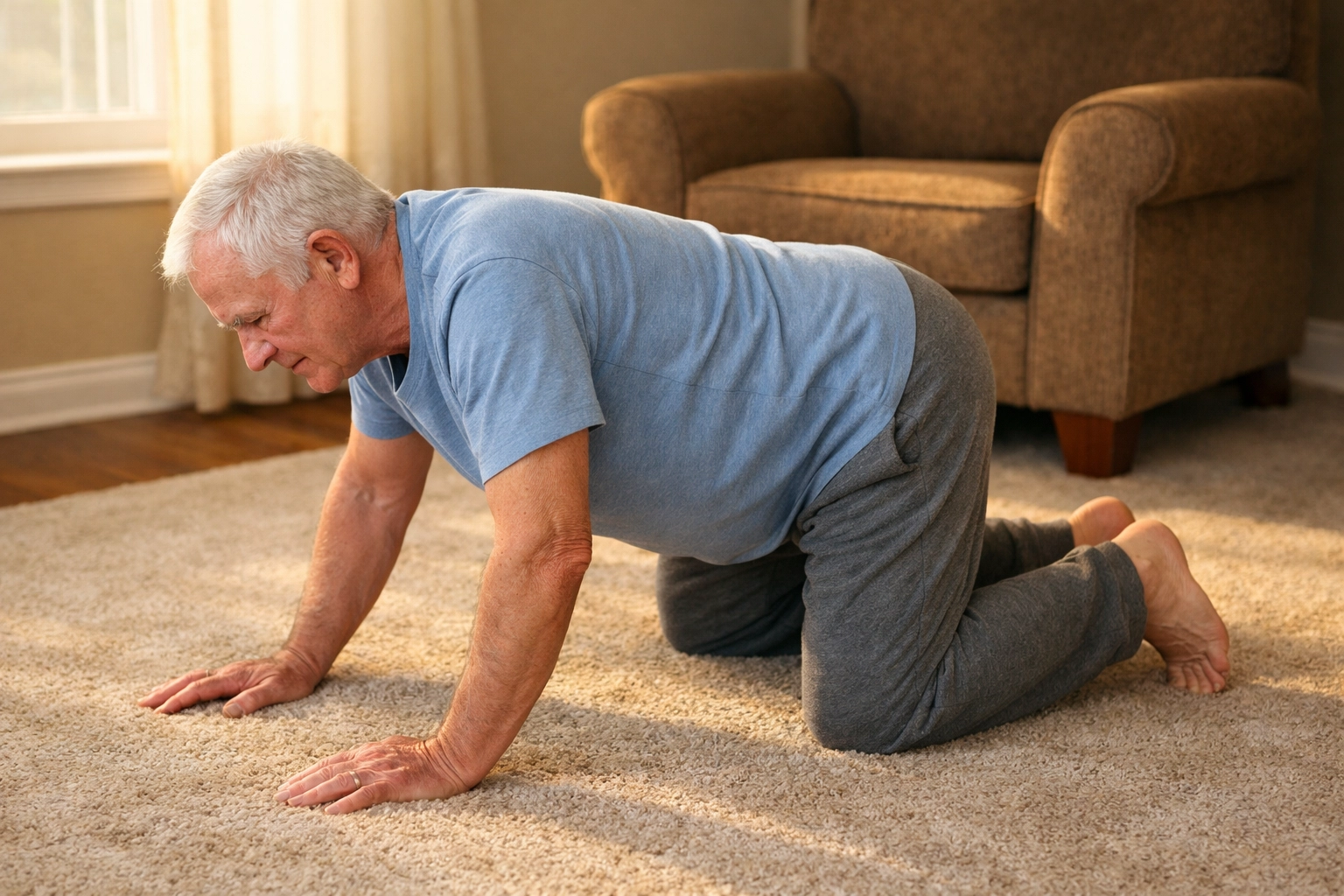
If your knees are painful or weak, you can place a small pillow or folded towel under them if one is within reach. Otherwise, just take it slow.
Step 3: Crawl to Sturdy Furniture
Still on your hands and knees, look around and identify the sturdiest piece of furniture nearby. You're looking for:
- A heavy chair (not one with wheels)
- A couch or sofa
- A bed frame
- A sturdy table or coffee table
- A bathroom vanity
Avoid lightweight furniture, anything on wheels, or objects that might tip if you lean on them.
Crawl toward your chosen support piece. If the floor is slippery, move carefully and deliberately. If you need to rest during the crawl, that's completely fine. Pause, breathe, and continue when you're ready.
Step 4: Position Yourself and Prepare to Rise
Once you reach the furniture, you have two main options depending on what feels more comfortable:
Option A: The Kneeling Rise
Place both hands firmly on the furniture at about shoulder width. Bring your stronger leg forward so that foot is flat on the floor, knee bent at about 90 degrees. Your other leg should still be on the floor in a kneeling position.
This creates a stable base: think of it like a runner's starting position.
Option B: The Half-Kneel
Position yourself so you're kneeling on one knee (like proposing), with your stronger leg forward and foot flat. Both hands should be on the furniture for support.
Choose whichever position feels more stable for you.
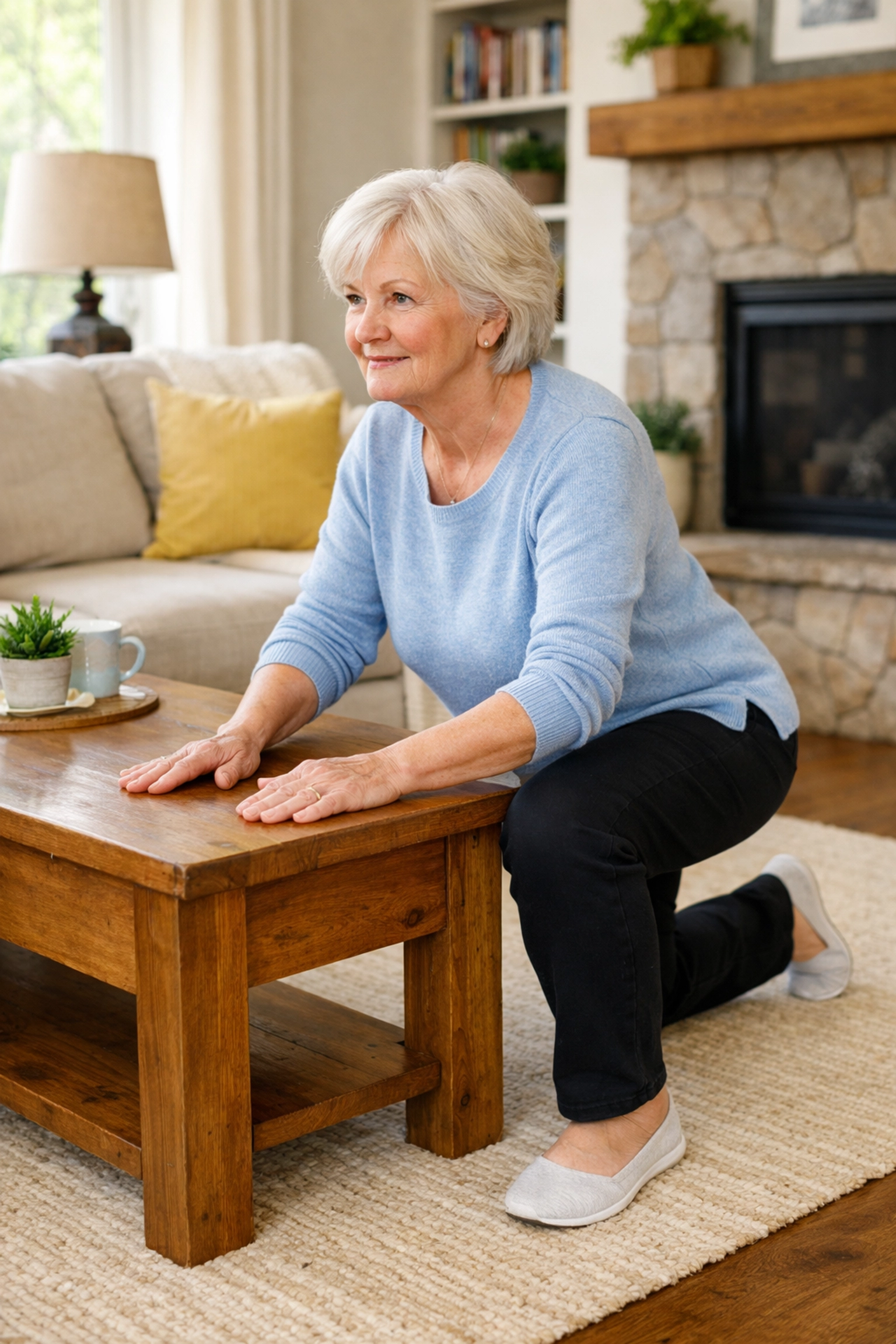
Step 5: Push Up to Standing
This is the moment that requires the most strength and balance, so take a breath before you begin.
Using your hands on the furniture for support, push down through your forward foot and stand up slowly. Don't jerk or rush. Use your leg muscles: not your back: to lift yourself.
Your hands are there for balance and guidance, not to haul your entire body weight. If you feel shaky at any point, pause in a partial standing position until you feel steadier.
Once you're fully upright, keep your hands on the furniture for support.
After You're Up: The Essential Next Steps
You're standing. Excellent. But you're not done yet.
Immediately sit down on a stable chair or the edge of a bed. Your body just went through a physically demanding process, and your blood pressure may have shifted. Sitting prevents a secondary fall from dizziness or fatigue.
Rest for at least five to ten minutes. During this time:
- Notice any pain that might have been masked by adrenaline
- Check for delayed symptoms like dizziness or nausea
- Drink some water if possible
- Consider what caused the fall
Don't immediately jump back into whatever activity you were doing. Give your body time to fully recover.
Special Situations and Considerations
If You're Alone and Can't Reach Furniture
If there's no sturdy furniture within crawling distance, look for alternatives:
- Can you reach a wall? Wall corners provide two surfaces to brace against
- Is there a staircase nearby? You can use the stairs themselves to gradually work your way up
- Can you crawl to a doorway? The door frame can provide support
In the worst case scenario where you truly cannot get up, don't exhaust yourself trying repeatedly. Conserve your energy, stay as warm as possible, and call for help using a phone or medical alert device if you have one within reach.
If You've Fallen in the Bathroom
Bathroom falls present unique challenges because of limited space and slippery surfaces. If you've fallen in the shower or near water:
- Be extra cautious about slippery floors
- Use the toilet, sink, or tub edge as support (test stability first)
- Consider turning on the bathroom fan or cracking a door to prevent overheating while you recover
If You Use a Mobility Aid
Don't try to use your cane or walker to pull yourself up from the floor: these devices aren't designed to support that kind of vertical weight and could cause another fall. Get to furniture first, stand up, then retrieve your mobility aid once you're stable.

What Caregivers Need to Know
If you're helping someone who has fallen, your role is to guide and support: not to lift.
Here's what to do:
Assess the Situation Calmly
Approach the person and speak in a calm, reassuring voice. Your demeanor sets the tone. If you're panicked, they'll become more anxious.
Check for Injuries
Ask them where they feel pain. Look for obvious signs of injury. If there's any doubt about a serious injury, call 911 before attempting any movement.
Guide, Don't Lift
Walk them through the five-step process verbally. Stand nearby to provide psychological support and catch them if they become unsteady, but don't try to haul them up yourself. Improper lifting causes back injuries to caregivers and can worsen injuries to the person who fell.
When You Should Help Physically
The only time you should provide physical assistance is if:
- You've been trained in safe transfer techniques
- The person is unable to complete the steps independently even with verbal guidance
- You have a gait belt or transfer belt to use properly
Even then, your role is to guide and stabilize, not to lift their full body weight.
After They're Up
Stay with them while they rest. Monitor for delayed symptoms. Help them identify what caused the fall. And importantly, don't shame or scold them for falling: it happens, and making them feel bad about it only increases anxiety around mobility.
When to Call for Emergency Help
Call 911 immediately if the person who fell:
- Hit their head, especially if they lost consciousness or feel confused
- Has severe pain, especially in the hip, back, or neck
- Cannot move a limb or has numbness and tingling
- Has a limb that looks deformed or bent at an unusual angle
- Is bleeding significantly
- Lost consciousness, even briefly
- Becomes increasingly confused or drowsy
- Cannot get up after several attempts
- Has difficulty breathing or chest pain
When in doubt, call for help. Emergency responders would rather check someone who turns out to be fine than arrive to find someone who's been lying injured for hours.
Practice Makes Prepared
Here's something most people don't consider: you can practice these steps before you ever actually need them.
In fact, you should.
Choose a time when you're feeling well and have someone else home. Get a cushion or yoga mat if you want extra padding. Then, slowly and carefully, go through the five-step sequence from lying on the floor to standing.
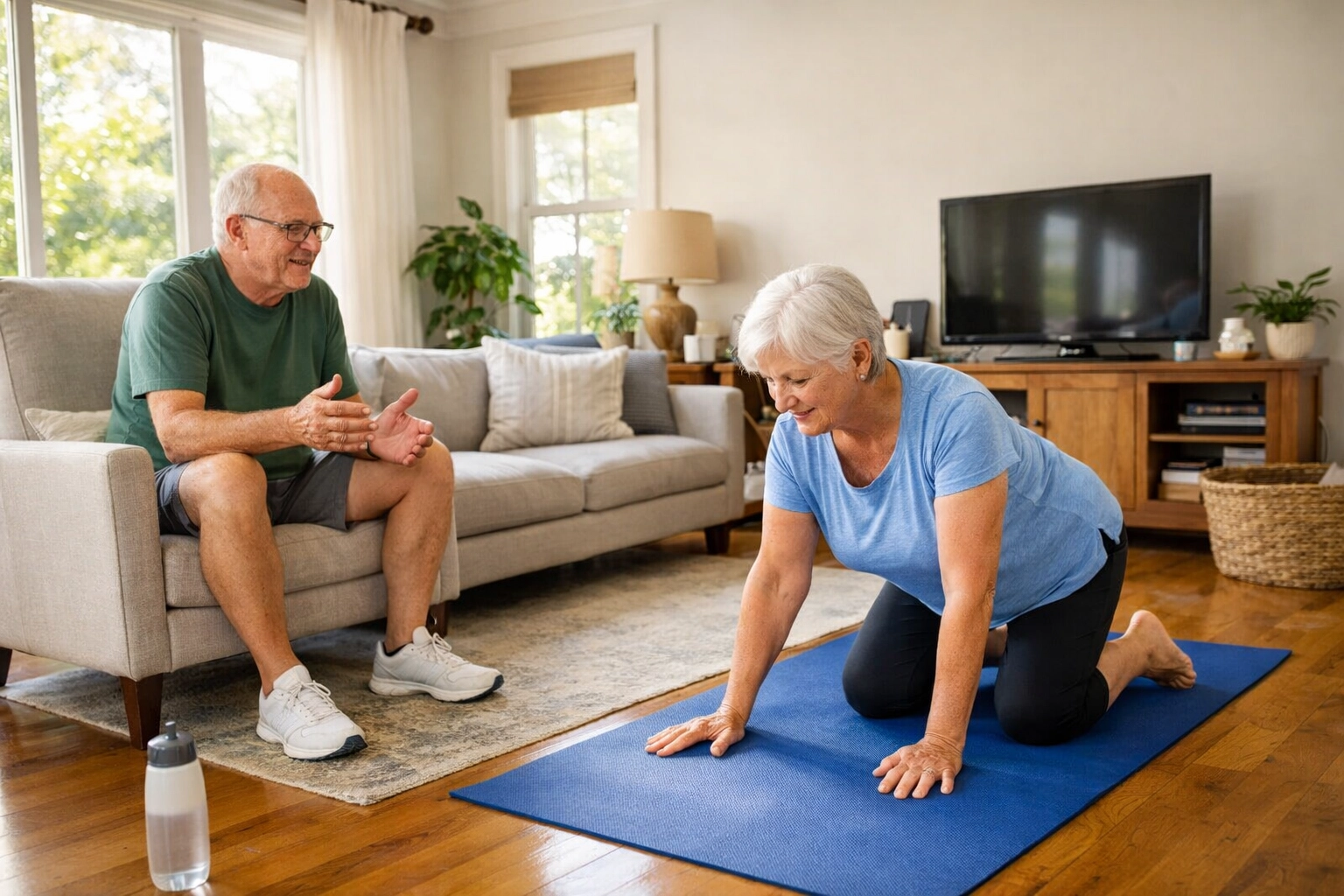
This practice session helps in several ways:
- You'll know exactly what to do if you ever fall for real
- You'll identify which pieces of furniture in your home are sturdy enough to use
- You'll discover if any steps are particularly difficult for you, which can inform conversations with your doctor or physical therapist
- You'll build confidence that you could get up independently if needed
For caregivers, practicing the coaching role: guiding someone through the steps verbally without physically lifting: is equally valuable.
Building Long-Term Confidence
Knowing you have a plan for getting up after a fall does something powerful: it reduces the fear of falling in the first place.
Fear of falling is a real phenomenon that causes many older adults to limit their activities, which ironically increases fall risk by reducing strength and balance. But when you know you have a proven method to safely recover, that fear loses some of its power.
This knowledge is a form of insurance. You hope you never need it, but having it provides peace of mind.
Combine this skill with good fall prevention strategies: proper lighting, cleared walkways, appropriate footwear, regular strength exercises, and well-placed grab bars: and you've created multiple layers of safety.
Falls are common, but they don't have to be catastrophic. The five-step method gives you a practical, safe way to recover your independence if the unexpected happens. Practice it, share it with family members, and remember: taking your time is always the right choice.

