
If you've just fallen and you're reading this from the floor, first: take a deep breath. You're going to be okay. What happens in the next few minutes matters, and this guide will walk you through exactly what to do: whether you're hurt, shaken up, or just not sure how to get back on your feet safely.
Falls happen. Even to careful people. Even to active, healthy seniors. But knowing how to respond can make all the difference between a minor incident and a serious injury. Let's break down exactly what to do, step by step.
First Things First: Don't Rush
Your instinct might be to jump up immediately, especially if you're embarrassed or worried someone will see you. Resist that urge.
Take several slow, deep breaths. You've just experienced a physical shock, and your body needs a moment to adjust. Your blood pressure might have spiked, your adrenaline is pumping, and moving too quickly could make things worse.
Stay where you are for at least 30 seconds to a minute. This isn't wasting time: it's giving your body a chance to stabilize. Use this moment to collect yourself mentally and physically.
Assess Before You Move
Before attempting to get up, you need to figure out if you're injured. This is critical because getting up the wrong way: or getting up at all when you shouldn't: can turn a minor fall into a major problem.

Ask yourself these questions:
- Do you have any sharp, severe pain anywhere?
- Can you move all your limbs without significant discomfort?
- Does your neck or back hurt?
- Are you bleeding anywhere?
- Did you hit your head?
- Do you feel dizzy or disoriented?
- Can you remember what caused the fall?
If you're experiencing severe pain, can't move a limb, hit your head hard, or feel extremely dizzy, do not attempt to get up. Stay where you are and call for help. We'll cover that in detail below.
If you're sore but nothing feels broken or seriously injured, you can proceed to getting up: but slowly and carefully.
The Safe Way to Get Up: Step-by-Step
This method is recommended by physical therapists and occupational therapists as the safest way to get up from the floor after a fall. It takes a little time, but it minimizes your risk of re-injury or falling again.
Step 1: Roll to Your Side
Slowly roll onto your side. If one side feels better than the other, choose that one. Rest here for a moment and let your body adjust to the new position.
This position is more stable than lying flat on your back and makes it easier to push yourself up.
Step 2: Push Up to Hands and Knees
From your side, use your arms to push yourself up into a crawling position: hands and knees on the floor. This might feel undignified, but it's the safest position for the next steps.
Take another breather here if you need it. There's no rush.
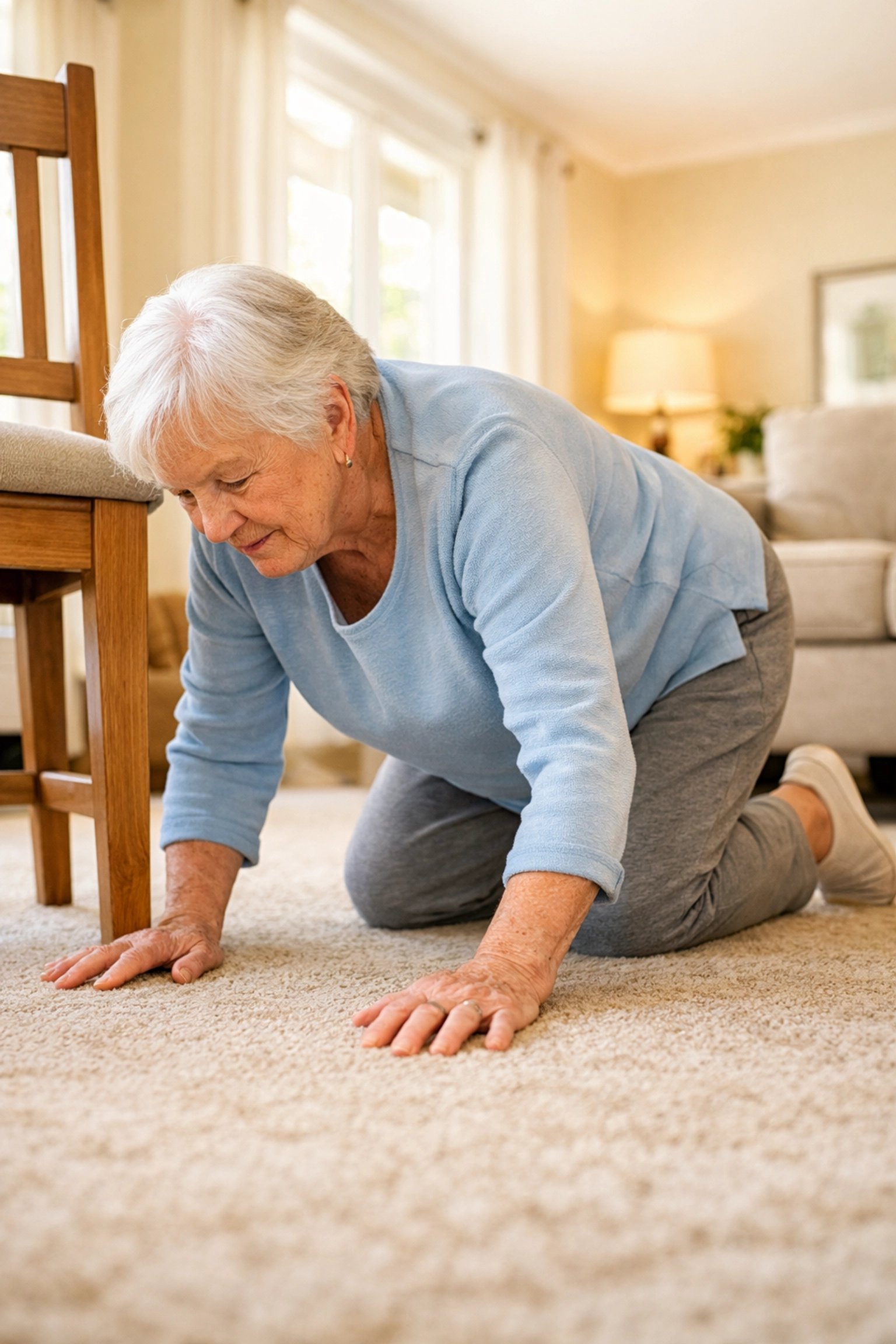
Step 3: Look for Sturdy Furniture
While you're on your hands and knees, look around for a piece of sturdy furniture. You're looking for:
- A solid chair (not one with wheels)
- A couch or sofa
- A coffee table or end table
- A bed frame
- A stair railing (if you're near stairs)
Avoid furniture that might tip or slide, like lightweight chairs, ottomans with wheels, or unstable tables.
Step 4: Crawl to the Furniture
Slowly crawl to the sturdy furniture you've identified. There's nothing wrong with crawling: it's actually the most stable position for moving across the floor. If crawling is too difficult, you can scoot on your bottom or drag yourself using your arms.
The key is getting close enough to use the furniture for support.
Step 5: Place Your Hands on the Furniture
Position yourself in front of the furniture and place both hands firmly on it. Make sure it feels stable and can support your full weight.
Step 6: Bring Your Stronger Leg Forward
Bring one foot up and place it flat on the floor in front of you, creating a half-kneeling position. If you have a stronger leg or a weaker leg, put the stronger one forward.
Your position should look like a deep lunge: one knee still on the floor, the other leg bent at about 90 degrees with your foot flat.
Step 7: Push Up to Standing
Using the furniture for support:
- Push down on the furniture with your hands
- Push through your forward leg
- Slowly rise to a standing position
Take your time with this. There's no prize for speed. If you feel wobbly or dizzy, stay in the half-kneeling position until you feel steady.
Step 8: Sit Down
Once you're standing, don't just start walking. Turn slowly and sit down in a chair or on the edge of the bed. Lower yourself carefully, keeping one hand on the furniture for support.
Sit for at least five to ten minutes before attempting to walk. Let your body fully recover from the fall and the effort of getting up.

When You Can't Get Up on Your Own
Sometimes, despite your best efforts, you simply can't get up. This might be because:
- You're in too much pain
- You don't have the strength
- You feel too dizzy or unstable
- There's no furniture within reach
- You suspect you've injured yourself
If you can't get up, here's what to do:
If Someone is Home
Call out for help. Even if you think no one can hear you, try. Yell, shout, bang on the floor or wall with your hand or an object if you can reach one.
If You Have a Medical Alert System
Press your button. This is exactly what it's for. Don't feel embarrassed: these systems exist specifically for situations like this.
If You Have Your Phone
Call someone. Call 911, call a family member, call a neighbor. If your phone isn't in reach, try to maneuver toward it carefully, but don't risk injuring yourself further.
If You're Alone Without Help
This is the scenario that frightens people most, but you have options:
Stay warm. If you can reach a blanket, coat, or towel, pull it over yourself. Staying on a cold floor for an extended period can lead to hypothermia, even indoors.
Keep moving what you can. Gently move your arms and legs to keep circulation going. Don't try to get up, but small movements can help.
Make noise periodically. If you have neighbors, bang on the floor, wall, or radiator. Someone might hear you.
Wait for someone to check on you. If you have regular visitors: home health aides, family members, friends who call daily: they'll notice when you don't answer and check on you.
This situation underscores why medical alert systems and regular check-ins are so important, especially for people who live alone.
After You're Up: Important Next Steps
Getting up is just the first part. What you do afterward matters too.
Sit and Recover
Don't immediately go back to whatever you were doing. Sit quietly for at least 10-15 minutes. Drink some water if you can get it safely. Let your heart rate return to normal.
Check Yourself Thoroughly
Now that you're up and calm, do a more thorough check:
- Look for bruises, cuts, or swelling
- Note any areas that feel tender or painful
- Check if anything feels different when you move
- See if you're limping or favoring one side
Figure Out Why You Fell
This is crucial for preventing another fall. Think back:
- Did you trip over something?
- Did you feel dizzy beforehand?
- Were you rushing?
- Was the floor wet or slippery?
- Did you misjudge a step?
- Were you wearing slippery shoes or socks?
Write down what you remember. This information will be valuable for your doctor.

Call Your Doctor
Even if you feel fine, contact your doctor within the next day or two to report the fall. Falls can be a sign of underlying issues like:
- Medication side effects
- Balance problems
- Vision changes
- Blood pressure issues
- Inner ear problems
- Muscle weakness
Your doctor might want to see you for a fall-risk assessment or adjust your medications.
Don't Ignore Pain That Develops Later
Some injuries don't show up immediately. If you develop increasing pain, swelling, bruising, or difficulty moving in the hours or days after a fall, contact your doctor right away. This is especially important for head injuries, which can have delayed symptoms.
Preventing Your Next Fall
Here's an uncomfortable truth: if you've fallen once, you're at higher risk of falling again. But that doesn't mean another fall is inevitable. You can significantly reduce your risk.
Strength and balance matter. Working with a physical therapist on exercises that build leg strength and improve balance can make a huge difference. Even simple exercises done regularly can help.
Review your medications. Some medications cause dizziness, lightheadedness, or blood pressure changes that increase fall risk. Talk to your doctor about whether any of your medications might be contributing.
Make your home safer. Look at where you fell and why. Then look at the rest of your home with fresh eyes:
- Remove throw rugs or secure them with non-slip backing
- Improve lighting, especially in hallways and stairs
- Clear clutter and tripping hazards
- Install grab bars in bathrooms
- Make sure stair railings are secure
- Keep frequently used items at easy-to-reach heights
Wear proper footwear. Slippery socks, loose slippers, and shoes with smooth soles all increase fall risk. Wear supportive shoes with good traction, even indoors.
Use assistive devices if recommended. If your doctor or physical therapist suggests a cane, walker, or other assistive device, use it. These tools exist to help you maintain independence safely.
You're Not Alone
Falling is frightening, and lying on the floor wondering how you'll get up is one of the scariest experiences many seniors face. But you've handled it. Whether you got up on your own or called for help, you did what you needed to do.
The fear of falling again is real, and it can lead people to limit their activities, which actually increases fall risk by causing deconditioning and muscle loss. Don't let fear keep you from living your life. Instead, channel that concern into practical prevention.
Talk to your doctor. Work with a physical therapist. Make your home safer. Stay active. These steps can help you maintain your independence and confidence.
And if you do fall again? You'll know exactly what to do.

