
If you've ever gotten up in the middle of the night to use the bathroom, you know that feeling of disorientation. Everything looks different in the dark, and your body isn't quite awake yet. For older adults, these nighttime trips can be particularly risky: and the statistics back that up.
Research shows that a significant portion of falls among seniors happen at night or during those early morning hours. Understanding why this happens and what you can do about it can make all the difference in keeping yourself or your loved ones safe.
Why Nighttime is Fall Prime Time
Let's talk about what makes the nighttime hours so hazardous. It's not just about the darkness, though that plays a major role.
Your Body Isn't Fully Awake
When you first get out of bed, your brain and body are still in sleep mode. This grogginess affects your reaction time, balance, and decision-making. You might think you're alert enough, but your coordination and spatial awareness are actually impaired for those first few minutes after waking.
If you have sleep disorders like sleep apnea or insomnia, this grogginess can be even more pronounced. Poor sleep quality means your body doesn't get the restorative rest it needs, leaving you more vulnerable to falls even during brief nighttime wakings.
Blood Pressure Changes
Here's something many people don't realize: when you've been lying down for hours and suddenly stand up, your blood pressure needs to adjust quickly to keep blood flowing to your brain. This process is called orthostatic adjustment, and it doesn't always work smoothly: especially for older adults.
When your blood pressure doesn't adjust fast enough, you can experience lightheadedness or dizziness. This is called orthostatic hypotension, and it's a major contributor to nighttime falls. One moment you're standing by the bed, and the next, the room starts spinning.
Some people also experience benign paroxysmal positional vertigo, or BPPV, which causes brief episodes of dizziness when changing head positions. This can be triggered by the simple act of sitting up in bed.
You Can't See Where You're Going
This one seems obvious, but it's worth emphasizing. In darkness, your eyes can't pick up the details they need to navigate safely. That small throw rug you step over automatically during the day becomes invisible at 2 AM. The edge of the nightstand you normally avoid? You might walk straight into it.
Reduced visibility affects depth perception too, making it harder to judge distances and step heights. This is particularly dangerous on stairs or when stepping over thresholds between rooms.
Creating a Safer Nighttime Environment
The good news is that most nighttime falls are preventable with some strategic changes to your home environment and habits.
Light the Way
Lighting is your first line of defense against nighttime falls, but you don't want to flood your home with bright lights that disrupt your sleep cycle.
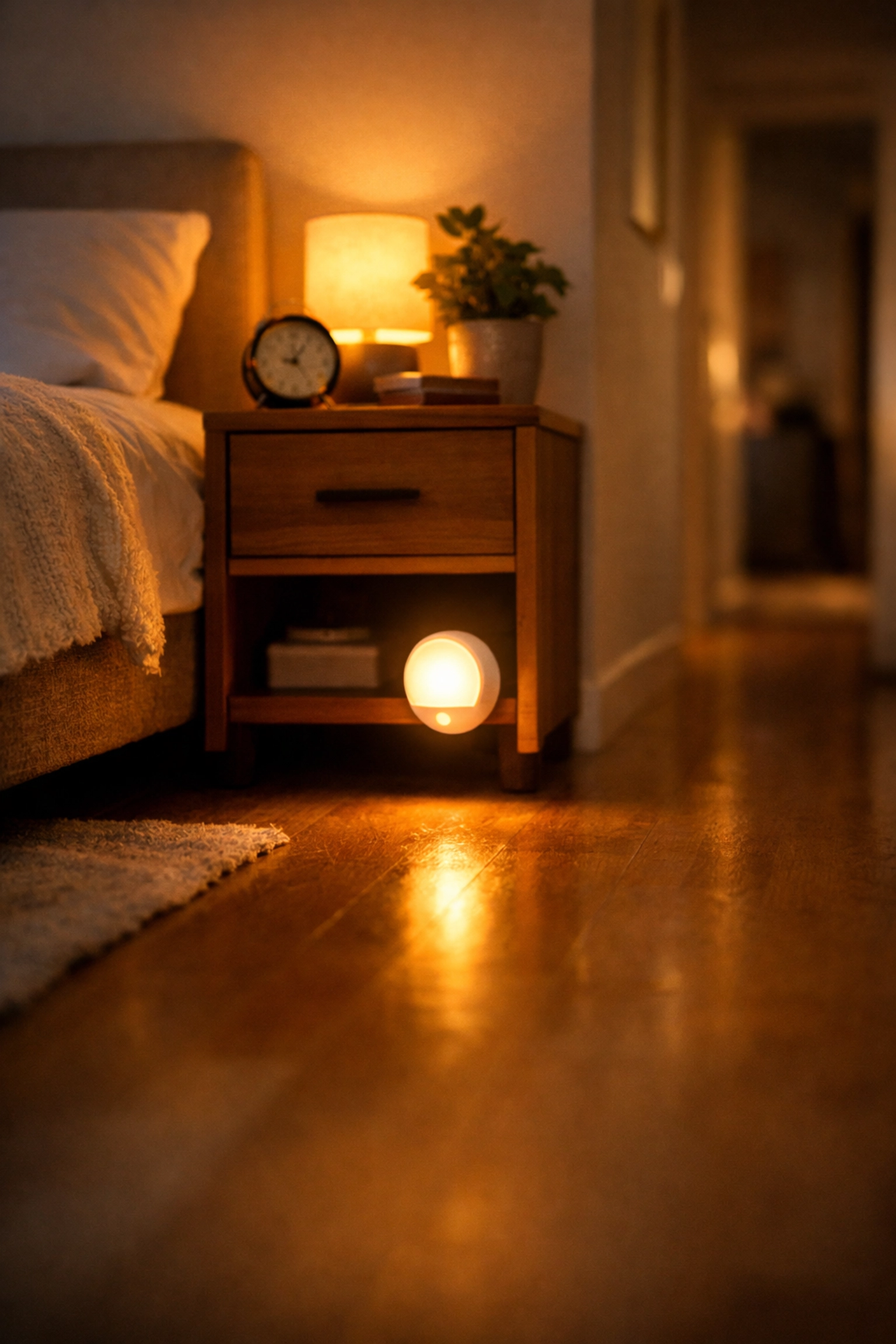
Motion-Activated Nightlights
These are game-changers. Install them in hallways, bedrooms, and bathrooms. They turn on automatically when they detect movement, giving you just enough light to see where you're going without having to fumble for switches in the dark.
Look for warm-toned LED nightlights rather than bright white ones. The warmer tones are less disruptive to your natural sleep patterns.
Floor-Level Lighting
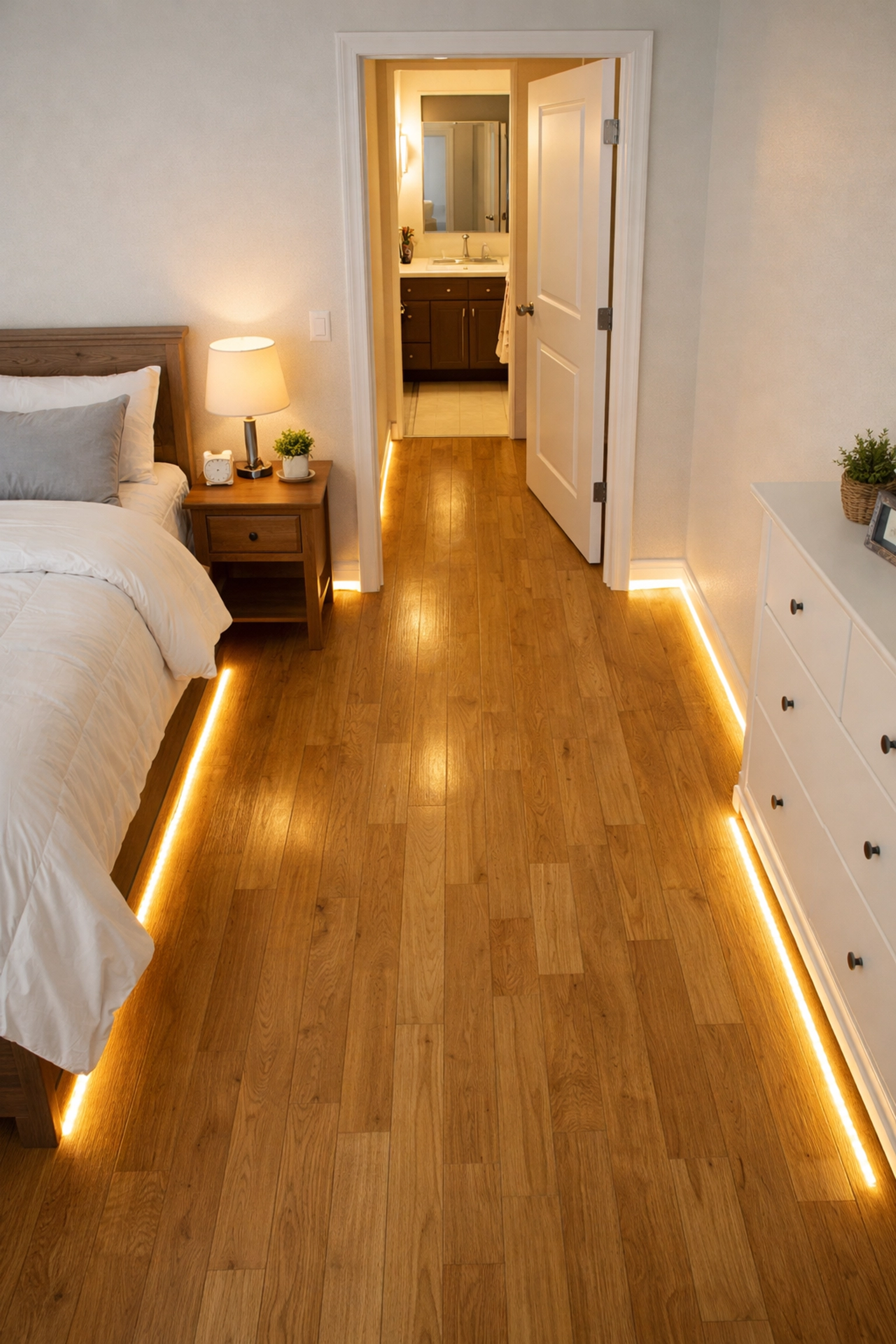
Consider installing LED strips along baseboards in hallways and stairs. These create a lighted pathway that guides you safely without shining directly in your eyes. They're particularly helpful because they illuminate the floor where you're actually walking.
Bedside Solutions
Keep a flashlight or touch-activated lamp within arm's reach of your bed. Make sure it's in the same spot every night so you can find it easily. Some people like motion-activated clip-on lights attached to their bed frame.
Master the Art of Getting Up Slowly
This is one of the simplest yet most effective fall prevention strategies, and it costs nothing.
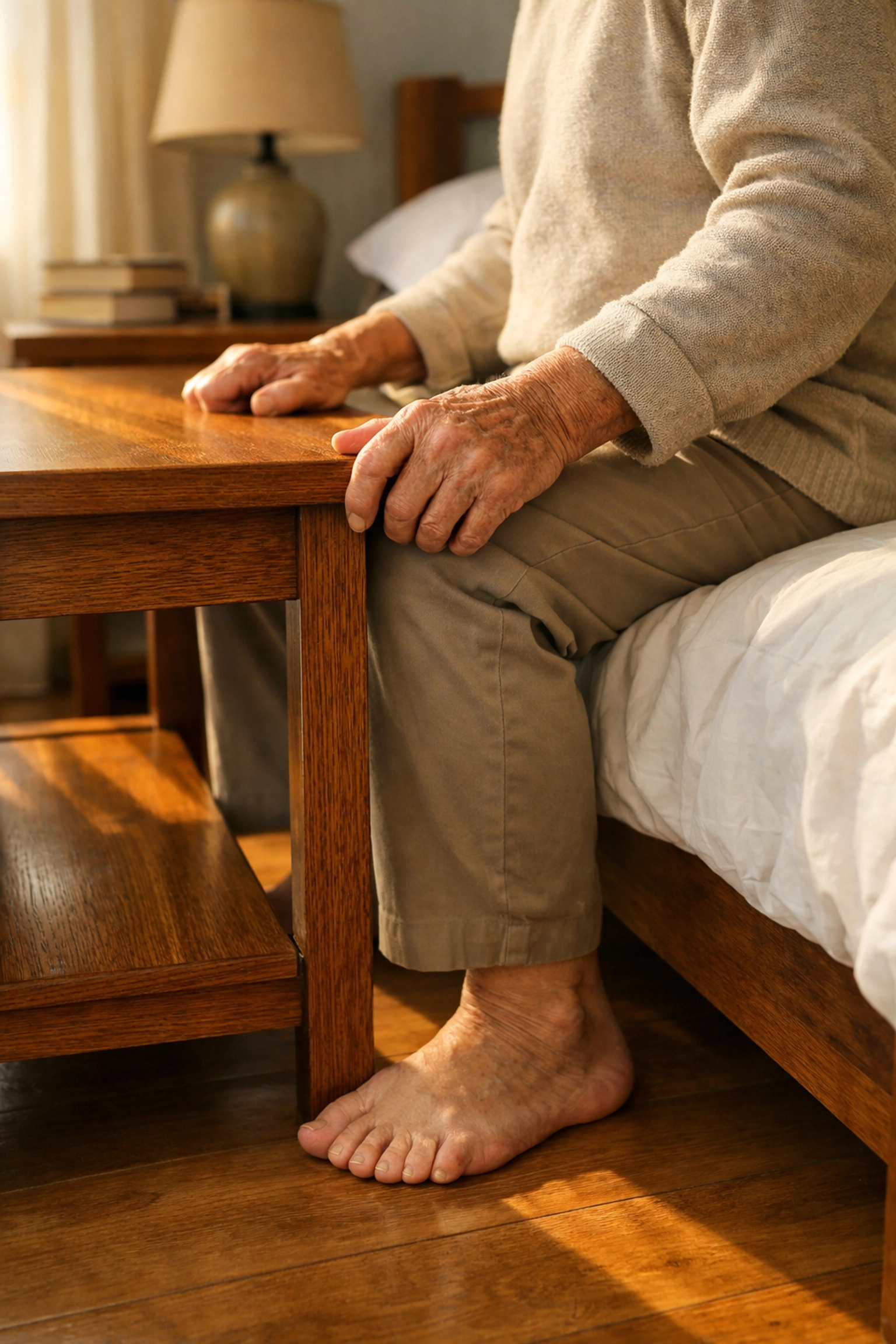
When you wake up and need to get out of bed, resist the urge to jump up immediately. Instead, follow this sequence:
First, open your eyes and take a few deep breaths while lying down. This gives your brain a moment to wake up.
Next, roll onto your side and pause for a few seconds.
Then, use your arms to push yourself into a sitting position with your feet flat on the floor. Sit on the edge of the bed for at least 30 seconds: count to 30 if you need to.
Finally, stand up slowly. If you feel dizzy at any point, sit back down and wait until it passes.
This gradual transition gives your cardiovascular system time to adjust and helps prevent that dangerous dizzy feeling.
Make Your Bedroom Fall-Proof
Your bedroom should be set up to minimize fall risk, especially around the bed.
Bed Height and Position
Your bed should be at a height where you can sit with your feet flat on the floor and your hips slightly higher than your knees. This makes it easier and safer to get in and out.
Position your bed so you have a clear, straight path to the door and bathroom. Avoid placing it in a corner where you'd have to navigate around furniture to get out.
Preventing Falls From Bed
Some people are at risk of rolling out of bed during sleep. If this is a concern, there are several solutions:
Bed rails can be attached to one or both sides of the bed, providing something to hold onto when getting up and creating a physical barrier.
A simpler option is tucking a pool noodle under the fitted sheet along the edge of the bed. This creates a gentle barrier that's hard to roll over but doesn't feel restrictive.
Body pillows or wedge pillows placed along the bed edge can serve a similar purpose while also being comfortable for sleeping.
Bedside Essentials
Keep everything you might need within reach: water, glasses, phone, medications. Use a sturdy nightstand that can support your weight if you need to lean on it while standing up or sitting down.
Clear the Path
Walk the route from your bed to the bathroom during daylight hours and look for potential hazards.
Remove throw rugs entirely if possible. If you must have them, secure them with double-sided carpet tape or non-slip rug grippers. Even small rugs can bunch up and create tripping hazards.
Eliminate electrical cords from walkways. Use cord covers or tape them along baseboards if they must cross a path.
Move furniture away from your walking path. You should be able to walk from bed to bathroom in a straight line without navigating around obstacles.
Bathroom Safety Matters
The bathroom is one of the highest-risk areas for nighttime falls because it combines slippery surfaces with the need to navigate in a semi-awake state.
Grab Bars and Support
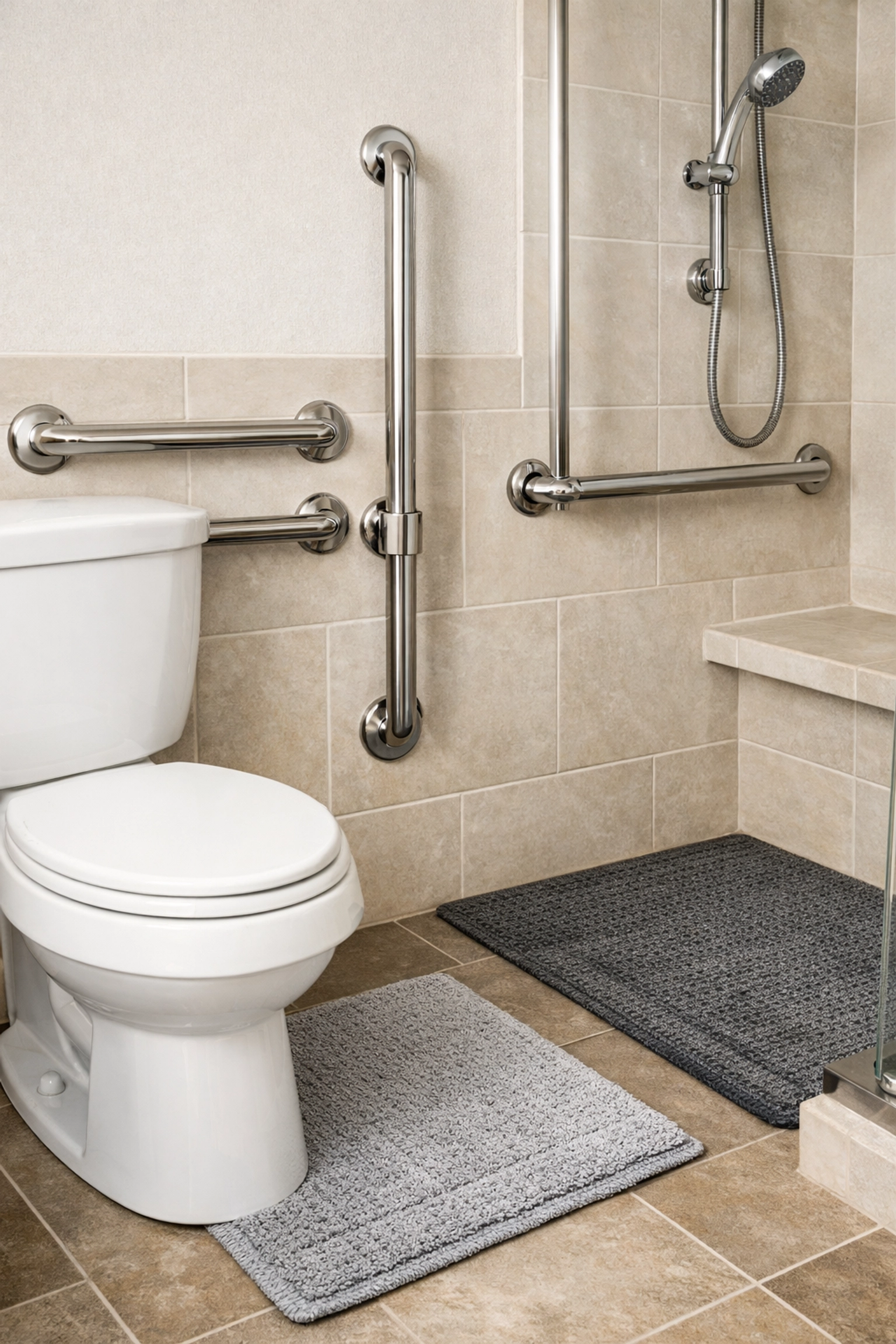
Install grab bars near the toilet and in the shower or tub area. These provide stability and something to hold onto when you're feeling unsteady. Make sure they're properly mounted to wall studs: they need to support your full body weight.
Non-Slip Surfaces
Use non-slip mats on the bathroom floor, especially near the toilet and shower. Make sure tub and shower floors have non-slip surfaces or mats as well.
Reduce the Distance
If getting to the bathroom feels like a long journey at night, consider using a bedside commode. This isn't anyone's first choice, but it can significantly reduce fall risk for people with limited mobility or those recovering from illness or surgery.
Footwear Makes a Difference
What you wear on your feet matters more than you might think.
Walking around in socks, especially on hardwood or tile floors, is asking for trouble. Even thick socks can be slippery.
Instead, keep a pair of supportive, non-slip slippers or shoes by your bed. Put them on before you stand up. Look for footwear with:
- Non-slip soles with good tread
- A secure fit that won't slide off
- Low, wide heels for stability
- Enclosed toes for protection
Some people prefer socks with rubber grips on the bottom. These can work if they fit snugly and the grips are in good condition.
Additional Safety Measures
Bed Alarms for Caregivers
If you're caring for someone who's at high fall risk, bed sensor alarms can alert you when they get up. These pressure-sensitive pads sit on the mattress and trigger an alarm when weight is removed.
Fall Mats
Cushioned fall mats placed beside the bed can reduce injury severity if a fall does occur. They're particularly useful for people who have fallen before or who have significant balance issues.
Emergency Response
Make sure there's an easy way to call for help if a fall happens. A medical alert system with a wearable button, or at minimum, a phone within reach, can be lifesaving.
Better Sleep, Safer Nights
Improving your overall sleep quality can actually reduce your fall risk.
When you sleep better, you're less groggy when you wake up, your balance is better, and you have more control over your movements.
To improve sleep:
- Maintain a consistent sleep schedule, even on weekends
- Get exposure to natural daylight during the day
- Exercise regularly (but not right before bed)
- Create a cool, dark, quiet sleeping environment
- Address sleep disorders like sleep apnea with your healthcare provider
- Review medications with your doctor: some can affect balance or cause nighttime bathroom trips
Small Changes, Big Impact
Preventing nighttime falls doesn't require a complete home renovation or expensive equipment. Most of the effective strategies are simple, practical adjustments to your environment and habits.
Start with the basics: improve lighting, slow down when getting up, and clear your pathways. These three changes alone can dramatically reduce your fall risk.
Then layer in additional safety measures based on your specific situation and needs. The goal isn't to create a fortress: it's to make your home environment work with your body's nighttime vulnerabilities instead of against them.
Remember, every fall prevented is a potential injury avoided. Taking these steps isn't about being overly cautious or admitting weakness. It's about being smart and staying independent for as long as possible.

