
When we talk about our parents getting older, we often focus on things like retirement plans, memory health, or managing chronic conditions. But there is one factor that often flies under the radar until it becomes an emergency: fall prevention.
I’m Brian Kerr, and here at Fall Guys Products, we spend a lot of time thinking about how to keep people upright and confident in their own homes. It’s not about being overprotective or treating your parents like they’re fragile; it’s about making sure their environment supports the active, independent life they want to lead.
The statistics are a bit of a wake-up call. Every year, more than one in four older adults will experience a fall. While that sounds a bit daunting, the good news is that falling isn't just an inevitable part of aging. Most falls are preventable with some simple, proactive changes. This guide is designed to help you navigate those changes without feeling overwhelmed.
Why Fall Prevention is a Family Conversation
Before we get into the nuts and bolts of grab bars and lighting, we need to talk about the "human" side of this. For many seniors, the topic of "fall prevention" feels like a threat to their independence. They might worry that admitting they feel unsteady will lead to them being told they can’t live alone anymore or that they need to move into a facility.
When you bring this up, keep the tone casual and reassuring. Focus on "safety for the sake of independence." The goal isn't to restrict them; it’s to give them the tools to stay in their home safely for as long as possible. Frame it as a team effort. You’re not "fixing" them; you’re "optimizing" the house.

Lighting: The First Line of Defense
One of the most common reasons for a trip or a stumble is simply not being able to see where you're going. As we age, our eyes need more light to see clearly, and our ability to judge depth or see contrast can decrease.
Start by walking through the home at dusk or night. Are the hallways dark? Is there a "dead zone" between the bedroom and the bathroom?
Simple fixes for lighting:
- Plug-in Motion Sensors: These are a game-changer. Place them in hallways, bathrooms, and kitchens so that if a parent gets up at 2 AM, the path is automatically illuminated.
- Increase Wattage: Check the light fixtures. If they allow for higher-wattage bulbs (staying within the fixture's safety limits), swap out those dim bulbs for brighter, "daylight" LED bulbs.
- Light Switches at Both Ends: Ensure stairs and long hallways have switches at both the top and bottom. If they don't, look into wireless smart switches that can be stuck to the wall without needing a professional electrician.
Managing Floor Hazards and Clutter
We all have "that one rug" that we trip over occasionally, or a pile of mail that sits on the bottom step. For an aging parent, these aren't just minor annoyances: they are high-risk zones.
Clear the Path:
Walkways should be at least 30 to 36 inches wide. This allows for plenty of space to move, even if they eventually need to use a cane or a walker. Remove small furniture like plant stands or decorative floor vases that sit in the natural flow of traffic.
The Rug Debate:
Throw rugs are notorious for causing falls. The best move is to remove them entirely. However, if your parent is emotionally attached to a specific rug, ensure it is secured with high-quality double-sided rug tape or a non-slip rubber backing. Even better, look for rugs with very low "pile" so there is no edge to catch a toe on.
Cord Management:
With more electronics in our lives, cords are everywhere. Use cord organizers or even simple tape to secure power strips and phone chargers against the baseboards and away from walking paths.
The High-Risk Zone: The Bathroom
The bathroom is statistically the most dangerous room in the house. It’s a combination of hard surfaces, soapy water, and frequent transitions (sitting to standing).
Grab Bars vs. Towel Racks:
This is a crucial distinction. Many people grab a towel rack for balance, but towel racks are not designed to support human weight. They will pull out of the drywall. You need professional-grade grab bars installed into the wall studs near the toilet and inside the shower.
Non-Slip Surfaces:
A wet tub or tile floor is a skating rink. Use non-slip mats or adhesive strips inside the tub. For the floor outside the tub, use a mat with a solid rubber backing that won't slide when stepped on.
Raised Seats:
If your parent has trouble standing up from a low chair, they will likely have trouble with a standard toilet. A raised toilet seat or a safety frame can make that transition much easier and reduce the strain on their knees.
Enhancing Stability with Mobility Aids
Sometimes, the house is as safe as it can be, but the individual needs a little extra support during transitions. This is where mobility aids come into play. These aren't just "medical equipment": they are tools for confidence.
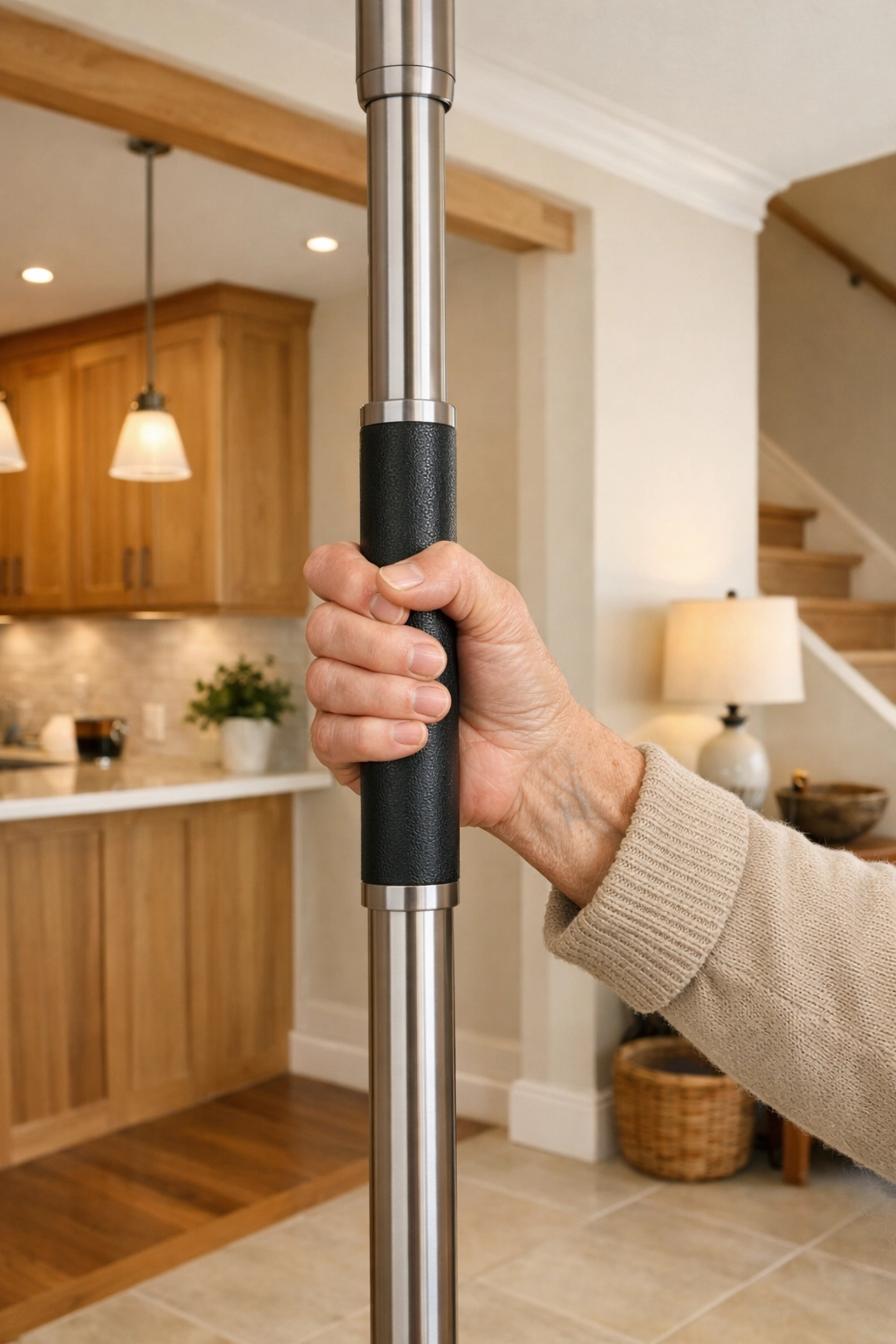
Floor-to-Ceiling Poles:
One of the most versatile tools for a home is a tension-mounted pole. These can be placed almost anywhere: next to a favorite recliner, beside the bed, or even in the bathroom. They provide a sturdy, vertical surface to grip while standing up or sitting down. Because they use tension, they usually don't require drilling into the floor or ceiling, making them great for renters or people who don't want permanent renovations.
Bed Rails and Parallel Bars:
Getting out of bed in the morning can be a dizzying experience. A simple rail that slips between the mattress and box spring provides a "handhold" to help them sit up and steady themselves before standing. In larger rooms or hallways where there’s no wall to lean on, parallel bars or sturdy handrails can create a "safe corridor" for movement.
Strength, Balance, and the "Use It or Lose It" Rule
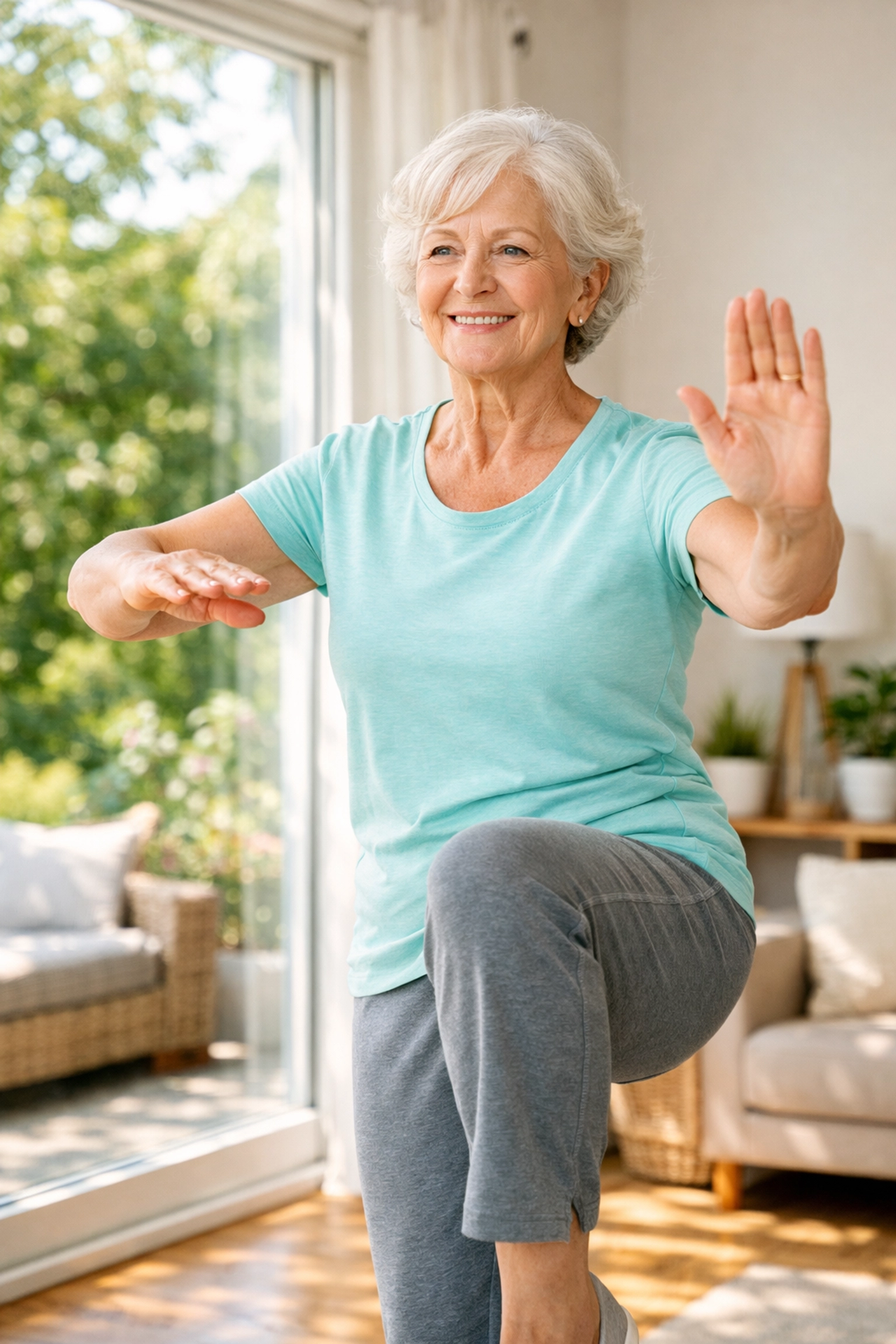
Home modifications are only half the battle. The other half is the person moving through the home. Physical activity is one of the most effective ways to prevent falls. When muscles are strong and the vestibular system (balance) is tuned up, a small trip doesn't have to result in a fall; the body can catch itself.
Evidence-Based Programs:
Research has shown that certain types of exercise are specifically effective for seniors:
- Tai Chi: This ancient practice focuses on slow, deliberate movements and weight shifting. It’s excellent for balance and has been shown to reduce fall risk significantly.
- The Otago Exercise Program: This is a set of leg muscle-strengthening and balance-retraining exercises designed specifically to prevent falls. It’s often taught by physical therapists but can be practiced at home.
- Stepping On: This is a community-based workshop that covers everything from exercise to medication management.
Even simple daily habits, like calf raises while waiting for the microwave or standing on one leg while holding onto the kitchen counter, can build the necessary "micro-strength" needed for stability.
The Hidden Factors: Vision and Medication
Sometimes a fall happens not because of a rug or a weak knee, but because of what’s happening inside the body.
Annual Vision Checks:
Cataracts, glaucoma, or even just an outdated prescription can make it hard to see obstacles. Ensure your parents are seeing an eye doctor once a year. Bifocals can also be tricky; sometimes they make the ground look blurry when a person looks down to walk. A separate pair of glasses specifically for walking or distance might be worth discussing with the optometrist.
The "Dizzy" Side Effect:
Many medications: especially those for blood pressure, sleep, or anxiety: can cause dizziness or "orthostatic hypotension" (a sudden drop in blood pressure when standing up). Have a pharmacist or doctor do a "medication review" to see if any of their current prescriptions increase the risk of falling.
Footwear Matters
It’s tempting for parents to walk around the house in socks or smooth-soled slippers. However, socks on hardwood or tile are a recipe for a slide.
Encourage the use of sturdy, "indoor only" shoes with rubber soles and a closed heel. If they absolutely refuse to wear shoes, high-quality non-slip socks with "grippy" bottoms are the next best thing. Avoid "backless" slippers or flip-flops, as these can easily slip off or cause a trip.
Creating an Emergency Plan
No matter how many precautions we take, we have to be prepared for the "what if." If a fall does happen, the goal is to ensure the person isn't lying on the floor for a long period, which can lead to further health complications.
- Personal Emergency Response Systems (PERS): These are the classic "help buttons." Whether it’s a wearable pendant, a watch, or a smartphone app, ensure your parent has a way to call for help that they are comfortable using.
- Check-in Routine: Establish a simple daily check-in. A quick "good morning" text or phone call gives everyone peace of mind.
- Teaching the "Safe Fall": Believe it or not, physical therapists can teach seniors how to fall in a way that minimizes injury and, more importantly, how to get back up safely using nearby furniture for leverage.
Conclusion: One Step at a Time
Taking on fall prevention for a parent can feel like a massive project, but you don't have to do it all in one weekend. Start with the "low-hanging fruit": clear the clutter, check the lights, and have that first reassuring conversation.
Remember, the goal isn't to wrap your parents in bubble wrap. The goal is to create an environment that respects their dignity and supports their freedom. By making these small, intentional changes, you’re not just preventing a fall: you’re providing peace of mind for the whole family.
Keep it simple, keep it supportive, and keep moving forward. We’re all in this together.

