
When we think about fall prevention, our minds usually jump to grab bars, better lighting, or clearing clutter. But here's something that might surprise you: one of the simplest and most overlooked fall prevention strategies is sitting in your kitchen right now: water.
Dehydration is a sneaky culprit behind many falls in older adults. It doesn't announce itself with dramatic symptoms. Instead, it quietly affects your balance, coordination, and mental clarity, setting the stage for a dangerous tumble.
Let's talk about why hydration and balance are so closely connected, and what you can do to protect yourself or your loved ones.
The Science Behind Dehydration and Dizziness
Your body is roughly 60% water, and every system depends on adequate hydration to function properly. When you don't drink enough fluids, your blood volume decreases. Think of it like this: your circulatory system is like a highway system, and blood is the traffic. When there's less traffic (blood volume), the whole system slows down.
This reduced blood volume means less blood reaches your brain. And when your brain doesn't get enough blood flow: a process called cerebral perfusion: you start experiencing symptoms like dizziness, lightheadedness, and confusion.
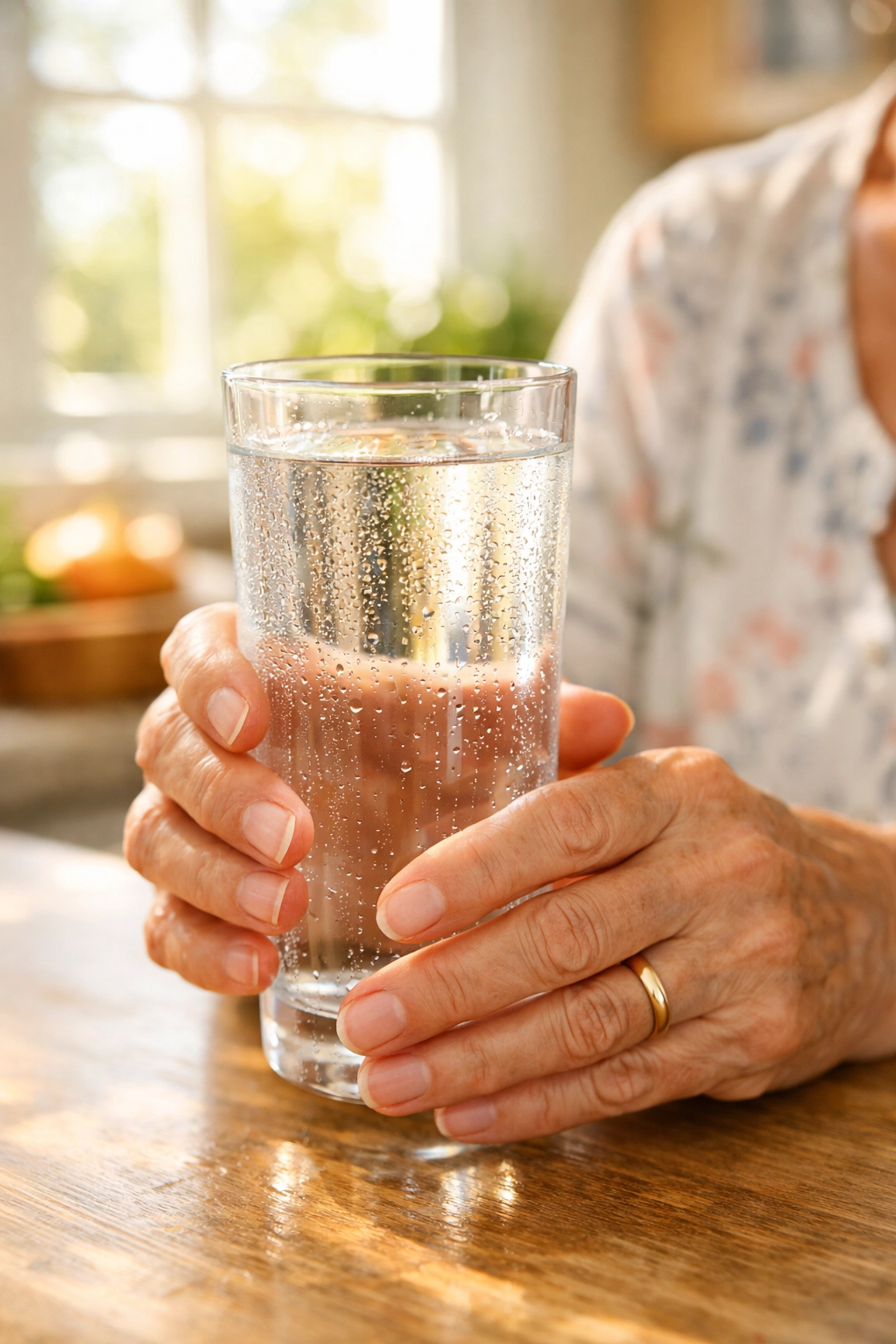
Here's where it gets particularly relevant to falls: dehydration causes something called orthostatic hypotension. That's the medical term for when your blood pressure suddenly drops as you stand up. You know that feeling when you get up too quickly and feel momentarily woozy or see stars? That's orthostatic hypotension, and dehydration makes it much worse.
For older adults, this isn't just an uncomfortable sensation: it's a serious fall risk. When you're dizzy and your blood pressure drops, your body struggles to maintain balance. Those few seconds of disorientation are all it takes for a fall to happen.
Beyond Dizziness: Other Ways Dehydration Increases Fall Risk
The dizziness connection is just the beginning. Dehydration affects your body in multiple ways that can contribute to falls:
Muscle weakness and fatigue: Your muscles need water to function properly. When you're dehydrated, your muscles become weaker and tire more easily. This compromises your ability to catch yourself if you start to lose balance.
Electrolyte imbalances: Dehydration throws off your body's electrolyte balance: essential minerals like sodium, potassium, and magnesium. These electrolytes help your muscles and nerves communicate. When they're out of whack, you might experience muscle cramps, confusion, and coordination problems.
Cognitive impairment: Even mild dehydration can affect your thinking, concentration, and reaction time. When your mental processing slows down, you're less able to respond quickly to balance challenges or hazards in your environment.
Reduced coordination: Dehydration impairs the signals between your brain and body, making movements less smooth and coordinated. This affects everything from walking to reaching for support when you feel unsteady.

The Research Speaks Volumes
The connection between dehydration and falls isn't just theoretical: it's backed by solid research. Studies have found that dehydrated older adults are significantly more likely to fall compared to those who maintain proper hydration.
In one study focusing on adults aged 65 and older, researchers found that 13.3% of dehydrated individuals experienced falls, compared to just 10.2% of those who were adequately hydrated. Even after accounting for medications and other risk factors, the association remained strong.
Another study showed that dehydration was positively associated with falls or death, with the odds increasing by 13% for dehydrated individuals. These aren't small numbers: they represent real people and real falls that could potentially be prevented with better hydration.
Why Seniors Are Especially Vulnerable
Aging changes how our bodies handle hydration. Several factors make older adults more susceptible to dehydration:
Decreased total body water: As we age, our bodies naturally contain less water. Where a younger adult might be about 60% water, an older adult might be closer to 50%. This means there's less reserve when fluid intake drops.
Diminished thirst sensation: This is a big one. The feeling of thirst becomes less reliable as we age. Many older adults simply don't feel thirsty even when their bodies need fluids. You can't rely on thirst alone as a guide.
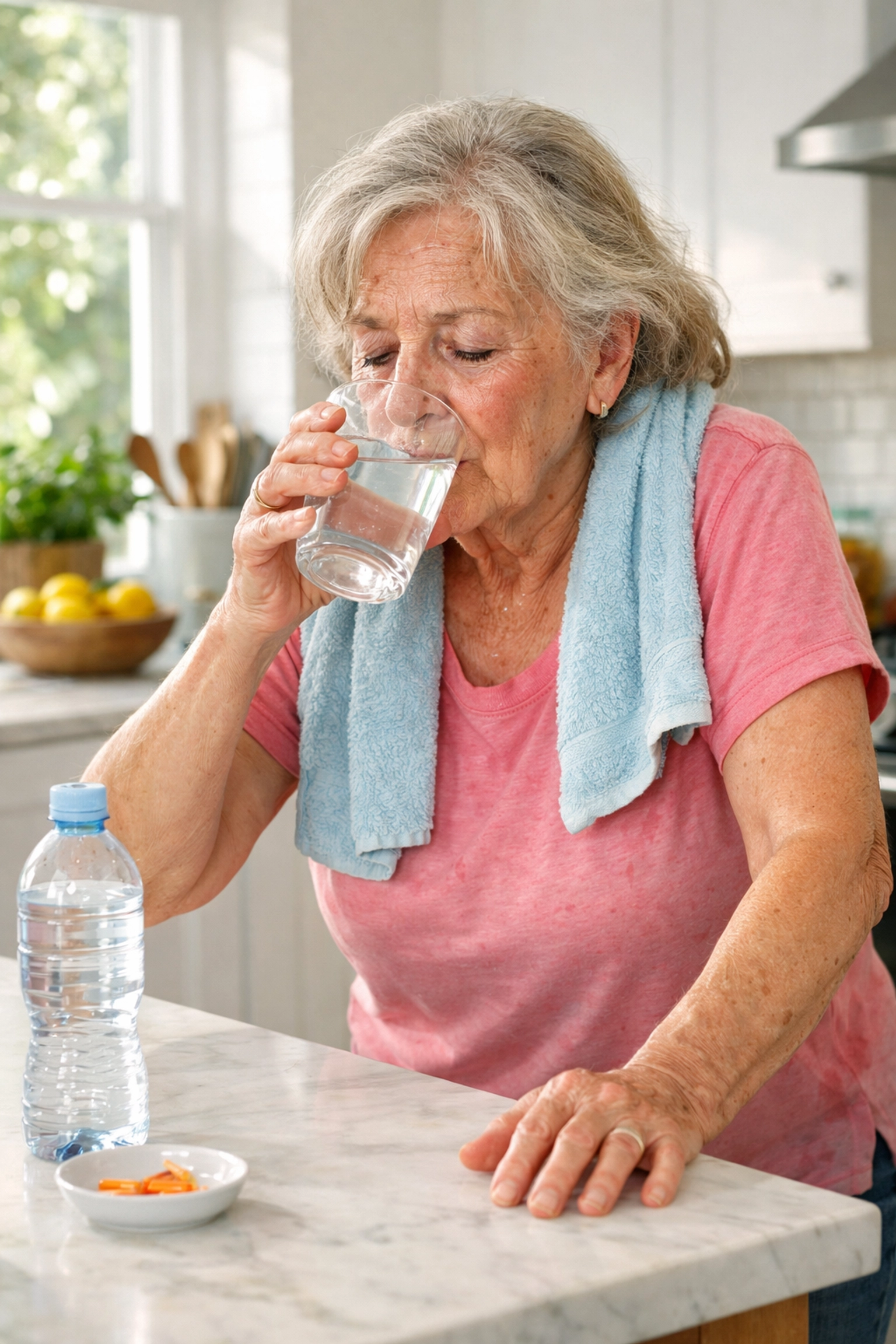
Medications: Many common medications act as diuretics, promoting fluid loss. Blood pressure medications, heart medications, and even some over-the-counter drugs can increase urination and contribute to dehydration.
Kidney function changes: Our kidneys become less efficient at conserving water as we age. They don't concentrate urine as well, meaning more water is lost.
Mobility challenges: Sometimes the issue isn't desire but access. If getting to the kitchen or bathroom is difficult, some people drink less to avoid the hassle or because they're worried about needing frequent bathroom trips.
Chronic conditions: Conditions like diabetes, kidney disease, and dementia can all affect hydration status.
Recognizing the Signs of Dehydration
Catching dehydration early is crucial for senior safety. Here are the warning signs to watch for:
Early signs:
- Dry mouth and lips
- Decreased urination or dark yellow urine
- Fatigue or low energy
- Mild headache
- Feeling unusually warm
More serious signs:
- Dizziness or lightheadedness, especially when standing
- Confusion or difficulty concentrating
- Rapid heartbeat
- Sunken eyes
- Very dark urine or no urination for several hours
- Extreme fatigue
If you or someone you care for experiences these symptoms, increase fluid intake immediately and contact a healthcare provider if symptoms are severe or don't improve.
How Much Water Do You Really Need?
The "eight glasses a day" rule is a good starting point, but individual needs vary. Current recommendations suggest:
- Men: About 15.5 cups (124 ounces) of fluids daily
- Women: About 11.5 cups (92 ounces) of fluids daily
Remember, these numbers include all fluids: not just water. Coffee, tea, juice, milk, and even foods with high water content count toward your daily intake.

However, you might need more if you:
- Live in a hot climate
- Exercise regularly
- Have certain medical conditions
- Take medications that increase fluid loss
A practical approach is to aim for 6 to 8 cups of fluids throughout the day, paying attention to urine color (pale yellow is ideal) and how you feel.
Practical Strategies to Stay Hydrated
Knowing you need to drink more water is one thing. Actually doing it consistently is another. Here are practical strategies that work:
Make water accessible: Keep water bottles or filled glasses in multiple locations: beside your favorite chair, on your nightstand, in your car. When water is within arm's reach, you're more likely to drink it.
Set reminders: Use phone alarms, smartwatches, or even old-fashioned kitchen timers to remind yourself to drink throughout the day. Some people find success with apps designed specifically for tracking water intake.
Add flavor: If plain water doesn't appeal to you, jazz it up. Add slices of lemon, lime, cucumber, or berries. Herbal teas (served hot or cold) are another great option.
Eat water-rich foods: Many fruits and vegetables have high water content. Watermelon, cucumbers, oranges, strawberries, lettuce, celery, and zucchini are all excellent choices that contribute to hydration.
Create a routine: Drink water at specific times: when you wake up, with each meal, when you take medications, and before bed (but not so much that it disrupts sleep with bathroom trips).
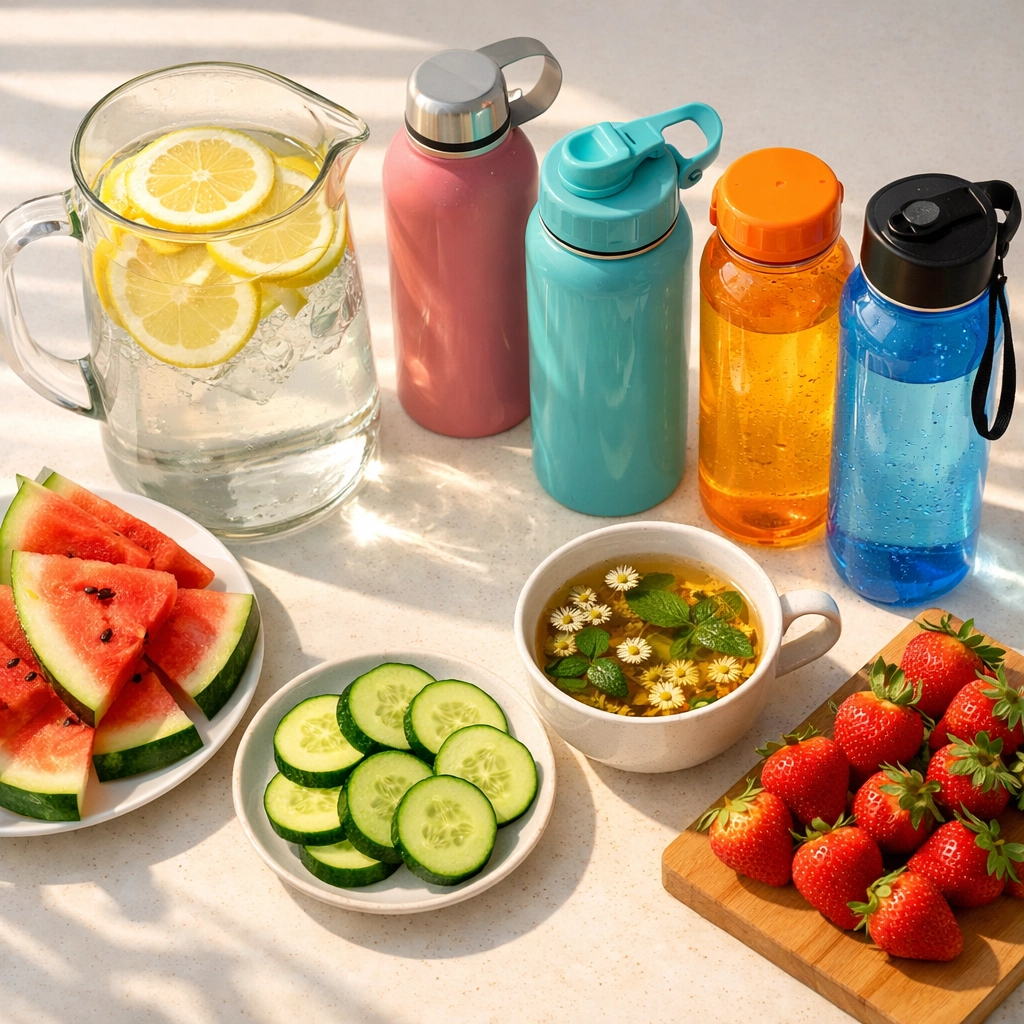
Use a marked water bottle: Bottles with time markers or measurement lines help you track progress and stay on target throughout the day.
Limit caffeine and alcohol: Both have diuretic effects, promoting fluid loss. If you enjoy coffee or alcoholic beverages, balance them with extra water.
Start your day hydrated: Drink a full glass of water first thing in the morning. Your body becomes dehydrated overnight, and this helps you start the day on the right foot.
The Temperature Factor
While hydration is important year-round, pay extra attention during hot weather. Heat increases fluid loss through sweating, and many older adults don't sweat as efficiently as younger people. During summer months or in warm climates, increase your fluid intake and stay in air-conditioned spaces when possible.
Cold weather deserves attention too. Indoor heating can be very drying, and people tend to drink less when they're not feeling hot. Don't let cooler temperatures trick you into neglecting hydration.
When to Seek Medical Advice
While most hydration needs can be managed at home, certain situations require professional guidance:
- If you have heart failure, kidney disease, or other conditions that require fluid restriction
- If you're unsure how much to drink given your medications and health conditions
- If you experience persistent dizziness or have already fallen
- If you show signs of severe dehydration
Your healthcare provider can offer personalized recommendations based on your specific health needs and medications.
The Bottom Line
Staying properly hydrated is one of the simplest, most affordable, and most effective fall prevention strategies available. It won't require expensive equipment, professional installation, or major lifestyle changes. Just consistent attention to drinking enough fluids throughout the day.
By maintaining proper hydration, you're supporting healthy blood pressure, optimal muscle function, clear thinking, and good balance: all critical factors in preventing falls. You're also supporting overall health in countless other ways.
So here's your action step: right now, before you do anything else, go get a glass of water. Then think about which hydration strategies from this article you can start implementing today. Your body: and your balance( will thank you.)

