
Balance is one of those things we often take for granted until it starts to feel a little less certain. When we are younger, we run, jump, and navigate uneven sidewalks without a second thought. But as the years go by, the systems our bodies use to keep us upright begin to change. You might notice a slight hesitation when stepping off a curb or a momentary dizzy spell when standing up too quickly.
If you’ve felt this, you aren’t alone. It’s a natural part of the aging process, but it isn’t something you simply have to "live with." In fact, balance is a skill, much like playing an instrument or learning to cook, that can be practiced, improved, and maintained.
At Fall Guys Products, we believe that staying mobile and independent starts with confidence. This guide is designed to help you, or a loved one you care for, understand the basics of balance training and how to start a simple, effective routine right in the comfort of your own home.
Understanding the "Three Pillars" of Balance
To improve your balance, it helps to understand what’s actually happening behind the scenes. Your brain stays balanced by coordinating information from three main systems:
- Vision: Your eyes tell you where you are in relation to your surroundings. They help you spot obstacles and gauge the distance to the floor.
- The Vestibular System: Located in your inner ear, this system acts like a built-in level. It senses head movement and position, helping you stay upright even when your eyes are closed.
- Proprioception: This is your body’s "position sense." Sensors in your muscles, joints, and skin (especially in your feet) send signals to your brain about where your limbs are and what kind of surface you are standing on.
As we age, these systems can become a little less sharp. Vision might dim, inner ear function can shift, and nerves in the feet may become less sensitive. Balance training works by "re-tuning" these systems, forcing them to work together more efficiently.
Setting Up Your Space for Success
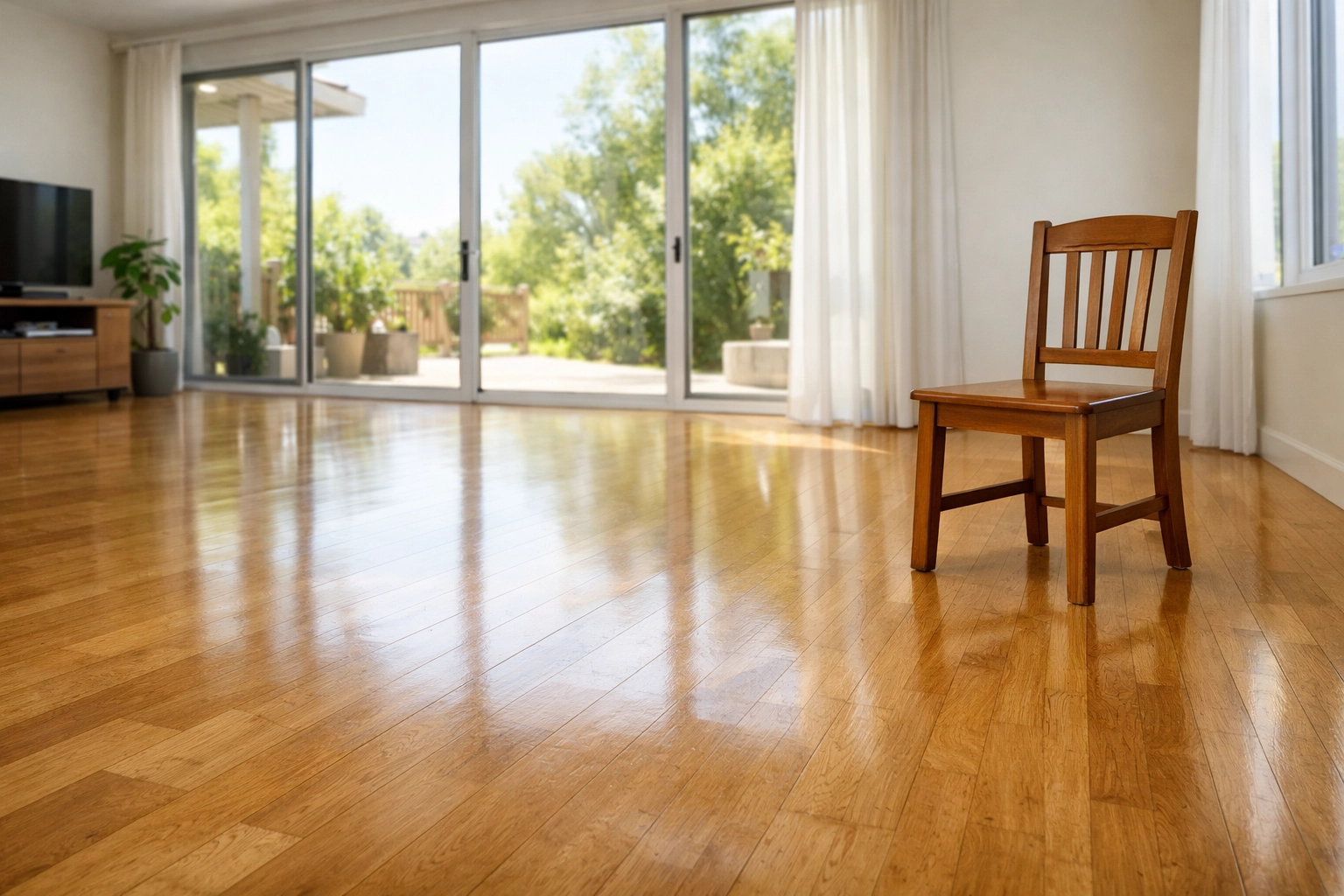
Before you try your first weight shift or leg lift, you need to create a "safety zone." The goal of balance training is to challenge yourself safely, not to actually fall.
Choose Your Support
For beginners, having a sturdy point of contact is non-negotiable. A heavy kitchen chair (without wheels!), a stable countertop, or a hallway with a solid wall are all excellent options. Avoid using furniture that might slide, like a lightweight coffee table or a rolling office chair.
Clear the Floor
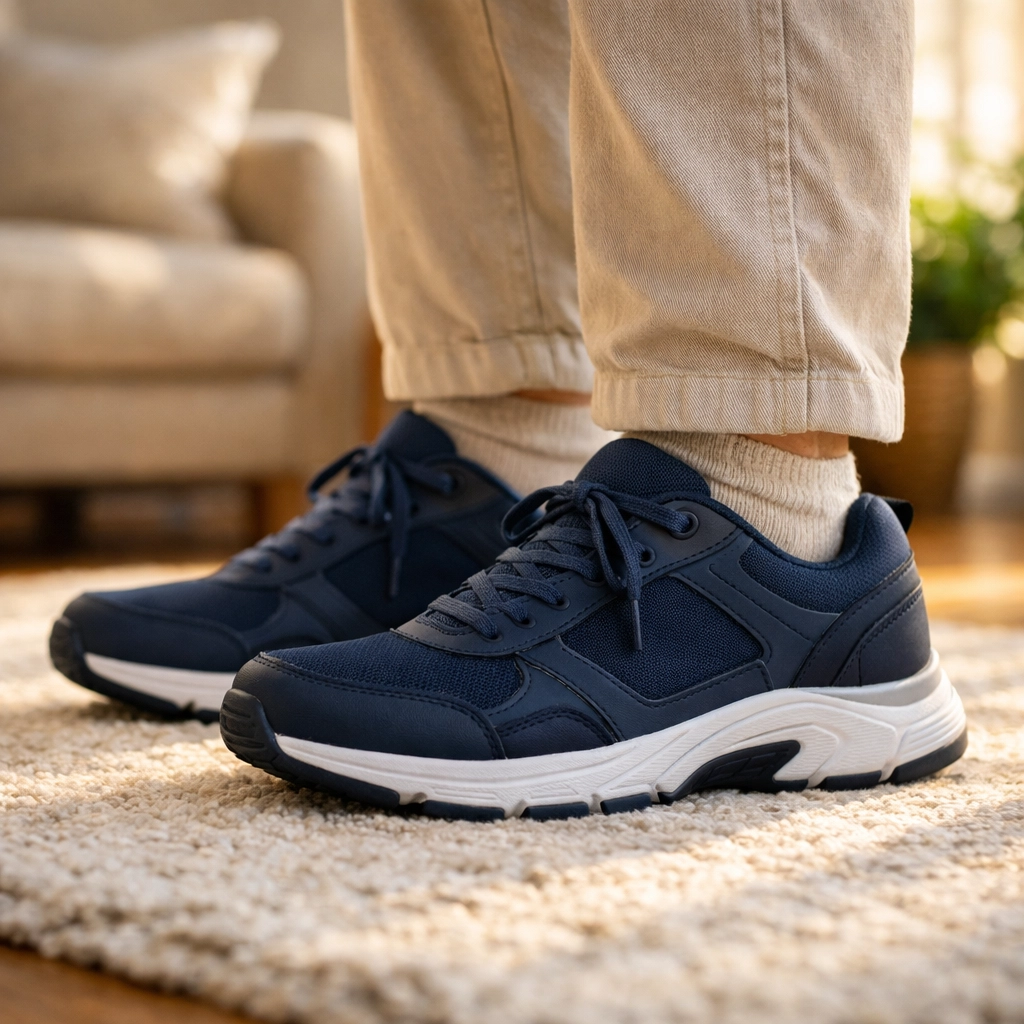
Remove any "trip hazards" from your workout area. This includes throw rugs, electrical cords, and pet toys. Ensure the floor is dry and that you are wearing supportive, non-slip footwear. While some people enjoy practicing barefoot to improve proprioception, beginners should generally start with sturdy sneakers that provide good arch support.
Lighting and Distractions
Make sure the room is well-lit. Since your vision is one of the three pillars of balance, trying to exercise in a dim room makes things unnecessarily difficult. Also, try to keep the area quiet so you can focus on your body’s movements.
Level 1: Beginner Exercises (The Foundation)
If you haven’t done much physical activity lately, start here. These moves are designed to build the foundational strength and "nerve-to-muscle" connection required for more advanced movements.
1. Weight Shifts
This is the simplest way to start feeling how your center of gravity moves.
- How to do it: Stand with your feet hip-width apart. Keep your hands hovering just above a countertop or the back of a chair for safety.
- The Move: Slowly shift your weight onto your right foot, allowing your left heel to lift slightly off the floor. Hold for 5–10 seconds. Slowly transition back to the center, then shift to the left.
- Focus: Try to keep your torso upright. Don't lean your shoulders; instead, feel the weight move through your hips and down into your feet.
2. Supported Single-Leg Stand
This move builds strength in the ankles and hips, which are the primary "stabilizers" during walking.
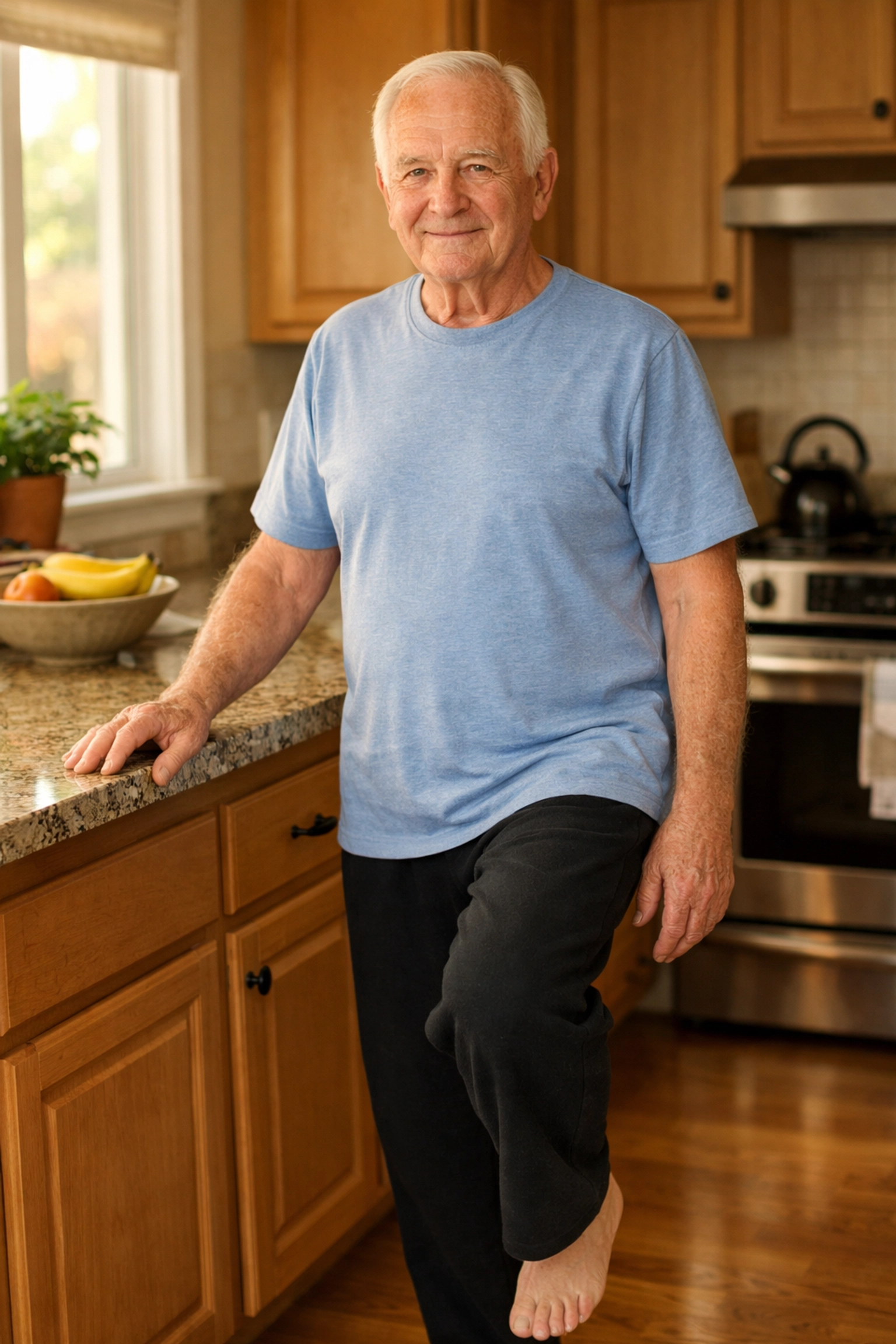
- How to do it: Stand near your support and place one hand on it.
- The Move: Lift one foot slightly off the floor, just an inch or two is fine. Try to hold this position for 10–15 seconds. Switch sides.
- Progression: As you feel more stable, try touching the chair with only one finger, and eventually, hovering your hand over the chair without touching it.
3. Seated Leg Lifts
If standing feels too taxing initially, you can build the necessary leg strength while seated.
- How to do it: Sit in a firm chair with your feet flat on the floor and your back straight.
- The Move: Straighten one knee to lift your foot off the floor. Hold for 5 seconds, then slowly lower it back down. Repeat 10 times on each leg.
- Why it works: This strengthens the quadriceps (thigh muscles), which are crucial for getting up from a chair and maintaining stability while walking.
Level 2: Intermediate Progressions (Building Confidence)
Once the beginner moves feel easy and you can hold a single-leg stand for 15 seconds with minimal support, you can move on to these exercises. These introduce "dynamic" balance, maintaining stability while your body is in motion.
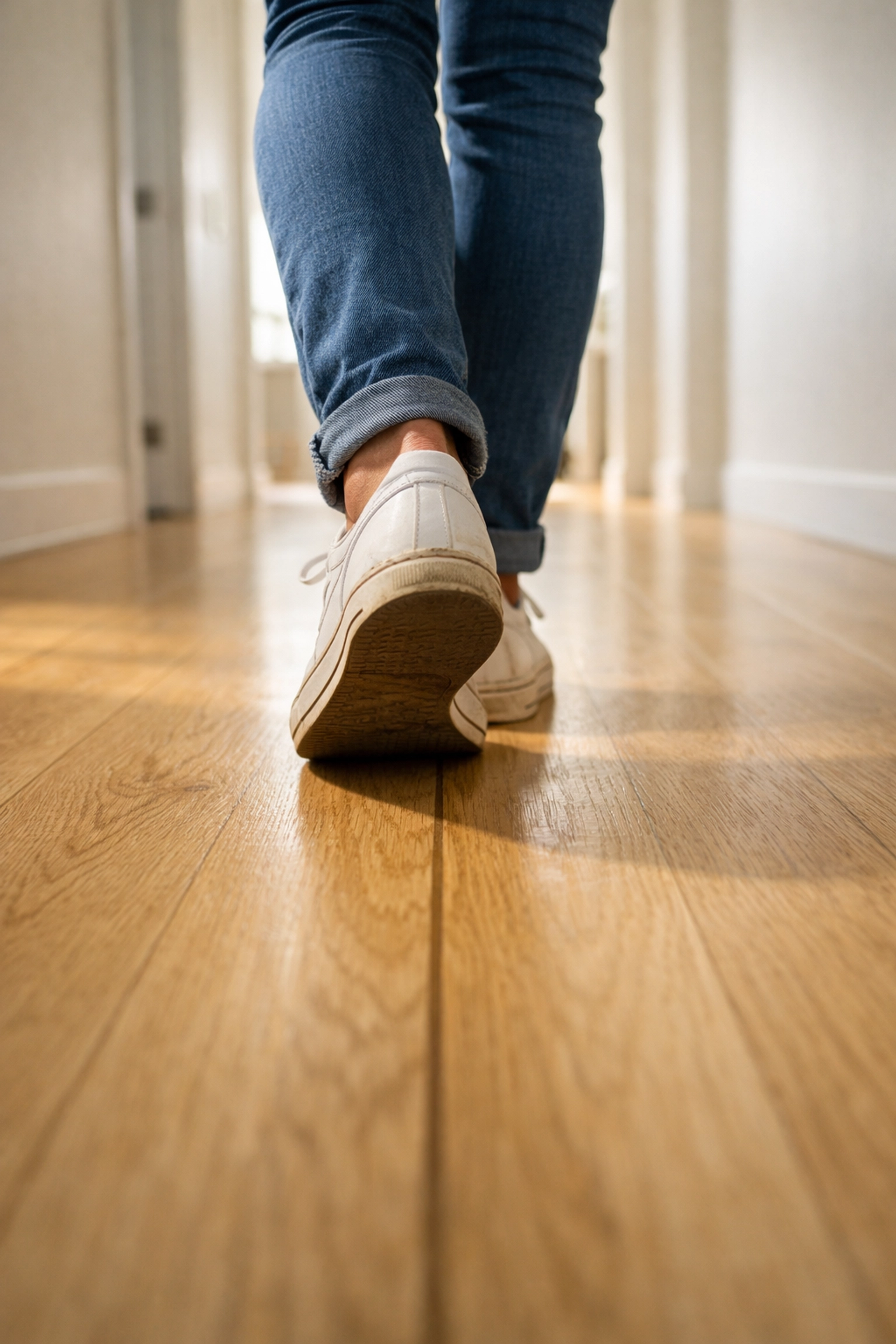
4. Heel-to-Toe Walking
Often called the "tightrope walk," this exercise is great for improving coordination.
- How to do it: Find a clear stretch of floor next to a wall.
- The Move: Take a step forward, placing the heel of your front foot directly in front of the toes of your back foot. They should be touching, or nearly touching.
- The Path: Take 10–15 steps forward. Use the wall for balance if you feel a wobble.
- Progression: Try to do the same thing in reverse, moving backward. This is much harder and should only be tried once you are very confident moving forward.
5. Toe and Heel Raises
Strong calves and shins help you "react" if you trip, allowing you to catch yourself more effectively.
- How to do it: Stand with both hands on your support.
- The Move: Rise up onto the balls of your feet (toe raise), hold for a second, and lower back down. Then, lift your toes off the floor so you are balancing on your heels (heel raise).
- Tip: Be careful not to stick your bottom out when doing heel raises. Keep your body as straight as possible.
6. The "Clock" Reach
This exercise helps with reaching for items in the kitchen or bathroom without losing your balance.
- How to do it: Imagine you are standing in the center of a large clock face on the floor. Hold onto a chair with your left hand.
- The Move: Balance on your left leg. With your right arm, reach forward toward "12 o'clock." Then reach to the side toward "3 o'clock," and finally reach behind you toward "6 o'clock."
- Focus: You aren't just moving your arm; you are allowing your body to slightly shift its weight while staying rooted through your standing leg.
Creating a Consistent Routine
The secret to better balance isn't intensity; it's consistency. Your brain and nervous system need regular "reminders" of how to stay stable.
- Frequency: Aim for 15–20 minutes of balance practice, twice a day. This might sound like a lot, but you can break it up. Do five minutes while the coffee is brewing and another five minutes during a commercial break on TV.
- The "Slow and Steady" Rule: Never rush through these movements. The slower you move, the more your stabilizer muscles have to work.
- Listen to Your Body: It is normal for your muscles to feel a little tired, but you should never feel sharp pain. If you feel dizzy or lightheaded, stop immediately and sit down.
A Note for Caregivers
If you are helping a parent or a spouse with these exercises, your role is to be a "safety anchor."
- Be a "Spotter": Stand near them, but don't hold them up unless they are about to fall. They need to feel the "wobble" to improve, but they need to know you are there to catch them.
- Encourage Progress: Keep a simple log. "Last week you held your leg up for 5 seconds; today you did 10!" Small wins build the confidence needed to keep going.
- Watch for Fatigue: Balance takes a lot of mental energy. If you notice your loved one getting frustrated or their form slipping, it’s time to take a break.
When to Seek Professional Guidance
While home exercise is wonderful, it’s important to know when to call in the experts. If you have had more than two falls in the past year, or if you experience unexplained dizziness, please talk to your doctor.
A Physical Therapist (PT) can be an incredible resource. They can perform a clinical balance assessment and identify exactly which system (vision, vestibular, or strength) needs the most work. They can also tailor a program specifically for conditions like neuropathy, Parkinson’s, or recovery from a hip or knee replacement.
Final Thoughts
Mastering stability at home doesn't require a gym membership or expensive equipment. It requires a sturdy chair, a bit of clear floor space, and a commitment to yourself. By taking twenty minutes a day to practice these movements, you are doing more than just "exercising": you are protecting your independence and ensuring that you can continue to enjoy the activities and people you love.
Remember, every expert was once a beginner. It’s okay to start small. It’s okay to use a wall for support. The goal is simply to be a little steadier today than you were yesterday. You've got this.

